Board Shorts vs Fight Shorts for BJJ: Why One Tears and One Wins
Walk into any no-gi class and you’ll see two camps: grapplers in $25 board shorts they grabbed off a clearance rack and grapplers in fight shorts that cost three times as much. Both look similar from a distance. Both have a waistband, a mesh liner, and the same mid-thigh length. But after one hard roll from full mount, the difference becomes obvious — and usually it’s the board shorts that lose.
This guide breaks down why board shorts and fight shorts are not interchangeable for BJJ, what to look for in grappling-specific shorts, and the narrow cases where board shorts can actually work for casual training.
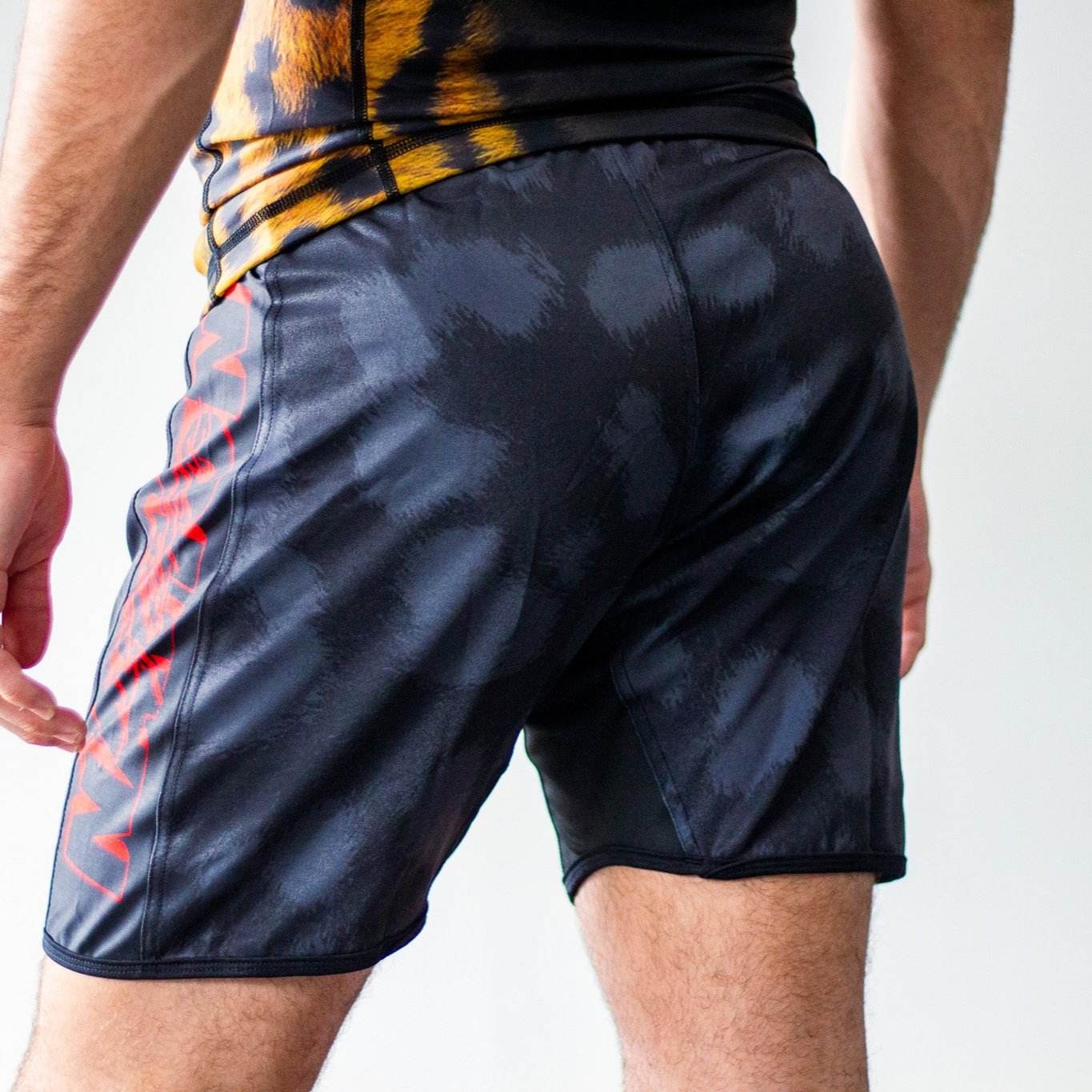
The Core Difference Between Board Shorts and Fight Shorts
Board shorts were designed for surfing. The priorities are salt water drainage, sun protection on the thighs, and a closure that holds up against wave impact. They typically use a drawstring tie or Velcro fly, woven polyester for quick drying, and mesh pockets along the side seam.
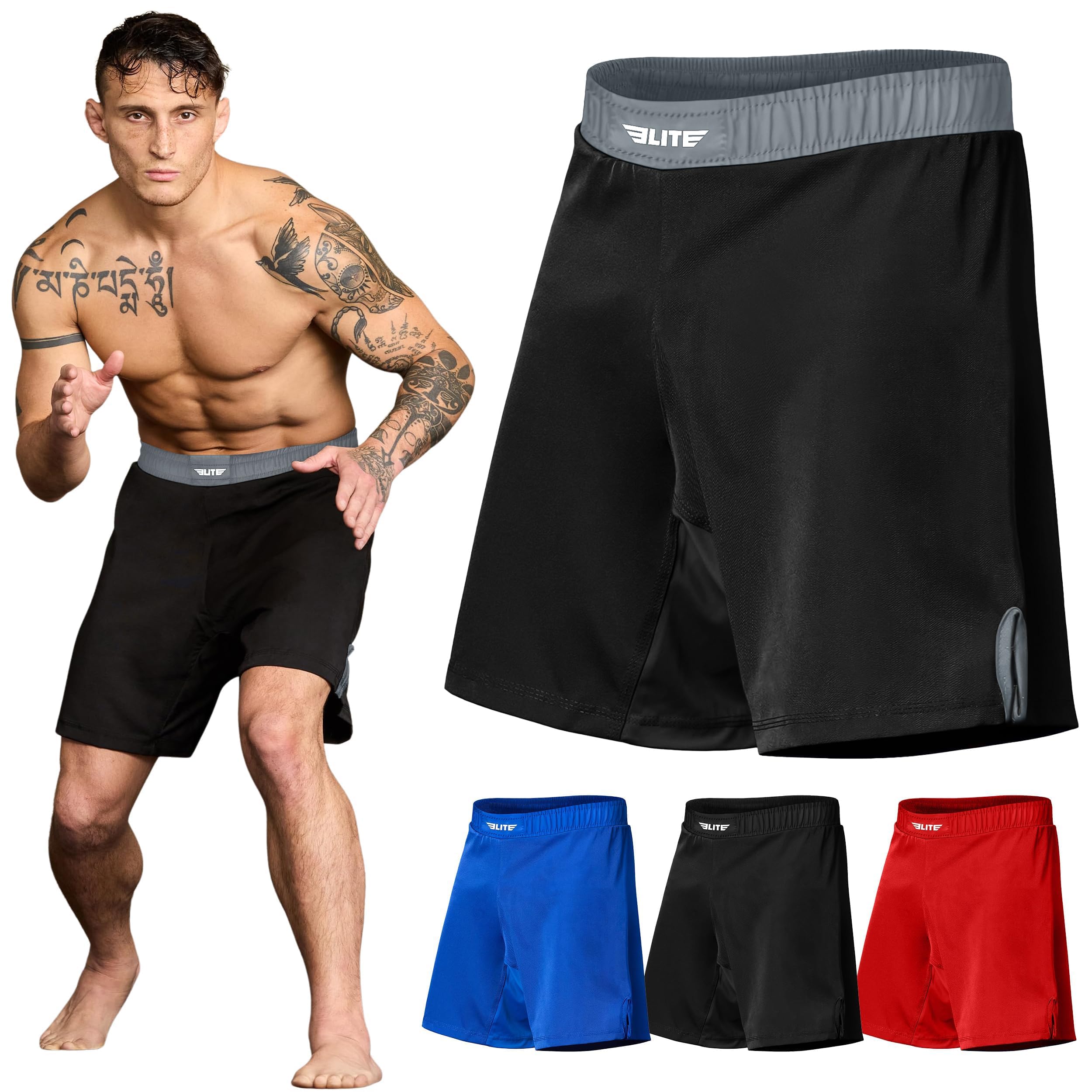
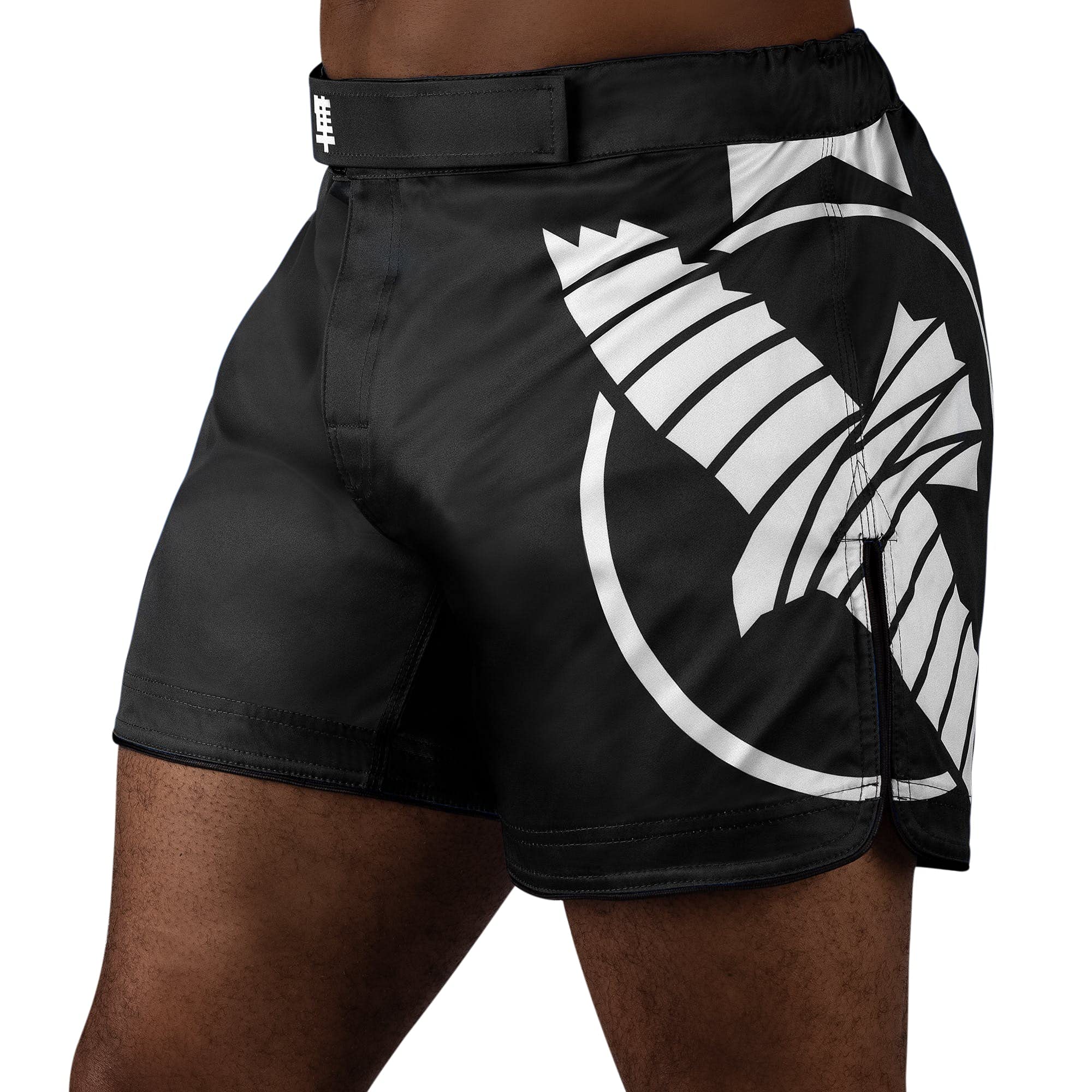
Fight shorts evolved out of Muay Thai and MMA. The priorities are range of motion for kicks, takedowns, and ground exchanges. They use a wide elastic waistband with a Velcro closure, four-way stretch panels at the crotch and side seams, and absolutely no pockets — because pockets catch fingers and toes during grappling.
For BJJ specifically, the question isn’t aesthetic. It’s whether the shorts can survive triangles, deep half guard sweeps, and being stepped on while your training partner posts on your hip.
Why Board Shorts Fail in No-Gi BJJ
Three failure points kill board shorts on the mat. Every no-gi gym has seen all three.
Drawstring Waistbands Come Untied
Surf-style drawstrings are designed to be cinched once and forgotten under steady water pressure. They don’t survive a guard pass where your partner posts a forearm on your hip and drives. Within three rolls, the bow is undone and your shorts are sliding down. Some grapplers double-knot them, but the knot itself becomes a finger trap during scrambles — exactly the thing the IBJJF wrote rules to ban.
Pockets Catch Fingers and Toes
This is the headline reason fight shorts banned pockets entirely. A mesh side pocket on board shorts looks harmless until your partner’s toe gets caught during a triangle setup, or your own finger hooks into the pocket while you’re posting on the mat. Best case: torn pocket. Worst case: broken finger or wrenched toe. Most sanctioned no-gi rulesets ban pocketed shorts in competition for exactly this reason.
Woven Polyester Doesn’t Stretch
Board shorts are usually 100% woven polyester or a poly-cotton blend. The fabric holds its shape against wave drag but has almost no give. When you shoot a deep underhook or sprawl into a sit-out, the inseam splits. Anyone who has trained no-gi for a year has heard the sound — a quick rip down the crotch seam mid-roll, followed by everyone laughing.
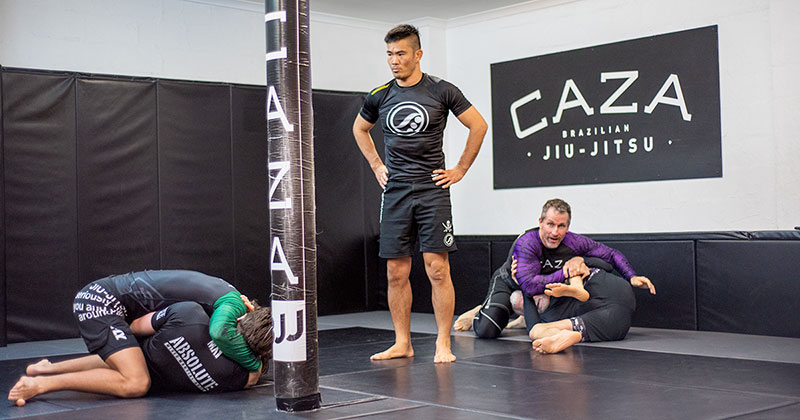
What Makes Fight Shorts Work for No-Gi
Fight shorts solve all three failure points and add features specifically built for grappling exchanges.
Velcro Plus Internal Drawstring
The closure on a proper fight short is a wide Velcro flap that locks the waistband shut, plus an internal cord for fine adjustment. Once it’s cinched, it stays cinched through scrambles, inversions, and being stacked. The Velcro itself is covered by a flat panel so it doesn’t scratch your training partner during chest-to-chest exchanges.
Four-Way Stretch Crotch Gusset
Quality fight shorts use a diamond-shaped stretch panel — usually a 4-way spandex blend — sewn into the crotch and inner thigh. This is the panel that lets you shoot a deep single, post on a hip for an armdrag, or invert into a leg entanglement without splitting the inseam. Budget fight shorts cut corners here; premium brands put real spandex panels in and the tag will tell you the blend percentage.
Flatlock Stitching
Standard hemmed seams have a raised ridge that abrades skin during ground exchanges. Fight shorts use flatlock or zigzag stitching that lies flush against the fabric. After fifty rolls in board shorts, you’ll have raw patches on your inner thigh. Flatlock fight shorts skip that entirely.
Materials — Spandex Blend vs Woven Poly
The fabric blend matters more than most beginners realize, and the difference shows up on the tag.
Board shorts are typically 100% woven polyester or an 88/12 poly-spandex blend at most. Stiff. Quick-drying. Not built for repeated tension at the seams.
Fight shorts use a poly-spandex blend with a higher spandex percentage — usually 88/12 in the main panels and up to 95% spandex in the stretch gusset. Some brands use a lighter knit polyester that drapes better and dries faster than woven board short fabric. The trade-off is durability versus mobility, and fight short makers tune for mobility because that’s what wins matches.
If you’re shopping, check the inside tag. Anything labeled “board” or “surf” without a spandex percentage listed is going to split on you within a month of regular training.
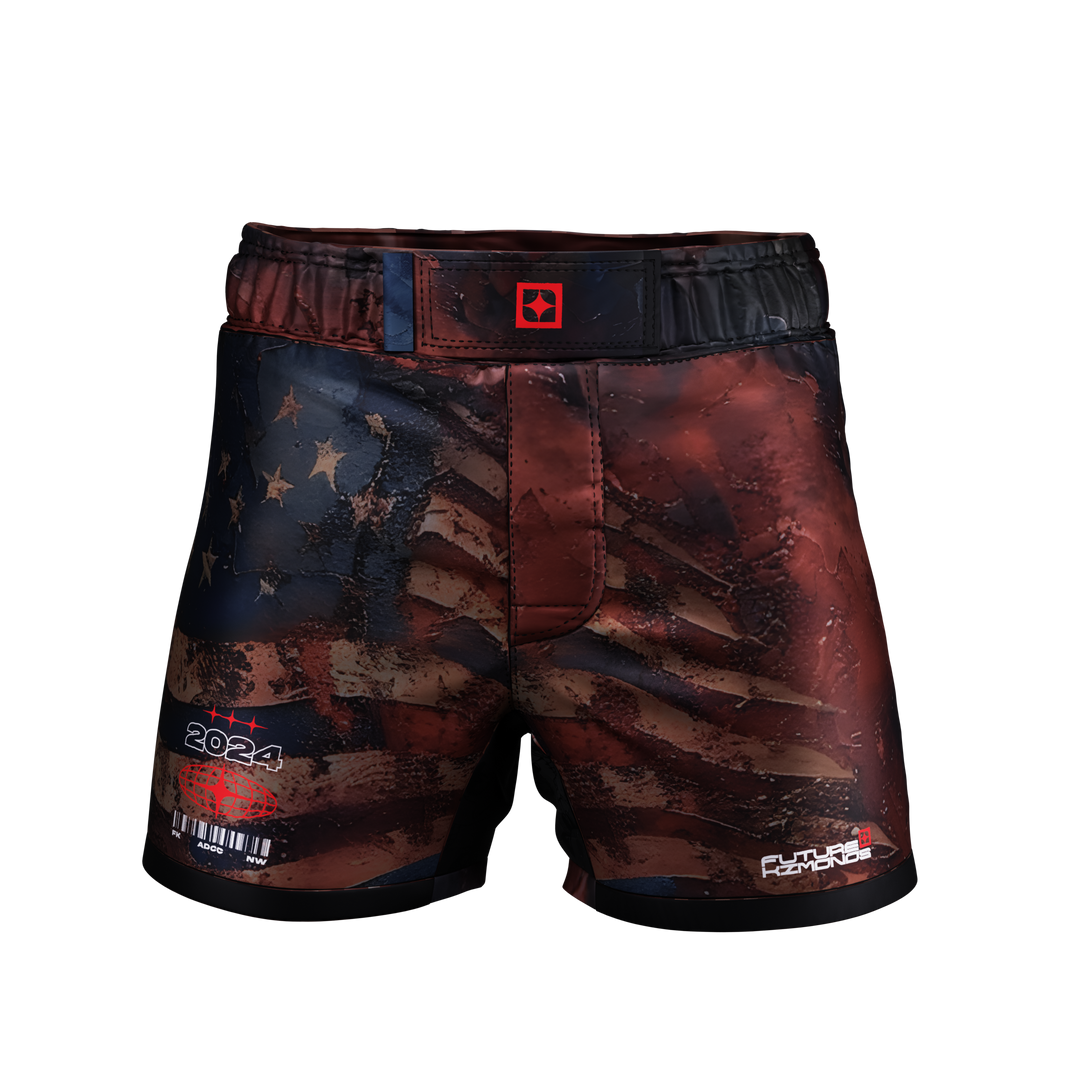
No-Gi Competition Rules — Why It Matters
If you’re planning to compete, this section is non-negotiable. The IBJJF no-gi ruleset (and most NAGA, Grappling Industries, and ADCC affiliate events) requires shorts that meet a specific spec:
- No pockets — internal or external
- No zippers, buttons, exposed metal, or rivets
- Cover the upper thigh but stop above the knee
- Elastic or compression fit that doesn’t slide during the match
- No drawstrings that could be grabbed as a grip
Board shorts fail the no-pocket rule immediately. Many also have decorative grommets or metal eyelets that disqualify them at the bullpen check. Showing up to a sanctioned tournament in board shorts means changing into borrowed shorts at the venue or forfeiting your match. Don’t risk it — competition-legal fight shorts cost less than your entry fee.
Cost and Durability — What You Actually Pay Per Roll
A $25 pair of board shorts that splits after a month of training costs you about a dollar per session. A $65 pair of fight shorts that survives 200 sessions costs you 32 cents per session. The cost-per-roll math heavily favors purpose-built shorts.
Mid-tier fight shorts run $40 to $55 and last 1 to 2 years of regular training. Premium fight shorts run $70 to $95 and last 3 to 4 years. Both categories outlast board shorts on a per-roll basis by a wide margin, and the premium pair is usually still the cheaper option long-term.
When Board Shorts Actually Work for BJJ
Board shorts aren’t useless. There’s a narrow case where they make sense and it’s worth being honest about.
Open Mat Drilling, Not Live Rolling
If you’re drilling positions at half-speed with a steady partner, board shorts can survive. The failure points show up under load — full-speed scrambles, hard guard passes, sprawl-to-shoot transitions. Slow technical drilling doesn’t stress the seams or the closure.
Beach BJJ and Outdoor Training
Some camps run sand sessions or oceanside training. Here board shorts are actually better — they’re built for salt water and sand exposure, while fight short Velcro picks up sand grains and stops gripping cleanly. For a once-a-month beach session, keep a pair of cheap board shorts in the bag.
Hot Climate Open Mats
Lightweight board shorts breathe better than tight fight shorts for casual hot-climate sessions where you’re flow-rolling instead of going hard. A 90-degree open mat in summer where everyone is moving at 40% is the rare case where board shorts can edge out fight shorts on comfort.
How to Choose Your First Pair of Fight Shorts
If you’re buying fight shorts for the first time, check these specs in order before you swipe.
Closure System
Look for a wide Velcro flap plus an internal drawstring — both, not just one. Velcro alone loosens over time and after about 50 washes. Drawstring alone unties under live grappling pressure.
Stretch Panel Location
The crotch gusset is the most important panel. Side stretch panels are a bonus. If a brand doesn’t mention a gusset or doesn’t show the inseam with a contrasting panel in their product photos, that’s woven polyester and it will split.
Inseam Length
For BJJ, 7 to 9 inches is the sweet spot. Shorter than 7 inches and they ride up during inversions. Longer than 9 inches and they bunch behind the knee during deep half and butterfly guard work.
Waistband Width
A 2-inch-plus waistband distributes pressure across the hip and stays in place. Narrow 1-inch waistbands cut into the hip during side control bottom and roll over on themselves under load.
Fit Around the Thighs
Tight enough not to flap during inversions, loose enough not to restrict deep squats. If you can’t squat to depth in the dressing room, they’ll restrict your shrimp escape on the mat.
Brands That Show Up at ADCC and IBJJF Events
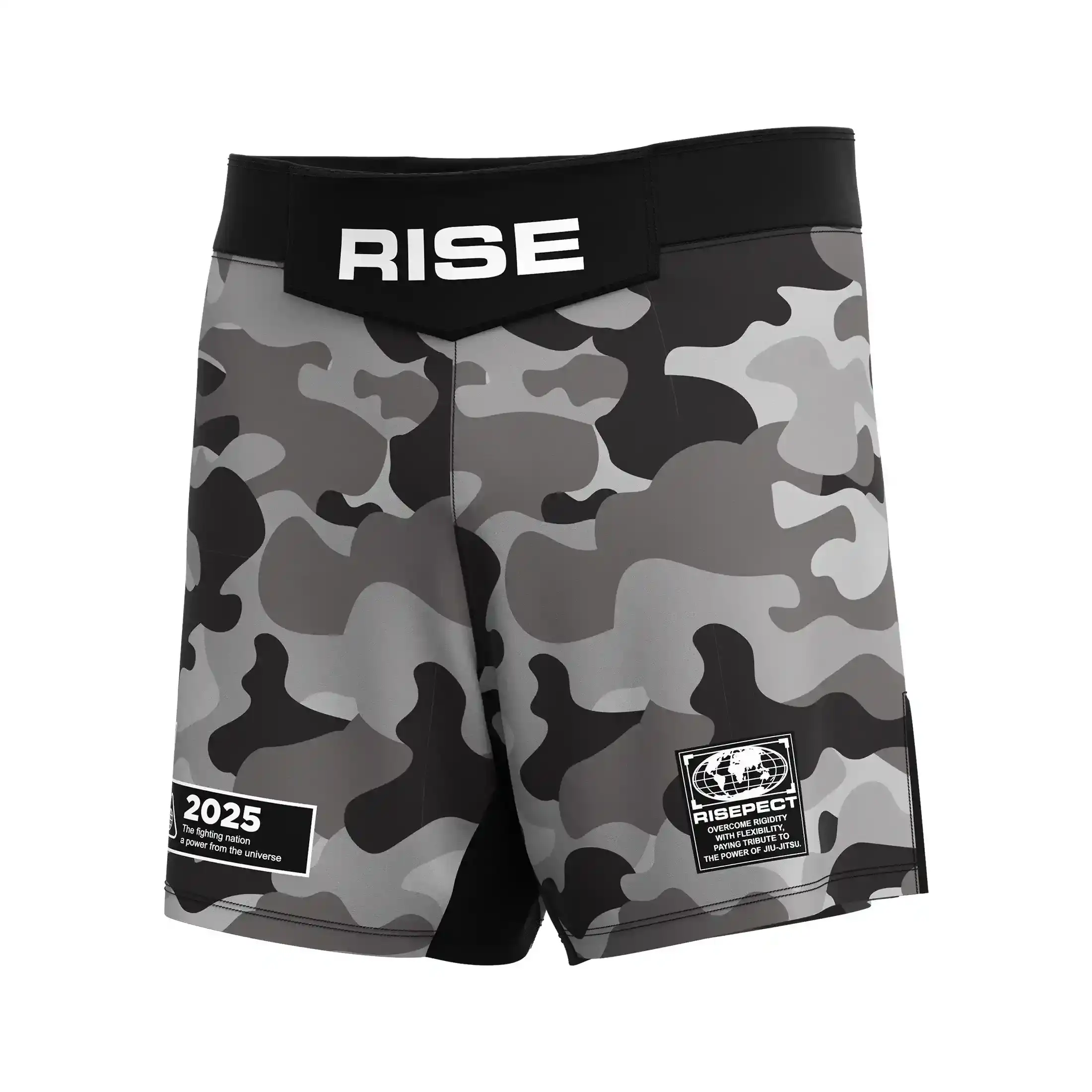
The fight short market has consolidated around a few reliable makers. Without picking a winner, here are the brands consistently seen at ADCC, EBI, and IBJJF no-gi events:
- Hayabusa — premium, durable, a Kasai-class no-gi staple
- Tatami Fightwear — wide range, value to premium, Europe-based
- Sanabul — entry-level price, surprisingly durable, popular with new grapplers
- Anthem Athletics — mid-range, generous cut for bigger thighs
- Combat Corner — pro fight shorts that also show up in BJJ rooms
- Shoyoroll — premium no-gi line, drops in limited runs
Avoid generic marketplace brands that don’t list stretch panel locations or fabric blends. The lack of detail is the giveaway — they’re cheap board shorts marketed as fight shorts, sold to beginners who don’t know what to look for yet.
Caring for Fight Shorts So They Last
Treat them right and a $60 pair lasts three years. Treat them wrong and the spandex dies in six months.
Wash cold, inside out, with the Velcro closed — open Velcro snags everything else in the load and shreds the loop side. Skip the dryer — heat destroys the spandex in the gusset and turns the four-way stretch into a torn ribbon. Air-dry flat or hang. Don’t bleach. Don’t iron the printed graphics or you’ll lift the ink off the panel.
Rotate three pairs minimum if you train four times a week. Letting the elastic recover between sessions doubles the lifespan of the waistband and keeps the crotch panel from going slack.
The Bottom Line
Board shorts and fight shorts look similar on the rack and feel similar in the store. On the mat, they aren’t even in the same category. Board shorts are built for waves; fight shorts are built for grappling. The pocket-catching, seam-splitting, drawstring-untying problems board shorts have aren’t theoretical — every no-gi room has seen them happen, usually mid-roll, usually with everyone watching.
If you’re training no-gi BJJ regularly, fight shorts are the only purpose-built option. Pick a mid-tier pair from a brand that competes, check the stretch panel and closure system, and you’ll outlast the next five pairs of board shorts your training partners burn through.
Sources
- IBJJF — official rulebook and no-gi uniform requirements
- ADCC Submission Wrestling World Federation
- FloGrappling — event coverage and athlete gear references
- Amazon search: BJJ fight shorts
Browse our top-rated rashguards and no-gi gear at the RashguardGuy shop →