Straight Jacket No-Gi: 7 Keys to Back Control
Straight jacket no-gi back control traps both arms with a wrist grip and a leg lock. The 7-key system Danaher’s gym uses to set up the rear naked choke.
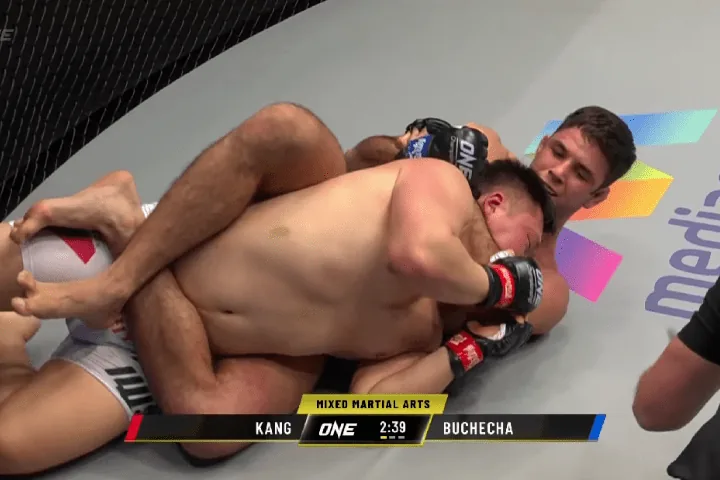
Straight jacket no-gi back control traps both arms with a wrist grip and a leg lock. The 7-key system Danaher’s gym uses to set up the rear naked choke.
The anaconda choke is a front headlock submission where you thread your arm over the opponent’s arm and under their chin, lock a bicep grip, and roll to compress both carotid arteries. In no-gi, the five most reliable entries are the snap-down, arm drag, leg staple, turtle top, and the D’arce-to-anaconda chain when the first…
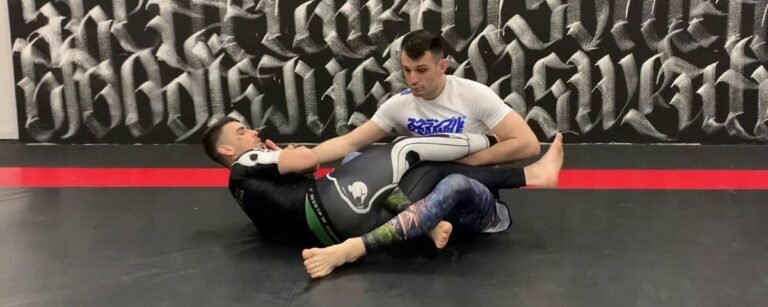
The saddle position (411/honey hole/inside sankaku) is the most dominant leg-lock control position in modern no-gi. Here are 3 real entries, the control details that make it work, and the finishes it opens up.
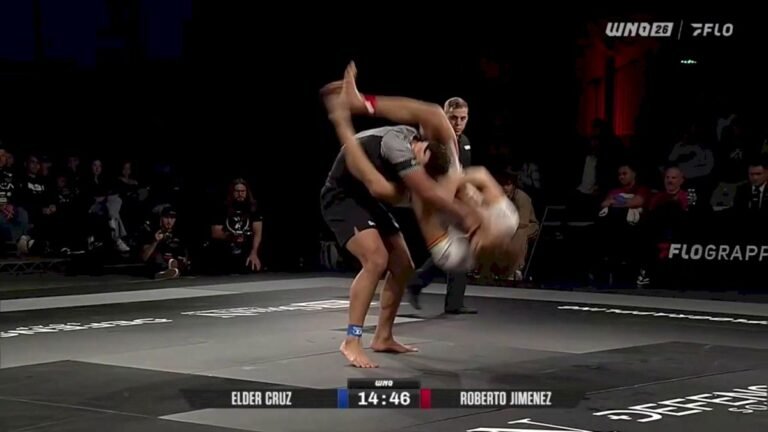
The arm bar is the most finished submission in no-gi grappling — it works from closed guard, mount, back control, and mid-scramble. The seven setups below cover the full range: from the closed guard fundamental to the flying arm bar that Roberto Jimenez used to win at WNO 26 in 16 seconds. No submission has…
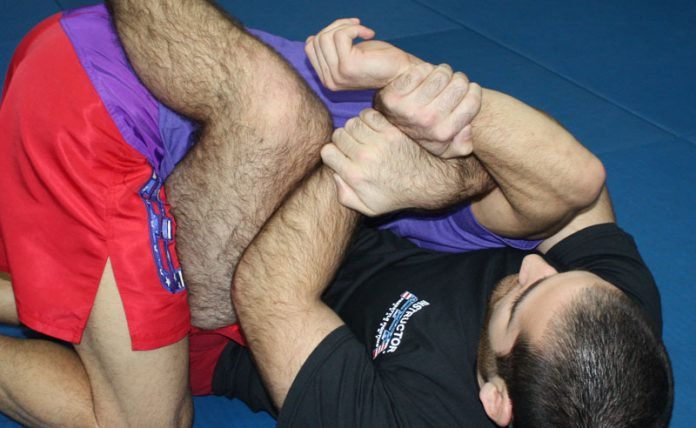
Quick Answer: The kimura trap is a back control system built around securing a figure-four grip on your opponent’s arm and using it to threaten multiple submissions simultaneously. From the kimura trap position, you can finish the kimura, transition to a back triangle, roll to the turtle for a standing kimura, or sweep when your…
Quick Answer: The body triangle in no-gi is a back control variation where you replace one hook with a leg triangle locked around your opponent’s torso. It eliminates the most common back escape (rolling to the free hook side), forces a constant rib squeeze that drains energy, and sets up the rear naked choke more…
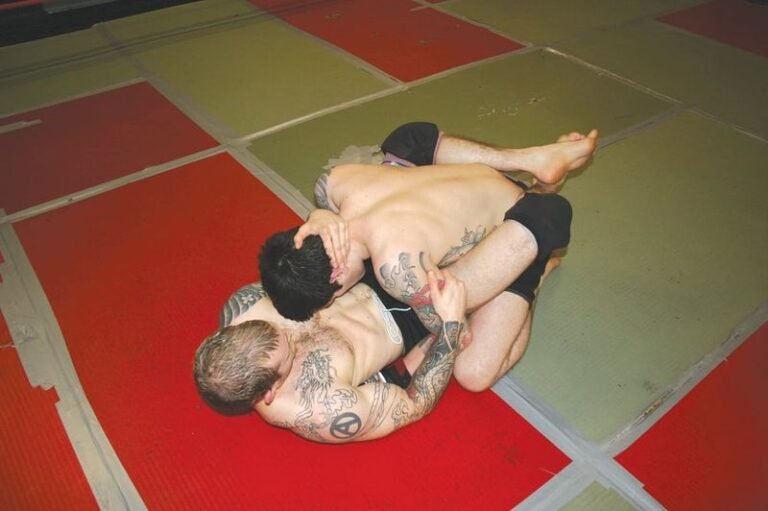
Quick Answer: The gogoplata is a shin choke executed from the bottom guard position — you place your shin across your opponent’s throat and pull their head forward while driving the shin in. The primary entry is through rubber guard (Mission Control to New York), and it works best in no-gi because the flexibility control…
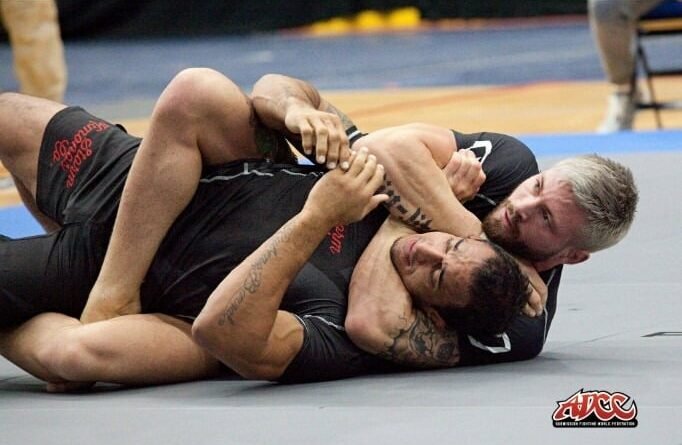
The crooked head lock is one of the most underrated submissions in no-gi BJJ. Also called the arm-in guillotine or Marcelotine, it forces your opponent to tap with a brutal combination of neck crank and blood choke — and it works at every level of competition, from local tournaments to the ADCC world stage. If…
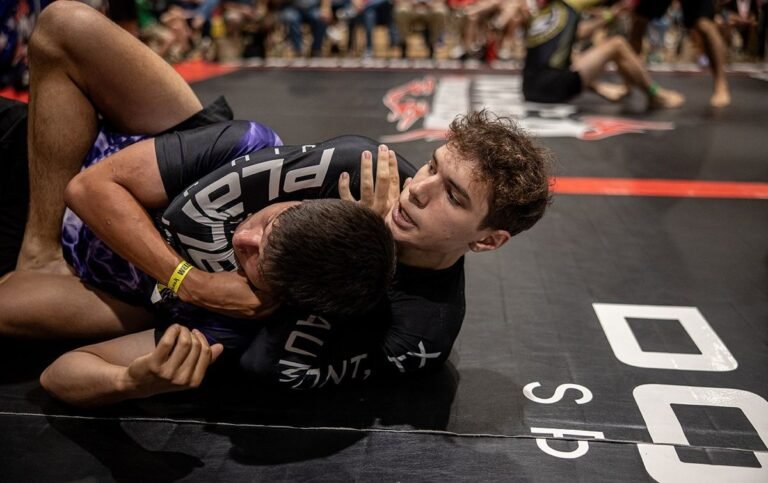
Quick Answer: The rubber guard is a no-gi guard system built around one core idea: use your leg to break and hold your opponent’s posture, then attack with omoplatas, triangles, and the gogoplata. It requires hip flexibility to use at full depth, but the Mission Control entry point is reachable for most grapplers who train…
Quick Answer: The japanese necktie no-gi is a front headlock submission that combines a blood choke with a neck crank component. Thread one arm under your opponent’s armpit and around their neck, lock a gable grip, hook their far leg, then drop to your side and press your chest onto the back of their head….
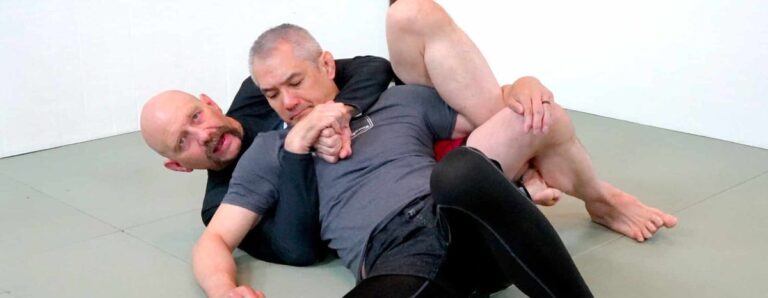
The crucifix no gi traps both arms so your opponent can’t defend. Learn the turtle entry, grips, 7 submissions, and how to escape.