
Mouthguard Recommendations for BJJ: A No-Gi Buyer’s Reality Check
You can pass guard with a black eye. You can pull guard with a tweaked neck. You cannot roll with a fractured front tooth. A mouthguard is the cheapest insurance in your gear bag, and for no-gi grapplers — where heads collide on level changes, knees come up off scrambles, and clinches turn into accidental headbutts — it is the one piece of kit that pays for itself in a single hard training night.
This is a buyer’s reality check on mouthguards for BJJ. We will cover the three categories you actually see on the mats, the material thickness that survives no-gi rolling, the replacement timeline most grapplers ignore, and a short list of what to look for when you walk into a sports store or open a search tab.
Why No-Gi Grapplers Need a Mouthguard More Than Most
In a gi class, grip fighting tends to be slower and more vertical, and your face is rarely the contact surface. In no-gi you live in the clinch, under hooks, on level changes, and in scrambles where heads frequently knock together. Front headlocks, snap-downs, doubles into a sprawl — the angles that win no-gi matches are the same angles that crash your teeth into someone else’s skull.
The injury data backs this up. Research on combat sports dental trauma shows that grappling disciplines account for a meaningful share of broken anterior teeth, particularly during reactive movements where the jaw is not braced.
A mouthguard does three jobs at once. It cushions direct impact on the teeth. It separates your upper and lower jaws so a sudden hit transfers force through the guard instead of jamming the mandible into the skull base, which is one of the mechanisms behind some concussions. And it stops you from clamping down on your own tongue or cheek when a partner’s knee lands on the chin during a scramble.
The Three Mouthguard Categories You Actually See on the Mats
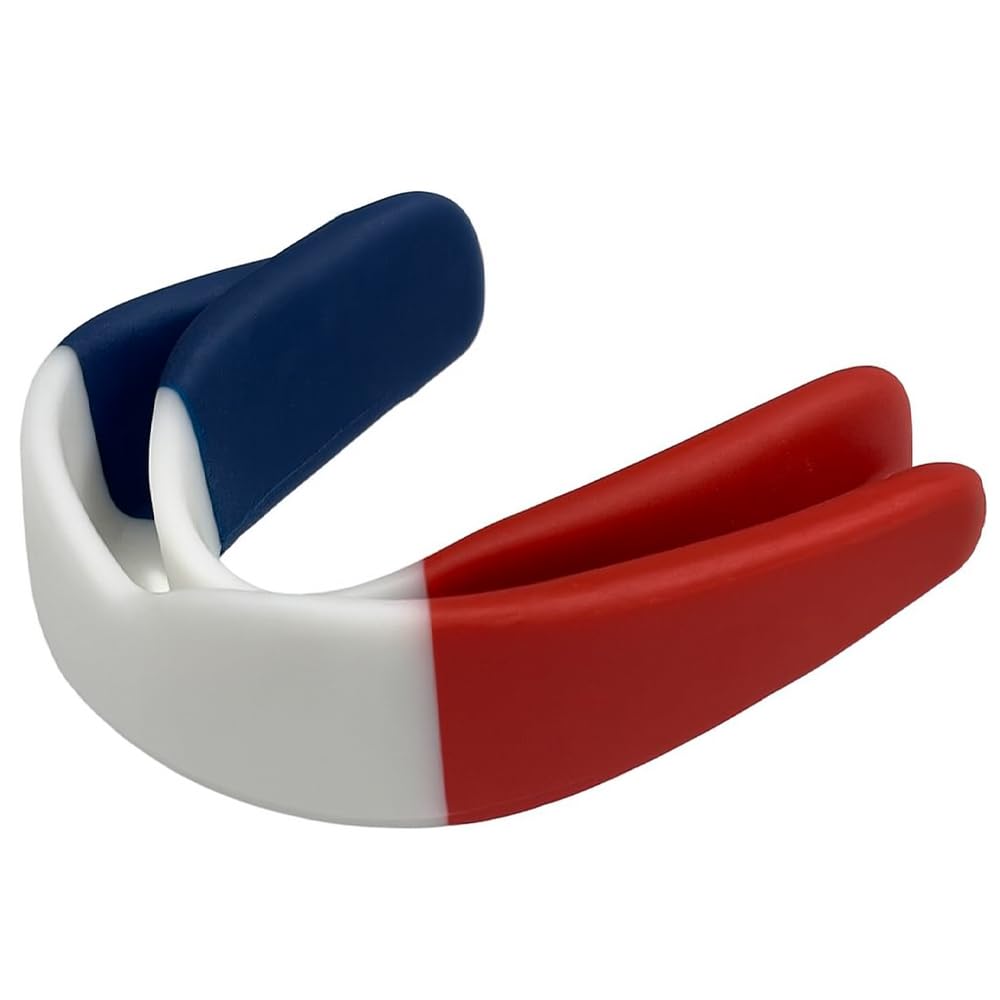
Walk into any no-gi room and you will see roughly three types of mouthguards. Each has a place. Each has a trade-off.
Stock Mouthguards
These are the pre-formed plastic blocks you find at the bottom of a five-dollar bin. They come in a single shape, you bite down, and that is your fit. The plastic is hard, the fit is generic, and breathing through them is unpleasant. For a one-time competition where you forgot your real guard at home, stock will technically meet the rules. For training? Skip them entirely. They fall out, they do not hold a bite, and the cheap plastic cracks within weeks.

Boil-and-Bite Mouthguards
This is the workhorse category for ninety percent of recreational grapplers. You drop the guard in hot water, the thermoplastic softens, you bite down on it while it cools, and the material molds to your teeth. Good ones get close to the fit of a custom guard for a fraction of the price. Bad ones are barely better than stock.
The differentiators inside this category are material thickness, dual-layer construction (a softer inner shell against the teeth, a denser outer shell for impact), and breathing channels that let you suck air through your mouth during hard rounds. Single-layer thin guards feel comfortable on day one and split during a hard scramble in week three.
Custom Mouthguards
A dentist takes an impression, sends it to a lab, and the lab produces a guard built around your exact bite. The fit is precise, the retention is excellent, and the protection is the best you can buy. The price tag is the catch — expect to pay several hundred dollars in most markets, more if you want logos or color matching.
For competitors training six days a week, or anyone with existing dental work like caps, implants, or orthodontics, a custom guard is genuinely the right answer. For the average hobbyist doing three classes a week, a top-tier boil-and-bite gets you eighty percent of the protection at ten percent of the cost.
What to Look For in a No-Gi Mouthguard

A few specifications matter more than marketing copy.
- Material thickness. Look for guards in the 4 to 5 millimeter range on the outer biting surface. Thinner feels nicer, but no-gi rolling pounds the molars and a thin guard wears flat fast.
- Dual-layer construction. A softer inner gel against the teeth keeps the fit comfortable and aids retention. A denser outer shell absorbs impact. Single-layer guards are cheaper for a reason.
- Breathing channels. The single biggest complaint with mouthguards in grappling is that they make hard rounds feel like a sauna. A guard with a sculpted front channel and reduced bulk in the palate lets you breathe through your mouth during scrambles.
- No strap. Boxing and football guards often have a strap to secure them to a helmet. You do not need a strap for BJJ — there is no helmet to attach to. Strapless guards are universal for no-gi.
- Latex-free and BPA-free. Standard now from any serious brand, but worth confirming. You are putting this in your mouth for three hours a week.
What to Actually Buy
These are categories rather than single-product endorsements. Stock changes, regional availability varies, and the right guard for your bite is not the right guard for your training partner’s. Use the search links to find the current options in your market.

For most grapplers — a dual-layer boil-and-bite at the 25 to 40 dollar tier. This is the sweet spot. Brands in this range have invested in proper thermoplastic, breathing channels, and case design. You can find solid options at any major sports retailer or general online marketplace.
For hard competitors — a custom-fit guard from a sports dentist. The investment pays off in a guard that lasts longer and protects existing dental work. Ask the dentist about their lab and material specifications before you commit, and confirm they have built mouthguards for combat sports specifically.
For backups and travel — keep a spare boil-and-bite in your bag. A second guard is non-negotiable if you compete. You will lose, forget, or destroy your primary at some point, and the spare is cheaper than a missed match.
The Six-Month Rule Most Grapplers Ignore
Walk into a no-gi room and ask how old people’s mouthguards are. The honest answers will surprise you. Two years. Three years. “I think since I started?”
A boil-and-bite mouthguard is a consumable item. The thermoplastic loses its shape under repeated heat (your mouth), pressure (your bite), and bacterial load. After roughly six months of regular use, the protective material is measurably degraded, the fit has loosened, and the antimicrobial coating that many guards ship with has worn off.
Replace your boil-and-bite every six to twelve months depending on how often you train and how hard you grind your teeth in rolls. Custom guards last longer — typically two to three years — but they also need replacement when the fit drifts or the lab material starts to delaminate.

Fit and Care: What Actually Works
A mouthguard you do not wear is worthless. The fit and the care routine determine whether it stays in your bag or in your mouth.
- Reboil if the fit drifts. Most boil-and-bites can be reboiled once or twice if the fit loosens. Follow the package instructions exactly — overheating turns the guard into mush.
- Rinse after every session. Cold water, every time, immediately after rolling. The bacterial load in your mouth combined with sweat and saliva is what makes old mouthguards smell.
- Use the case. The ventilated plastic case that comes with most guards is not optional. Throwing a wet mouthguard into a gym bag is how you grow a science experiment.
- Brush it weekly. Soft-bristle toothbrush, mild dish soap or unflavored mouthwash. Avoid bleach — it degrades the thermoplastic.
- Replace at the first crack or odor. A guard with visible cracks is no longer protecting your teeth. A guard you cannot get clean is colonized.
Common Mistakes That Cost You Teeth

The pattern repeats in every gym.
Wearing a guard that does not fit. If your guard moves when you talk or breathe, it is not fitted. Reboil it or replace it. A loose guard is barely better than no guard at all because it will pop free at exactly the wrong moment.
Skipping it during “light” rolls. Light rolls produce most of the dental injuries because nobody is bracing. A knee from a relaxed partner cracks a tooth just as efficiently as a knee from a competitor — more efficiently, because the partner is not expecting contact and the recipient is not protecting.
Buying for color instead of construction. A purple guard with a smiling shark on the front is the same plastic as a clear one. Spend the money on dual-layer construction and breathing channels, not graphics.
Trusting the case to sanitize the guard. The case ventilates. It does not clean. Brush the guard weekly regardless of how diligent you are about the case, and replace the case itself every six months when you replace the guard.
When to Upgrade to a Custom Guard

Three signals say it is time for a dentist-made custom guard.
You compete frequently and a primary guard is wearing through every two or three months. The cumulative cost of replacements is approaching custom territory, and the consistency of a single well-fitted piece is worth more than the rotation of boil-and-bites.
You have meaningful existing dental work — implants, caps, bridges, orthodontics. A custom guard is built to protect specifically those surfaces, and the impression process accounts for them in a way that a thermoplastic mold cannot.
Your bite is unusual enough that boil-and-bites consistently fit badly. Deep overbites, narrow palates, and post-orthodontic bites often need a custom build to retain properly during a hard roll.
For everyone else, a thirty-dollar dual-layer boil-and-bite, replaced on schedule and cleaned properly, is the right answer.
The Bottom Line
The cheapest tooth costs more than the most expensive mouthguard. Pick a dual-layer boil-and-bite in the 25 to 40 dollar range, replace it on a six-month rhythm, rinse it after every session, and store it in its case. If you compete or have dental work, talk to a sports dentist about a custom build. Either way, the math is brutal: a mouthguard you actually wear beats a perfect mouthguard you forgot in the locker.
Sources
- Wikipedia — Mouthguard: overview of mouthguard types, materials, and history.
- American Dental Association: clinical guidance on mouthguard use and dental injury prevention.
- PubMed: peer-reviewed research on dental injuries in combat sports.
- Amazon — BJJ mouthguards: current available dual-layer options.
Browse our top-rated rashguards and no-gi gear at the RashguardGuy shop →
Shop on Amazon
BJJ Gi on Amazon →
As an Amazon Associate we earn from qualifying purchases.