Long-Session Snorkeling Rashguards: How Thermal Loss, Salt, and Sun Compound Over Hours
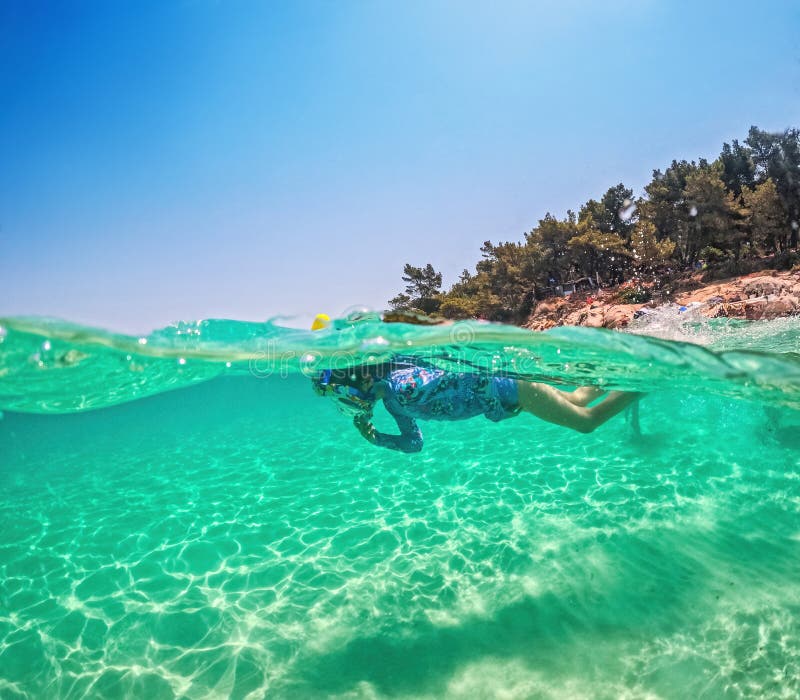
The question “what’s the best rashguard for snorkeling” usually gets answered as if the session is thirty minutes long. Buy this one, the UPF is 50+, the sleeves are long, done. That advice holds for a quick reef peek before lunch. It falls apart the moment you spend four hours drifting over a reef on a calm tropical morning, or six hours floating between mooring lines on a liveaboard day. Long-session snorkeling is a different physical event from a training round, and most grapplers crossing over from BJJ to the water learn this the uncomfortable way — sunburn through the fabric, salt rash under the armpits, a chill that sets in two hours from shore.
This guide walks through what actually changes after hour two in the water. The thermal physics, the salt chemistry, the UV decay curve, and the seam mechanics that determine which rashguard finishes the day comfortable and which one becomes a salty, sagging punishment. If you already own a stack of no-gi training rashguards and you’re trying to figure out which ones will hold up for sustained snorkeling — or whether you need something purpose-built — the answer lives in these four compounding variables.
Thermal Loss Compounds Faster Than the First Hour Suggests
Water conducts heat roughly twenty-five times more efficiently than air at the same temperature. A tropical lagoon sitting at 28°C (82°F) feels balmy when you first slip in, because it’s only four degrees below your skin temperature. The first hour is fine. Your body’s metabolic output keeps pace with the conductive loss, and the rashguard’s role is mostly UV protection plus a thin convective barrier.
What changes around the ninety-minute mark is your activity level. Once you stop kicking aggressively and start drifting, watching, photographing — the calorie burn drops while the heat loss continues. Core temperature ticks down a fraction of a degree. You don’t notice it as cold, exactly, just a gradual stiffening of the hands and a slight shiver after climbing out of the water. By hour three, that mild deficit becomes meaningful, and the fabric weight of your rashguard becomes the single biggest factor in whether you can keep snorkeling comfortably.
This is where typical BJJ training rashguards — built for breathability, weighing 180 to 220 grams per square meter — start to underperform. They were designed to wick sweat and allow heat to escape during a hard six-minute round. In water, that breathability translates to negligible thermal retention. A snorkeling-oriented rashguard runs heavier, often in the 240 to 280 gsm range, sometimes with a thin fleece-backed interior layer. The extra weight is small in the gym but consequential after two hours in the water.
Saltwater Chemistry Changes the Fabric You Trained In
Polyester and nylon — the two dominant rashguard fabrics — both tolerate seawater far better than cotton, but they don’t tolerate it equally. Polyester is functionally inert to salt and is the preferred fiber for long-session snorkeling. Nylon, by contrast, absorbs water more readily (around 4% of its weight versus polyester’s 0.4%) and becomes meaningfully heavier when saturated. After two hours of full saturation in saltwater, a nylon-dominant rashguard can carry two to three hundred extra grams of water weight, which translates directly into shoulder fatigue when you’re swimming back to the boat against a current.
Spandex content is the other variable. Most rashguards run 80/20 or 85/15 polyester-to-spandex blends for stretch. Spandex degrades under prolonged saltwater and UV exposure faster than the base polyester. The first sign is a slight loss of recovery — the cuffs no longer snap back as tightly, the hem starts to ride up. After ten to fifteen long sessions, a high-spandex rashguard will visibly bag at the lower back and underarms. For sustained snorkeling, lower spandex content (10% or under) trades some training-style stretch for a longer functional life in salt.
The saltwater layer between fabric and skin also creates an abrasion environment. Every kick, every shoulder rotation grinds dissolved salt crystals against the skin at the cuffs, neckline, and armpits. The rashguards that hold up best for snorkeling either run flat seams in those high-friction zones or use a slightly looser cut at the armpit specifically to reduce that grinding contact.
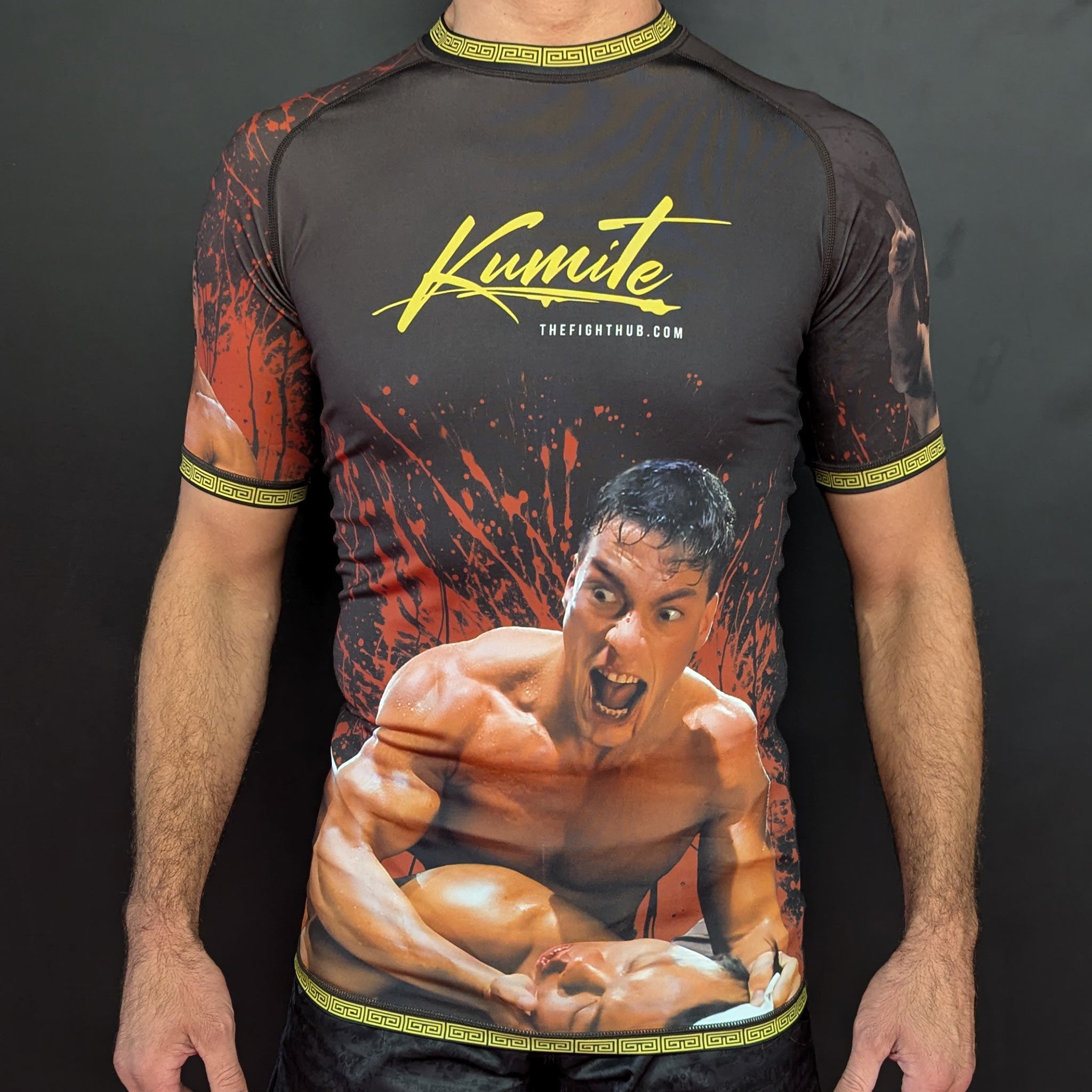
Sun Exposure: The UPF Number Lies After Two Hours
A UPF 50+ rating means the fabric, in laboratory conditions, blocks at least 98% of UV radiation. That rating is measured on dry, new fabric, stretched to a standardized degree. Three things change that picture during long-session snorkeling: the fabric is wet, the fabric is stretched over a moving body, and the cumulative UV dose over four hours is enormous compared to a brief beach walk.
Wet polyester loses some UPF protection — exactly how much depends on the fabric’s weight and weave density. Lightweight training fabrics drop more, sometimes by 30 to 40% when fully saturated, because the water fills the interstitial spaces and acts as a UV transmission medium. Heavier snorkel-oriented fabrics with tighter weaves and often a titanium-dioxide or zinc-oxide treatment hold their UPF rating much closer to the dry-state spec. This is why a thin training rashguard can still produce a faint pink across the shoulders after a long session, even though the label promises full protection.
Stretch matters too. When fabric is pulled taut over the deltoids during arm strokes, the weave opens and UPF drops. This is one reason snorkel-specific rashguards often run slightly looser through the shoulders than a competition-fit no-gi top. The compression that helps you move on the mat works against you in the water.
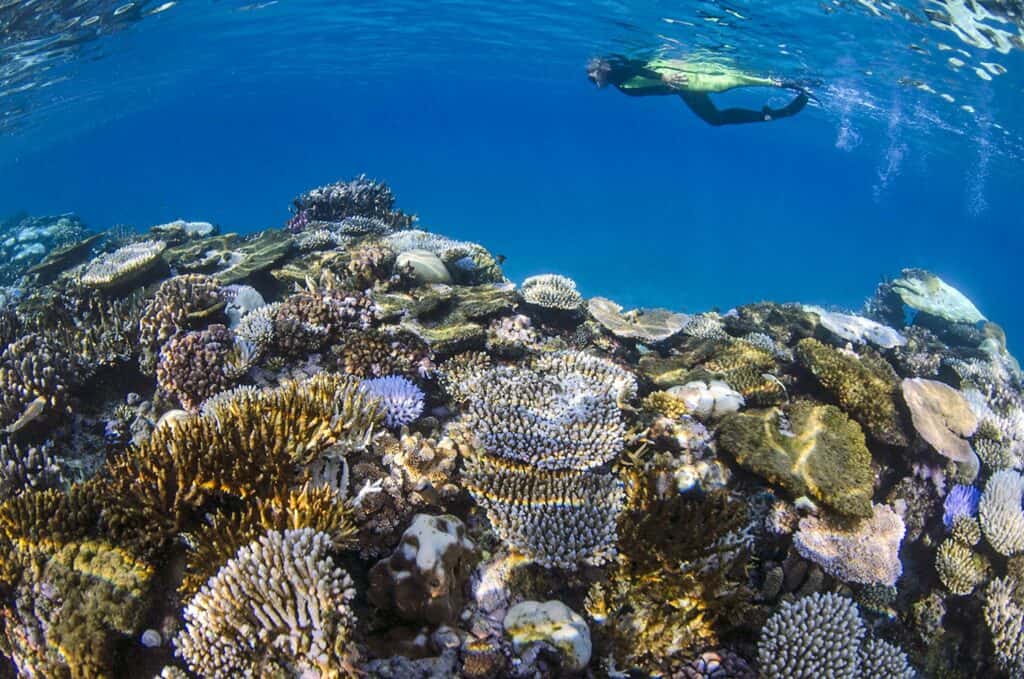
Seam Construction Becomes the Failure Point
On the mat, a seam either holds or it doesn’t, and most training rashguards last hundreds of sessions before any seam concern emerges. In the water, seam architecture becomes the primary comfort variable long before it becomes a durability variable. Overlock seams — the standard stitching where the seam allowance sits on the inside of the garment — create a small raised ridge that, in dry conditions, you stop noticing within minutes. Wet, salted, and rubbed against skin for three hours, that same ridge becomes a chafing source.
Flatlock vs Overlock for Sustained Water Use
Flatlock seams interlock the fabric edges side-by-side rather than stacking them, producing a nearly flat join with no raised ridge against the skin. For snorkeling, flatlock seams at the shoulders, underarms, and side panels are close to non-negotiable for sessions over two hours. Many no-gi rashguards already use flatlock at high-stress zones for grappling reasons — the same construction transfers well to water use.
Bonded seams (heat-welded rather than stitched) take this further, eliminating the seam profile almost entirely. They’re more common on dedicated swimwear and surf rashguards than on BJJ-marketed pieces. The trade-off is that bonded seams can fail more dramatically when they do go — peeling apart rather than slowly fraying — so they’re a better fit for purpose-built snorkel garments than crossover training tops.
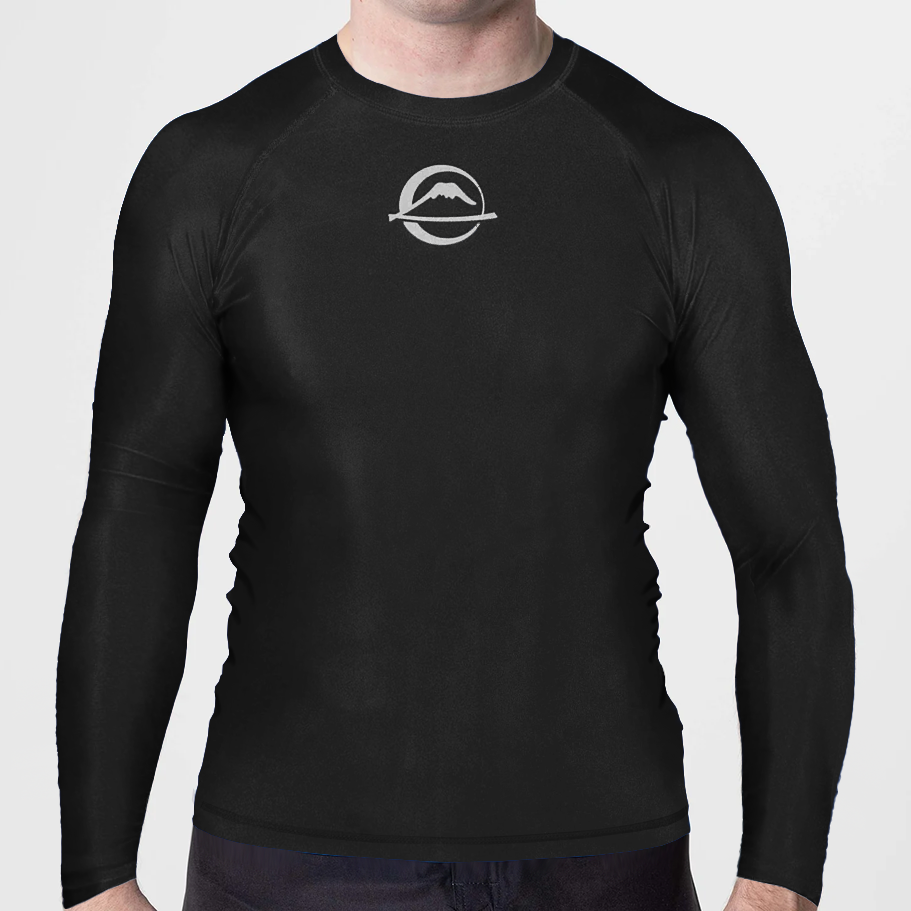
Fit Considerations: Sustained Float vs. Training Compression
A no-gi rashguard fits like compression gear because compression serves a grappling purpose — minimal grippable fabric, muscle support during explosive movement, a barrier against the opponent’s skin and the mat. None of those functions apply to snorkeling. The compression fit that feels right on the mat can actively work against you in the water.
Tight rashguards restrict the small breathing expansions of the diaphragm. On the mat you’re breathing hard against the compression and barely notice. Snorkeling is mostly slow, deliberate diaphragmatic breathing through a tube — and a compression top that limits chest expansion will leave you feeling slightly winded an hour in. Snorkel-oriented rashguards run a relaxed athletic fit through the torso, tighter at the cuffs and neckline (to reduce flush-in of cold water and salt) but easier through the ribcage.
Sleeve length is the other meaningful difference. Standard long-sleeve training rashguards end at the wrist. Snorkel-specific versions often include thumb loops or extended cuffs that cover the back of the hand — the most commonly forgotten sunburn zone for snorkelers who spend hours arms-extended at the surface.
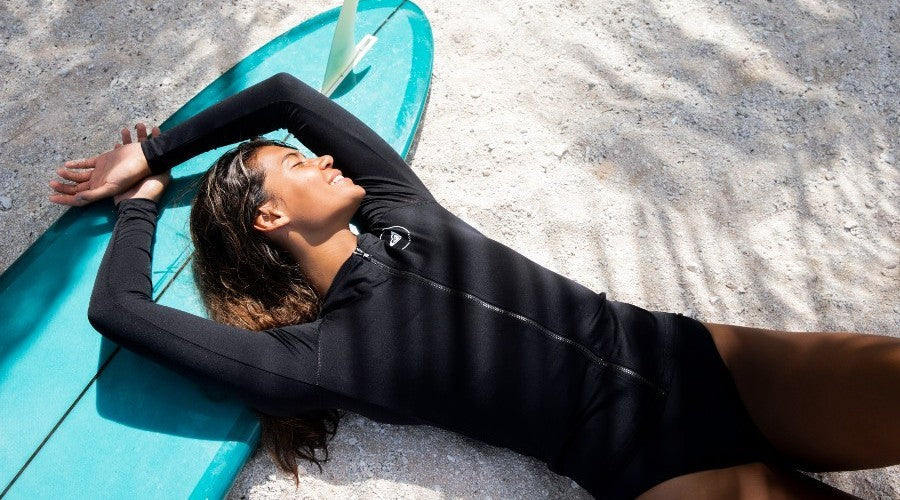
Choosing a Rashguard That Survives the Full Session
If you only snorkel occasionally and your sessions stay under ninety minutes, a heavier no-gi training rashguard with flatlock seams will serve you well enough. The fabric will dry on the boat, the salt will rinse out at home, and you’ll get years out of it. The crossover use is real and most BJJ rashguards in the 220 gsm range handle short snorkels without issue.
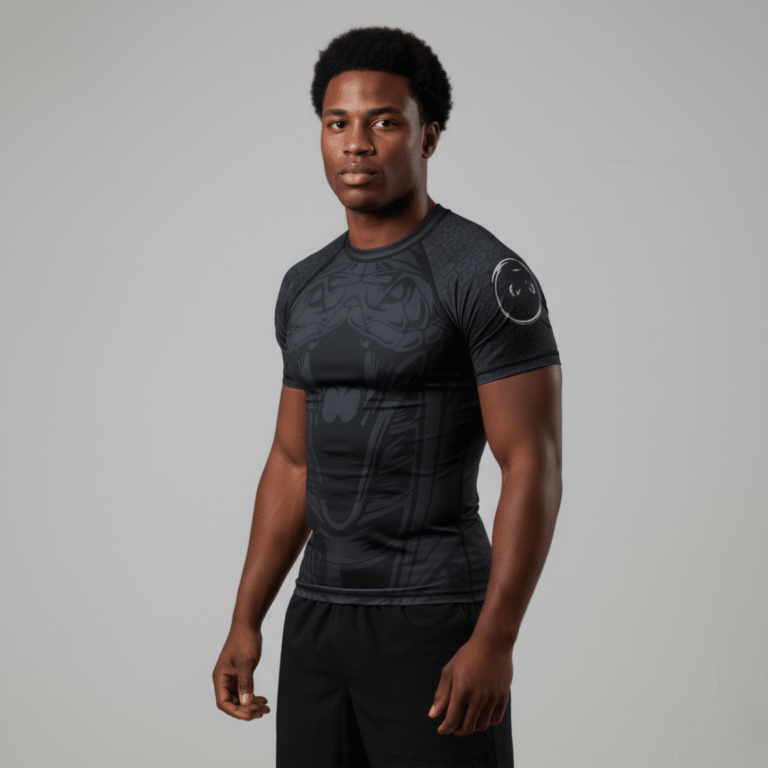
If you’re a regular long-session snorkeler — multi-hour reef days, liveaboards, anything where you’re in the water for half the daylight hours — the calculus shifts. A purpose-built snorkeling rashguard with these features earns its keep: polyester-dominant fabric over 240 gsm, low-spandex blend (10% or under), flatlock or bonded seams at high-friction zones, relaxed torso fit, extended cuffs or thumb loops, and a UPF 50+ rating verified by the brand’s testing data rather than a generic label claim.
The brands actively producing crossover gear that hits these specs include Patagonia (Capilene-derived weights), O’Neill (Reactor and Premium series), Xcel, and Roark for the surf-oriented side. From the BJJ direction, heavier-weight options from Hayabusa’s outdoor line and Tatami’s training tops in the 240+ gsm range translate reasonably to snorkeling. The key is checking the specific weight, fiber blend, and seam construction rather than buying on the rashguard label alone.
After the Session: Care That Extends Functional Life
Salt left in the fabric continues to abrade the fibers and accelerate spandex degradation between sessions. A long-session rashguard needs a thorough freshwater soak — not just a rinse — within a few hours of getting out of the water. Twenty minutes in a tub of cool freshwater pulls out the dissolved salt far better than the quick splash at the boat ramp shower. Hang to dry out of direct sunlight; the sun-exposure variable that matters during snorkeling matters again on the drying line.
Skip the fabric softener entirely. Softeners coat the fibers and reduce both UPF performance and the fabric’s wicking. A small amount of mild detergent every few washes is enough; the rest of the time, plain freshwater rinses are better for the gear than running it through a wash cycle. Done consistently, a quality snorkel-rated rashguard will hold its specs through a couple of hundred long sessions before the spandex finally surrenders and the fit goes loose.
Sources
- American Academy of Dermatology — UPF and sun-protective clothing guidance
- U.S. EPA SunWise Program — UV exposure science
- Wikipedia: Ultraviolet Protection Factor
- Wikipedia: Spandex — saltwater and UV degradation properties
- Long-sleeve UPF 50+ snorkeling rashguards on Amazon
Browse our top-rated rashguards and no-gi gear at the RashguardGuy shop →