Cauliflower Ear in No-Gi: How Ear Guards Actually Prevent the Damage
The injury is well-named but poorly understood. Most grapplers know cauliflower ear happens from “too much grinding” or “getting cranked in guillotines all night.” Fewer understand the actual sequence — vascular rupture, unchecked hematoma, perichondrial separation, cartilage necrosis, fibrous replacement — and fewer still can explain how an ear guard interrupts that sequence. That last part is the one worth knowing, because protection that misses the actual mechanism doesn’t prevent damage. It just makes you feel like you’re doing something.
How Cauliflower Ear Actually Develops
Cauliflower ear is an auricular hematoma: blood collects between the skin and the perichondrium, the thin membrane that wraps your ear cartilage and delivers its nutrient supply. When that blood isn’t drained or compressed quickly, the cartilage loses contact with the perichondrium, the cartilage cells die, and fibrous tissue fills in the space. The ear doesn’t change shape because you got hit hard enough to break something. It changes shape because the shear forces between skin and cartilage — repeated across enough rounds — tear small capillaries and let blood pool in a space with no natural drainage.
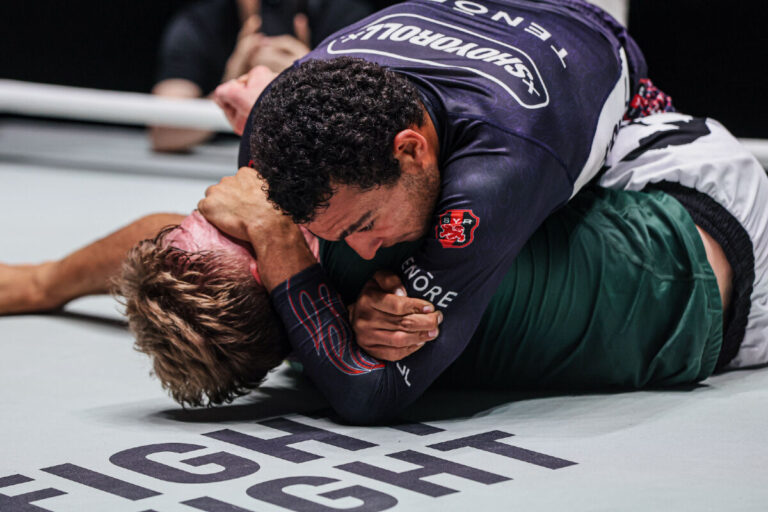
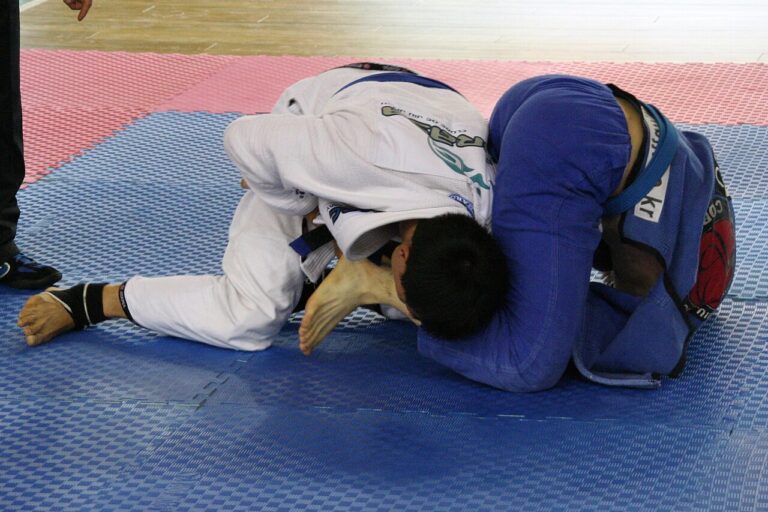
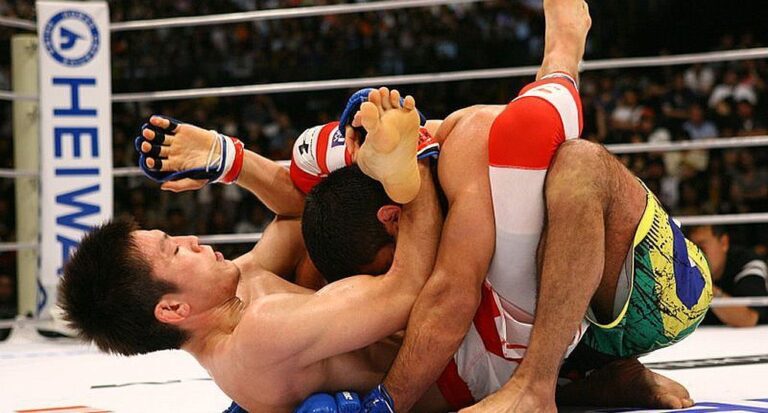
No-gi creates that shear force constantly. The turtle position, body triangles, over-under clinches, snap-down entries, guillotine defenses — all of them drag your ear across a training partner’s shoulder, collarbone, chest, or mat surface with sustained pressure. Without a collar or lapel to grip, wrestlers and no-gi grapplers use head position and friction as control tools. Your ear is in that friction zone every time your head is being directed.
A single session rarely does it. The damage accumulates across weeks of training, which is why experienced grapplers who’ve gone years without ear problems can suddenly develop a hematoma when they add a second sparring day or start wrestling more aggressively.
The Two Things Ear Guards Actually Do
Most gear reviews compare brands on comfort and durability. What they skip is what the guard is actually preventing — because the answer isn’t one thing, it’s two, and they work differently.
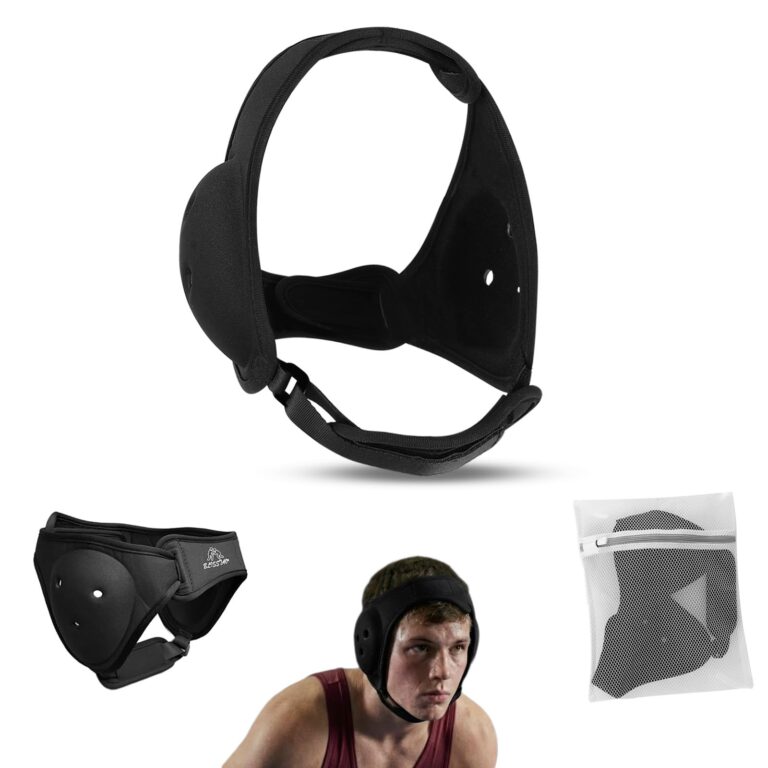
Friction absorption is the first mechanism. The guard’s outer surface — whether hard plastic, silicone, or padded neoprene — takes the shear force before it reaches your ear. When a training partner’s shoulder drags across your head during a snap-down, the guard surface moves with that friction rather than transmitting it through to the skin-cartilage interface. This is why surface texture matters more than most buyers expect. Smooth, rigid shells reduce friction transfer better than soft rubber, which can grip opponent surfaces and still transmit shear even when the guard stays in place.
Hematoma compression is the second mechanism, and it’s less intuitive. When a capillary does rupture — and it will, over enough rounds — the guard’s cupped shape creates inward pressure against the auricle that limits how much space opens up between the skin and the perichondrium. Blood still pools, but a compressed pool doesn’t separate the skin from cartilage far enough to compromise the cartilage’s nutrition. This is why fit determines effectiveness more than brand. A guard loose enough to shift during contact provides intermittent compression at best, and no compression when it matters most: during the exact scramble or clinch sequence that caused the rupture.
Which No-Gi Positions Create the Most Risk
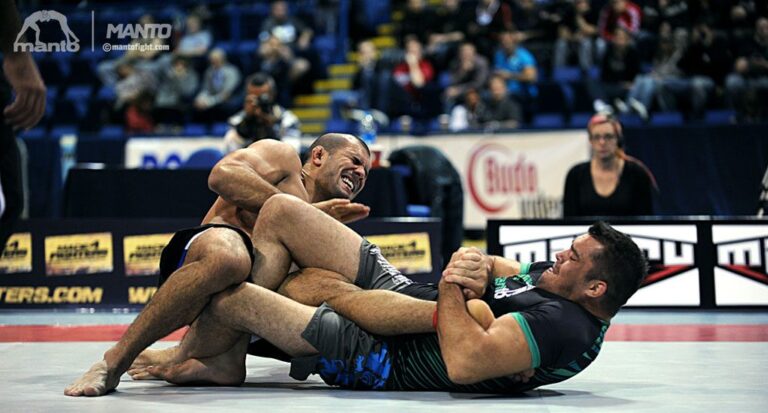
The guillotine defense is the most underestimated high-risk position. When you’re caught in a standing arm-in guillotine and driving into your opponent, your ear presses against their armpit or ribcage under significant pressure. The rotation you’re adding — trying to break the grip angle — creates sustained circular friction around a fixed point, which is the exact mechanism that tears capillaries. Five minutes of active guillotine defense across a single session generates more ear trauma than most grapplers recognize.
Turtle control is the second major risk zone. Being ridden from above means your partner’s chest sits on your ear every time they shift weight or attempt a turn-over. The ear is pinned between two surfaces with no escape path. Multiply that by six minutes of pressure and the cumulative force is substantial, even if it never felt like “contact” in the moment.
Snap-down to front headlock entries are the position most grapplers don’t account for until they’ve already developed swelling. The speed of the snap pulls your head into a sudden downward angle, and the top of the ear catches the forearm or wrist leading the snap with the momentum of the full movement. One snap per round means little. Forty minutes of wrestling with multiple snap attempts per match is a different calculation entirely.
The relationship between training volume and ear risk goes deeper than most grapplers realize — the positions above become dangerous primarily when they accumulate across sessions rather than in a single round.
Hard Shell vs. Soft Cup: Which Stops What
This distinction is worth understanding before you buy, because the two designs don’t protect against the same forces.
Hard-shell guards, adapted from wrestling designs, are built for impact absorption. The rigid cup deflects direct blows — accidental headbutts, elbow contact during scrambles, and the sudden collision forces of failed takedown attempts. If your primary concern is sudden-force trauma rather than sustained friction, a hard shell gives you more protection per impact. The tradeoff is that in tight clinch positions, the rigid cup creates pressure points that cause discomfort without improving protection against the grinding contact you’re actually dealing with.
Soft-cup guards — silicone or neoprene ear cups — are built for friction absorption in sustained contact. They conform to head shape, move with your head rather than against it, and stay lower-profile in tight clinch situations. They’re less effective at deflecting direct impact. No-gi training involves both types of contact, which is why dual-density guards — foam interior with a harder composite exterior — have become more practical for grapplers than wrestling designs borrowed from folkstyle.
For a full comparison of how each design performs under no-gi conditions, the breakdown of wrestling headgear versus BJJ ear guards covers the crossover cases in detail.
Why Fit Matters More Than Brand
A guard that shifts during contact doesn’t protect. It provides a false sense of coverage while the underlying ear still absorbs friction and impact. The inferior part of the ear — the earlobe and lower helix — gets most of its exposure during guillotine and snap-down sequences, which is also where a poorly fitting guard will sit highest and leave the most gap.
The correct fit for no-gi has a few non-negotiables. The cup should center over the ear canal and cover the entire auricle including the earlobe, not just the upper cartilage. The headband should sit flat without gaps above the ear. Any chin strap, if the design includes one, needs enough tension to prevent the guard from rotating forward during snap-down defense or collar-tie sequences.
Test fit before a hard round, not during one. Press your chin to your chest, then rotate your head side to side. If the guard moves visibly across the ear in either direction, it will move in a scramble. That movement is what defeats the protection.
There’s more detail on sizing and adjustment in the ear guard fit guide for no-gi, including how to handle guards that sit correctly for most positions but shift during specific choke defenses.
Common Mistakes That Defeat the Protection
Wearing guards only during sparring rounds. Cauliflower ear accumulates across sessions, not in isolated moments. Technique drilling that involves clinch work, takedown entries, and guard passing generates the same friction forces as lighter sparring. Grapplers who wear guards for hard rounds but skip them during drilling are accumulating microtrauma throughout the session and leaving it uncompressed.
Removing the guard when the ear feels hot. The ear swells slightly during training as blood flow increases, and the cup can amplify the sensation of heat. Grapplers sometimes interpret normal warmth and fullness as a sign the guard is too tight. That heat is the indicator you need compression, not a reason to remove the guard.
Using a guard sized for a different head shape. Most guard brands offer single adult sizes designed for medium-to-large skull dimensions. Grapplers with narrower frames often find the cup positions too high, which leaves the lower helix and earlobe exposed during the exact positions — guillotine defense, turtle — where that exposure matters most. If you can see your earlobe when looking directly at a mirror with the guard on, the fit is wrong regardless of the brand.
What the Research Supports
The medical literature on auricular hematoma confirms the mechanism: repeated low-level trauma is more effective at causing hematoma than isolated high-force impact, because the capillaries rupture progressively rather than all at once.[1] This matters for gear decisions because it means protection that reduces friction across every round — including drilling — is more effective than protection worn only for the highest-intensity rounds where you expect contact.
It also means the 24-hour window for draining a hematoma matters more than most grapplers know.[2] After that point the blood clots, fibrosis begins, and conservative measures no longer prevent permanent change. If your ear swells noticeably after a session, the correct response is urgent care aspiration, not compression and hope.
The Bottom Line
Ear guards work because they absorb friction before it becomes hematoma and compress the ear to limit pooling after microtrauma. Whether that protection survives a hard no-gi session depends almost entirely on fit and consistent use, not brand name or price. Buy a guard with dual-density cups, fit it so the entire auricle is covered, keep it on across drilling and sparring both, and you’ve addressed the actual mechanism. The injury isn’t inevitable — it’s the result of repeated uncompressed trauma that could have been interrupted at any point.
Sources
- What Is Cauliflower Ear? Causes, Prevention and Protection — Hayabusa Fight
- How to Prevent Cauliflower Ear in BJJ — BJJ Fanatics
- Guide to Ear Guards: Do They Really Prevent Cauliflower Ear? — MMA Style USA