Imanari Roll: 7 Truths About No-Gi’s Most Feared Entry
The imanari roll is a rolling leg attack that starts from standing, drops the attacker into a back-roll, and ends with their legs wrapped around your shin before you finish your strike. Named for Japanese MMA veteran Masakazu Imanari, the technique earned its place in no-gi grappling history because it solved a problem nobody else had: how do you close distance on a striker without eating a knee, and still arrive in a heel-hook position with full control? Twenty years after Imanari first broke it out against Mike Brown at DEEP 21 in 2005, it remains the highest-percentage rolling leg entry in the sport.
This guide unpacks where the move came from, why it works against bigger opponents, when it gets you finished instead, and which no-gi athletes you should be studying to add it to your game. If you want the legend’s own breakdown, the BJJ Fanatics tutorial below is Imanari himself demonstrating the entry on a live partner.
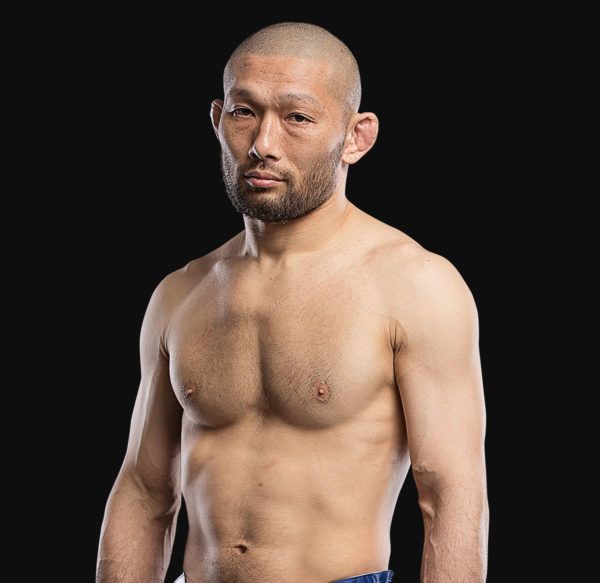
Who is Masakazu Imanari, and how did the imanari roll get his name?
Imanari is a Japanese submission grappler born in 1976, a veteran of PRIDE, Pancrase, DEEP, Cage Rage, and ONE Championship. He nicknamed himself “Ashikan Judan” — roughly, “tenth-degree black belt of leg attacks.” His professional record stretches back to 2000, and his refusal to wrestle from the feet at a time when everyone else was learning Greco shaped his entire game. He had to find a way to get to the mat without standing in the pocket, and the rolling entry was his answer.
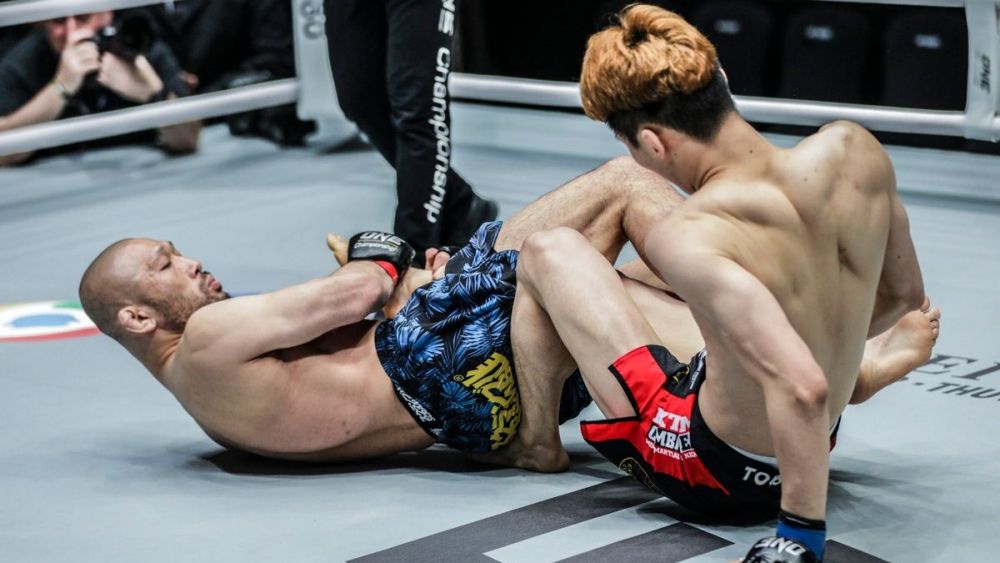
The move went mainstream in 2005 when he hit Mike Brown with a back-roll into a kneelock at 3:38 of the second round. From there it spread through the underground no-gi scene, then through MMA after Ryan Hall used the same entry to submit BJ Penn at UFC 232 in 2018 — Penn’s first-ever submission loss in his career. The technique is named after Imanari because he was the first to use it consistently in high-level competition and because nobody else had the timing dialed in like he did.
How the imanari roll actually works in no-gi grappling
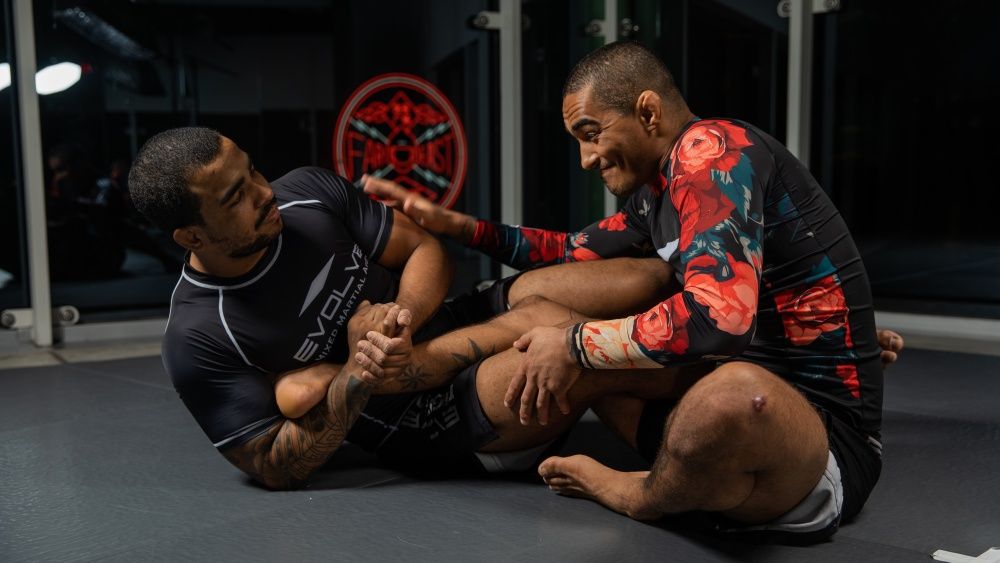
From a standing position, the attacker drops their level the same way a wrestler shoots a single — except instead of stepping in, they fold one knee under, plant the opposite shoulder on the mat, and roll backwards across the inside line of the opponent’s lead leg. The roll ends with the attacker’s outside leg hooked behind the opponent’s knee and their inside leg threaded under the opponent’s thigh. From there, the heel is exposed for an inside or outside heel hook, the ankle is in reach of a straight ankle lock, and the kneeline is set up for a kneebar.
The mechanic that makes it work is momentum. A standing opponent has their center of gravity over their feet, and a rolling body coming in low at the shins doesn’t give them anything to sprawl on. They have two choices: jump back and surrender position, or get rolled into ashi garami before they can react. Most people pick option two by accident.
Where the heel hook fits in
Once the attacker lands in ashi garami, the heel hook is the dominant finish. It’s faster than the kneebar, harder to defend than the toe hold, and gives the attacker control of the entire leg through the back of the heel. The heel hook itself isn’t part of the imanari — it’s the submission that the imanari sets up — but the two are linked in the sport’s memory because nobody ran the entry without finishing the leg.
Why bigger opponents have a harder time defending it
This is the part most beginner guides skip. The imanari roll is a momentum attack, and momentum punishes anyone who can’t move their hips fast. A 200-pound striker can’t get his lead leg out of the path of a 145-pound roller because the timing window is roughly 0.4 seconds — about the same as a jab. By the time he registers what’s happening, his shin is already in the entanglement.
Smaller opponents who try it against a smaller person actually have a harder time, because the timing window matters less when both bodies are nimble. That’s why Imanari, who fought at featherweight and bantamweight his entire career, used it most successfully against opponents his own size or larger. He wasn’t using it as a leveler; he was using it as a tax on anyone who didn’t drill leg defense.
The Ryan Hall moment that exposed the imanari roll to a UFC audience
Ryan Hall finished BJ Penn at UFC 232 on December 29, 2018, with the first successful imanari-roll-to-heel-hook in UFC history. Penn — a former two-division champion, a Brazilian jiu-jitsu black belt, and someone who had never tapped in MMA — was on the canvas in 88 seconds. Hall had been using the entry since his ADCC days; Penn had likely seen it a hundred times. Knowing the move is coming doesn’t save you if your reaction time is even fractionally off.

The Hall finish mattered for a second reason: it forced UFC commentators, who had spent years dismissing leg locks as gimmicks, to take the position seriously on a pay-per-view stage. Within twelve months, every major MMA gym was running leg-lock drills. Hall, who medaled at ADCC before moving to MMA full-time, has said in interviews that he considers the imanari “the highest-percentage entry that exists” in no-gi. He’s not wrong about that, but he’s also one of the few people in the sport who can hit it at world level.
What can go wrong: the failed imanari and what it costs you
If the roll is timed badly, the attacker ends up on their back with their opponent standing over them and a clear path to side control or a guillotine. The defender’s correct response — once they see the move starting — is to pull the lead leg back, frame on the attacker’s chest, and either pass on the long step or step over for a front headlock. Garry Tonon, a five-time EBI champion, has built half his game around the consequences of a botched imanari attempt; he’s faded the entry, countered it with the kani basami, and used the same momentum to flip his own roll into a back-take.
The cost of a failed attempt isn’t just losing the round. It’s giving up the entanglement battle and ending up on bottom with someone heavier on top of you. That’s why advanced no-gi competitors only throw the imanari roll when they have a clear timing read; the move is binary, and the downside is real.
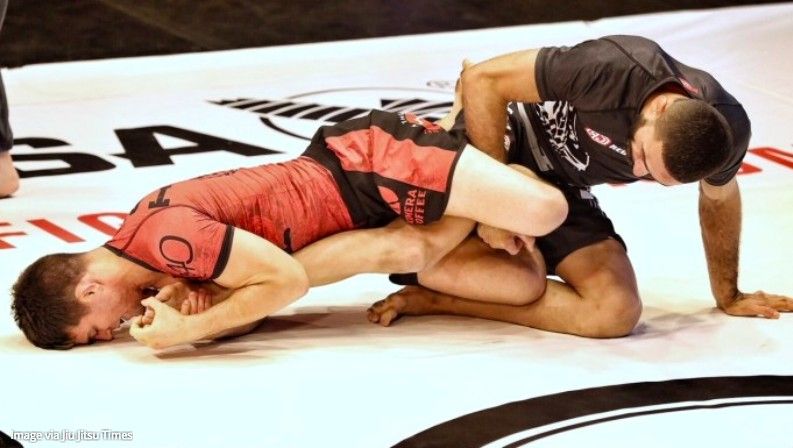
Who is finishing with the imanari roll in 2026?
The technique has cycled through three generations of no-gi athletes. Imanari built the foundation in Japan in the early 2000s. Eddie Bravo students like Tonon and Geo Martinez kept it alive on the American scene through the EBI years from 2014 to 2019. The current generation — Kade and Tye Ruotolo, Damien Anderson, Andrew Tackett, Diogo Reis — uses it as a tactical entry rather than a primary weapon. They roll into it off a failed shot, off a missed snap, or off an opponent’s collar tie attempt. The transition has gotten subtler, but the principle hasn’t changed.
At the elite level, you’ll see the imanari mixed with the saddle, 50/50, outside ashi, and the Tonon-style flying knee bar setup. None of these positions existed in their current form when Imanari first hit the move; the position library has tripled in twenty years, and the entry is now one tool in a system rather than a standalone trick.

Learning the imanari roll without blowing out your training partner’s knee
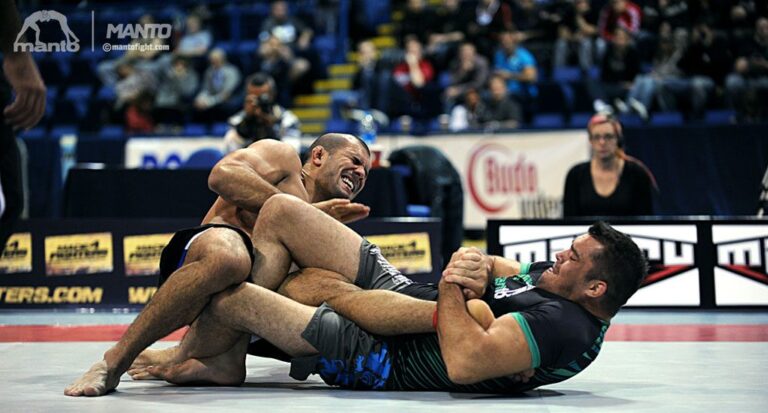
Heel hooks injure people. That’s not a slogan — it’s a structural truth about the joint. The knee resists hyperextension well; it resists internal rotation almost not at all. A heel hook applied with full pressure tears the medial collateral ligament, the anterior cruciate, or the meniscus, often all three in the same rep. If you drill the imanari roll with a partner who doesn’t know how to tap to leg locks, you will hurt them.
The honest path is to drill the entry without the finish for the first 50 reps, then add the heel-hook control without applying pressure, then partner with someone who has at least a year of no-gi mat time. Most heel-hook injuries happen between purple belts who think they’re being careful and aren’t. Tap early on leg locks. Always.
What gear matters for drilling the roll
You need a rashguard that won’t bunch under your armpit when you invert, shorts that don’t ride up past your hip when you scissor, and clean nails. That’s it. The imanari is one of the few techniques where what you wear matters more than you’d think — a loose-fitting top will fold over your face mid-roll and cost you a second of vision you don’t have to spare. If you’re building a no-gi kit from scratch, our 2026 rashguard buying guide and the gear bag essentials list cover the fit specs that actually matter for inverted positions.
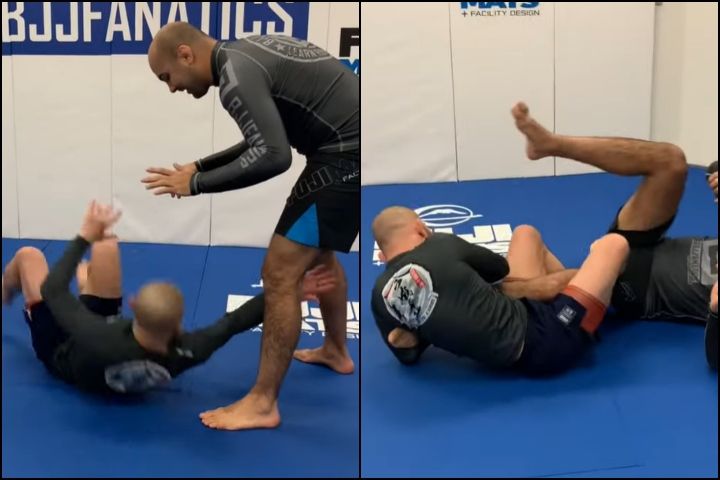
The imanari roll explained by Imanari himself
The video below is Masakazu Imanari teaching the entry to a live partner at a BJJ Fanatics seminar. Watch his head position on the roll — he never lets his ear leave the mat until the entanglement is set. That detail is what makes his version work and what most students skip.
How the move shows up at ADCC and modern no-gi events
At ADCC 2024 in Las Vegas, the imanari roll appeared in roughly one of every twelve sub-66kg matches in the early rounds, according to FloGrappling’s submission tracker. By the finals it had nearly disappeared — top-level defenders read the entry, and the cost of a failed attempt is too high in a points match. The same pattern shows up at Who’s Number One and the ADCC Open events: the move is most effective against opponents who haven’t seen it live before. Once a grappler has eaten one in training, they learn to step their lead foot off-line every time they see a level change.
For the 2026 cycle, including the upcoming ADCC World Championships in Krakow, expect the entry to show up most often in trials matches — where unknown competitors throw it at higher-ranked names — and almost never in the medal rounds. The latest competition footage is tracked in our weekly no-gi recaps if you want to see who is hitting it live.
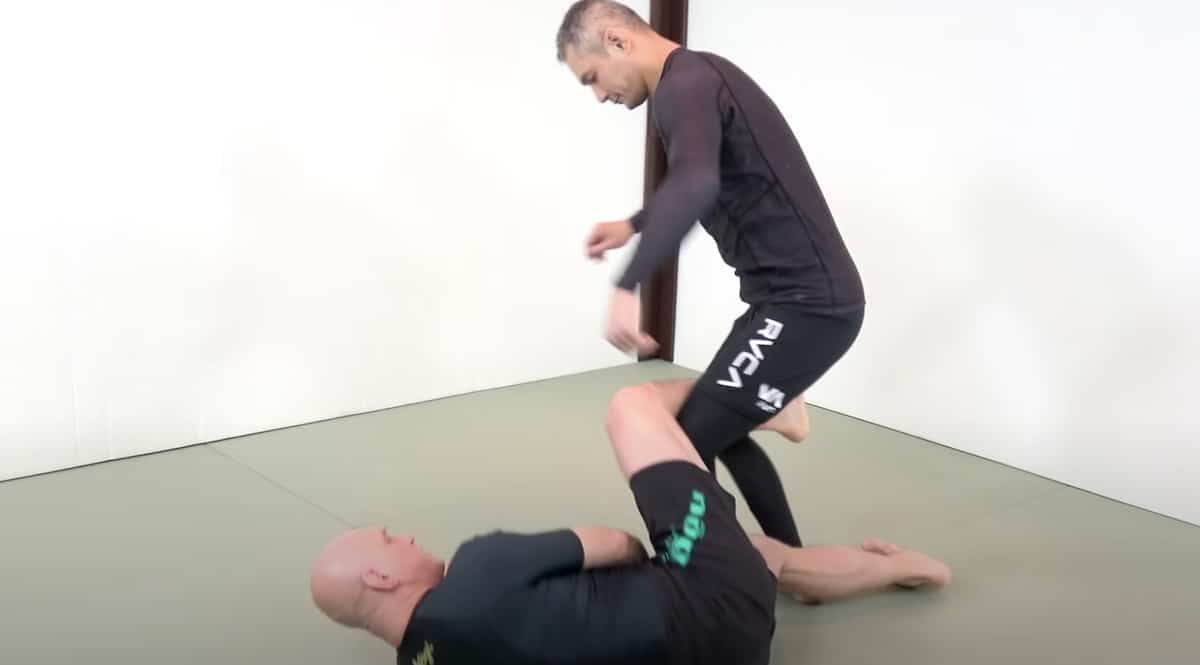
The bottom line on the imanari roll
If you’re under brown belt, drill the imanari roll for movement, not for submission. The mechanics teach you how to invert without panicking, how to read a lead leg, and how to use your hips instead of your arms to control distance — all of which apply to twenty other no-gi positions. If you’re hunting heel hooks, train the entry slowly, tap early, and pick partners who do the same. The move is twenty years old, the highest-percentage rolling entry in the sport, and still feared in 2026 for one reason: when it lands, the fight is over before the loser knows it started.
Sources
- ONE Championship — Masakazu “Ashikan-Judan” Imanari athlete page — career record and competition history
- FloGrappling — The Evolution of the Imanari Roll in MMA & BJJ — historical breakdown of the technique’s spread
- Masakazu Imanari — Wikipedia — biographical and career data
- Evolve MMA — How to Perfect the Imanari Roll in BJJ — technical breakdown of the entry
- Grappling Insider — Ryan Hall’s UFC heel hook history — context on the UFC 232 finish
- BJJ Heroes — Garry Tonon profile — EBI competition history and leg lock counters
Browse our top-rated rashguards and no-gi gear at the RashguardGuy shop →