First Rashguard Under $30: A No-Gi White Belt’s Starter Pick
You walked into your first no-gi class, got destroyed by a blue belt for an hour, and now you’re staring at a checkout page wondering if a $28 rashguard is going to fall apart on you in a month. Good news: for your first six months on the mats, it absolutely will not. The real question isn’t whether sub-$30 gear can survive — it’s whether the specific cheap rashguard you’re about to buy is the right cheap rashguard for someone who has never trained no-gi before.
This guide is for the brand-new grappler — the person who has been to three or four classes, owns zero technical apparel, and wants to stop showing up in a cotton t-shirt that turns into a wet rope by round two. Everything below assumes you have not yet figured out your favorite brands, you don’t know your no-gi fit preferences, and you’re not about to drop $80 on a rashguard you might hate the cut of. We’ll keep it under $30 the whole way.
Why Your First Rashguard Doesn’t Need to Cost $80
The premium rashguard market exists for a reason — sublimated designs, ranked-belt prints, brand collabs, IBJJF-stamped competition cuts. None of that matters for a white belt who is still figuring out whether they prefer long sleeves or short, tight or relaxed, hemmed long or cropped. Buying a $70 rashguard before you’ve answered any of those questions is like buying golf shoes before your first driving range visit. You’re paying for fit certainty you don’t have yet.
A sub-$30 rashguard built from a standard 80/20 polyester-spandex blend will hold up to four or five classes per week for at least six months if you treat it right. That’s enough time to develop opinions. Once you know what you want, you can graduate to the premium stuff with actual information instead of guesswork.
What “Under $30” Actually Buys You
Let’s be honest about the tradeoffs. A $25–$29 rashguard is going to differ from a $60 one in a few predictable ways:
- Fabric weight. Budget rashguards tend to run thinner. That’s not always bad — thinner means cooler in summer training — but it also means a touch less abrasion resistance against the mat.
- Print quality. Sublimated graphics on cheap rashguards fade noticeably after 40–50 washes. Solid colors hold up better than complex prints in the budget tier.
- Seam construction. Premium rashguards almost always have flatlock seams (the wide, flat stitching that doesn’t chafe). Sub-$30 options sometimes use standard overlock seams, especially on the cheaper end. Read the listing.
- Cut precision. Cheaper means more variation between sizes. The same brand’s medium might fit differently across two production runs.
None of these are dealbreakers for a beginner. You’re not competing at Worlds in month one. What you need is a shirt that wicks sweat, doesn’t ride up when someone passes your guard, and doesn’t stink so bad after three classes that your training partners stop drilling with you.
Long Sleeve or Short Sleeve First?
If you can only buy one rashguard, buy long sleeve. Here’s the case:
- Long sleeves protect your forearms from mat burn during shrimping, crab walking, and any drill where you’re sliding around on your back.
- They cover ringworm-vulnerable skin in a room full of strangers who haven’t all built the same hygiene habits.
- They keep your elbows warm during the warmup, which matters more than you’d think for a 48-year-old white belt who took up grappling on a whim.
- If the academy is cold, a long-sleeve rashguard plus shorts is a complete uniform.
Short-sleeve rashguards have their place — Taipei summers, hot rooms, days when you specifically want bare forearms for friction on no-gi grips. But that’s a second purchase, not a first one. Get the long sleeve down first.
Fit Matters More Than Brand at the $30 Tier
At this price point, the brand on the chest is not what’s going to make or break your experience. Fit is. Here’s what to check before you buy:
Sleeves should end at the heel of your palm
Not at your wrist, not mid-forearm. Sleeves that stop short ride up the moment someone grabs your wrist for a grip break. Sleeves that cover the back of your hand will frustrate you in drilling. The heel of the palm is the goldilocks zone.
Hem should be long enough to tuck
A short hem will untuck during inversions, leaving your lower back exposed to the mat for the rest of the round. You want at least four inches of fabric below your navel when you’re standing upright. Cheaper brands sometimes cut hems short to save material — measure on the size chart, don’t trust the photo.
Compression, but not constriction
A proper rashguard is meant to be tight. That’s the entire point — it prevents the shirt from being a grip for your opponent. But “tight” should not mean you can’t take a full breath. If you have to inhale shallow to fit into a medium, size up. Cheap brands run small more often than they run large.
Brands That Consistently Hit Under $30
Without naming specific SKUs (because they rotate and the link will be dead by next quarter), here’s the lay of the land at the sub-$30 tier:
- Sanabul’s entry line — the cheapest Sanabul rashguards sit just under $30 during sales and run consistent enough that the medium fits like a medium across multiple production runs. Solid first-buy candidate.
- Elite Sports basics — usually $25–$28, decent flatlock seams, simple solid-color designs. Fewer fancy prints means fewer chances for the sublimation to fail.
- Generic Amazon house brands — hit-or-miss. The best ones rival branded options at $20. The worst ones tear at the underarms in three weeks. Read at least 200 reviews and sort by recent first.
- Avoid the $15 direct-from-warehouse listings with no brand name, no return policy, and a three-week shipping window. Those are almost always single-needle stitched fast fashion that will not survive contact with another human.
Three Things to Skip on Day One
The hardest part of being a beginner is not knowing what’s gear-store marketing and what’s actually useful. Here’s what to leave in the cart:
- Themed or limited-edition prints. The skull-with-flames rashguard you love today will embarrass you in eight months when you’ve absorbed the gym’s quieter aesthetic. Solid colors aren’t boring — they’re the safe choice that survives your own taste evolution.
- Anything labeled “Pro” or “Competition” at a budget price. Real competition rashguards have to meet specific cut and color rules for the federation hosting the event. A $25 listing slapped with “IBJJF Approved” is almost always marketing, not certification. Don’t buy a $25 shirt to compete in. Buy a $25 shirt to learn in, then buy real competition gear when you actually have a tournament booked.
- The matching compression shorts set. Combo deals are tempting because they look like a discount. But your no-gi shorts have completely different requirements — gusseted crotch, drawstring quality, fly closure. Buying the matching set means you’re picking the shorts based on rashguard branding instead of shorts engineering. Buy them separately.
When to Upgrade (and When to Stay Cheap)
Three to six months in, you’ll know whether grappling is sticking. If it is, you’ll start to develop preferences — heavier fabric for cold rooms, specific cuts that fit your shoulders, sleeves that end exactly where you want them. That’s the moment to invest in one or two premium rashguards in the $50–$80 range to round out a rotation.
But don’t retire the sub-$30 starters. Cheap rashguards stay useful for the rest of your career:
- Twice-a-day training — when you’re rolling morning and night, you need rashguards in the rotation that you don’t care about. Cheap ones absorb that abuse.
- Travel sessions — dropping into a new academy means borrowing or buying gear you might never wear again. Don’t bring your $80 premium piece on a one-off visit.
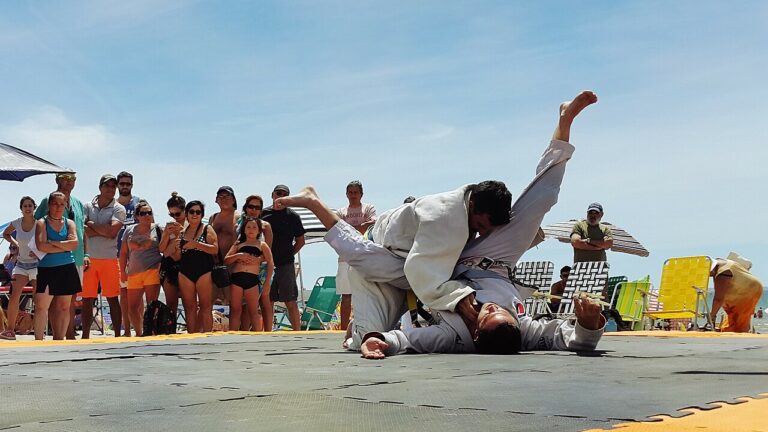
- Outdoor or beach grappling — saltwater, sand, and direct sun ruin sublimation prints fast. Use cheap gear and protect the nice stuff.
Care Tips to Stretch a $30 Rashguard’s Life
The single biggest factor in how long your cheap rashguard lasts is not the brand — it’s whether you treat it like technical fabric or like a t-shirt. They are not the same thing.
- Wash cold, every time. Hot water breaks down the spandex fibers that make the rashguard stretch back to its shape. A cold cycle keeps the compression alive for months longer.
- Hang dry. Never tumble. The dryer is the single fastest killer of cheap rashguards. Heat plus mechanical friction will warp the cut and shred the print in under thirty cycles.
- No fabric softener. Softener coats the polyester fibers and destroys their moisture-wicking ability. Your rashguard ends up holding sweat instead of moving it away from your skin.
- Two-rashguard minimum. Rotating between two pieces lets each one fully dry between sessions. A rashguard that goes back into the bag damp will smell like death within a week, and no amount of detergent will fully save it.
- Don’t iron. Obvious to some, not all. The print will lift, the seams will warp, and you’ll regret it for months.
The Honest Bottom Line
A good first rashguard under $30 is the one that fits, has flatlock seams, ends at the heel of your palm, and tucks past your navel. The brand, the print, and the marketing buzzwords are noise. Buy two — same brand, same size, same color — and rotate them. In six months you’ll have actual data about what you want from a premium piece, and you’ll have saved at least $100 not buying gear before you knew what to ask for.
Save the premium budget for later. Right now, you’re buying time on the mat — not a wardrobe.
Sources
- Brazilian Jiu-Jitsu — Wikipedia — background on no-gi grappling and the sport’s apparel evolution.
- International Brazilian Jiu-Jitsu Federation (IBJJF) — official source for no-gi competition uniform rules referenced in the article.
- Amazon search: BJJ no-gi long sleeve rashguards — current live listings for sub-$30 options to compare seam construction and reviews.
- Amazon search: Sanabul rashguards — entry-tier options frequently sitting just under $30.
Training BJJ in Taipei? TaipeiBJJ.com has training resources and gym guides for the Taipei BJJ community.
Browse our top-rated rashguards and no-gi gear at the RashguardGuy shop →