No-Gi Shoulder Injuries: 7 Keys to Recover
A 2014 study of competitors at the Hawaii State Judo and BJJ tournaments found the shoulder behind only the knee and the elbow in submission-related injury counts, and three of the four shoulder injuries recorded came from a kimura. That number matters because it means the joint most grapplers blame on “bad training partners” is usually failing in a predictable, mechanical way — not from bad luck.
Why No-Gi Still Loads the Shoulder Hard
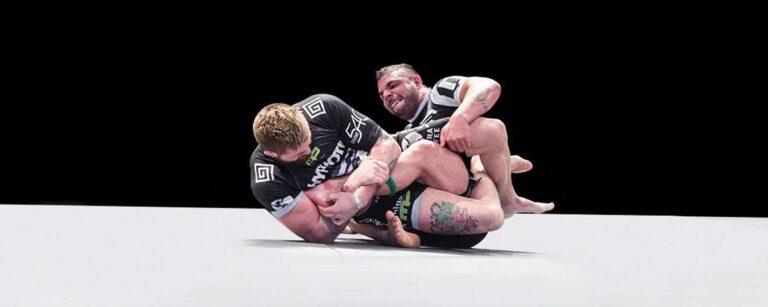
Drop the gi and the grip options change, but the shoulder doesn’t get a break. Underhooks replace collar ties, wrestling shots replace spider guard hooks, and the kimura trap system that dominates no-gi leg lock defense runs through the exact same joint that a gi kimura attacks. If anything, no-gi grappling asks the shoulder to do more of the control work, because there’s no fabric to grip instead of the limb itself.
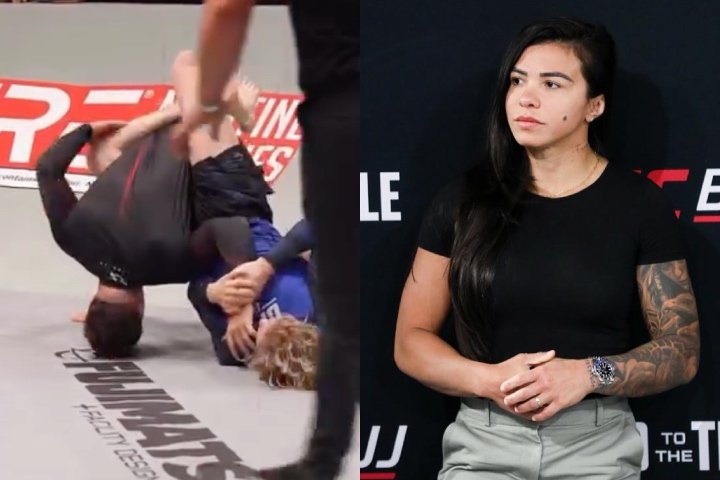
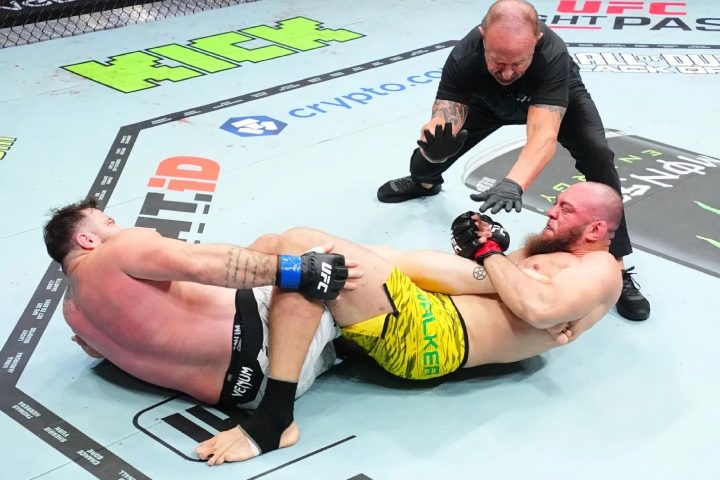
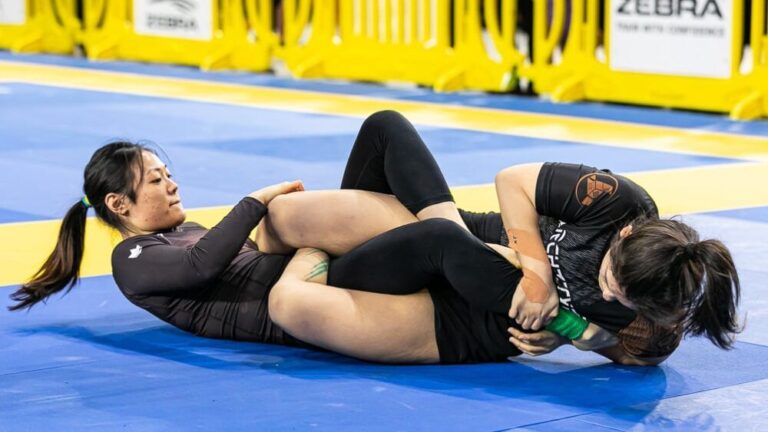
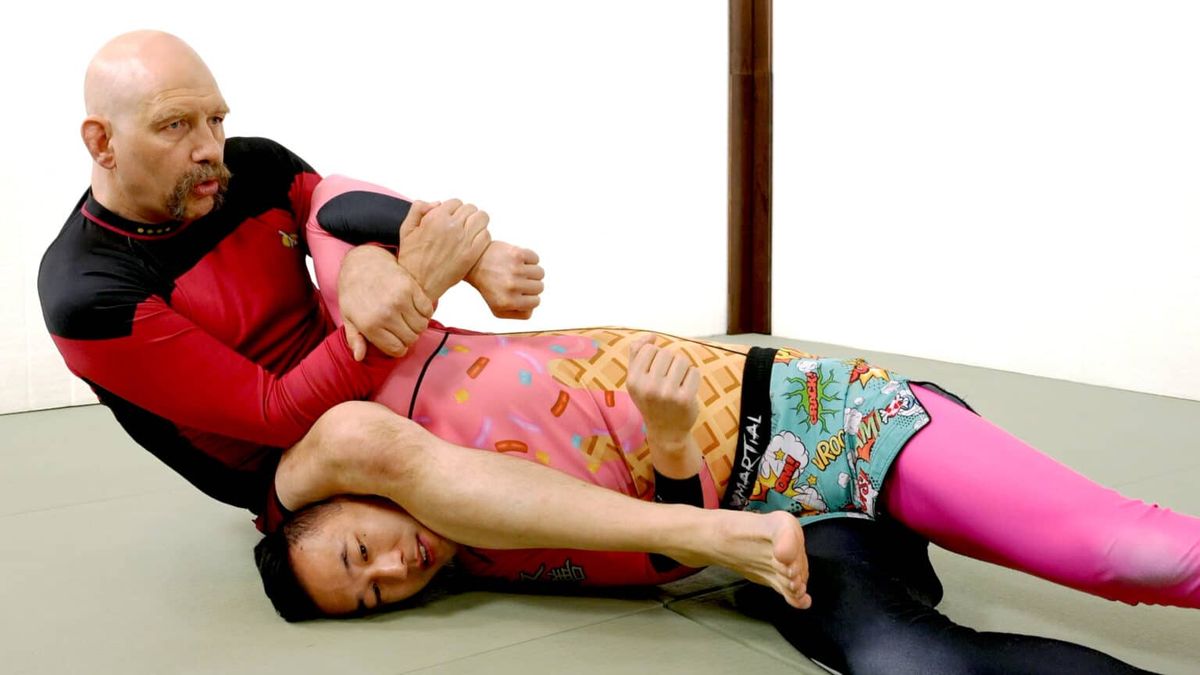
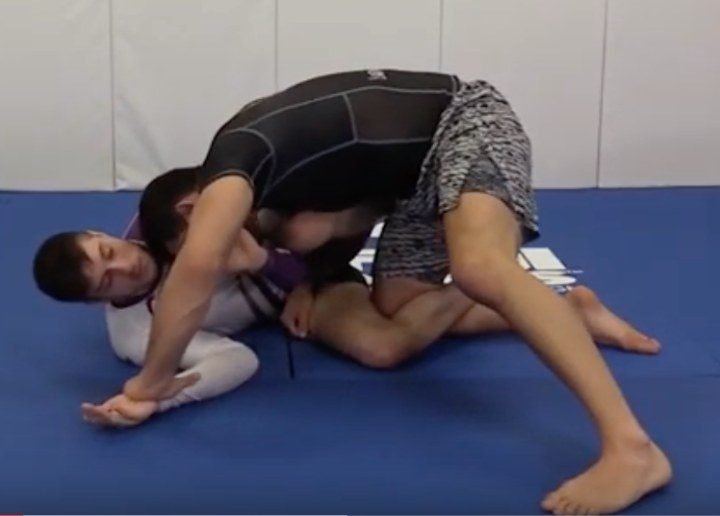
That photo isn’t rare. Kimura and americana finish rates are high in no-gi because defenders often try to fight the position with strength instead of tapping to the rotation early, and the shoulder capsule loses that fight before the elbow or wrist ever gets involved.
The Shoulder Injuries No-Gi Grapplers Actually Get
Four injuries show up over and over, and they feel different enough that you can usually tell them apart without an MRI.
Rotator cuff strain shows up as a deep, hard-to-point-to ache that gets worse reaching overhead or behind your back. It’s the most common and usually the mildest, resolving in two to six weeks with rest and rehab.
AC joint sprain announces itself with a sharp pain right on top of the shoulder, exactly where the collarbone meets the shoulder blade. Press on that spot and it hurts. In worse cases you’ll see a visible bump — the “step deformity” — where the collarbone sits higher than it should.
Labral irritation feels like a deep clicking or catching sensation, often with pain that’s hard to localize. It comes from repeated biceps tendon traction during kimura and americana defense and tends to build up over months rather than happening in one session.
Anterior subluxation is the scary one — a brief sense that the shoulder popped out and reset itself, usually from an americana or a bad fall. It can look and feel like a full dislocation for a few seconds before it slides back into place.
What’s Actually Loading the Joint
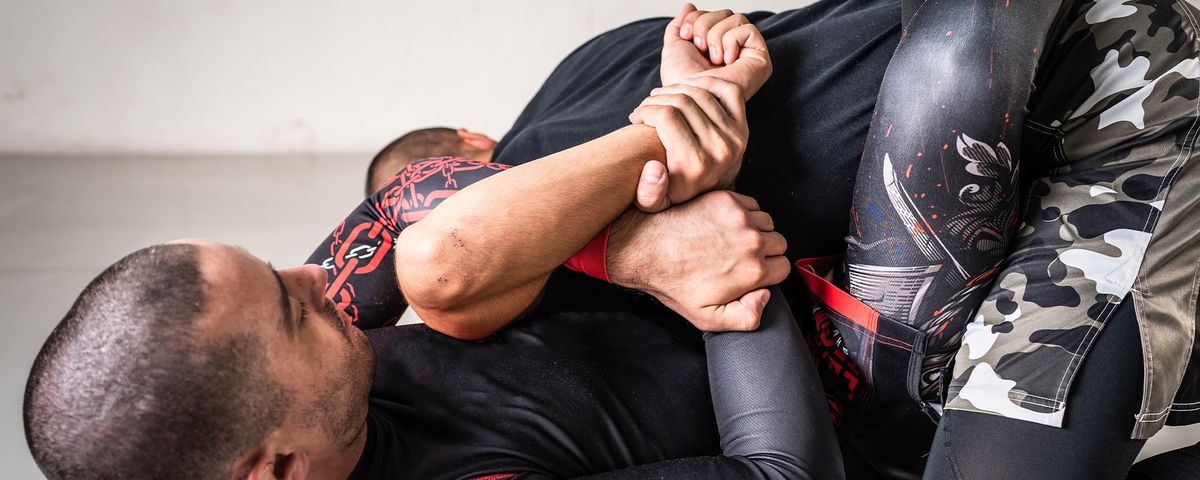
The kimura drives the shoulder into internal rotation while the elbow stays bent at roughly 90 degrees, stacking force on the posterior capsule and the external rotators — infraspinatus, supraspinatus, teres minor. The americana does the opposite, forcing external rotation and loading the front of the shoulder instead. Both apply that force through a long lever arm, which is why a smaller person can finish a kimura on someone much stronger: the lock isn’t fighting muscle, it’s fighting a joint that was never built to rotate that far under load.
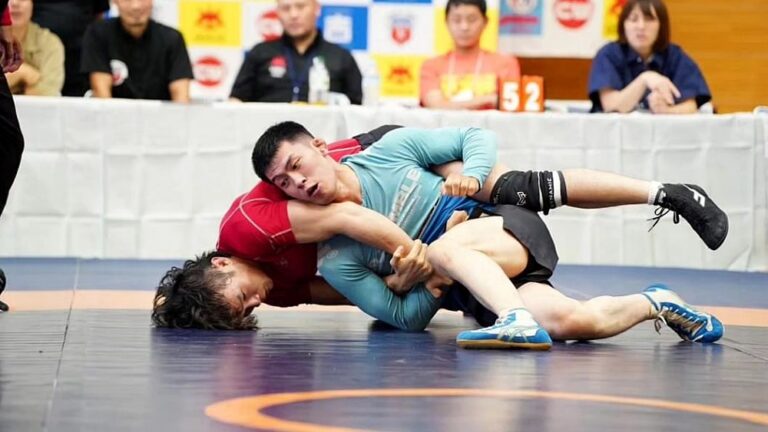
Submissions aren’t the only culprit. A failed sprawl, a bad landing off a single leg, or getting stacked awkwardly while turtled can all jam the shoulder the same way, just without a tap option. Kimura setups and americana finishes get most of the attention because they’re repeatable and visible, but plenty of shoulder injuries in the gym never touch a submission at all.
Why This Hits Differently Than a Gi Shoulder Injury
Most of what’s written about BJJ shoulder injuries assumes a gi. Gi grapplers get extra leverage from collar and sleeve grips, which means a kimura or americana can be set up and finished faster, often before the defender gets a chance to posture or create space. No-gi grips slip more, so submissions tend to develop slower and defenders get more warning — but that same slipperiness is why scramble-related shoulder injuries show up more in no-gi than in gi. A sweaty underhook that slides at the wrong moment, or a double-leg that gets stuffed and turns into an awkward fall, loads the shoulder in a way a gi grip rarely allows, because there’s no fabric holding the position still.
That difference changes what you train for. A gi player who gets good at defending kimura grips mostly needs to manage the submission itself. A no-gi grappler needs that same defense plus the shoulder stability to survive scrambles where nobody has a clean grip on anything, least of all the person about to get hurt.
Taping and Supporting a Jammed or Sprained Shoulder
Tape doesn’t fix a shoulder injury, and it won’t stabilize a true AC joint sprain the way a brace can. What it does well is remind the joint where it shouldn’t go. A kinesiology tape strip run from the deltoid up over the AC joint and across the upper trap gives mild proprioceptive feedback that can cut down on the “forgot it was hurt” re-injuries that happen mid-roll. For a rotator cuff strain, the better move during the first week isn’t taping at all — it’s load management. Skip positions that stress overhead reach or forced internal rotation and keep training everything else.
Buddy systems matter here too. Tell your training partners the shoulder is out before you roll, not after they’ve already cranked a kimura you couldn’t escape in time.
The First Two Weeks: What to Do and What to Skip
Ice the joint for 15 to 20 minutes a few times a day for the first 48 to 72 hours if there’s swelling, and keep the arm moving through pain-free range rather than immobilizing it completely — a shoulder that sits still for two weeks stiffens up fast and takes longer to get back. Skip anything that loads the arm overhead, behind the back, or into a kimura or americana grip, gi or no-gi, submission or escape. Guard retention, leg entries, and hip movement that don’t involve the injured arm can usually continue.
Red Flags That Mean Tape Isn’t Enough
Most shoulder tweaks in no-gi are rotator cuff strains or Grade 1 AC sprains that calm down with rest. A few signs mean you need imaging before you plan a return date. A visible step deformity at the top of the shoulder points to a Grade 3 or higher AC separation. A shoulder that feels loose or like it’s going to “pop out” during normal daily movement, not just under grappling load, suggests instability that tape won’t fix. Numbness or weakness down the arm after a kimura or a fall needs a doctor the same day, not a wait-and-see week. And pain that hasn’t improved at all after two weeks of genuine rest is a sign the injury is bigger than a simple strain.
Getting Back on the Mats Without Re-Injuring It
Grade 1 AC sprains and mild rotator cuff strains are usually ready for contact training in two to six weeks. Grade 2 sprains run closer to four to eight weeks. Anything involving instability, a Grade 3 separation, or a labral tear can take three to six months of conservative rehab before sparring resumes, and that timeline isn’t optional just because a tournament is coming up.
Before loading the shoulder in live rolling again, it should move through full range of motion without pain, show strength within about 90% of the healthy side on rotator cuff testing, and hold up under the kind of sudden, awkward loading a scramble produces — not just the controlled kind you get drilling slow. Band pull-aparts and side-lying external rotation work are the two simplest exercises for rebuilding that strength, and they’re worth doing even after the pain is gone, because a shoulder that’s been injured once is more likely to go again if the surrounding muscles never got rebuilt.
Reducing the Odds of the Next One
Grapplers who tap early to kimuras and americanas instead of fighting the rotation almost never turn a submission into an injury — the ones who get hurt are usually the ones trying to spin, posture, or power out of a position that’s already locked. Posterior shoulder strength work, specifically external rotation with a band, builds the muscle group that resists the exact force a kimura applies. Sleeper stretches done consistently restore internal rotation range that tends to get restricted from repeated grip fighting, which in turn makes it easier to defend a kimura without the shoulder being the first thing to give.
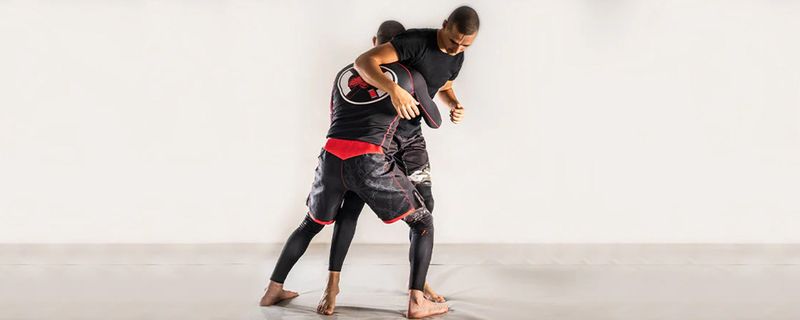
Underhooks deserve the same respect submissions get. A shoulder jammed into an awkward angle during a scramble for position can do just as much damage as a kimura, just without the warning that comes from feeling a lock set in. Fighting for grips with your shoulder already fatigued late in a hard round is when a lot of these injuries happen — not in the first five minutes, when everyone’s still moving carefully.
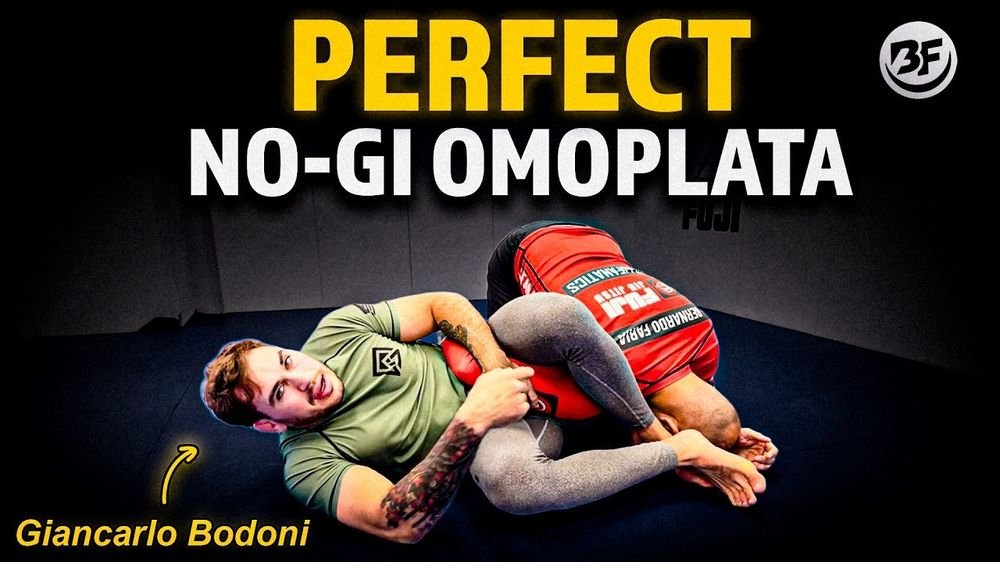
The omoplata is worth a specific mention here, because it’s one of the few shoulder locks in the game that works without any gi grip at all, which means no-gi grapplers face it just as often as their gi counterparts. Respecting the tap on an omoplata early protects the same structures a kimura threatens, just from a different angle.
None of this means avoiding kimura and americana training. It means treating a stiff or sore shoulder the way you’d treat a knee that tweaked funny — worth a few days of attention before it becomes a few months off the mats. If you’ve already dealt with a knee injury or a rib injury from training, the shoulder follows the same rule: early, honest rest beats pushing through and finding out how much worse it can get.
Sources
- Scoggin et al., “Assessment of Injuries During Brazilian Jiu-Jitsu Competition,” Orthopaedic Journal of Sports Medicine — competition injury data showing shoulder injury rates and kimura as a primary mechanism
- BJJ Rehab: Kimura and Americana Shoulder Injuries — injury mechanism, damaged structures, and recovery timelines
- BJJ Rehab: AC Joint Separation Grades, Symptoms & Recovery — grading system and return-to-training benchmarks