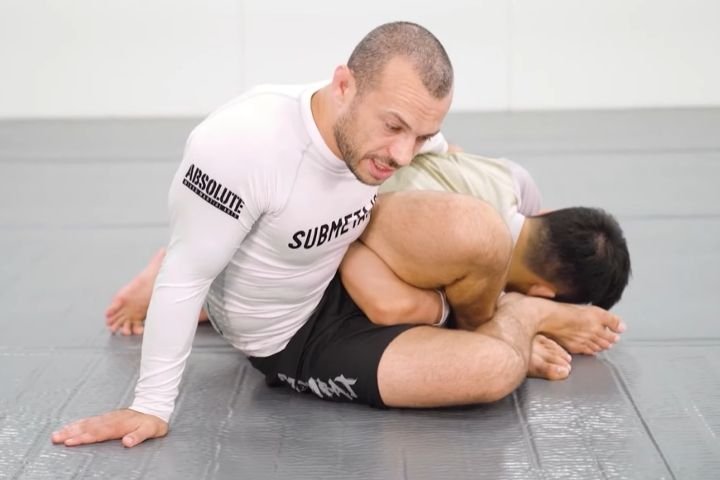
Reverse Omoplata No-Gi: 7 Keys From Turtle
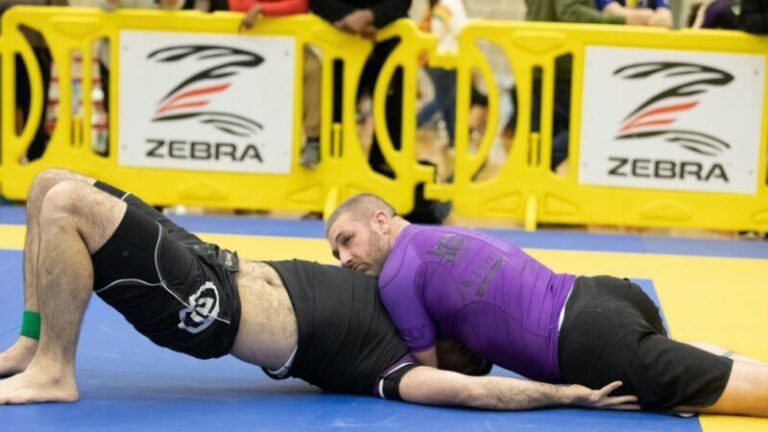
Esteven Martinez finished exactly this position at the 2021 Pan IBJJF No-Gi Championship — a rolling reverse omoplata off a turtling opponent at black belt, the top division of one of the sport’s biggest annual no-gi events. That’s not a YouTube curiosity. It’s a live demonstration that the position holds up against resisting black belts, not just cooperative drilling partners.
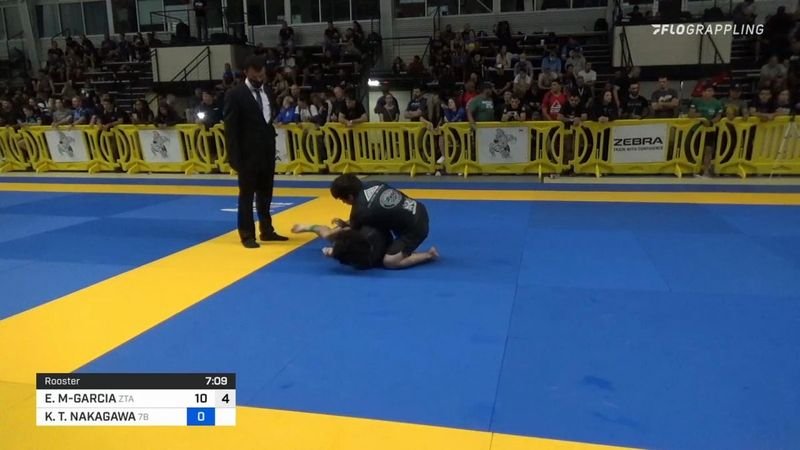
Esteven Martinez’s reverse omoplata from turtle at the 2021 Pan IBJJF No-Gi Championship — black belt division, a live finish against full resistance.
What Actually Makes a Reverse Omoplata “Reverse”
A standard omoplata starts in guard. You swing a leg over your opponent’s shoulder, they end up flattened face-down, and you finish facing toward their head. The reverse omoplata flips all three of those variables. You enter from behind or beside a turtled opponent, your leg traps the same-side arm from the opposite direction, and when the shoulder lock sets, your opponent ends up face-up while you’re oriented toward their feet instead of their head.
Nino Schembri is widely credited as the grappler who popularized the position and built much of the surrounding setup vocabulary decades ago. The entry most associated with his name comes directly out of the guard-passing scramble — not a leg-lock system, despite how often modern leg-lock-heavy no-gi games stumble into the same shape by accident while hunting a different submission.
A standard omoplata, entered from guard, uses the exact same joint lock built from the opposite side of a scramble entirely. That distinction matters for more than trivia. If you drill the reverse omoplata the same way you drill a guard-based one — static reps, same entry cue, same grip sequence — you’ll build mechanics that never fire in a real round, because the scramble that actually produces the position looks nothing like closed guard. Recognizing the entry is arguably a bigger skill here than finishing the lock itself.
Key 1 — Hunt It Off a Turtled Opponent, Not From Guard
The highest-percentage entry in no-gi comes when your opponent turtles to defend a pass or a back take. As they roll their shoulder down to protect their near arm, that same arm is often already extended in a position your leg can trap on its way across their back. Reaching for a standard omoplata here does nothing — the geometry doesn’t match. Reaching for the reverse variant does, because the position is built for exactly this scramble.
This is also why so many reverse omoplatas look accidental on film. Grapplers scrambling for a back take or a leg entry end up in the shape without planning it, then recognize the opportunity and finish from there. Training the entry deliberately — instead of hoping to stumble into it — is what separates someone who can hit it on command from someone who gets it once a year.
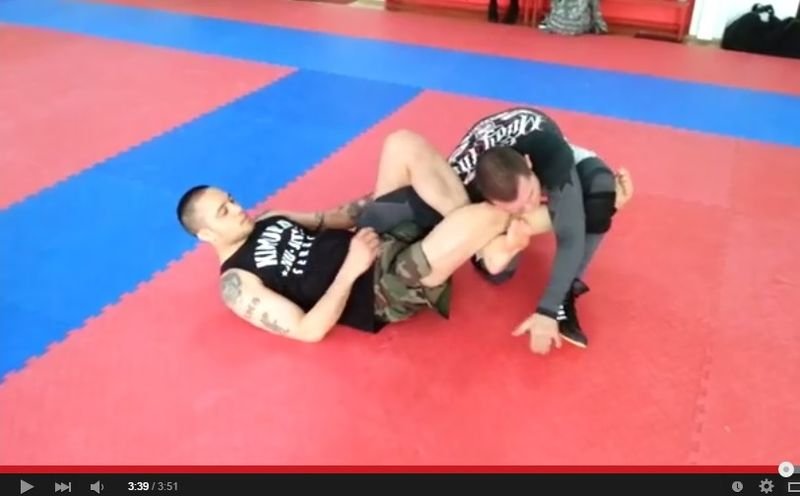
Leg-entanglement scrambles like this are where most reverse omoplata chances actually appear — not from a planned guard sequence.
Key 2 — Trap the Wrist the Same Way You Would in the Standard Version
Without a sleeve or belt to grip, the no-gi reverse omoplata lives or dies on hand control, exactly like its guard-based cousin. The moment your leg clears the shoulder, pin the wrist of the trapped arm to the mat. If that hand stays free, your opponent uses it to post, turn into you, or fight the leg off before the lock ever sets. The grip-fighting principles that make a standard no-gi omoplata work transfer directly here — the entry is different, but the hand-control problem is identical.
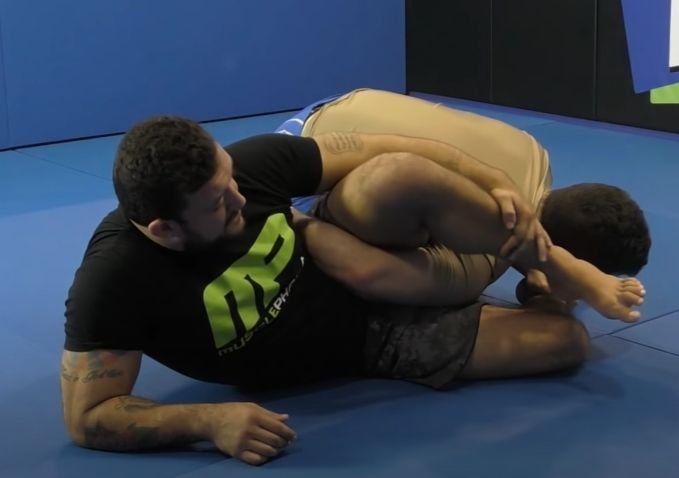
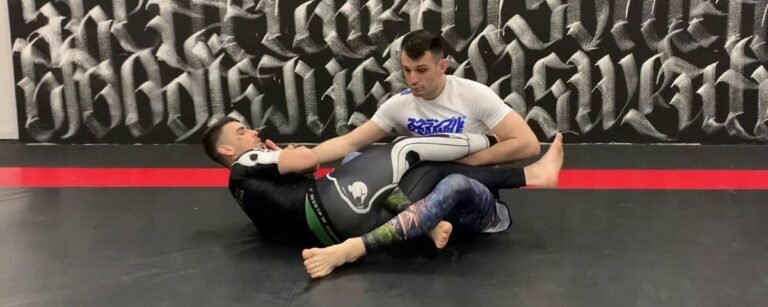
Tom DeBlass pinning the wrist in a standard no-gi omoplata — the same hand-control principle is what makes the reverse version hold once you’re in it.
Key 3 — Square Your Hips Before You Commit to the Finish
Because you’re facing your opponent’s feet instead of their head, it’s easy to leave your own hips angled away from square — a habit carried over from guard-based submissions where facing their head is the default. Square your hips directly across their shoulder line before you apply pressure. Angled hips bleed off rotation and give your opponent room to shrug the shoulder and dump pressure, the same failure mode that kills a standard omoplata when the hips stay elevated.
Key 4 — Use the Position to Finish the Scramble Even Without the Tap
Most reverse omoplata attempts in live rolling don’t end in a tap. They end in a sweep, a back take, or a strong top position once your opponent spends their energy defending the shoulder. That’s not a failed attempt — it’s the position doing its job. If your opponent turns hard into you to kill the lock, follow the turn into their back instead of fighting to keep the shoulder attack alive. You already did the hard part by stopping their scramble.
Key 5 — Chain Into the Leg Lock Game When the Shoulder Isn’t There
Because the entry so often happens inside a leg-entanglement scramble to begin with, a stuffed reverse omoplata frequently leaves you with a leg still available to attack. Grapplers who build their no-gi game around leg attacks treat the reverse omoplata as one branch of a decision tree that also includes a heel hook or kneebar from the same entanglement — not a stand-alone technique they either hit or abandon.
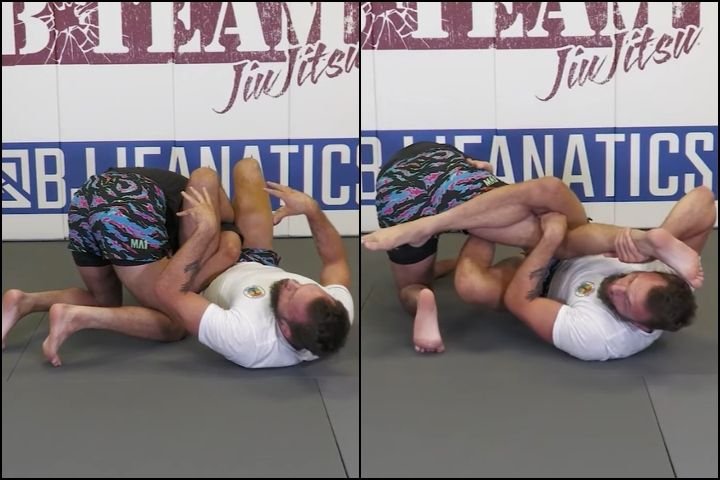
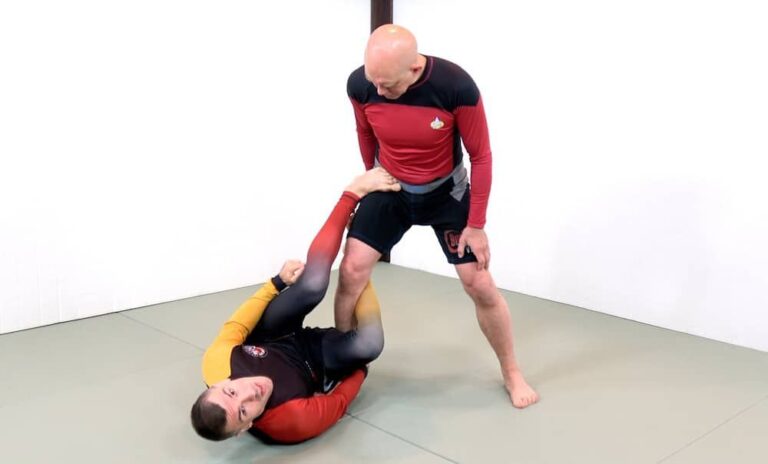
The same scramble that produces a reverse omoplata chance often leaves a leg available too — treat the position as a branch point, not a single outcome.
Key 6 — Don’t Force It From a Cooperative Drilling Pattern
The position gets taught in isolation constantly — set up from a static turtle, finish, reset, repeat. That teaches the mechanics, but it doesn’t teach the timing. Live reverse omoplata opportunities show up inside fast scrambles, not static turtles, so drill the entry starting from live hand-fighting or a resisting back-take attempt once you’ve got the isolated mechanics down. Grapplers who only drill it statically tend to freeze when the real opportunity — messier, faster, half a second long — actually appears.
Key 7 — Respect the Same Shoulder Risk as the Standard Version
The joint target hasn’t changed, and neither has the injury risk. Apply pressure slowly in drilling, especially with partners who aren’t expecting the angle, since the unfamiliar orientation means training partners are often slower to recognize they need to tap than they would be in a position they drill every week.
Who’s Actually Using This in Competition
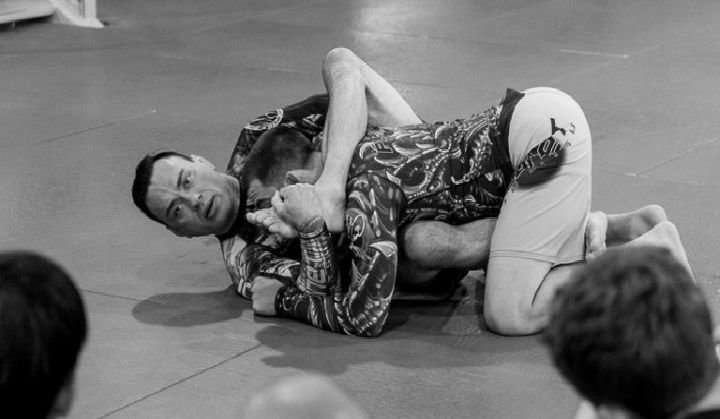
Nino Schembri built the early reputation around the position. Keenan Cornelius has publicly discussed and demonstrated the reverse omoplata as part of his broader guard-attack game, and instructional content from Troy Manning’s no-gi omoplata system treats it as a core branch rather than a footnote. Esteven Martinez’s 2021 Pan No-Gi finish remains the clearest publicly documented example of the position working at the black belt level under full tournament resistance — proof that despite how rarely it shows up, it isn’t a gimmick.
What it isn’t tied to, despite some claims floating around online, is Eddie Bravo’s 10th Planet truck system. The truck position shares a neighborhood with leg-entanglement scrambles, but the reverse omoplata’s roots and most of its modern instruction trace back to guard-passing and back-take scrambles, not 10th Planet’s leg-lock-first system specifically. Worth knowing if you hear the two conflated — they’re genuinely separate branches of no-gi technique that happen to look similar from a distance.
How It Fits Into a No-Gi Gameplan
Most grapplers don’t build a gameplan around the reverse omoplata the way they would around a go-to guard pass or a signature takedown — and they shouldn’t. It’s a low-volume, high-value opportunity attack: something you recognize and capitalize on three or four times a season, not something you hunt every round. Trying to force the entry against an opponent who isn’t turtling or scrambling wastes energy chasing a position that simply isn’t available yet.
Where it earns its place in a gameplan is as a response, not an opener. Grapplers who are already comfortable attacking the back or hunting leg entanglements pick this up fastest, because they’re already spending rounds in the exact scrambles where the position shows up. If your current game rarely puts you behind a turtled opponent, the reverse omoplata isn’t the technique to prioritize this month — back-take fundamentals are the better investment, and the omoplata opportunities will start appearing on their own once you’re there more often.
Common Mistakes With the Reverse Omoplata
- Trying to force the entry from a standing or neutral position instead of waiting for a real turtle or scramble opportunity
- Leaving the trapped wrist free, which lets an opponent post and turn out before the shoulder lock ever sets
- Leaving your hips angled instead of square, which bleeds off the rotation that actually finishes the submission
- Treating a stuffed attempt as a dead end instead of following the turn into back control or a leg entry
If your reverse omoplata attempt gets stuffed and the scramble turns into a straight grip fight for the back, the fundamentals covered in chaining to a triangle from a failed shoulder lock apply here too — the moment your opponent commits hard to defending one submission, a different one is usually open.
Sources
- Esteven Martinez — Rolling Reverse Omoplata From Turtle, 2021 Pan IBJJF No-Gi Championship — FloGrappling
- Step-by-Step Reverse Omoplata — Grapplearts
- Master the Reverse Omoplata — Jiu-Jitsu Mag
- No-Gi Brazilian Jiu-Jitsu Omoplata System — Troy Manning, BJJ Fanatics