Bow and Arrow Choke No-Gi: 7 Keys to Finish
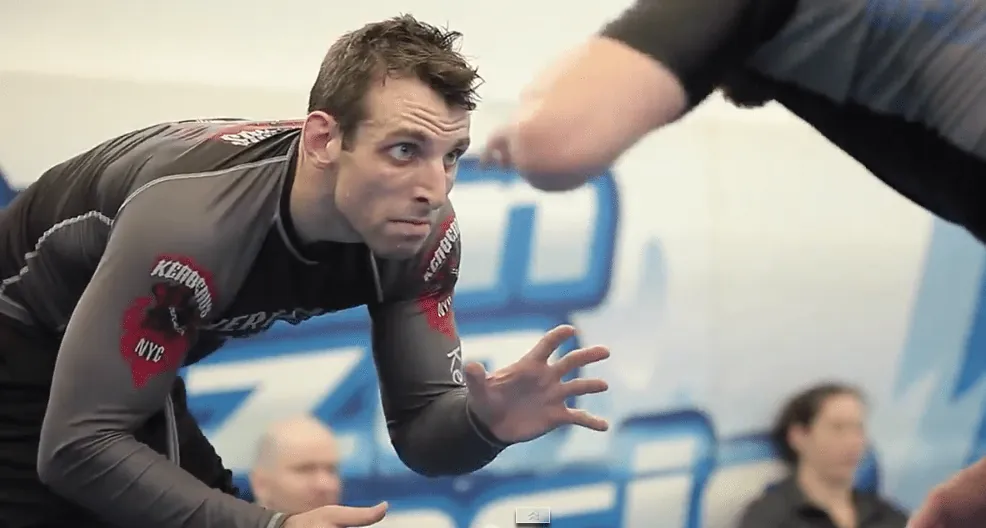
The gi version needs a collar. Grab the far lapel, trap the far leg behind your knee, and arch back until the opponent taps or goes out. Take the gi away and that grip disappears — which is why most no-gi grapplers assumed the technique just didn’t translate. Eddie Cummings proved otherwise during his run through EBI and Polaris in the mid-2010s, finishing opponents with a wrist-trap version that keeps the same body mechanics and swaps the fabric grip for a bare-skin one. It never became a staple the way the rear naked choke did, but it solves a specific problem: what to do when you have the back but can’t get your arm all the way under the chin.
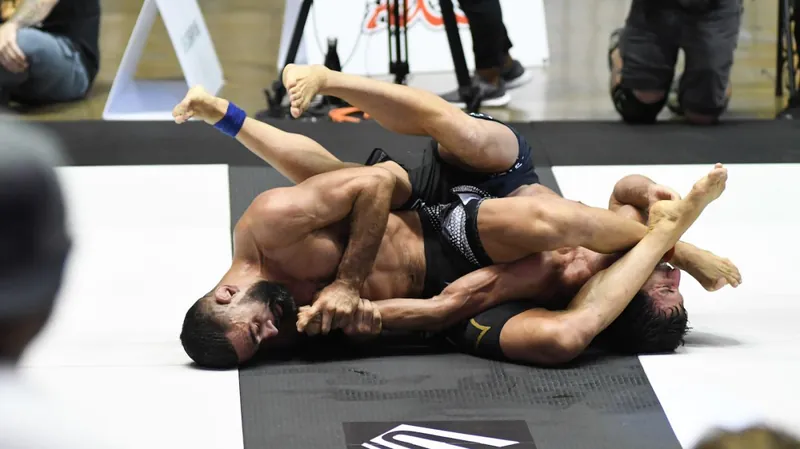
What the No-Gi Bow and Arrow Choke Actually Changes
Strip away the gi and three things change at once. First, the grip: instead of a four-finger collar grip, the attacking hand either traps the opponent’s far wrist against their own neck or threads a deep underhook that pins the shoulder. Second, the leverage: the far-leg pin that used to hook a pant cuff now grips bare skin above the knee, which is a worse grip but still enough to prevent the opponent from straightening out and relieving pressure. Third, and most important, the finish mechanism shifts. A gi bow and arrow choke is a clean blood choke — the collar cuts both carotids. The no-gi version leans more heavily on neck flexion and spinal extension, meaning it often finishes as a combination of discomfort and restricted blood flow rather than a pure fast choke.
That difference matters for how you drill it. Grapplers who try to force a true blood-choke finish with no-gi mechanics usually stall out, because the grip surface just isn’t strong enough to hold the position long enough. The ones who finish it treat it as a controlled squeeze-and-extend — get the grip, pin the leg, and lean back steadily instead of yanking.
Setting Up From Back Control: The Gift-Wrap Entry
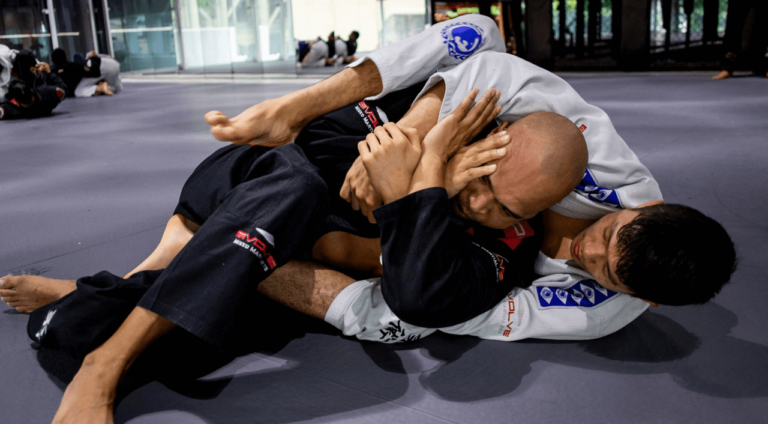
Most no-gi instructors teach this starting from standard back control with both hooks in, not from a static seatbelt grip. Once you’ve got your hooks, the setup begins with a gift-wrap — trapping one of the opponent’s arms across their own chest so it can’t post or defend the neck. From there you walk your grip up from the gift-wrapped arm toward the far side of the neck, using the trapped limb as a ramp. Our guide to taking and keeping back control covers the hook placement and hip positioning this setup depends on, and it’s worth drilling that separately before layering the choke on top.
The leg pin happens almost as an afterthought if your hooks are already deep — you’re not reaching for a fresh grip on the leg, you’re using the hook you already have to prevent the hips from squaring back up. Grapplers who skip straight to the choking grip without securing this leg control usually get their back taken away before the choke ever closes.
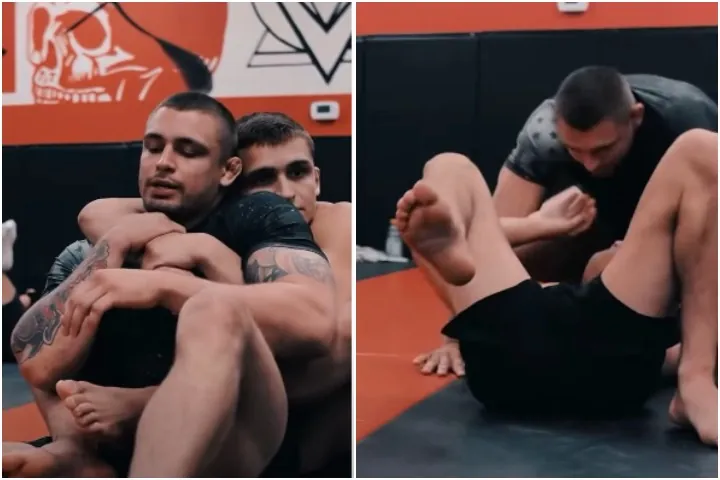
Eddie Cummings’ Mount Variation
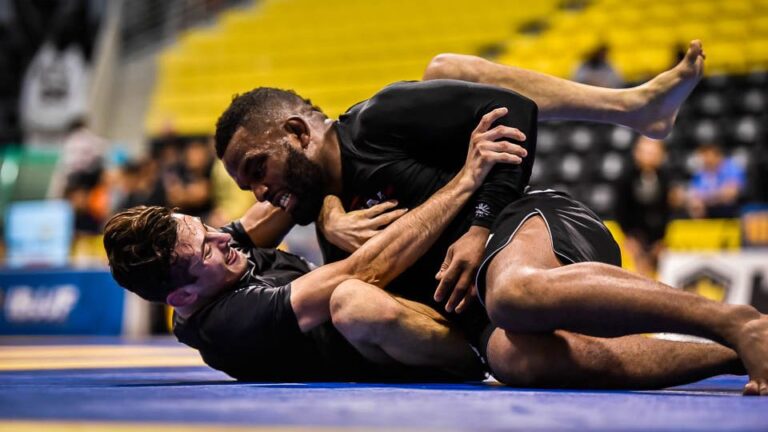
Cummings didn’t just adapt the grip — he moved the entire entry point. Rather than starting from back mount, his version starts from a top-mount gift-wrap, using the trapped arm to climb toward the neck while the opponent is still flat on their back instead of turtled or facing away. That matters in no-gi because taking the back cleanly is harder without gi friction to stall a scramble, so a version that works from mount gives grapplers a finishing option before the fight for the back even starts. BJJ World’s breakdown of the variation credits the finish to leg extension rather than collar pressure, since there’s no fabric left to choke with once the gi is gone.
It hasn’t replaced the rear naked choke as the default back-attack finish, and it probably shouldn’t — the RNC is simpler and more reliable once hooks are in. But as a secondary option off a failed mount attack, it gives up less position than most submission attempts from top mount do if it doesn’t land clean.

Choke or Crank? Why the No-Gi Version Splits Opinion
Call it what you want, but don’t call it risk-free. Some coaches insist the no-gi bow and arrow is a legitimate blood choke with a grip disadvantage; others argue it’s functionally a neck crank that happens to restrict some blood flow as a side effect. The truth sits closer to the second camp than most people teaching it will admit — without the collar’s cutting edge, a meaningful part of the finish comes from compressing and extending the neck rather than sealing the carotids cleanly. That’s not automatically dangerous, but it does mean the technique gets evaluated differently under rulesets that separate chokes from cranks. IBJJF rules only allow neck cranks when they’re combined with a choking action, which puts a hybrid technique like this one in a gray area referees don’t always call the same way twice.
If you’re the one tapping, don’t wait to find out which category your opponent’s version falls into. Tap early and tap often — a slow, grinding finish gives you more warning than a fast choke does, and there’s no reason to test how your neck handles sustained extension.
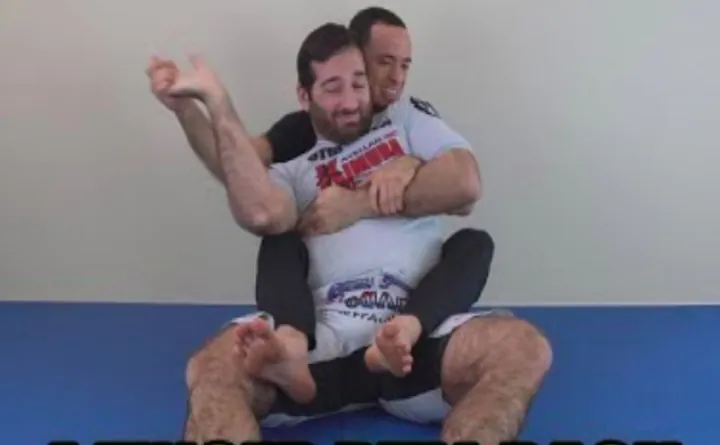
Bow and Arrow Choke vs. Rear Naked Choke: When Each One Wins
The rear naked choke wins the efficiency argument every time you have a clean seatbelt grip and both hooks in — it’s faster, it’s a true blood choke, and it doesn’t require trapping a limb first. Our rear naked choke setup guide covers why that grip sequence is worth drilling as your default back finish. The bow and arrow earns its place as a backup for a narrower situation: your opponent has defended the choking arm well enough that you can’t thread it under the chin, but you still have a gift-wrap or an arm trapped across their body.
Think of it less as a competing technique and more as a pressure-release valve. When the RNC stalls because the defending arm is jammed against the neck, switching to a wrist-trap bow and arrow attacks a different structure — the far side of the neck and the spine — instead of fighting the same jammed arm for another thirty seconds.
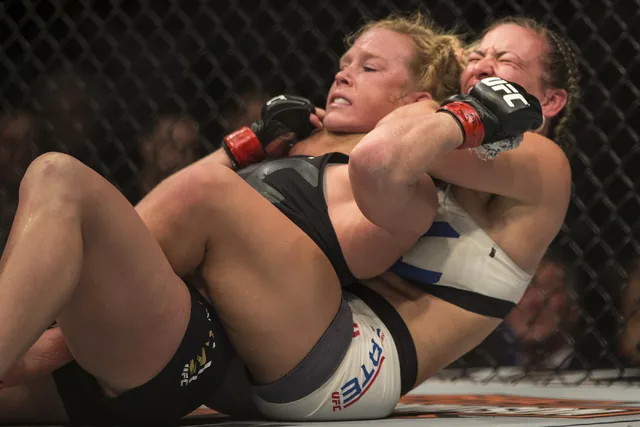
Is It Legal in No-Gi Competition?
Mostly yes, with caveats that depend on the organization. IBJJF treats it as a choke-plus-crank hybrid and generally allows it at adult belt levels, since the rule against pure neck cranks specifically targets techniques with no choking component at all. ADCC has historically been more permissive about combination submissions in general, though referees there also watch closely for techniques that look more like isolated spinal manipulation than a finish built around airflow or blood flow. If you compete somewhere with a youth or lower-belt no-gi division, check the specific ruleset before drilling this as a go-to — several regional federations restrict neck-crank-adjacent submissions below brown belt regardless of how the choke component is framed.
The practical takeaway: it’s legal almost everywhere for adults, but it’s not universally legal for everyone, and “I saw Eddie Cummings do it on FloGrappling” isn’t a ruleset.
Three Mistakes That Let Opponents Spin Out
The most common error is rushing the grip before the leg is controlled — grapplers see the wrist or the far side of the neck open up and lunge for it, which frees the hip they were supposed to be pinning and lets the opponent turn into them. The second is pulling straight back instead of extending through the opponent’s spine at an angle; a straight-back pull gives them a wall to brace against with their free arm, while an angled extension takes that base away. The third, and the one that costs people the position entirely, is committing to the choke grip before the gift-wrap or underhook is actually locked — if the trapped arm slips free mid-transition, you’ve traded a dominant back-control position for a scramble on even footing.
How to Escape Before It Locks
The defense window is earlier than most people think. The moment you feel an arm climbing past your shoulder toward your neck instead of staying low for a standard choke attempt, that’s your signal to fight the gift-wrap, not the final grip. Keep your trapped elbow tight to your ribs and turn your chin toward the attacking side — this closes the exact gap the wrist-trap grip needs to reach your neck. If the grip is already on, your best option is attacking the leg pin rather than the choking arm directly: bridge and roll toward your controlled leg to break the spinal extension before it builds, since the choke depends on that extension more than a gi version would.
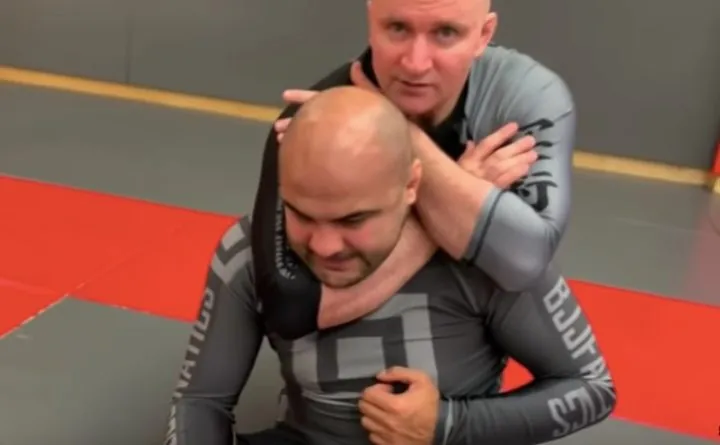
Most grapplers will go years without needing this choke as a primary finish, and that’s fine — it was never meant to replace the rear naked choke. What it does give you is an answer for the specific moment when your choking arm is jammed and your opponent thinks they’ve survived. Drill the gift-wrap entry a dozen times before you ever try the finish live, because the grip is the hard part, not the extension.
Sources
- No-Gi Bow and Arrow Choke — BJJ World — Eddie Cummings’ mount-based variation and the leg-extension finish mechanic.
- Neck Cranks: Why IBJJF Rules Treat Them Differently — BJJee — competition rules on neck cranks combined with chokes.
- Rear Naked Choke No-Gi: 7 Keys to Lock In the Finish — Rashguard Guy — grip sequence for the primary back-attack finish this technique backs up.