Straight Jacket No-Gi: 7 Keys to Back Control
Danaher’s gym put this system on the map, but the mechanics matter more without a gi to hold onto. At ADCC 2022, Gordon Ryan finished more matches from the back than from any other position, and the grip he used to get there wasn’t a seatbelt — it was a wrist. Strip the collar and sleeve away and the whole system changes shape: no fabric to stall an escape, no lapel to choke with, nothing but hands, hips, and a leg that has to do the work a gi would normally do for free.
Why No-Gi Changes the Math
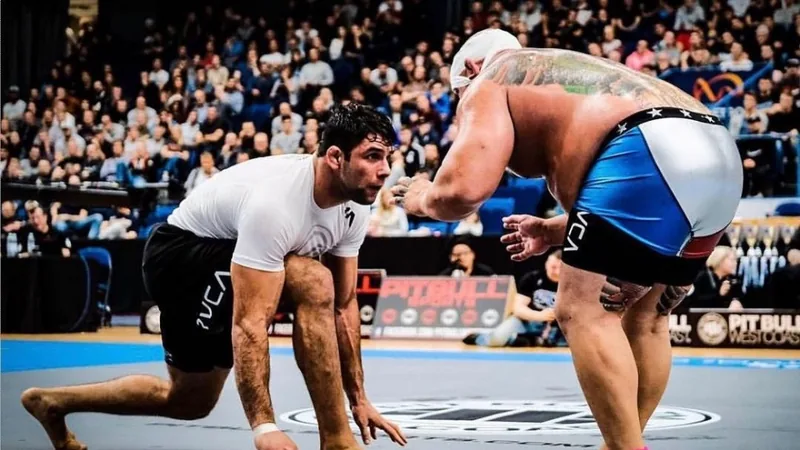
In the gi, back control survives on fabric. Grab a sleeve, grab a collar, and even a sloppy seatbelt buys you five extra seconds to fix your grip. No-gi strips that cushion away. Sweat turns skin into a surface with almost no friction, which means every grip you take has to be structurally sound on its own — not propped up by material. That’s the entire reason the straight jacket exists as a named system rather than just “good back control.” It replaces the gi’s forgiveness with a specific sequence: wrist control instead of a sleeve grip, a leg trap instead of a seatbelt hook, and a decoy choke that does the isolating work a lapel would otherwise handle.
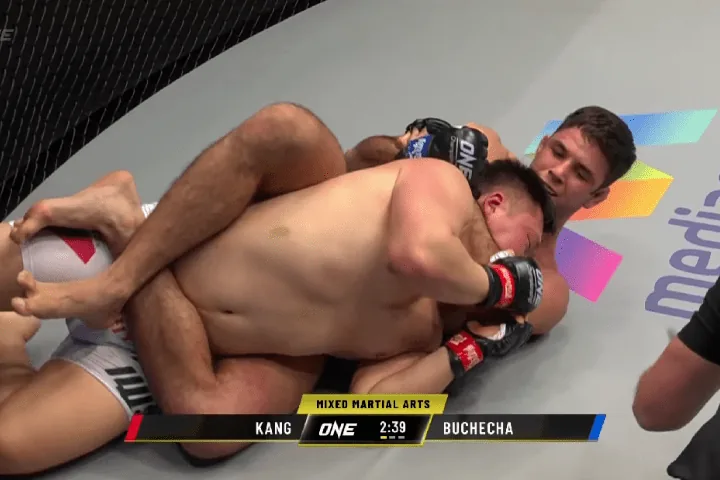
The payoff is that straight jacket control transfers directly to MMA, where there’s no gi to begin with. Demian Maia built a UFC career on exactly this idea — nine rear naked choke finishes, still the division record — years before Danaher’s crew gave the system a name and a step count.
It also explains why this system reads as “complicated” the first time someone watches it. It isn’t one technique — it’s a sequence of small decisions, each one closing off an escape route the last step opened up. Skip a step and the whole thing collapses back into generic back control, which is still good, but gives your opponent far more exits than they’d have against the full system.
Enter From the Weak Side, Not the Strong Side
Most white belts take the back and fall toward whichever shoulder feels natural. That’s backwards. Fall to the underhook side instead. An underhook can’t be pulled up and over your opponent’s head the way an overhook can, and it keeps your head glued tight to their back so they can’t turn in and get their shoulders flat to the mat. That single detail — which side you fall to — decides whether the next four minutes are spent controlling or chasing.
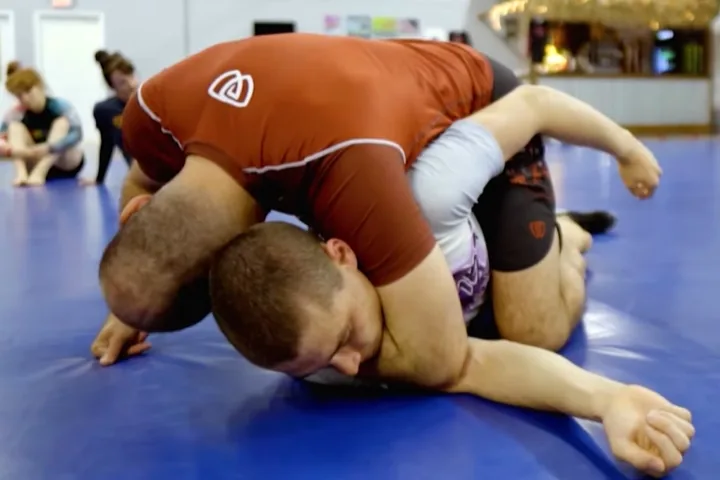
Once you’re attached on the correct side, get a foot on the hip and your other leg crossed over — a body triangle if your legs are long enough to lock it, hooks if they’re not. Don’t rush this part. A rushed entry is the single biggest reason back control gets lost in the first ten seconds, long before any submission attempt even starts.
Don’t force a body triangle if your legs are too short to lock it comfortably — a half-locked triangle is weaker than two solid hooks. ADCC scores both the same way, and in no-gi there’s no lapel to grab regardless, so there’s no competitive reason to fight for a triangle your body isn’t built for on that particular opponent.
Isolate One Arm With a Two-Handed Wrist Grip
This is the detail that separates the straight jacket from generic back control, and it’s the one most no-gi grapplers skip. The moment you’re attached, get both of your hands on one of your opponent’s wrists — not a collar tie, not a bicep grab, a wrist. Two hands on one wrist sounds like overkill until you feel how hard a sweaty arm is to control with one hand alone. The second hand is what keeps the arm from slipping free the instant they start to hand-fight.
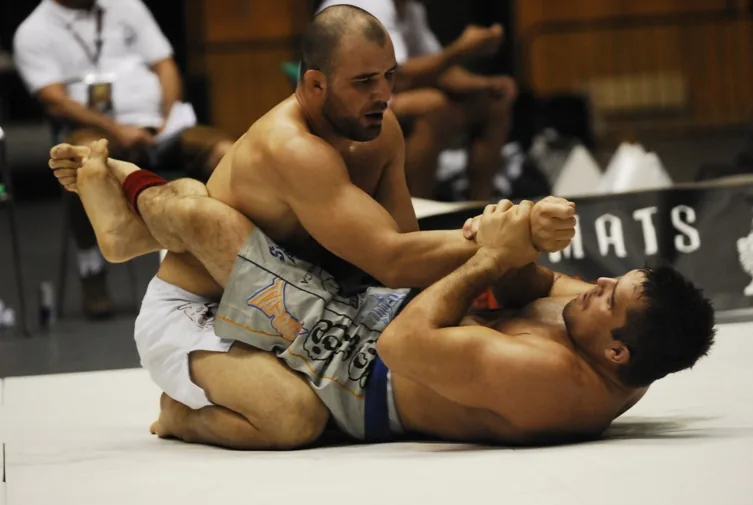
Wrist control also does something a lapel grip never could: it lets you steer the rotation of your opponent’s whole torso. Pull the wrist across their body and their shoulders follow, which opens the exact angle you need for the choke that’s coming next.
Bait the Choke to Set Up the Real Trap
Here’s where the straight jacket stops looking like patient positional grappling and starts looking like a trap. Attack a single-arm rear naked choke with your free arm. Most opponents know this choke is live and react the same way every time — they reach up with their free hand to peel your choking arm off their neck. That’s the bait working exactly as intended. You were never fully committed to finishing the choke from here; you wanted them to commit their other arm to defending it.
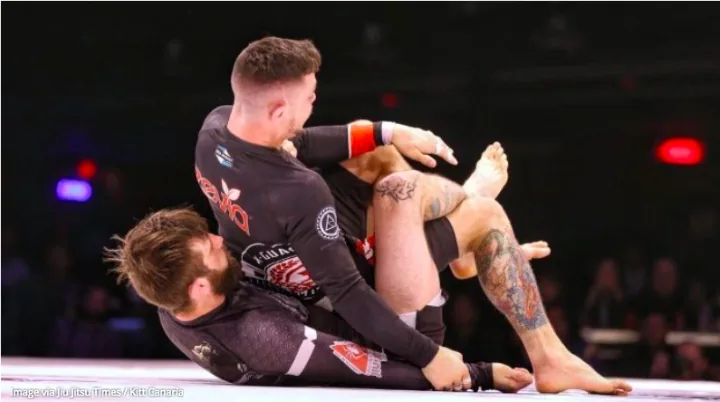
The predictability is the whole point. A trained opponent defends a choke threat almost on reflex, and that reflex is what hands you their second arm.
Feed, Release, and Hunt the Second Arm
With their defending hand now up near their own neck, feed your top arm’s wrist control down to your bottom (underhook) arm. One arm is now doing the job two arms were just sharing. That frees your top arm completely — release the choke attempt and go hunt the second wrist with it. This is the step grapplers rush, and rushing it is how the whole sequence falls apart. Take the extra half-second to get a real grip, not a grazing touch you’ll lose the moment they shrimp.
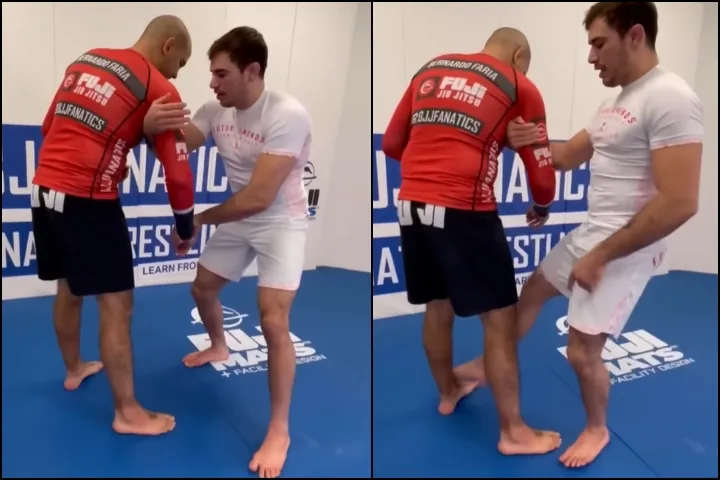
By the end of this step you should have one wrist controlled by your underhook arm and the other wrist controlled by your free hand. Both of their arms are now accounted for — they just don’t know it yet.
Lock the Leg Trap and Go Two-on-One
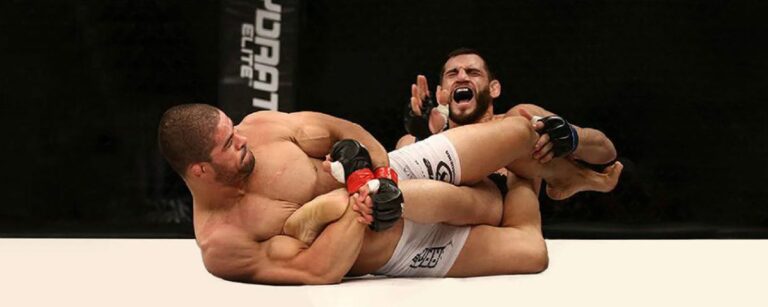
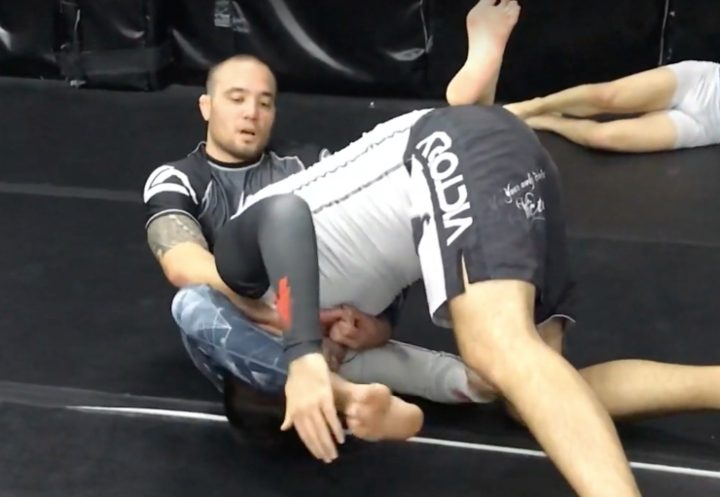
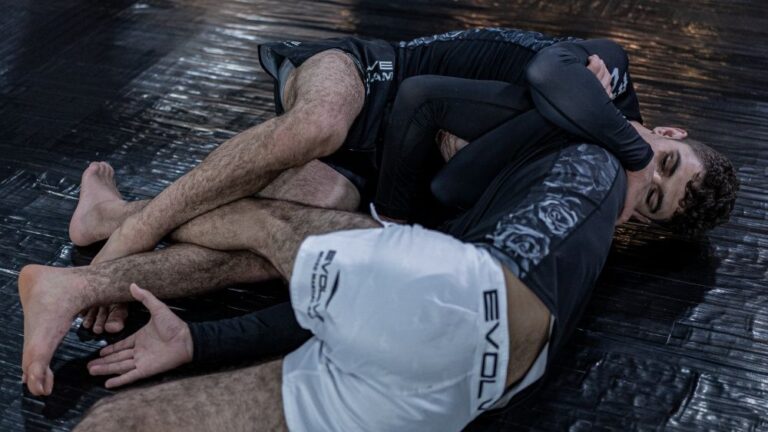
This is the move that gives the system its name. Hip out slightly to open the angle, then trap one of their arms against their own body using your leg instead of a hand. With one arm pinned under your leg and the other controlled by a two-on-one grip from your remaining arm and hand, your opponent looks exactly like someone zipped into a straight jacket — both arms dead, no framing hand left anywhere on their body.
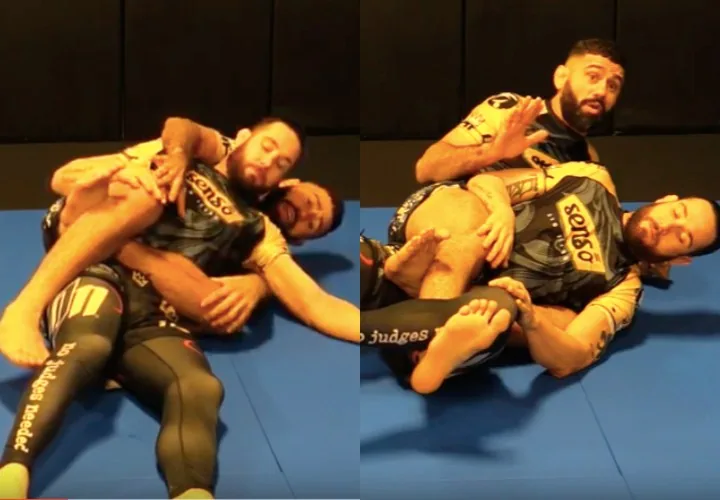
Without a gi, the leg trap has to be tighter than it would be in the gi — there’s no fabric adding extra surface friction to help it hold. Keep your knee pinned high and close, not floating, or a sweaty arm will work its way loose in seconds.
Three Ways to Finish Once Both Arms Are Dead
Everything up to this point was setup. Once both arms are controlled, three finishes are sitting right in front of you, and which one you take depends entirely on how your opponent reacts to losing their arms:
- Rear naked choke — the default finish. With both arms dead, there’s no hand left to fight your choking arm off the neck.
- Armbar — if they extend the trapped arm trying to create space, follow it out into an armbar rather than fighting to keep the position static.
- Triangle from the back — if they turn into you to escape the choke, their own trapped arm and your legs are already in position to finish a triangle.
Most grapplers only drill the choke and treat the other two as theoretical. They’re not. The moment your opponent panics and reacts, they’ll hand you whichever finish fits their escape attempt — you just have to recognize it instead of forcing the choke every time.
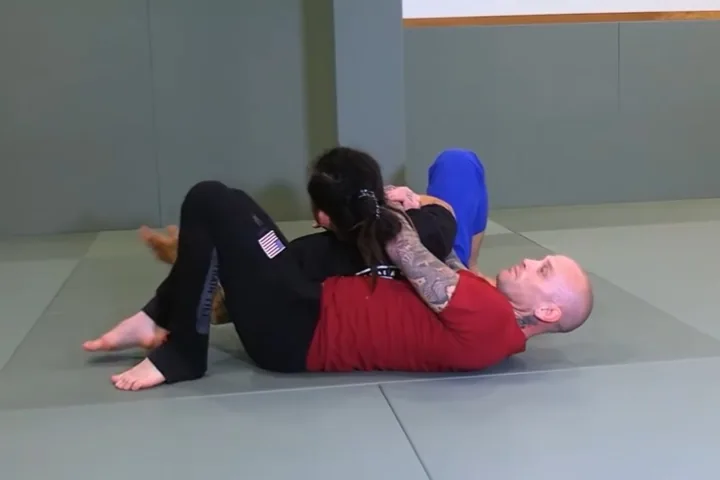
The mistake that breaks the whole system happens earlier than most people expect: going straight for the leg trap before the choke bait has actually pulled the second arm out of hiding. Skip that step and you’re not fighting a disarmed opponent — you’re fighting someone with one hand still completely free to post, frame, or grab your fingers. The leg trap only works because the arm underneath it was already given up willingly a moment earlier. Force it early and you’ll spend the rest of the round wrestling a limb that was never actually isolated.
The fix is almost boring: drill the sequence slowly, out loud, naming each step before you do it — fall underhook side, two hands on one wrist, bait the choke, feed and release, hunt the second wrist, then and only then, trap the leg. Live rolling rewards whoever has the sequence automated, not whoever is strongest. Four or five slow reps a session, done consistently for a few weeks, will get the order into your hands faster than any amount of hard rolling alone.
This system doesn’t replace general back control no-gi fundamentals — it builds on them once hooks or a body triangle are already locked in. And the finish most people default to from here is still the rear naked choke, just arrived at through a cleaner setup than grabbing and squeezing.
Sources
- The 7 Steps of The Danaher Straight Jacket Back System — BJJ Eastern Europe’s breakdown of the full sequence.
- Danaher Straight Jacket Control (To A Rear Naked Choke) — BJJ Fanatics on the arm-trapping mechanics and finish.
- Demian Maia athlete profile — UFC.com, record for rear naked choke finishes in the division.