Gift Wrap No-Gi: 7 Keys to the Back Take
Rickson Gracie used a version of this exact control against Nobuhiko Takada and Masakatsu Funaki in Japan decades before “gift wrap” became a standard term in competition no-gi. The name comes from how the trapped arm wraps the opponent’s own head and shoulders shut, like ribbon pulled tight around a box. At 155,000+ monthly searches for mount-related BJJ queries and almost no dedicated no-gi breakdown anywhere online, the position is overdue for a real explanation of how to enter it, hold it, and cash it in for a finish.

What Is the Gift Wrap in No-Gi BJJ?
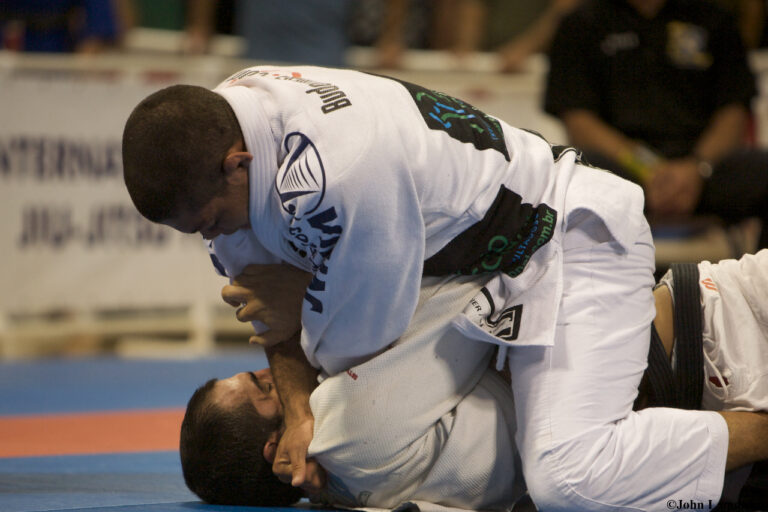
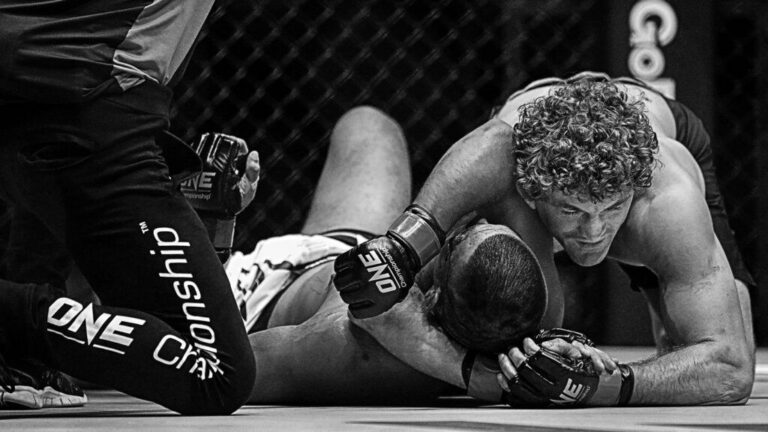
The gift wrap is an arm-isolation control that starts from mount or top side control. You catch your opponent’s near-side wrist, drive it across their own face, and pin it there with your own forearm wedged behind their head. The trapped arm becomes a wall between their skull and the mat — they can’t use it to frame, bridge, or push off the floor, and it’s physically in the way of almost every mount escape that depends on hip movement.
What makes it a no-gi staple rather than a gi-only trick is the grip. A lot of mount control in the gi relies on collar and sleeve material that simply isn’t there in a rashguard. The gift wrap skips fabric entirely — it’s wrist-to-head contact, body weight, and angle. Train it in shorts and a rashguard and it works exactly the same at an ADCC trials match as it does in the gi.
How Do You Enter the Gift Wrap From Mount?
Most entries start the same way: your opponent turns onto their side to escape, which is the single most common mount reaction at every skill level. When they roll away from you, their near arm crosses in front of their own chest as they try to post or frame. That’s your window. Catch the wrist with your same-side hand, using an underhook grip on the forearm rather than fighting their palm directly — Gordon Ryan has pointed out that gripping underneath the wrist attacks the weaker rotator cuff muscles instead of the much stronger chest and shoulder, so the isolation holds even against a bigger opponent.

Once you have the wrist, drive it up and across their face, then slide your own forearm in behind their head so the wrist gets pinned between your arm and their skull. Your head stays heavy on their chest the entire time — if you lift up to “look” for the grip, they recover the frame and the whole entry collapses. The wedge, not the grip strength, is what actually locks the arm in place.
Why Does the Gift Wrap Work So Well in No-Gi?
I’ll say it plainly: the gift wrap is a better no-gi mount tool than most of what gets taught at the beginner level, because it solves the actual problem no-gi mount control has. Sweat removes friction fast, and a lot of standard mount-retention advice (heavy hips, base wide, chase the far-side underhook) assumes you have time to readjust grips every few seconds. The gift wrap doesn’t need readjusting. Once the wrist is wedged behind the head, that connection survives bridging, hip escapes, and most scrambles, because it’s structural rather than grip-dependent.

It also removes an entire category of escape. Standard mount escapes — the upa bump, the elbow-knee, the trap-and-roll — all depend on the bottom player using both arms to frame or bridge. With one arm gift-wrapped shut, they’re defending with half their usual tools while you keep both of yours.
How Do You Transition From Gift Wrap to Back Control?
This is where the position earns its reputation. Once the wrist is pinned, step your far-side leg over into technical mount on the open side — the side with the trapped arm — and let your hips rotate with it. Your opponent is already turned halfway onto their side because that’s how you got the grip in the first place, so the transition takes one step, not a scramble.

Slide your bottom hook in first — the leg closest to the direction you’re turning — then follow with the top hook once the bottom one is secure. Don’t rush both hooks in at once; a lot of back takes get lost right here because the top hook goes in before the bottom one is load-bearing, and the opponent uses that gap to spin back to guard. With both hooks set and your chest glued to their back, slide your free hand through for the seatbelt. The choke-side hand is already inside from the gift wrap grip, which means your submission setup is half-finished before you’ve technically arrived at back control.
What Submissions Can You Finish From the Gift Wrap?
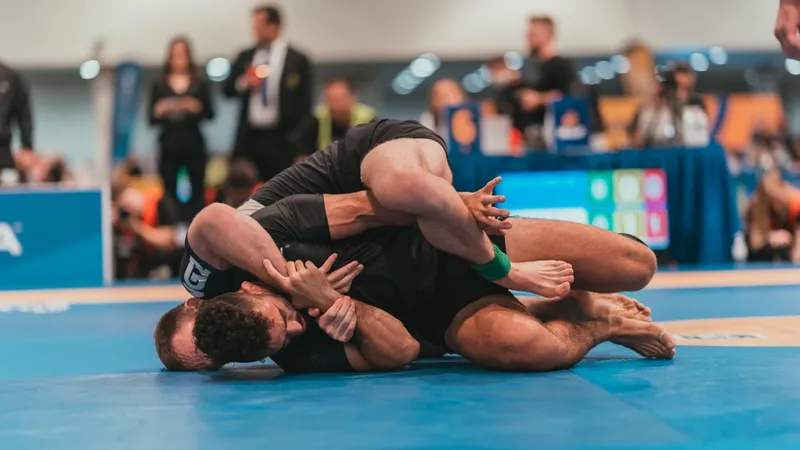
The rear naked choke is the default and the highest-percentage finish, since the seatbelt arrives pre-built. Flatten your opponent chest-down, keep your bottom hook heavy so they can’t turn back into you, and thread your choking arm under the chin while your other hand controls the head. The detail that actually matters: hide your thumb inside your fist instead of gripping with it exposed. An exposed thumb gives your opponent something to grab and peel, and it’s the single most common reason an otherwise-correct rear naked choke stalls out two inches from a finish.
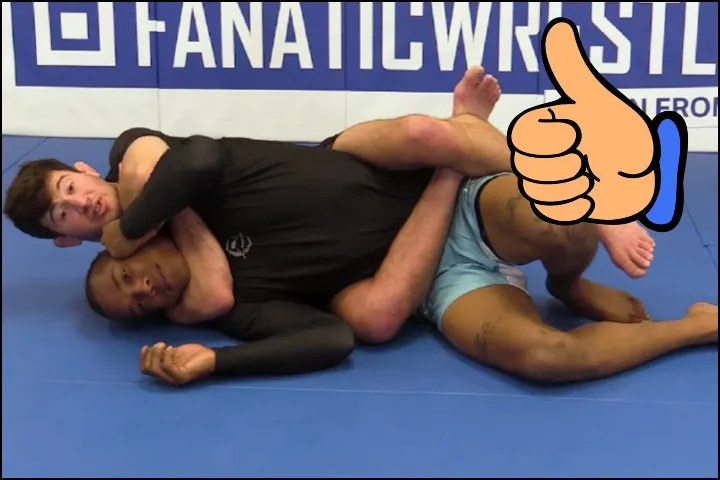
If they stay flat on their back instead of turning, you’re not locked into the choke — the gift wrap also feeds directly into an armbar on the trapped arm, since it’s already isolated and extended across their body, or a mounted triangle if you can free a leg to thread across their neck. Our mounted triangle breakdown covers the leg-threading details if that’s the finish you want to chase instead of staying with the choke. For opponents who manage to turtle up mid-transition, the north-south choke becomes the higher-percentage option, and the same wrist-isolation principle from the gift wrap applies there too.
What Mistakes Kill the Gift Wrap in No-Gi Rolls?
The most common failure is letting go of the wrist too early to chase the back take. If you release the grip before your hooks are both in, the trapped arm comes free and your opponent uses it to post, frame, or grab your far leg mid-transition. Keep the wrist pinned until your bottom hook is load-bearing — only then is it safe to free your hand for the seatbelt.
The second mistake is skipping the head wedge and trying to hold the position on grip strength alone. Sweat makes wrist grips slip fast, and a grip-only gift wrap against a strong opponent lasts about as long as your forearm does. The wedge behind the head is what actually does the work; the grip is just there to feed the wrist into it.
A smaller but costly error: rotating your hips too late. If you isolate the wrist and then pause, your opponent reads the direction you’re about to roll and recovers guard before your hook lands. The grip and the hip rotation need to happen in the same motion, not as two separate steps.
How Do You Defend the Gift Wrap From the Bottom?
If you feel your wrist getting captured and driven across your face, the window to prevent it is before your opponent’s forearm wedges in behind your head — once that wedge is set, fighting the grip directly rarely works. Instead, stop turning further onto your side. The gift wrap depends on you being mid-roll; if you square back up to flat, your opponent loses the angle to finish the wedge and has to reset.

If the wedge is already locked and you can’t square up, your remaining option is to use your free arm to frame on their hip and create enough space to re-guard before the second hook lands. Once both hooks are in and the seatbelt is set, you’re defending a finished back take, not a developing one — plan your escape for the moment your hips start to turn, not after.
Is the Gift Wrap Legal in No-Gi Competition?
Yes — the gift wrap itself is just a control position, not a submission, so there’s nothing to clear with IBJJF or ADCC rulesets before using it. The finishes that come off it are where legality actually matters, and that depends entirely on which finish you chase. The rear naked choke and armbar are legal at every belt level and every ADCC division without restriction. The mounted triangle is fine too, since it’s a leg-based choke rather than a joint attack.
Where it gets stricter is if you try to twist into a wristlock off the trapped arm instead of finishing with the choke. Straight wristlocks are legal in no-gi ADCC rules but banned in IBJJF gi and no-gi divisions below black belt, and even at black belt IBJJF restricts them to standing positions only — not from back mount. If you compete in IBJJF, treat the gift wrap purely as a control-into-choke tool and save the wristlock variations for ADCC-ruleset or submission-only events where they’re unrestricted. Same logic applies to the arm triangle as a backup finish if your opponent manages to turn into you mid-transition — it’s legal everywhere and doesn’t require you to track a separate ruleset.
Most no-gi grapplers treat the gift wrap as a footnote inside a bigger mount system instead of training it as its own skill. That’s backwards — it’s one of the few mount tools that survives sweat, scrambles, and a bigger opponent without needing fabric to hold onto. Drill the wrist isolation and the hip rotation as one movement this week, and the back take stops being a scramble and starts being a formality.
Sources
- BJJ Eastern Europe — Learn Rickson Gracie’s Signature Gift Wrap Back Take — history of the position and its use in Rickson Gracie’s Pride-era fights.
- Evolve University — How to Use the Gift Wrap to Improve Your BJJ — entry mechanics and positional variations.
- BJJ Eastern Europe — Hide Your Thumb: The Secret to Finishing the Rear Naked Choke — grip detail for the finishing choke.
- BJJ Eastern Europe — Gordon Ryan Explains Weird Grip for Easier Mount Control and Attacks — wrist isolation mechanics from mount.