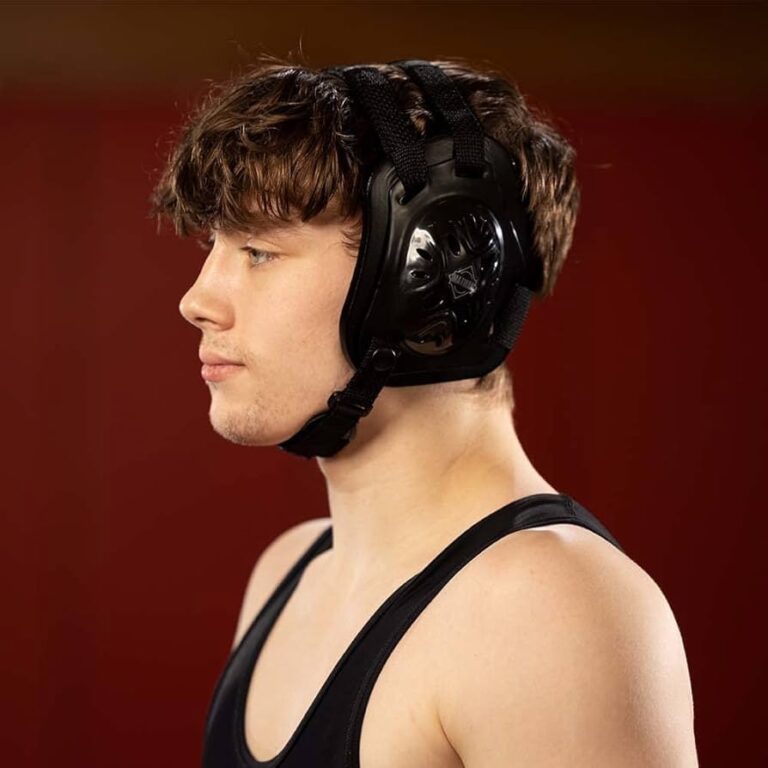

Starting Ear Guards Before the Damage Begins: The Case for Early Adoption in No-Gi
Most grapplers who wear ear guards started wearing them after something went wrong. An ear blew up after a bad headlock. A drilling session left one side visibly swollen. A training partner mentioned the redness. Somewhere in that sequence, the ear made its case loudly enough that protection entered the equation. That’s the standard origin story: reactive, late, driven by pain or cosmetic alarm rather than any deliberate strategy.
The case for starting earlier — before the first roll, before the first red flag, before the earliest signs of trauma appear — is more practical than most people realize. Early adoption of ear guards in no-gi isn’t about being timid or overcautious. It’s about understanding how the injury actually develops, how habits get set, and why the easiest window for preventing long-term ear damage is the one most grapplers never use.
The Damage Doesn’t Announce Itself
The hematoma that becomes cauliflower ear rarely feels like a defining moment when it first happens. Early-stage ear trauma shows up as tenderness, slight puffiness, and warmth. It’s easy to dismiss as general post-training soreness — just the body adjusting to the demands of contact sport. That dismissal is exactly where the problem begins.
When a blow, scrape, or sustained pressure causes blood to pool between the perichondrium and the cartilage of the ear, the clock starts. Left undrained and untreated, that accumulated blood begins to organize — the body tries to resolve the clot by laying down fibrous tissue, and the cartilage underneath gradually loses its blood supply. Over time, through repeated insults or a single significant one, the ear calcifies into the distinctive hardened shape that’s become synonymous with long-time grapplers.
The window for intervention is narrow. In the first 24 to 48 hours after a hematoma forms, drainage is relatively straightforward and effective. A few days later, the tissue has already begun to organize, making drainage harder and increasing the likelihood of recurrence. A week out, the damage is often permanent without surgical intervention. Most grapplers don’t recognize the signs in that first window — partly because they don’t know what to look for, and partly because no one told them to look.
Why Most Grapplers Start Too Late
The gap between when ear damage begins and when grapplers respond to it isn’t accidental. It’s cultural, partly, and partly a matter of how training environments talk — or don’t talk — about ear protection.
The Earned Ear Problem
In many no-gi gyms, cauliflower ear carries status. It’s visible evidence of time on the mat, a physical marker of years spent in headlocks and scrambles. That cultural framing creates a subtle but real disincentive to protect against it — wearing ear guards as a white belt can feel like refusing a rite of passage. Some newer grapplers even want the look, associating it with a legitimacy they haven’t yet developed through skill alone.
This is changing. At the higher levels of no-gi competition, the attitude toward ear guards has shifted significantly. Athletes who are competing seriously understand that a blown-up ear is a liability, not a badge — it catches during scrambles, signals pain under pressure, and can sideline a grappler for days after a training session. The culture at the elite level increasingly treats ear guards the way it treats mouthguards: standard protective equipment, not an admission of weakness.
Waiting for Visible Signs
The other common failure point is the assumption that protection becomes relevant only once the ear is visibly swollen. That logic makes sense on the surface — why guard something that isn’t hurting yet? — but it misunderstands how the injury works. By the time there’s visible swelling, the hematoma has already formed. The protective gear that would have mattered most is now in the role of secondary prevention at best: stopping further trauma while the current injury resolves, rather than preventing the injury from occurring in the first place.
Starting ear guards before any damage is present is the only configuration in which they function as true primary prevention. Every other starting point is reactive, and reactive protection is always working against a deficit it helped create by not being there sooner.
What the Ear Is Actually Going Through in Early Training
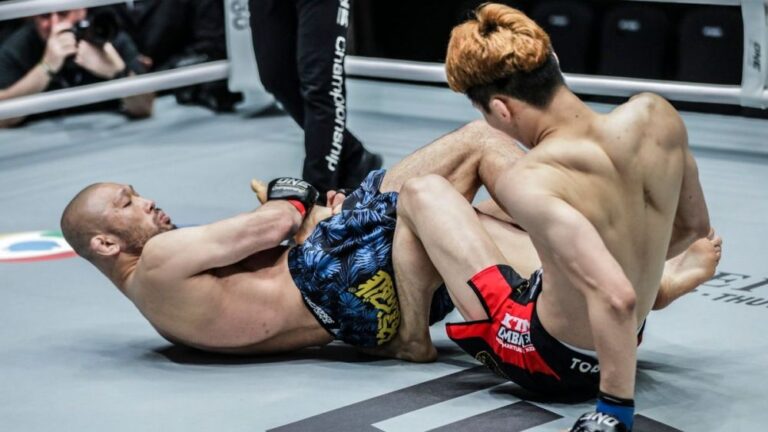
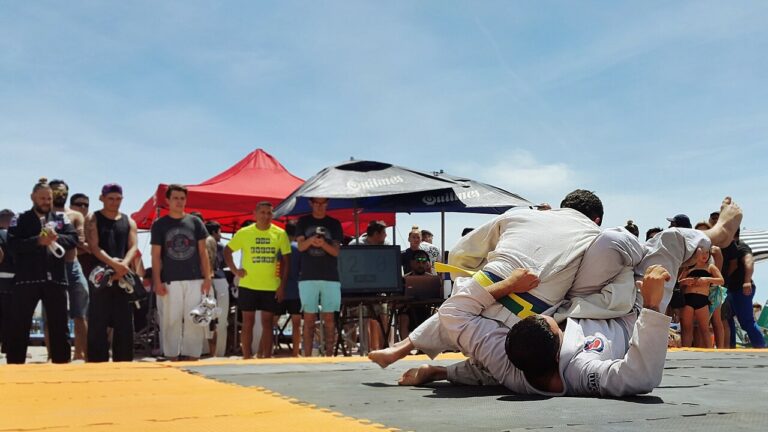
New grapplers accumulate more incidental ear contact than they realize. In no-gi specifically, the lack of collar-and-sleeve grips means a higher volume of underhook battles, head-tie scrambles, and neck wrestling — all positions that load the ears constantly. A beginner isn’t skilled enough to minimize that contact the way an experienced grappler can. They’re getting caught in more awkward positions, spending longer in bad spots, and taking friction and compression on the ears that a more skilled athlete would escape quickly.
That elevated early exposure is exactly why the beginning of someone’s grappling career is the highest-risk window, not the lowest. The ear damage that compounds over years often starts in the first few months, in small doses that build into something structural. Waiting until six months in to think about ear guards means those first six months have already done their work.
There’s also a skill gap factor that’s easy to overlook. Experienced grapplers know how to angle out of a guillotine attempt before the head gets cranked sideways. They feel the underhook coming and time the level change. Beginners don’t have those reads yet. They get stuck in the positions that create the most ear contact — held in headlocks longer, jammed under a heavier partner’s chest in turtle, dragged into neck cranks they can’t see coming. The technical inexperience that defines early training is also an anatomical risk factor.
What Changes When You Start on Day One
The practical argument for early adoption isn’t just about preventing a specific injury. It’s about habit formation. Grapplers who start wearing ear guards from their first training session don’t have to overcome any resistance to the habit later — it’s already part of their pre-roll routine the same way taping fingers becomes automatic for certain athletes. There’s no adjustment period, no phase of deciding whether this is necessary for them specifically, no window where the habit was absent and now has to be reestablished after some triggering injury.
That matters more than it sounds. One of the most consistent patterns in ear guard use is that grapplers who take a training break and return often don’t resume wearing the guards they used before the layoff. The habit breaks during the absence, and restarting it requires a conscious decision that early adoption would have made unnecessary. Starting consistently from week one means the decision is never really a decision — it’s just what training looks like.
There’s also an equipment comfort dimension that takes time to work through. Ear guards take sessions to break in, and more importantly, they take sessions to get used to. The first several rolls wearing any ear guard involve some spatial adjustment — head positioning feels slightly different, pressure feedback from the ears is altered, and there’s an awareness of something that wasn’t there before. Grapplers who go through that adjustment phase from their first week don’t experience it as a disruption to an established game. Grapplers who adopt guards mid-career often abandon them during the adjustment phase because the unfamiliarity coincides with a sense of regression in their training.
Making Ear Guards Work from the First Session
For a first-time grappler choosing ear guards on day one, the priority isn’t finding the most advanced model on the market — it’s finding something that stays on reliably and doesn’t create so much bulk that it interferes with basic positioning. A secure strap fit matters more than padding density in the early stages. If the guard keeps slipping or requires constant readjustment, it becomes a source of friction during drilling that new grapplers don’t need layered onto the already-steep learning curve.
Silicone guards with dual-strap systems tend to hold position better across head shapes than single-strap models, and low-profile designs reduce the impact on peripheral awareness without sacrificing coverage over the ear cup. For no-gi specifically, the fit has to survive underhook exchanges and head ties — positions that apply lateral force to the guard rather than just frontal pressure. A guard that holds through those exchanges will hold through most of what beginner training involves.
Wearing the guard for full sessions from the beginning — not just for live rolling — establishes a broader habit baseline faster. Drilling with guards on normalizes the feel more quickly than rolling alone does, because drilling involves deliberate repetition of the exact positions that put ears at risk. Headlock defense, clinch entry, wrestling setups — these are the contexts where the ear is most exposed, and practicing them with guards on builds the association between protective gear and those positions as something ordinary rather than something signaling an elevated danger level.
The Long Game
The grapplers who train into their forties and beyond without significant ear problems aren’t necessarily the ones who got lucky with training partners or avoided dangerous positions. Many of them made a deliberate choice early — sometimes from watching what happened to the people around them — to treat ear protection the same way they treated any other piece of training gear. It became part of the overhead of showing up, not an optional add-on for bad days.
No-gi grappling has a high attrition rate from chronic injury. The ear is one of the more preventable casualties, precisely because the intervention is external, inexpensive, and doesn’t require any modification to technique or training volume. Wearing ear guards doesn’t mean rolling less hard or training less frequently. It removes one of the accumulated costs of doing what you’re already doing.
Starting before the damage begins means the ears are never the variable that changes the training calculus — never the reason a session gets cut short, a sparring request gets declined, or a competition gets postponed. That’s the actual value of early adoption: not vanity, not excessive caution, just the arithmetic of keeping more of what you invest in the sport available for the sport itself. The damage doesn’t give you warning. The guard should already be on when it tries.
Sources
National Center for Biotechnology Information (NCBI) — Auricular Hematoma Research
FloGrappling — No-Gi Grappling Coverage
Image credit: hearcare-indiana.com