How No-Gi Competitors Vet a Rashguard Before They Trust It on the Mat
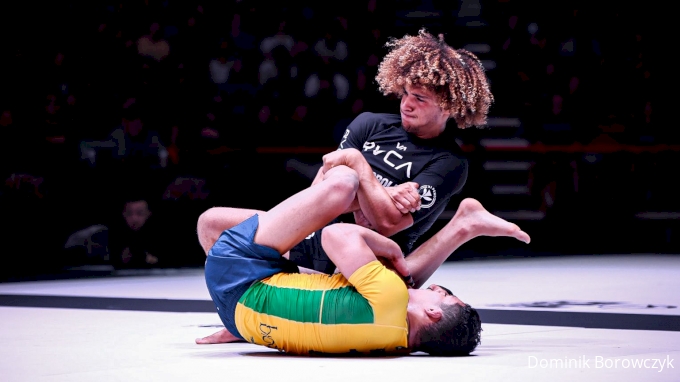
Walk into any serious no-gi room and you’ll notice something: the people who roll the hardest rarely talk about their rashguards the way ads do. They don’t care which athlete’s signature is printed across the chest. They care whether the collar still lies flat after eighteen months, whether the underarm seam has ever opened mid-scramble, and whether the sleeves bind when an opponent cranks an arm into an Americana. That difference in priorities is the entire reason most men buy the wrong rashguard. They shop like a fan; they should shop like a competitor.
The good news is that the way elite grapplers vet gear is completely learnable, and it has nothing to do with having an ADCC invite. At the top level the rules barely constrain what you wear — ADCC lets athletes pick any color, and competitors can even roll shirtless, with the only hard prohibition being zippers, pockets, or anything that could cut or catch a training partner. That freedom means the choices the best men make are pure function. Strip away branding and what’s left is a short list of physical tests anyone can run in a fitting room or during their first week with a new piece. This is that lens.

What “best” actually means once you stop reading the label
When people search for the best rashguards for men, they’re usually hoping for a brand name to copy. But “best” isn’t a fixed object — it’s a match between a garment and the way you train. A 200-pound heavyweight who drills takedowns three nights a week destroys gear in places a lean guard-player never touches. Someone training in a humid, un-air-conditioned room in July needs a fabric that moves sweat differently than someone rolling in a cold Northern garage. The competitor’s first move is never “which is best?” It’s “best for what load, what body, what climate?” Answer those three and the field of candidates shrinks fast.
This is also why chasing the single highest-rated rashguard online so often disappoints. A garment engineered for a flyweight competitor’s lean torso will hang loose and bunch on a thicker, heavier frame — and loose fabric is exactly what your opponent’s fingers and toes hook into. The pros aren’t buying the most expensive option; they’re buying the one that disappears on their specific body under their specific style of pressure. “Best” is a verb you perform, not a product you locate.
The fit test competitors run before they ever roll
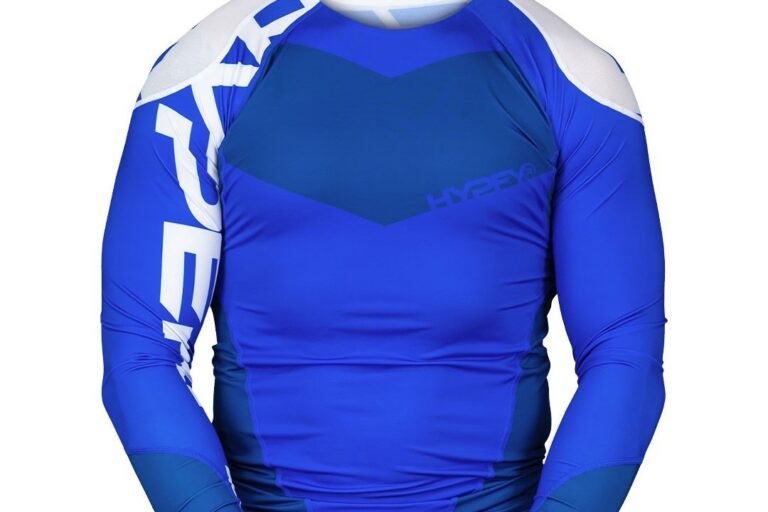
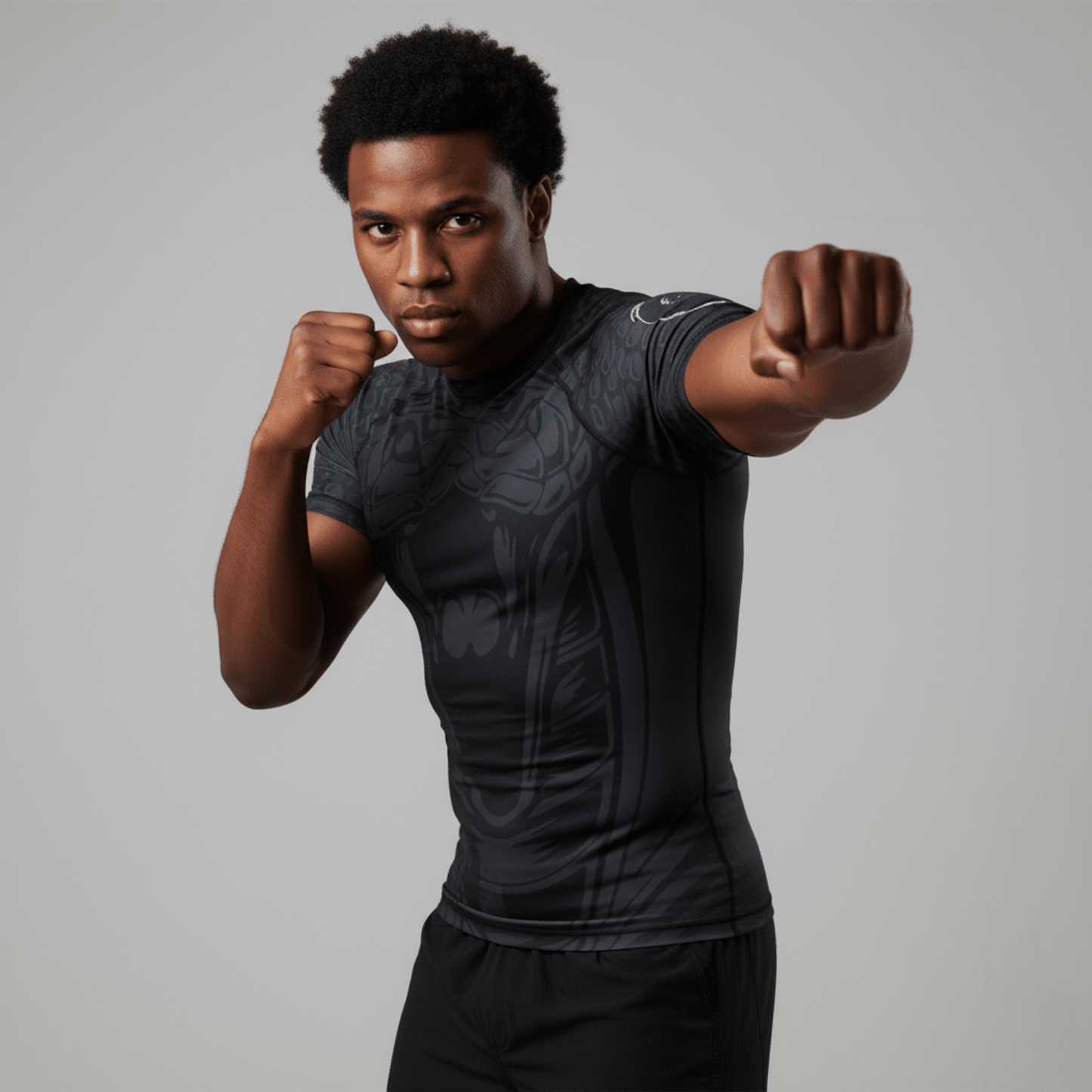
The single most important property of a no-gi rashguard is compression that holds without choking. A good piece should feel like a firm second skin — snug enough that there is no loose material anywhere for a grip to grab, but never so tight that it digs at the throat or pins your shoulders down. Competitors test this in the store the way they’ll move on the mat: arms overhead in a full reach, then a deep squat, then a torso twist as if shooting a single leg. If the hem rides up over the navel, if the collar saws at the neck, or if the shoulders feel restricted at full extension, the piece fails before it ever sees live rolling.
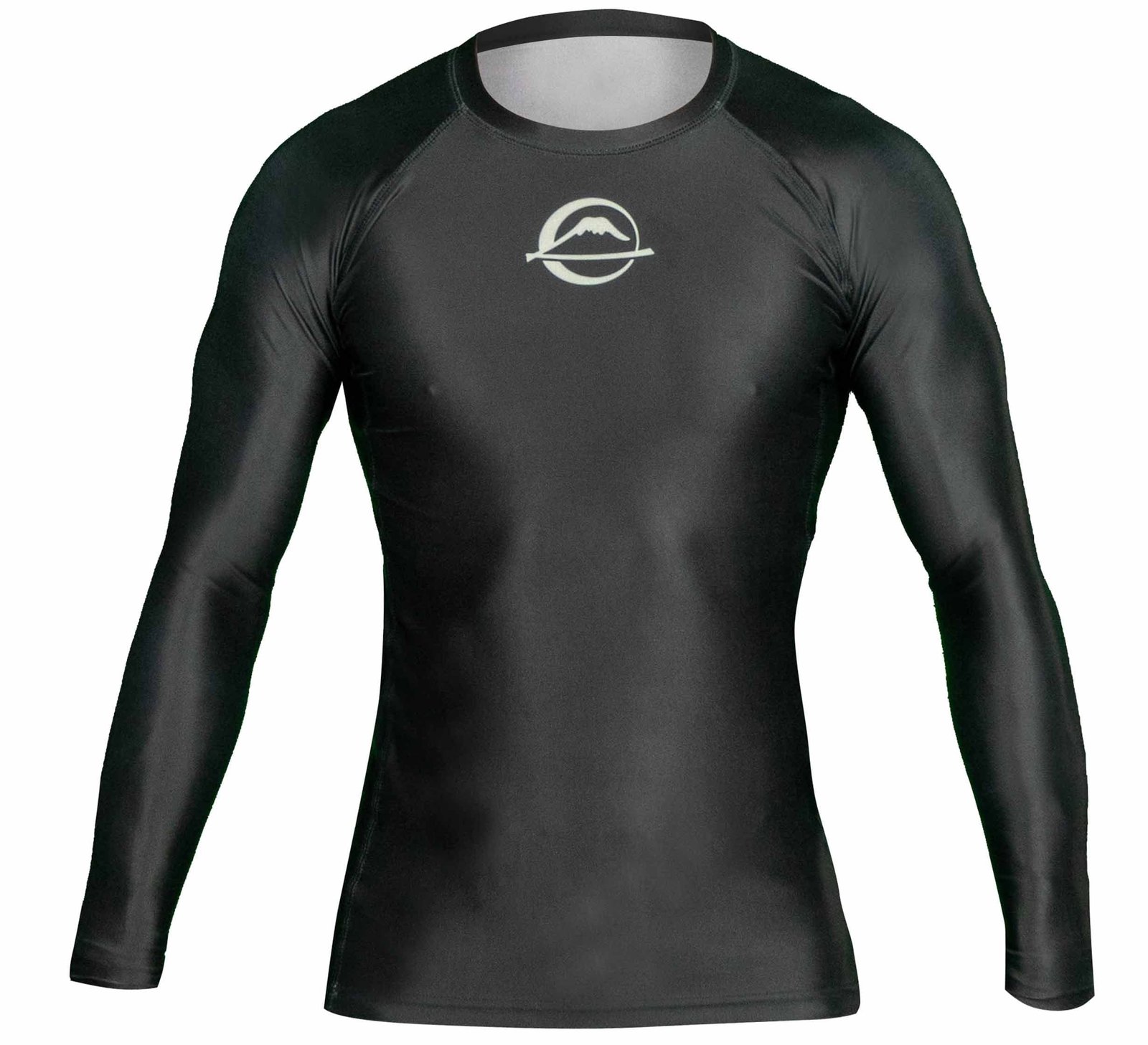
Pay special attention to the collar and the hem, because those are the two zones that betray a cheap fit fastest. A flat-locked, slightly higher collar stays put when an opponent frames across your face; a thin, loosely sewn one rolls down and exposes skin to friction and mat bacteria. The hem should sit tight on the hips. Many men instinctively size up for “comfort,” which is the exact opposite of what the garment is for — a rashguard isn’t a T-shirt, and extra room is extra leverage handed to whoever you’re rolling with.
Sleeve length is a decision, not a default
Long sleeve, short sleeve, or sleeveless isn’t a style preference at the competitive level — it’s a hygiene and grip calculation. Long sleeves cover more skin, which means fewer skin-to-mat and skin-to-opponent contact points where ringworm and staph transfer, and they protect the forearms during heavy grip-fighting. Short sleeves run cooler in brutal heat and give some grapplers a freer feeling on underhooks. The competitor’s habit is to own both and choose by the session: long for high-volume open-mat days in shared rooms, short for hot private rounds. The wrong move is owning one and forcing it onto every situation.
Seams and panels: where rashguards actually die
Ask a competitor how their last rashguard failed and almost none will say the fabric wore thin. They’ll say a seam blew out — usually the underarm or the side panel, the two places that absorb the most repeated stretch during scrambles. This is the detail that separates a garment that lasts two years from one that’s trash in two months, and it’s nearly invisible on a product page. What you want is flat-lock stitching, where the two pieces of fabric are joined edge-to-edge with overlapping thread rather than folded and sewn into a raised ridge. Flat seams lie smooth against the skin, don’t chafe, and crucially distribute load instead of concentrating it on a single line of thread.
Panel construction tells the same story. A rashguard built from more, smaller panels can be shaped to the body’s curves so the compression stays even as you move — but only if those extra seams are sewn well. Cheap multi-panel pieces just give you more failure points. When you have the garment in hand, turn it inside out and look at the underarm junction where the sleeve, body, and side panel all meet. That three-way intersection is the highest-stress point in the whole garment. If the stitching there looks dense, even, and reinforced, the piece will probably survive hard use. If it looks like a single thin row of thread, plan on replacing it soon.
Fabric weight and the climate you actually train in
Most quality no-gi rashguards are built from a polyester-spandex blend, and the ratio plus the fabric weight quietly decides how the piece behaves. More spandex (elastane) means more stretch and tighter compression; more polyester means better moisture-wicking and durability. Heavier fabric resists snags and holds compression longer but traps heat — a smart pick for a cold room or for someone who runs cold. Lighter fabric breathes and dries faster, which matters enormously in a humid, packed gym where a soaked rashguard becomes a wet, bacteria-friendly blanket by the second round.
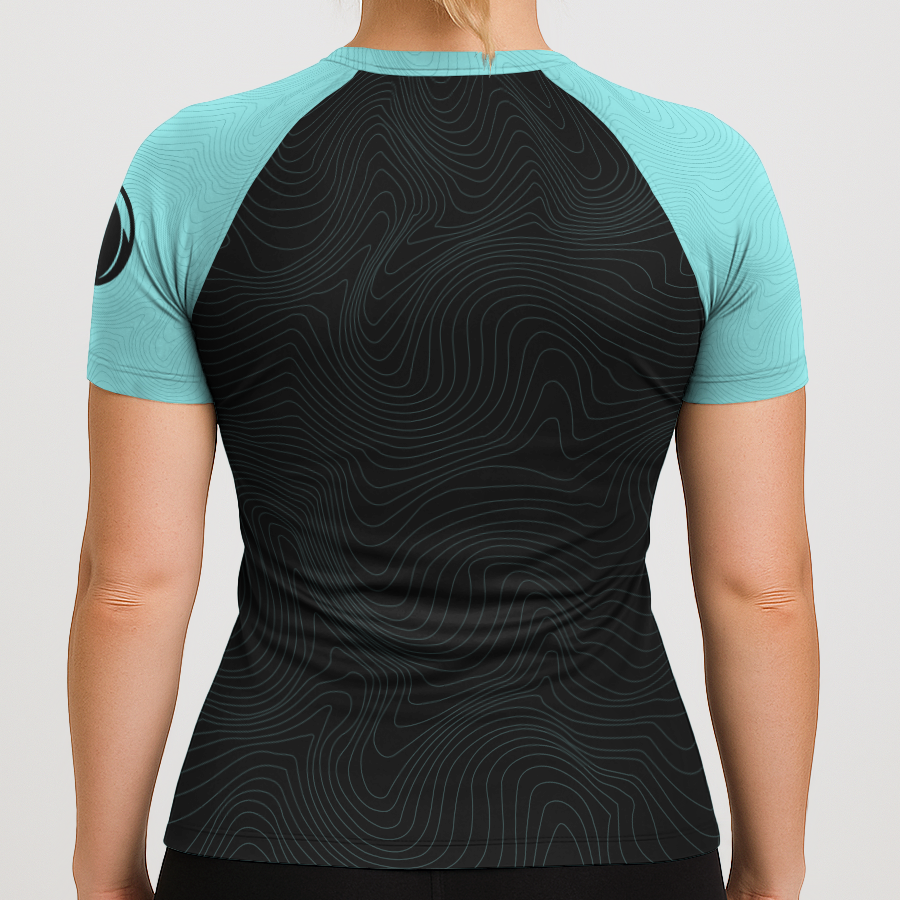
The competitor’s instinct here is to match the garment to the worst conditions they regularly train in, not the average. If your room is unbearable in summer, a lighter, faster-drying piece beats a heavyweight one even if the heavy one technically lasts longer, because a rashguard that stays drenched is both a performance problem and a hygiene risk. If you mostly train in a cool space, the heavier, denser weave rewards you with years of even compression. There’s no universally superior fabric weight — there’s only the one that fits the room you sweat in.
Why graphics matter far less than the marketing implies
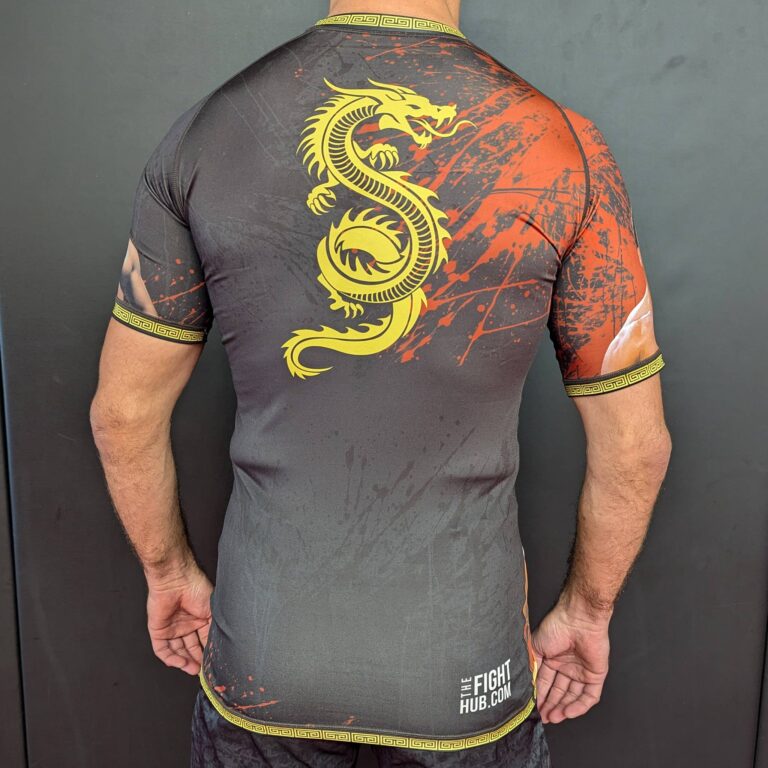
The most visible thing about a rashguard — its design — is close to the least important thing functionally, with one exception. The exception is how the graphic is applied. Sublimated graphics, where the dye is bonded into the fabric itself, add no weight, never crack, and don’t peel after washing. Screen-printed or heat-pressed designs sit on top of the fabric as a layer of plastic-like ink; they can crack, stiffen a panel, and trap heat where they sit. So the rule competitors follow isn’t “avoid graphics” — plenty of high-end pieces are loud — it’s “only trust sublimation.” If a design looks and feels like it’s painted onto the surface rather than dyed into it, that’s a tell about the whole garment’s quality tier.
This is freeing, because it means you can pick whatever look you like once the construction checks out. The athletes you watch on FloGrappling streams wear everything from plain black to elaborate full-print designs, and it has zero bearing on how they perform. Buy the design you’ll enjoy putting on — just confirm it’s dyed in, not stuck on.

Matching the rashguard to your training volume
One piece is never enough for someone training seriously, and not for the reason you’d guess. It’s not about variety — it’s about drying time and rotation. A rashguard that gets soaked, washed, and worn again before it has fully dried out becomes a breeding ground for the exact bacteria you’re trying to avoid. Competitors who train four, five, six sessions a week run a rotation of three to five rashguards so each one gets a full cycle to wash and air-dry between uses. If you train twice a week, two solid pieces are plenty. If you’re on the mat most days, build the rotation before you build the wardrobe.
This also reframes the cost question. Spending more on one premium rashguard while owning only that one is worse for a high-volume grappler than owning three mid-tier pieces that each get to dry properly. Volume changes the math. A casual hobbyist can justify a single nicer piece; a six-day-a-week competitor needs depth on the shelf more than they need a flagship on their back.
Shopping the lens without overpaying
Put it all together and the buying process becomes refreshingly mechanical. Decide your training load, climate, and body type first. Then filter for snug-but-not-choking compression, flat-lock seams (especially at the underarm), a polyester-spandex blend weighted toward your climate, a collar and hem that stay put, and sublimated rather than printed graphics. Sleeve length you choose by session, so plan to own both eventually. Notice that not one of those criteria is a brand name. The competitor’s lens is brand-agnostic on purpose — it lets the same checklist work across the entire market instead of locking you into one logo.
When you’re ready to compare actual options against this checklist, a broad search is the fastest way to see the full field rather than whatever one shop is pushing. You can scan a wide range of men’s no-gi rashguards on Amazon’s rashguard listings and run each candidate through the fit, seam, and fabric tests above. The garment that passes all of them on your body, in your room, under your weekly load — that’s your best rashguard. It won’t be the same as anyone else’s, and that’s exactly the point.

The men who roll at the highest level didn’t earn their gear instincts from reviews. They earned them from blown seams, soaked collars, and a thousand scrambles that taught them what fails and when. You don’t have to repeat all those failures to inherit the lesson. Vet the next rashguard the way they do — with your hands, your range of motion, and a clear picture of how you actually train — and you’ll stop buying for the fan in you and start buying for the grappler.
Sources
- Wikipedia — Rash guard
- ADCC Official — events and no-gi gear
- FloGrappling — no-gi competition coverage
Browse our top-rated rashguards and no-gi gear at the RashguardGuy shop →
Shop on Amazon
BJJ Rashguards on Amazon →
As an Amazon Associate we earn from qualifying purchases.