Where Cauliflower Ear Actually Starts in No-Gi: Positions, Pressure, and Prevention
Cauliflower ear does not hit every no-gi practitioner the same way or through the same positions. The athlete whose game is built on wrestling exchanges, underhook battles, and top pressure develops it on a different timeline — and through different mechanisms — than the guard-centric player who rarely shoots or engages in standing clinch work. Most conversations about prevention treat ear damage as a uniform hazard, something that shows up eventually for everyone who trains long enough. The reality is more specific than that, and understanding the specifics is what makes ear guard use actually work rather than feel like a precaution taken on faith.
The Two Mechanisms That Matter
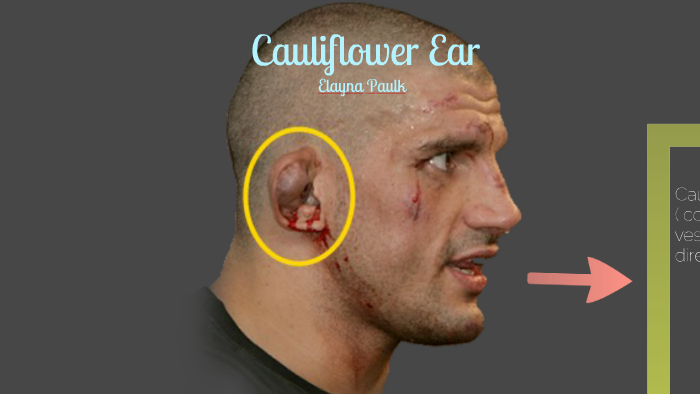
Before looking at individual positions, it helps to understand what ear damage actually requires at the tissue level. Cauliflower ear forms when the perichondrium — the fibrous membrane that supplies blood to the ear’s cartilage — separates from the underlying cartilage. Blood or serous fluid fills the gap. Left without treatment, the body responds by depositing fibrous tissue and eventually calcified cartilage into that space, permanently changing the ear’s structure.
Two distinct contact mechanisms drive this separation in no-gi grappling. The first is compression: a partner’s body pressing the ear against a hard surface — usually the mat — with enough force to pull the perichondrium away. The second is friction under load: the ear being dragged across a surface while supporting pressure, creating a shearing force across the perichondrial attachment. Both mechanisms are present in no-gi grappling. They do not distribute evenly across all positions. Identifying where each mechanism shows up most frequently is the starting point for a position-aware prevention approach.
Wrestling Exchanges: Where the Risk Concentrates
Of all the scenarios in no-gi training, wrestling-heavy exchanges — takedown attempts, mat returns, scramble recoveries — generate the most ear trauma per unit of training time. The physics are direct: when two athletes hit the mat in a double-leg or single-leg finish, the speed of impact and the weight distribution that follows create compression forces that technical drilling never replicates. The bottom ear, pressed against the mat under a partner’s body weight, takes the full load of that contact. Repeated across multiple rounds and sessions, this accumulates in ways that feel minor in the moment but are not minor in the tissue.
The underhook battle is a secondary source of risk that many no-gi practitioners underestimate. In a tight underhook fight — two athletes battling for inside position from the clinch — the head is pressed against the opponent’s chest or shoulder for extended periods. This is sustained compression, not impact: the ear is held between two bodies for several seconds at a time, across many exchanges per session. Athletes whose game is built on underhook control and body-lock wrestling run this exposure far more than players who avoid the clinch.
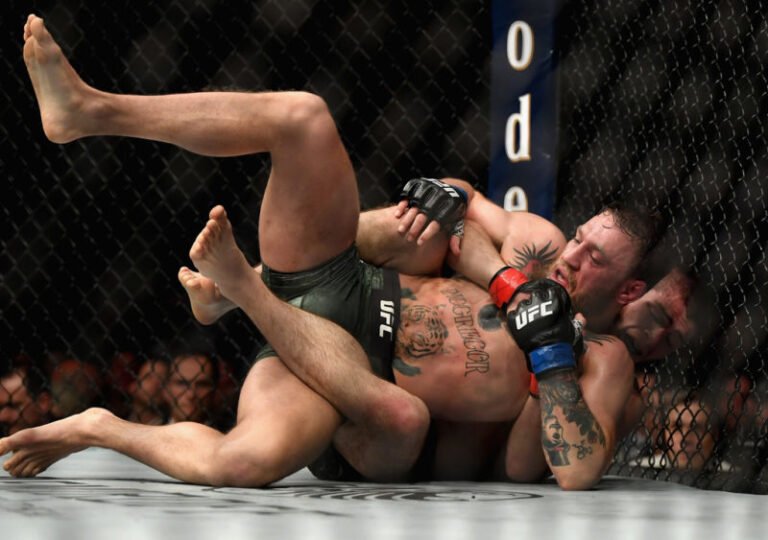
Head position during front headlock sequences matters as well. The front headlock is a common no-gi control position that transitions into guillotines, d’arce chokes, and anaconda setups. In the defensive exchange — the athlete defending the front headlock while working to recover posture — the head is cranked laterally under the opponent’s arm, pressing one ear against the opponent’s body. When the defensive scramble is live and both athletes are moving, the ear takes both compression and friction as the head shifts against the opposing body.
Guard Game Risk: Less Obvious, Still Real
Guard-centric practitioners often assume their positional choices insulate them from significant ear risk. This assumption is partly correct — a player who lives exclusively in open guard rarely encounters the high-speed mat contacts of wrestling training. But several guard and bottom positions generate consistent ear exposure that compounds over training years in ways that catch athletes off guard.
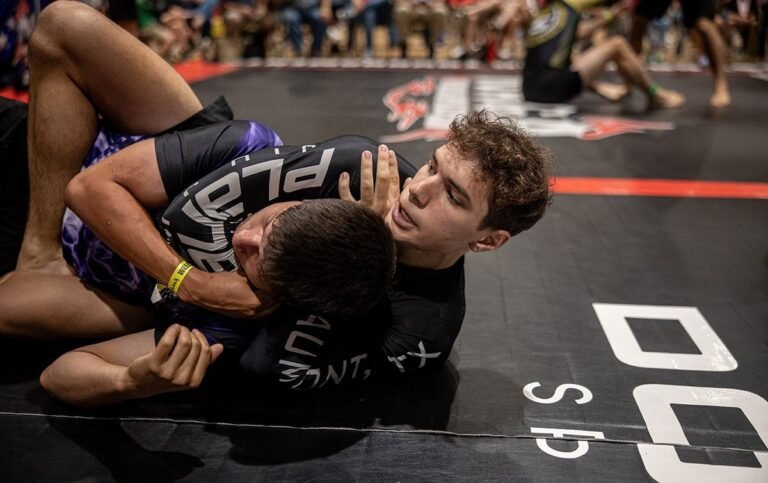
Being flattened in bottom half guard is the most common source. When a top player uses a crossface to flatten the half guard player, the bottom ear gets driven into the mat while the top player’s forearm exerts lateral force across the face. The crossface is not a subtle technique — it is designed to create discomfort and structural compromise in exactly the way that also stresses perichondrial tissue. Athletes who spend significant training time in bottom half guard against aggressive crossfacing partners are accumulating ear trauma in each session, even in what feels like ordinary grinding work.
The turtle position adds another exposure point. A grappler recovering from a failed shot, defending a front headlock, or scrambling back to guard frequently passes through turtle. In this position, with the head angled forward and one ear exposed upward, a top partner applying a seatbelt or harness control creates sustained lateral compression on that ear. Athletes from wrestling backgrounds who use a tight overhead control style in turtle situations apply more force here than BJJ-trained partners using a looser body-exposure game.
How Drilling and Live Training Create Different Risk Profiles
A practical question shapes how most grapplers think about ear guard use: do you need protection during drilling, or only when training live? The honest answer requires separating what feels like high intensity from what actually generates tissue stress.
Drilling creates predictable contact. When two athletes rehearse a crossface-to-head-inside-half sequence cooperatively, the contact is expected, the speed is controlled, and neither party is applying full resistance. The perichondrium-separation risk in this context is genuinely lower than in live grappling. For athletes training at moderate volume — three to four sessions a week — drilling represents a lower-priority window for ear guard use.
Live rolling changes everything. The contact in a live round is unscripted. A scramble begins from a position neither partner anticipated, bodies collide at angles not rehearsed, and the ear takes contact that no amount of positional drilling prepares the tissue for. This is where most acute ear trauma occurs — not in the planned, structured repetition of drilling, but in the unplanned collisions of live grappling. For prevention purposes, live training is the non-negotiable window for consistent ear guard use. If guards are only worn for part of each session, the live rounds are the part that matters most.
What Ear Guards Do Inside These Positions
An ear guard cannot eliminate the positions that generate trauma — avoiding them would mean avoiding most of what makes no-gi grappling competitive. What ear guards do is change the nature of the contact that occurs within those positions. The guard’s structure distributes force across a larger surface area, reducing the localized pressure that drives perichondrium separation. Instead of a partner’s chest pressing directly against the cartilage of the ear in an underhook battle, the guard absorbs and spreads that load. Instead of the mat surface creating point-compression on impact, the guard’s exterior absorbs and redistributes the contact across its full surface.
The friction mechanism is addressed differently. In positions like the crossface or front headlock defense, where the ear is being dragged under load, a guard’s smooth exterior surface changes the friction characteristics of that contact. The ear itself is no longer the surface being dragged against a partner’s body — the guard’s exterior is. Whether this fully eliminates friction stress depends on fit and construction, but it is a meaningful change in the physics of the contact.
Retention is the variable that determines whether any of this works in practice. A guard that fits loosely enough to shift during a live wrestling exchange provides inconsistent protection in the exact positions where consistency matters most. Adjusting fit before each session — not loosely setting the guards during a warmup and leaving them — is the difference between reliable protection and a piece of gear that’s technically present but not functioning.
Matching Prevention to Your Actual Grappling Game
Prevention works best when it’s calibrated to actual risk. A practitioner who trains primarily in open guard, avoids takedowns, and rolls with partners who have clean, low-pressure styles has a different risk profile than someone training in a wrestling-heavy room five days a week. Both benefit from consistent ear guard use in live training, but the urgency of that consistency differs.
Wrestling-focused practitioners — athletes who compete in no-gi submission wrestling, MMA, or who cross-train in wrestling — should treat ear guard use in live training as entirely non-negotiable. The positions their game naturally creates — takedown finishes, scramble recoveries, underhook battles, front headlock defense — are the highest-risk scenarios in no-gi training. Missing guard days for this population is not a minor gap; it is a significant exposure that accumulates quickly.
Guard-centric players have more margin, but the crossface and bottom half guard exposure alone are enough to cause damage across training years. The half guard player who assumed their game was relatively safe — and noticed ear changes three years into consistent training — is a recognizable figure in competitive BJJ. The risk is lower in a pure guard game, not absent. Understanding which moments in your own rolling create exposure is more useful than a blanket assumption that a technical style is fully protective.
Why the Timing of Prevention Matters
Ear tissue that has not yet undergone cauliflower ear formation is biologically different from tissue that has experienced one or more cycles of fluid accumulation and partial healing. In ears that haven’t yet been damaged, the perichondrium is fully intact and well-attached to the underlying cartilage. Each instance of perichondrial separation that is allowed to heal without permanent damage leaves the tissue slightly more predisposed to future separation. The process is cumulative: the tissue that survives repeated minor separations begins developing micro-adhesions and structural changes that eventually close the window where full prevention was possible.
Grapplers who successfully protect their ears across years of competitive no-gi training are not a genetic special case. Most of them made one decision early and kept it: they treated ear guards in live training as standard gear, the same way a serious athlete treats a mouthguard — not selectively based on estimated round intensity, but consistently, before live contact begins. The positions that generate ear trauma are not exceptional. They are the ordinary, repetitive exchanges of no-gi grappling: the shot, the underhook battle, the crossface, the headlock defense. Understanding that those positions are where damage accumulates, and wearing guards consistently through them, is what prevention actually looks like in practice.
Sources
Wikipedia — Cauliflower Ear: Overview of auricular hematoma formation, perichondrial separation, and the clinical pathway from acute injury to permanent deformity.
PubMed / National Library of Medicine: Medical literature on auricular hematoma in combat sports athletes, prevention protocols, and perichondrial tissue response to repeated trauma.
FloWrestling: Technique and positional coverage relevant to wrestling-heavy no-gi training contexts and the scramble positions discussed in this guide.
Image credit: feaforall.com