
Ear Guard Construction for No-Gi: What Separates Gear That Holds from Gear That Fails
Most gear problems in no-gi grappling announce themselves slowly. A rashguard seam weakens over months. Shorts lose compression across dozens of washes. Ear guards are different — they tell you everything you need to know inside the first two rounds of live rolling. Either the cup holds its position against the lateral forces of a single-leg shot, the compression of a tight clinch, and the drag of a scramble on the mat, or it migrates and leaves the ear exposed before the session is half over. The speed at which ear guards reveal their limits is what makes choosing them harder than most no-gi gear decisions.
The conversation around ear guard selection usually stays at the surface level: brand comparisons, price points, what someone at your gym wears. What rarely gets discussed is the underlying engineering — cup geometry, strap vector, interior padding density — and why those variables determine performance in no-gi grappling far more than any brand name does. Understanding what the construction actually means translates directly into making the right call before you buy something that fails you mid-roll.
What the Cup Does and Why Its Shape Matters
The cup is the structural core of the ear guard — the part that sits against the ear and absorbs or redirects impact. Every other design decision in the guard is in service of keeping the cup in position. What most grapplers discover after training with several designs is that cup shape, not cup material, is the primary driver of comfort and retention.
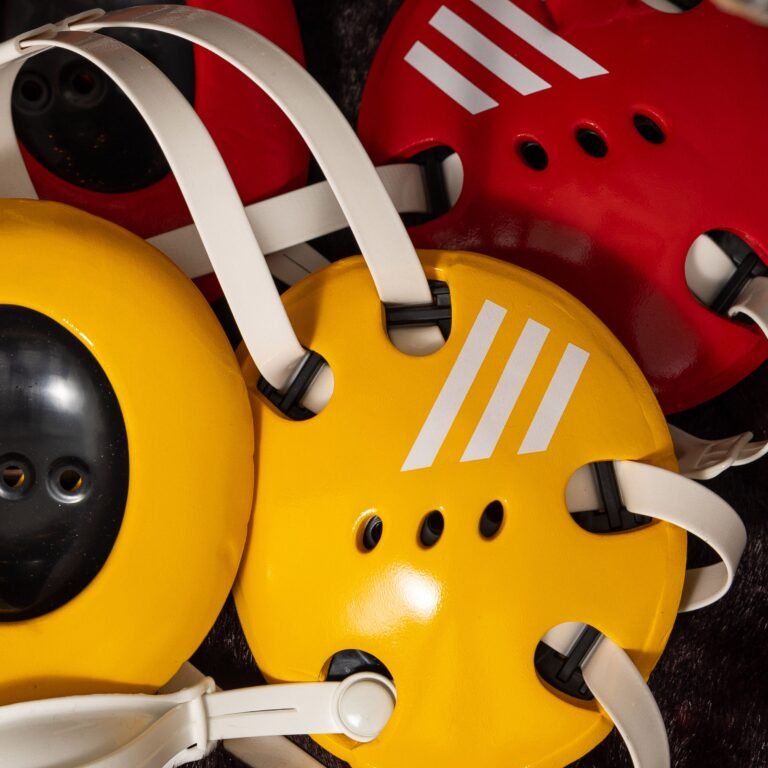
Flat cups apply even pressure across the entire ear surface, which sounds desirable until you account for ear anatomy. The antihelix — the inner ridge that runs parallel to the outer rim — protrudes significantly on most ears, and a flat cup pressing against it creates a focused pressure point that becomes painful within fifteen minutes. Contoured cups that follow the ear’s ridges distribute contact more evenly and feel genuinely neutral once properly fitted. This distinction matters more than whether the cup material is rigid polycarbonate or semi-flexible thermoplastic.
Rigid cups protect better against sudden impact — a stray knee during a guard pass, a forearm catching the ear in a scramble — because they don’t deform under contact and maintain the air gap between the ear and the external force. The trade-off is that rigid cups transmit force more directly when compressed laterally, which is what happens when an opponent applies head pressure from the side during a tight clinch. Softer cups absorb lateral compression better but can collapse under sustained pressure in ways that defeat the protection goal. The practical answer most experienced grapplers arrive at is a semi-rigid cup with soft perimeter padding: rigid enough to maintain the protective air gap, padded enough to handle lateral pressure without creating hot spots.
Strap Systems and the Physics of Retention
Where ear guard design most frequently fails in no-gi grappling is the strap system. A strap exists to hold the cup against the ear across a range of forces that don’t act in a single direction. A chin strap creates downward and rearward tension — useful for resisting upward migration, useless for resisting the forward pull that dominates most grappling scrambles. When someone shoots a single leg and drives their head into your hip, the force vector on your ear guard is forward and slightly lateral. A guard held in place only by chin-strap tension has nothing resisting that force.
Guards with a second strap over the crown of the head create tension that resists forward migration. The geometry works: crown tension pulls the guard toward the back of the head, counteracting the forward forces of clinch grappling and shots. The limitation is that a fixed crown strap doesn’t account for the substantial variation in head size and shape across different grapplers. A two-strap system where each strap is independently adjustable solves this — you can set crown and chin tension separately to match how your head is proportioned and where the cup needs to sit.
Some guards use an over-ear hook rather than a second strap — a rigid piece that loops over the ear itself to anchor the cup in place. This works well for some ear shapes but can be painful on larger ears where the hook creates its own pressure point. It also tends to be difficult to reposition quickly between rounds, which matters more than it might seem: guards that take more than a few seconds to remove and reapply get left off during drilling, which means they’re not worn consistently enough to build habit.
How Your Grappling Game Changes What You Need
The forces acting on an ear guard during a wrestling-based game are meaningfully different from those in a guard-player’s game. Knowing where the stress concentrates in your training tells you what design features to prioritize.
Clinch-Heavy and Wrestling-Based Games
If your no-gi game starts in the collar tie, runs through underhooks, and generates attacks from single-leg and double-leg shots, your ear guards face constant lateral and forward pressure. The cup meets an opponent’s bicep, shoulder, and hip on nearly every exchange. Extended cups — those that reach well below the earlobe — catch more on the opponent’s body during a shot and get pushed sideways before the strap system can compensate. Shorter cups that profile closer to the ear surface are more appropriate for high-volume clinch grappling. The strap system needs two-direction tension, and the cup-to-head contact should be snug without compression — any looseness translates directly into migration during a hard collar tie.
Guard Players and Bottom Position
Grapplers who spend significant time playing open guard, inverting, hip escaping, and working from their back create a different set of demands. Mat contact during hip escapes is the most damaging for ear guards: the cup gets dragged against the canvas, and any rigid or raised perimeter catches and pulls the guard sideways. Guards with a smooth, tapered perimeter handle mat contact significantly better than those with sharp edges or thick rims. The cup should sit close enough to the ear that it doesn’t have leverage to rotate when it contacts the mat. Interior padding density matters here too — denser foam holds its shape across the position changes that define a bottom-game session, while foam that compresses out early leaves the cup floating by the end of a round.
Fit Geometry Before You Buy
The variable that determines more outcomes than any other single factor is the relationship between cup size and ear size. This sounds obvious, but most online gear reviews skip it entirely. A cup that doesn’t fully cover the ear leaves the antihelix and upper helix — the areas most vulnerable to the hematomas that cause cauliflower ear — exposed at the top. A cup that’s too large for the ear doesn’t seal at the perimeter and allows contact force to reach the ear surface at the gap. Manufacturers publish cup dimensions, but they rarely specify what ear size range each cup is designed for. When in doubt, size up slightly — a marginally larger cup that covers the full ear is more protective than a precisely sized cup that leaves gaps at the rim.
The chin strap length is a separate fit variable. Straps that are too long allow the cup to sit lower than intended, dropping below the antihelix. Straps that are too short pull the cup upward and forward, exposing the lobe. Both misalignments cause grapplers to over-tighten in compensation, which creates pressure-point discomfort that leads to the guard being removed. Independent strap adjustment solves this — but if you’re buying a fixed-strap guard, test the cup position before live rolling by running through the movement patterns that define your game and watching for migration.
What Actually Degrades and When to Replace
Ear guard lifespan in regular no-gi training runs between six months and two years depending on training frequency and material quality. The straps fail before the cup does, consistently. Velcro loses grip after repeated washing and sweat exposure; elastic loses tension; plastic buckles crack at the adjustment hinge. The cup itself — polycarbonate or rigid plastic — is almost never the failure point. Interior foam is the middle variable: it compresses and loses its shape over time, which means the guard stops conforming to the ear it was originally fitted to. When the guard that used to feel invisible starts feeling loose despite correct strap tension, the foam has compressed past its functional range.
Grapplers who train five or more days per week burn through guards faster and typically keep two pairs in rotation. This isn’t about cost amortization — it’s because foam needs recovery time between sessions to maintain its density. A guard worn daily for two hours at a time compresses foam faster than the same total training time spread across multiple pairs. The rotation extends the useful life of each guard and keeps the fit consistent from session to session.
Sourcing and What the Price Points Actually Signal
Budget ear guards — the kind shipped loose from generic suppliers at the bottom of a wrestling gear search — are almost universally single-strap designs with flat cups and low-density foam. They work adequately for light drilling and beginner no-gi classes where the intensity stays low. They do not hold position in hard live rolling. The cup migrates, the strap loosens, and the guard ends up on the mat next to you rather than on your ear. At this price point, you’re not getting ear protection — you’re getting the appearance of it.
Mid-range guards from wrestling-specific brands and established grappling gear companies tend to offer contoured cups, adjustable two-strap systems, and higher-density foam that holds its shape across real training cycles. The construction gap between budget and mid-range is large enough to be immediately noticeable in live rolling. The gap between mid-range and premium is smaller — at the top end you’re typically paying for materials refinement, warranty, and brand positioning rather than a categorical improvement in performance. For most no-gi grapplers training regularly, mid-range gear built by companies that make wrestling-specific equipment represents the best combination of performance and longevity.
Amazon search results for wrestling and BJJ ear guards mix all three tiers in the same results page with few useful filters. Searching by specific construction terms — adjustable chin strap, dual strap, contoured cup — returns more relevant results than brand searches, because the brands that sell directly and the brands that manufacture under generic labels often produce comparable hardware. What you’re filtering for is the design features that survive live grappling, not the label sewn onto the strap.
Sources
- Cauliflower Ear — Wikipedia
- BJJ & Wrestling Ear Guards on Amazon
- FloGrappling — No-Gi Competition Coverage
Image credit: workgearz.com