Reach, Bridge, Sprawl: How Your Rashguard Should Move Before You Roll
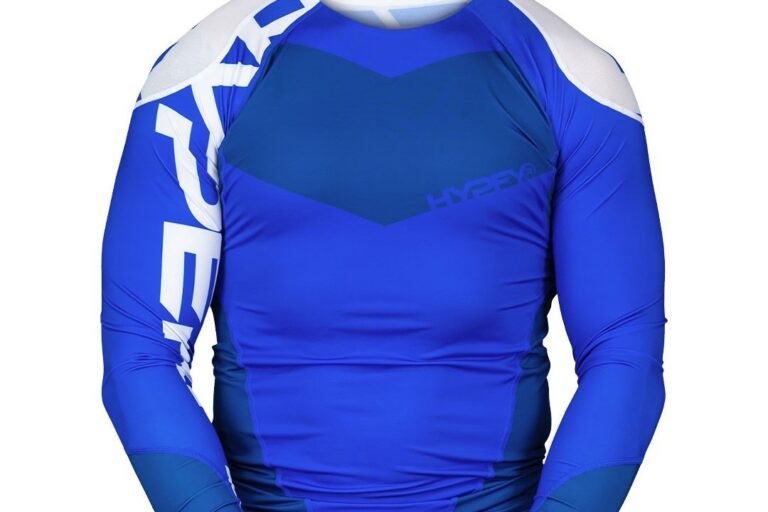
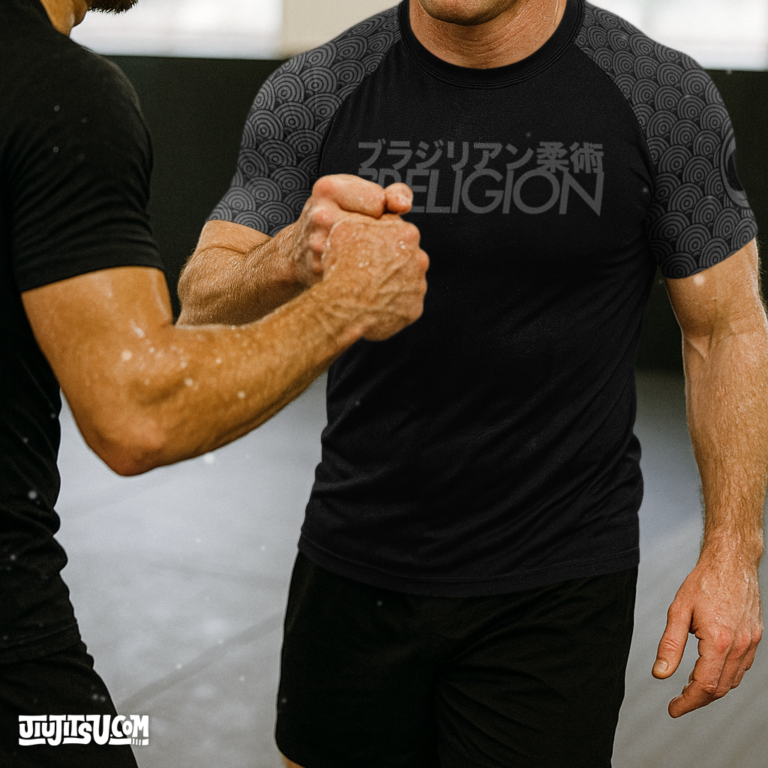
Stand in front of a mirror in a brand-new rashguard and almost any size looks fine. Shoulders are square, the fabric sits flat, the logo is centered. Then you shoot a double, get flattened out, and suddenly the hem is bunched under your ribs, the left sleeve has crept halfway to your elbow, and the collar is sawing at your neck every time you turn to look for the underhook. The garment that passed the mirror test failed the only test that matters — the one where you are actually grappling. Fit is not something a rashguard has while it hangs on your torso. It is something it does while you move, and the way to judge it is to put it through the exact motions you make on the mat before you ever pay for it or step onto the tatami.
Why the Standing Mirror Lies to You
A rashguard is a compression garment, and compression only works when the fabric is under tension against your skin. Standing upright with your arms at your sides is the single lowest-demand position your body will ever be in while wearing it. Your torso is at its shortest, your shoulders are neutral, and there is no shear force pulling the seams in different directions. Every dimension the shirt has to accommodate — the stretch across your back when you reach, the length it needs when you extend overhead, the give it needs at the armpit when you frame — is hidden. The mirror is showing you a still photograph of a garment whose entire job is to survive a two-hour movie.
This is why so many grapplers end up with a drawer full of rashguards that are technically the right size and still wrong. The tag matched the chart, the dry fit felt snug, and none of that predicted how the thing behaves when you are inverted or driving forward off a sprawl. The fix is to stop evaluating a rashguard in the one position you are never in during a roll and start evaluating it in the positions you are always in.
Start Overhead: The Reach Test
The first movement to run is the simplest and the most revealing. Raise both arms straight overhead as if you are reaching for a collar tie or posting on an opponent who is climbing to mount. Watch three things. First, the hem: a rashguard that is correctly long will lift a couple of inches and settle back down. One that is cut short — or sized too small in the torso — will yank clear of your waistband and expose your lower back, and it will do that every single time you extend. Second, the sleeve ends: they should stay put or retract only slightly. If the cuffs shoot up your forearms and refuse to slide back down, the sleeves are too narrow and are gripping the wrong part of your arm. Third, the armpit: reaching overhead is where a too-tight rashguard announces itself with a sharp pull across the lats and a seam that digs into the underarm.
Hold the reach for a beat and then bring your arms down slowly. A well-fitted rashguard recovers on its own — the hem drops, the sleeves slide back, the fabric re-settles across your chest without you touching it. If you have to tug it back into place, that is not a quirk you will train around. That is a tug you will perform a hundred times a session, usually at the worst possible moment.
Get Low: The Bridge and the Shrimp
No-gi lives on the ground, so the next tests belong on the ground. Lie on your back and bridge — hips to the ceiling, weight rolling onto your shoulders and the back of your neck, exactly as you would to escape mount or off-balance a passer. This is the moment a collar shows its true character. A neckline cut too wide or too loose will gap and slide, and in a bridge that means fabric bunching behind your neck and rubbing raw skin against the mat. A collar that fits sits flush through the whole movement. Bridging also loads the upper back across its widest span; if the shoulder yoke feels like it is about to split or the fabric goes sheer and strained between your shoulder blades, the shirt is under-built for your frame.
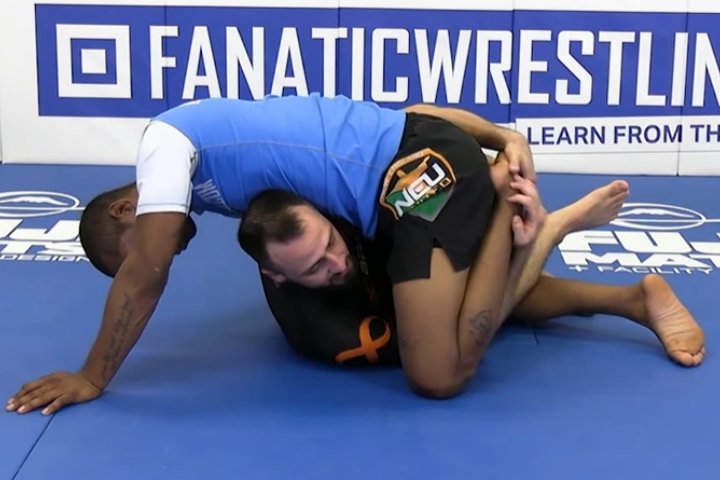
Then shrimp. Turn onto your side, frame with your arms, and drive your hips back the way you would to recover guard. Shrimping is a torso-lengthening, side-bending movement, and it is the single best check for whether a rashguard has enough length and enough lateral stretch at once. Watch the side seam: it should glide, not bind. Watch the hem on the down side: it should stay tucked against your hip, not roll up into a rope under your armpit. A rashguard that shrimps well — that stretches along your side and springs back — is one that will stay where it belongs through scrambles, guard retention, and every hip escape in between.
Drive Forward: The Sprawl and Level Change
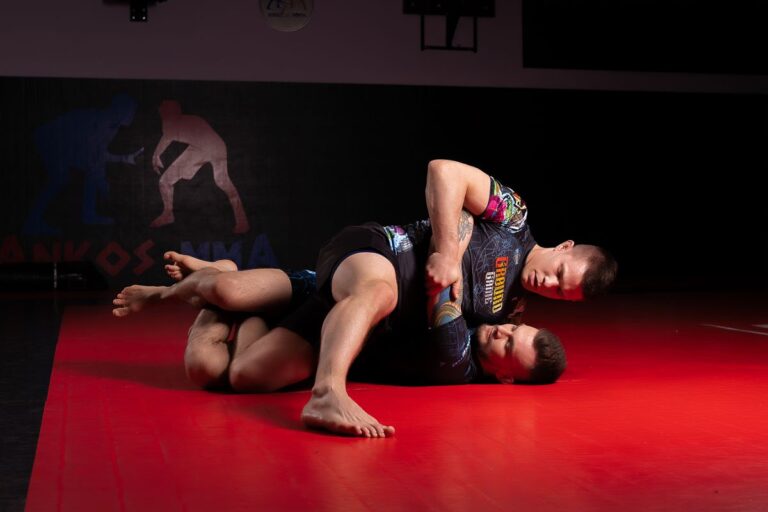
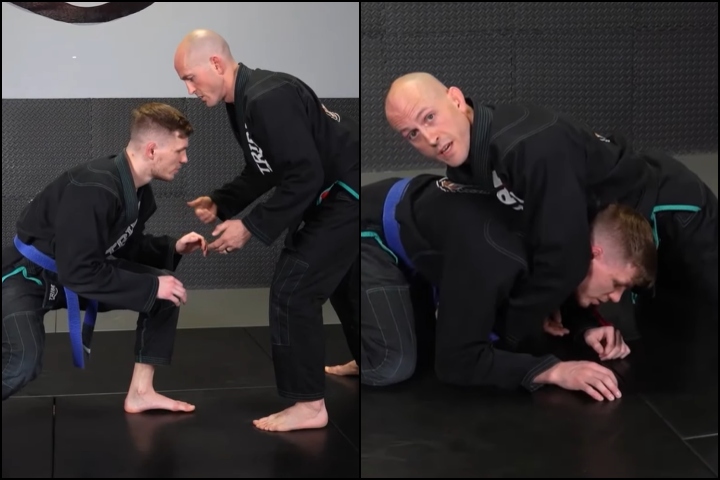
Wrestling is half of no-gi, and the sprawl is where fit gets tested under speed and load. Drop into a level change as if you are defending a takedown, then sprawl your hips to the floor and drive your chest forward over an imaginary opponent’s back. This movement simultaneously lengthens the front of your torso, compresses the fabric across your chest, and demands maximum reach through both shoulders as your arms shoot forward to underhook or crossface. A rashguard that is fighting you here will telegraph it in the chest panel — a tight band across the sternum that limits how far your arms extend, or a front hem that pops free the instant your hips hit the mat.
Do a few level changes in a row, quickly, the way they actually happen in a match. Fit problems that stay hidden in one slow repetition surface fast under tempo. If after three or four sprawls you already want to reset the shirt on your torso, imagine how it feels in round five of hard rolls.
Load the Sleeves: The Grip Exchange
Sleeves get their own test because no-gi grips live on them. In the gi you grip the fabric; in no-gi your opponent grips your wrist, your forearm, your bicep, and every one of those grips lands on the sleeve of your rashguard. Extend an arm and slowly rotate the wrist through pronation and supination, then flex and straighten the elbow through its full range, as if you are peeling a grip or reaching for a two-on-one. The sleeve should move as one piece with your arm without twisting into a spiral. A sleeve that spins around your forearm as you rotate is a sleeve that is too wide in the tube and too loose at the cuff — and loose sleeve fabric is exactly the handle a savvy opponent will use against you.
Pinch the cuff and give it a light tug down your forearm. A correctly fitted long sleeve stays anchored near the wrist; it does not leave a two-inch band of empty fabric flapping past your hand. If you wear short sleeves, run the same rotation and watch the sleeve hem at your bicep — it should stay flush against the muscle through the whole flex, not balloon out and offer a grip.
Read the Seams While You Move
Seams are the structural skeleton of a rashguard, and their whole purpose is to sit in the valleys of your body where they will not chafe or restrict. The problem is that seams move when you move, and a seam that sits perfectly on a standing torso can migrate into a pressure point once you are folded up in someone’s guard. As you run through the reaches and bridges and sprawls, pay specific attention to the flatlock seams at the shoulder, the side, and the underarm. A good seam disappears — you stop noticing it. A bad one announces itself as a hot line of friction in one particular position, and that is the position where it will burn a stripe into your skin over a long session.
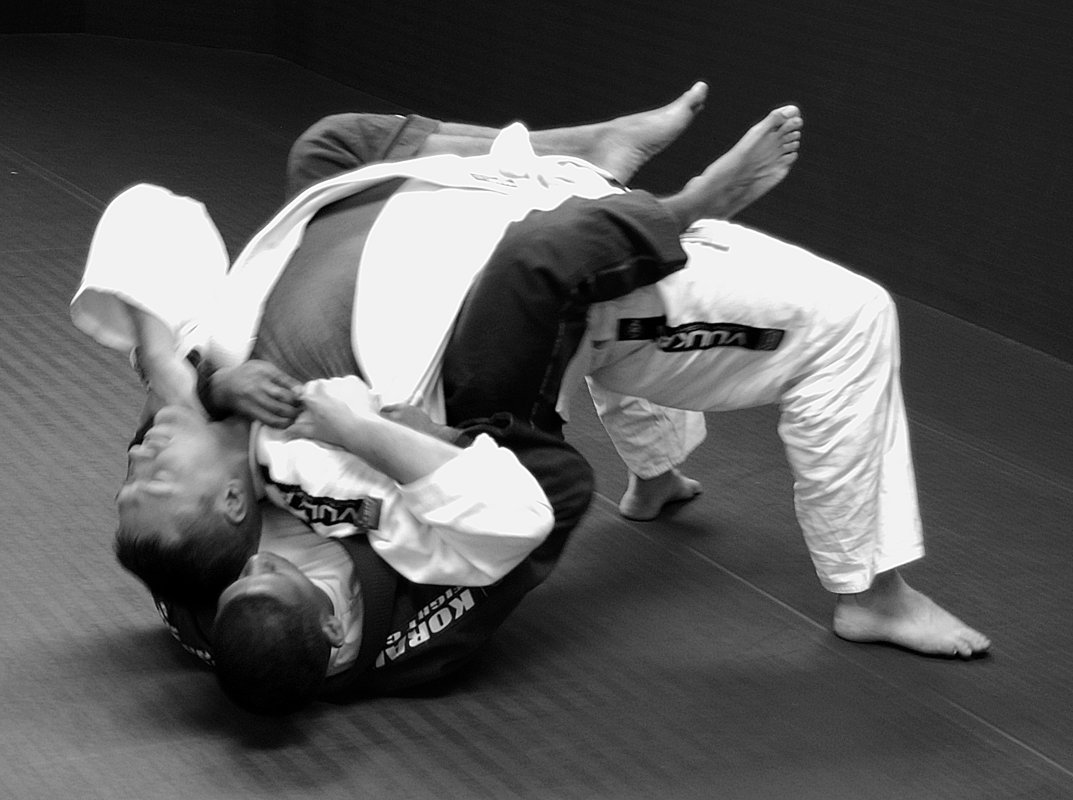
The armpit seam deserves the most scrutiny, because that is the junction taking shear from three directions at once when you frame, post, and underhook. Reach across your body as if you are hitting an arm drag and feel for a seam that bites into the underarm. If it does, no amount of break-in period will fix it; that is a pattern-and-fit mismatch between the garment and your shoulders, and it will chafe every time you cross-face.
The Sweat Variable
There is one condition a pre-purchase movement check in a store cannot replicate, and it is the most important one: sweat. Elastane loses a measurable amount of its grip when the fabric is saturated, which is why a rashguard that passes every dry movement test can still go slack twenty minutes into a hard roll. You cannot test this in a fitting room, but you can account for it. When two sizes both pass the dry movement check, choose the one that runs slightly tighter, because that is the one that has margin to spare once the fabric warms up, wets out, and relaxes. A rashguard should feel a touch more compressive than comfortable when it is dry and new. That surplus tension is what keeps it locked to your body after it soaks through.
Your Two-Minute Movement Check
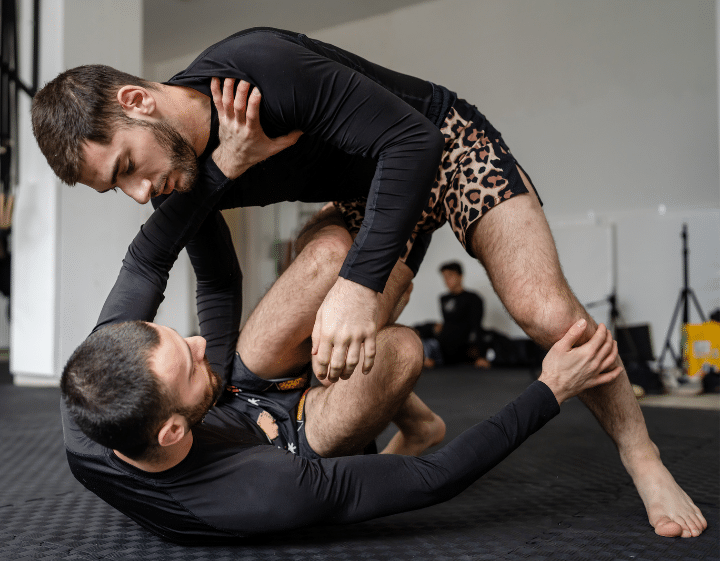
Pulled together, the whole evaluation takes about two minutes and needs no partner. Put the rashguard on, and instead of walking to the mirror, run this sequence and pay attention to what the fabric does — and, more importantly, whether it puts itself back where it started when you stop.
- Reach both arms straight overhead, hold, and lower slowly — watch the hem and cuffs recover on their own.
- Bridge on your shoulders and check the collar and upper-back panel for gapping or strain.
- Shrimp to both sides and watch the side seam glide and the hem stay tucked.
- Run three quick level changes and sprawls, then see whether you already want to re-set the shirt.
- Rotate and flex each arm through a grip exchange and check the sleeve for twisting or empty cuff fabric.
- Reach across for an arm drag and feel the underarm seam for any biting or friction.

If the rashguard comes through all six clean — recovering to its starting position, no migrating seams, no flapping sleeves, no exposed lower back — you own something that will disappear on your body the way good gear is supposed to. If it fails even one, it will fail it every round of every session, and no break-in period rescues a fit that was wrong from the first reach. When you are ready to try a few on and run the sequence yourself, you can compare cuts and compression levels quickly through a no-gi BJJ rashguard search and put each candidate through the same two minutes.
Fit Is a Verb
The mistake almost every grappler makes is treating rashguard fit as a static property — a number on a chart, a snapshot in a mirror, a thing the garment either has or does not have while it sits still. But you never grapple sitting still. You grapple in reaches and bridges and sprawls and scrambles, and the only fit that counts is the fit that survives all of them and puts itself back together when they are done. Judge your next rashguard the way you will actually use it, in motion, before you trust it in a roll. Move first. The mirror can wait.
Sources
- Wikipedia — Rash guard
- Wikipedia — Spandex (elastane)
- Wikipedia — Submission wrestling (no-gi grappling)