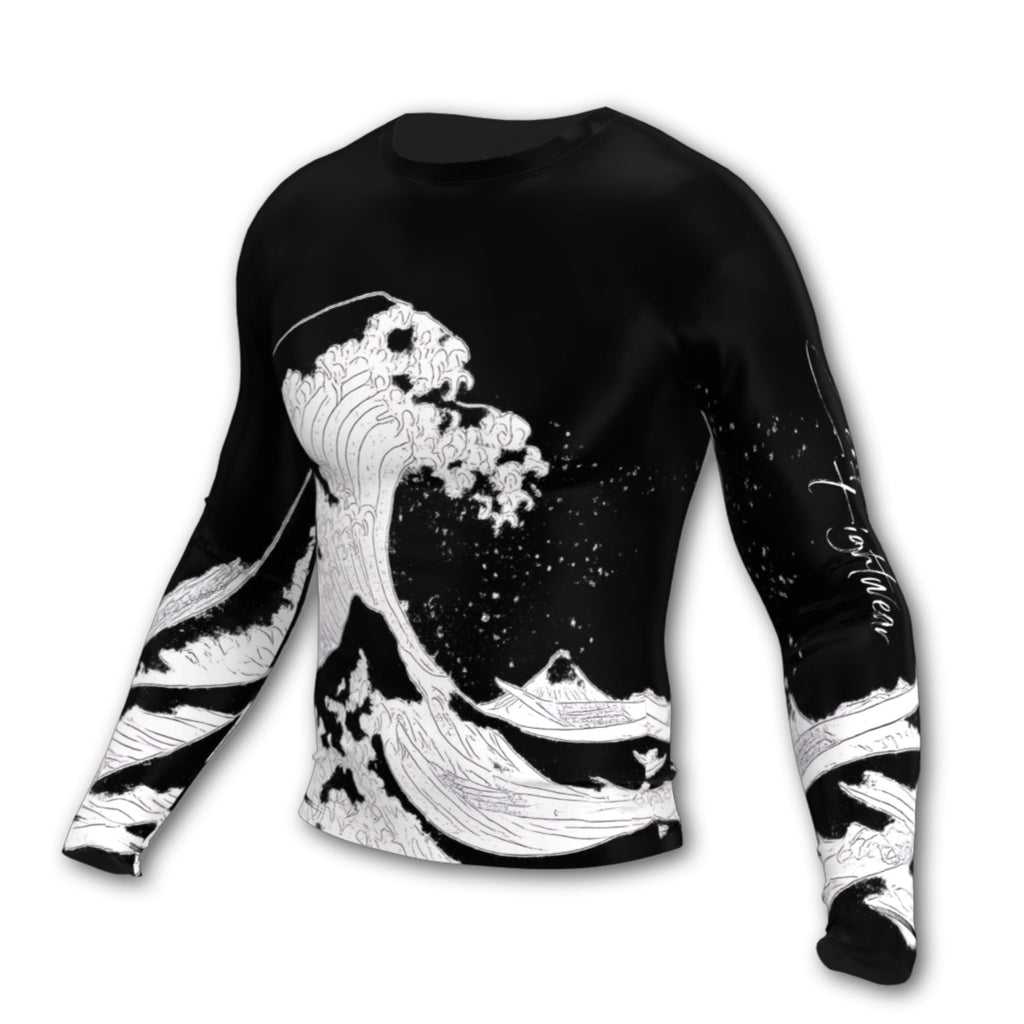
The Detergent Mistakes That Are Fading Your Rashguard Faster Than the Mat
Most grapplers who care about their gear already know the headline rule: skip the dryer. What almost nobody checks is the bottle sitting next to the washing machine. Detergent is the part of laundry day that feels too boring to think about, so people grab whatever’s on sale — and a lot of what’s on sale is chemically formulated to do the opposite of what a sublimated rashguard needs. For the full picture of why rashguards fade at the fiber level — sweat, chlorine, UV, and heat — see our complete guide to rashguard fading. This is the narrower, more actionable question: which products and machine settings are quietly doing the damage, and what to swap them for.

The Three Detergent Offenders
Detergent feels like the boring part of laundry, but for a technical synthetic garment it matters enormously — and most mainstream detergents are actively formulated to fight the exact thing you’re trying to protect. Three specific offenders show up in almost every grappler’s laundry cabinet.
Bleach and “whitening” or “brightening” detergents. These contain optical brighteners and mild oxidizing agents meant to strip color and stains out of cotton. On a sublimated rashguard they do exactly that job on your graphics — lifting and dulling the print with every wash. Optical brighteners work by absorbing UV light and re-emitting it as visible blue light to make whites look “whiter than white,” which is a chemical reaction happening directly on your fabric’s surface, not a passive ingredient sitting inert in the wash water. If your detergent’s label brags about brightening or whitening power, it is chemically at war with your team logo, and no amount of cold water offsets that.
Fabric softener. This one is counterintuitive because softener seems gentle — it’s marketed on the promise of “protecting” fabric. In reality it works by depositing a waxy, cationic surfactant film across every fiber to make them feel plush to the touch. On a rashguard, that film clogs the microscopic gaps between synthetic fibers that are supposed to wick moisture away from your skin, kills the wicking performance you paid for, and — critically — seals sweat, oils, and bacteria into the weave instead of letting them rinse out in the next wash. Softener is the single fastest route to a rashguard that smells permanently, no matter how often you wash it afterward.
Too much detergent, full stop. Synthetic athletic fabric barely absorbs liquid the way cotton does, so it can’t hold or rinse out a generous dose of soap the way a bath towel can. Excess detergent doesn’t rinse clean — it builds up in the fibers over successive washes, traps odor rather than removing it, and leaves a stiff, slightly tacky residue that changes how the fabric feels and moves. Most people eyeball a capful the same for every load regardless of fabric type; for rashguards and other technical synthetics, half the manufacturer’s recommended dose is usually plenty, and using less is one of the easiest habit changes to actually stick to.
What to Use Instead
The replacement is boring, which is exactly why it works: a plain, dye-free, dye-and-perfume-free liquid detergent with no bleach, no brighteners, and no built-in softener. Liquid formulas dissolve more completely in cold water than powders, which matters because powder residue that doesn’t fully dissolve is another source of the stiff, odor-trapping buildup described above. Purpose-made “sport” or “performance fabric” detergents exist specifically for this problem — they’re formulated without brighteners or softening agents and often include enzymes that break down body oil and sweat protein without touching dye.

If odor rather than fade is your real problem, resist the urge to reach for a stronger detergent or a splash of bleach — that’s the exact move that quietly kills a rashguard’s color while barely touching the smell, because odor-causing bacteria live deep in the fiber, not on the surface where bleach acts fastest. A half-cup of white vinegar added to the rinse cycle neutralizes odor-causing bacteria directly and rinses away completely, with zero effect on sublimated dye. An occasional enzyme-based sport wash soak does the same job for genuinely stubborn funk. Both options solve the smell without the collateral damage bleach and softener cause.
The Machine Settings That Matter As Much As the Detergent
Detergent chemistry is half the story — the other half is what the wash drum physically does to the fabric. A rashguard tumbling for forty minutes against zippers, denim, hook-and-loop straps, and the ridged drum wall takes constant mechanical abrasion regardless of what soap is in the water. That abrasion raises pills — the little fuzzy balls of roughened fiber — and hazes the printed surface even when the dye chemistry underneath is perfectly intact.
Turning the rashguard inside out before it goes in the machine is the single most effective, zero-cost habit here: the printed, visible surface faces inward and rides out the cycle protected, while the plain interior takes the abrasion instead. Wash on a gentle or delicates cycle so the drum agitates less violently, and keep rashguards away from anything with hooks, zippers, or rigid seams — a mesh laundry bag is a cheap way to guarantee that separation load after load. None of this requires spending anything; it’s entirely about which button you press and what you toss in alongside your gear.
Reading a Detergent Label in Ten Seconds
You don’t need a chemistry degree to shop safely — you need to scan a bottle for a handful of words. Skip anything advertising “whitening,” “brightening,” or “stain-fighting oxygen power.” Skip anything that’s a combined detergent-plus-softener product, since you can’t opt out of the softener half. Enzyme-based cleaning claims are a good sign, not a bad one — enzymes break down protein and oil, not dye. And a shorter ingredient list with no added dyes or heavy fragrance almost always means less residue sitting in your fibers between washes.
One myth worth killing while you’re at it: cold water doesn’t mean a weaker clean. Modern enzyme-based detergents are formulated to activate at cold-wash temperatures specifically because so much of the market has shifted to cold cycles for energy savings — the enzymes that break down sweat protein and body oil work fine well below the point where heat starts damaging your gear. The old assumption that hot water is what actually “cleans” comes from an era of powder detergents and grease-heavy cotton laundry; it doesn’t apply to a synthetic performance garment whose main soil is sweat, salt, and skin oil. You’re not sacrificing cleanliness by washing cold — you’re just removing the one variable that was quietly frying your rashguard.
The Bottom Line
Skipping the dryer gets all the attention in rashguard care advice, but the bottle next to the machine is doing comparable damage in a huge number of gear bags. Cut bleach, brighteners, and softener, halve your detergent dose, wash inside out on gentle with a mesh bag, and reach for vinegar or an enzyme soak when odor — not fade — is the actual problem. None of it costs more than what you’re already buying; it’s just buying the right bottle instead of whatever was on sale.
Browse dye-free sport detergent on Amazon and mesh laundry wash bags here.
Related Reading
- The Chemistry of a Worn-Out Rashguard — the complete guide to why rashguards fade
- Hard Water, Hot Cars, and the Gym Bag — the damage that happens between sessions, not in the wash