Cheap vs. Premium Rashguards: What a Grappler’s Money Actually Buys
Ask a roomful of grapplers for the best rashguards for men and you won’t get a brand name — you’ll get an argument about money. One guy swears his $19 two-pack has survived two years of daily training. The next guy insists you can feel the difference the moment you pull on something premium, and that the cheap stuff pills, peels, and stinks within a season. They’re both right, and that’s exactly why “best” is the wrong question to start with. The right question is what your money is actually buying as the price climbs, and at what point you stop getting anything for it.
This is a value breakdown, not a shopping list. Instead of ranking products that’ll be sold out or rebranded by next season, we’re going to walk up the price ladder tier by tier, separate the features that genuinely change how a top performs from the ones that only change the receipt, and figure out how much you should realistically spend based on how often you’re actually rolling.
Why “Best” Is a Budget Question in Disguise
A rashguard has a short, brutal job description: hold a layer of fabric tight against your skin through dozens of grip exchanges, scrambles, and sweaty pins, then survive a hot wash and do it again tomorrow. Almost every top on the market can do this once. The spread in price reflects how many times it can do it before the seams blow, the fabric thins to translucency, or the smell becomes permanent.
That reframes the whole purchase. You’re not buying a single garment, you’re buying a number of usable sessions. A $20 top that lasts forty sessions costs you fifty cents a roll. A $55 top that lasts two hundred sessions costs you twenty-eight cents a roll — cheaper per use, even though it’s nearly triple the sticker price. The catch is that the math only works if you actually train enough to reach that two-hundredth session before the styles change or you do. Cost-per-roll is the lens that makes the cheap-versus-premium fight finally make sense.
What Each Price Tier Actually Delivers
Prices drift with sales and the dollar, but the no-gi market sorts itself into three honest bands. Knowing what’s standard in each one tells you whether you’re paying for performance or just for the box it ships in.
The Entry Tier: Roughly Under $25
This is where the multi-packs and house-brand basics live, and it’s a perfectly sane place to start if you’re new. You’ll usually get a polyester-spandex blend with overlock seams — functional, but slightly raised where the panels meet, which is the first thing to chafe on a long session. The compression is real but inconsistent; a cheap top can fit beautifully or bunch under the arms with no way to know until it arrives. The fabric tends to be lighter and thinner, which feels great in summer and turns see-through after enough washes. For a beginner who isn’t sure they’ll still be training in six months, spending more than this is a gamble on a habit you haven’t formed yet.
The Workhorse Tier: Roughly $25 to $45
This is the sweet spot for the vast majority of grapplers, and it’s where most of the meaningful upgrades land. Flatlock stitching replaces overlock seams, so the joins lie flush and stop sawing at your skin during back-takes and scrambles. Fabric weight climbs into the 220–260 gsm range that holds its shape and opacity through hundreds of washes. Sleeve cuffs and collars get reinforced so they don’t curl. Sizing charts are usually more honest because the brands in this band actually expect repeat buyers. If you train two or more times a week and intend to keep going, this is the tier where cost-per-roll quietly beats the cheap stuff.
The Premium Tier: Roughly $45 and Up
Above the mid-band, the gains get smaller and the reasons get more specific. You’re paying for things like sublimated graphics that won’t crack or peel, genuinely antimicrobial fabric treatments, ergonomic paneling cut to follow the shoulders and lats, and sometimes a heavier competition-weight build that shrugs off abuse. These are real improvements — but they’re refinements on an already-good product, not a leap in basic function. The honest truth is that a premium top doesn’t make you tap anyone faster. It lasts longer, looks sharper, and feels a touch better, and whether that’s worth the premium depends entirely on how much mat time you’re putting in.

Where Extra Money Genuinely Shows Up
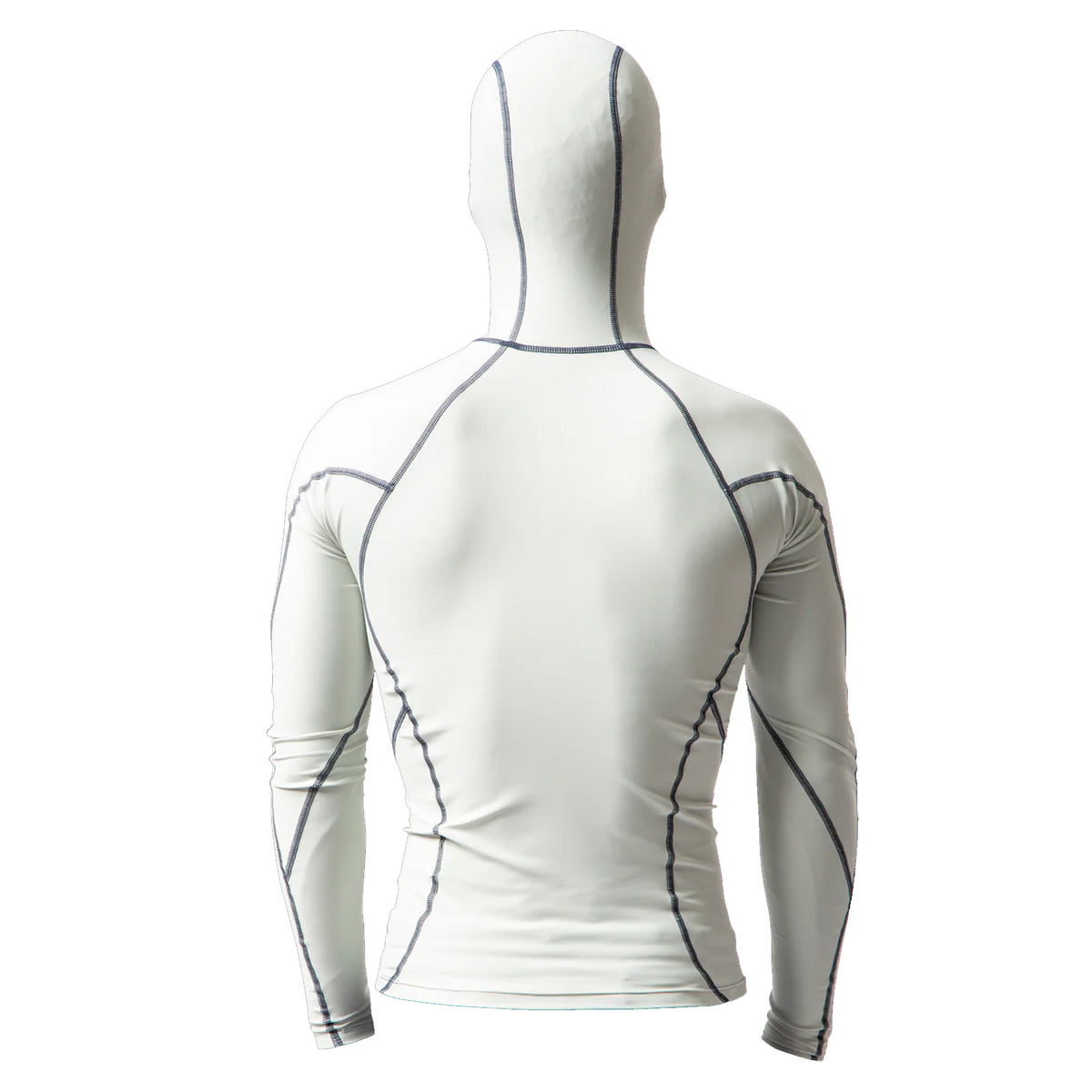
Three things reliably improve as you spend more, and all three are felt on the mat rather than seen in the photos. The first is seam construction. Flatlock and bonded seams cost more to produce, and they’re the single biggest comfort upgrade in grappling apparel because they remove the raised ridge that abrades your skin every time a sleeve drags across it. Once you’ve trained in a flatlock top, going back to a raised overlock seam feels like sandpaper.
The second is fabric recovery — the ability of the material to snap back to shape after being stretched. Cheap blends lose their elasticity and start to sag at the waist and cuffs, which is when a rashguard stops doing its one job of staying put. Better fabric holds compression for far longer, and that longevity is most of what you’re buying in the upper tiers.
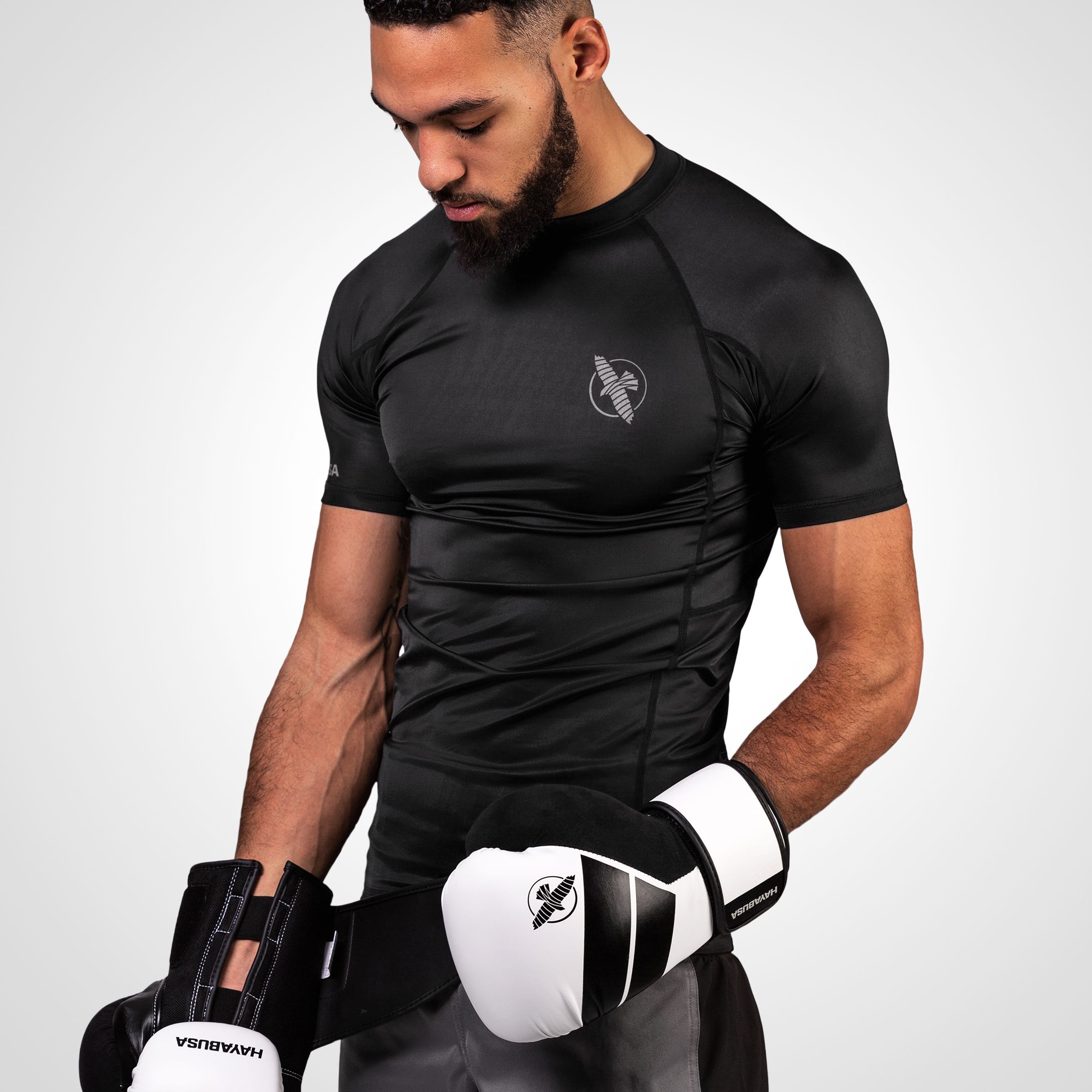
The third is fit precision. A more expensive top is usually built from more fabric panels, each shaped to follow a specific part of the torso, which is why premium gear photographs so cleanly on athletes. More panels mean fewer wrinkles, less bunching under the arms, and a top that moves with you instead of fighting your shoulders during an underhook battle. You can absolutely train in a two-panel budget top — but the four-, six-, and eight-panel builds feel noticeably more like a second skin.
Where Extra Money Buys You Nothing
Now the other side of the ledger, because plenty of premium pricing is pure theater. The loudest example is graphics. A dramatic sublimated print might cost the manufacturer a few cents more than a plain panel, yet it can add fifteen or twenty dollars to the price because it’s the part you photograph for the gym group chat. Looking good is a legitimate reason to spend money, but be honest that you’re buying art, not athletic performance.
Brand prestige is the next trap. Some of the most-hyped names in grappling charge a premium that has more to do with their sponsored athletes and Instagram presence than with anything woven into the fabric. A mid-tier top from a less famous maker frequently uses the same gsm fabric and the same flatlock seams for fifteen dollars less. Marketing claims are the third soft spot — vague promises about “moisture-wicking technology” describe what every polyester blend on earth already does. If a feature can’t be pointed to on the seam, the fabric, or the fit, treat it as a story, not a spec.
Matching Your Spend to How Often You Roll
This is where the cost-per-roll math turns into an actual recommendation. The honest variable isn’t your taste or your bank balance — it’s the number of sessions a top will live through before it’s retired, and that’s driven by how hard and how often you train.
If you’re rolling once or twice a week, a cheap top genuinely can last a couple of years, and the per-session cost of premium gear never gets a chance to pay off. Buy two or three entry-tier tops, rotate them, and put the saved money toward mat fees. If you’re training three to five times a week, you’re now washing constantly and stressing the fabric hard — the workhorse tier is the clear winner because its durability is exactly what high-frequency training punishes. And if you’re on the mat almost daily, competing, or drilling in heat that soaks everything, the premium tier finally earns its keep: the fabric recovery, the bonded seams, and the antimicrobial treatments are built for precisely that volume, and the cost-per-roll quietly drops below the cheap stuff.

The Smart Buyer’s Move
The grappler who gets the most for his money rarely buys at the extremes. He starts in the entry tier just long enough to confirm the habit is real, then settles into the workhorse band for his daily rotation, and reserves a single premium top for competition or the days he wants to feel sharp. He spends on seams, fabric weight, and fit, and refuses to spend on logos, hype, and marketing adjectives. He owns three or four tops rather than one, because rotation lets each one dry fully and dramatically extends the life of every piece — which is its own quiet form of value.
So the best rashguard for men isn’t a product, it’s a match between how a top is built and how hard you’re going to use it. Decide your weekly volume first, set your tier from that, then ignore every price above and below it. When you’re ready to compare what’s currently in stock across the bands, a neutral starting point is a broad search for men’s no-gi BJJ rashguards where you can sort by price and read enough reviews to spot the workhorse-tier gems hiding among the hype.
The Bottom Line
Cheap rashguards and premium rashguards aren’t good or bad — they’re tools priced for different training loads. The money you spend above the workhorse tier buys longevity, refined fit, and looks, not a better grappler. Figure out how many sessions a year you’ll really put a top through, do the cost-per-roll math, and let that decide your tier. That single calculation will serve you better than any best-of list ever could.
Sources
- Wikipedia: Rash guard — background on construction, materials, and the garment’s history.
- Wikipedia: Spandex — how elastane content drives compression and fabric recovery.
- Amazon: men’s no-gi BJJ rashguards — live price-tier comparison across entry, workhorse, and premium bands.
Browse our top-rated rashguards and no-gi gear at the RashguardGuy shop →
Shop on Amazon
BJJ Rashguards on Amazon →
As an Amazon Associate we earn from qualifying purchases.