Taking Your No-Gi Rashguard Into the Surf: A Grappler’s Crossover Guide to Water Sports
Most grapplers own three or four rashguards before they ever think of them as anything but training kit. Then summer arrives, a surf trip gets booked, and the question surfaces somewhere between the wax and the sunscreen: do I really need a dedicated surf top, or will the compression rashguard already in my gym bag do the job in the water? It’s a fair question, because the garment that survives an hour of live rolling is built on the same logic a surfer needs — a tight, fast-drying second skin that kills friction and shields the body. But the ocean is not the mat. Saltwater, hours of UV, paddling abrasion, and board wax all attack a rashguard in ways a training room never does, and the gap between “works fine” and “falls apart by August” is wider than it looks.
This is a crossover guide for grapplers heading into surfing, paddleboarding, and open-water swimming in 2026 — not a ranking of products, but a working explanation of what your no-gi top does well in the water, where it quietly fails, and how to read the spec before you trust it past the break.
Same Garment, Different Ocean
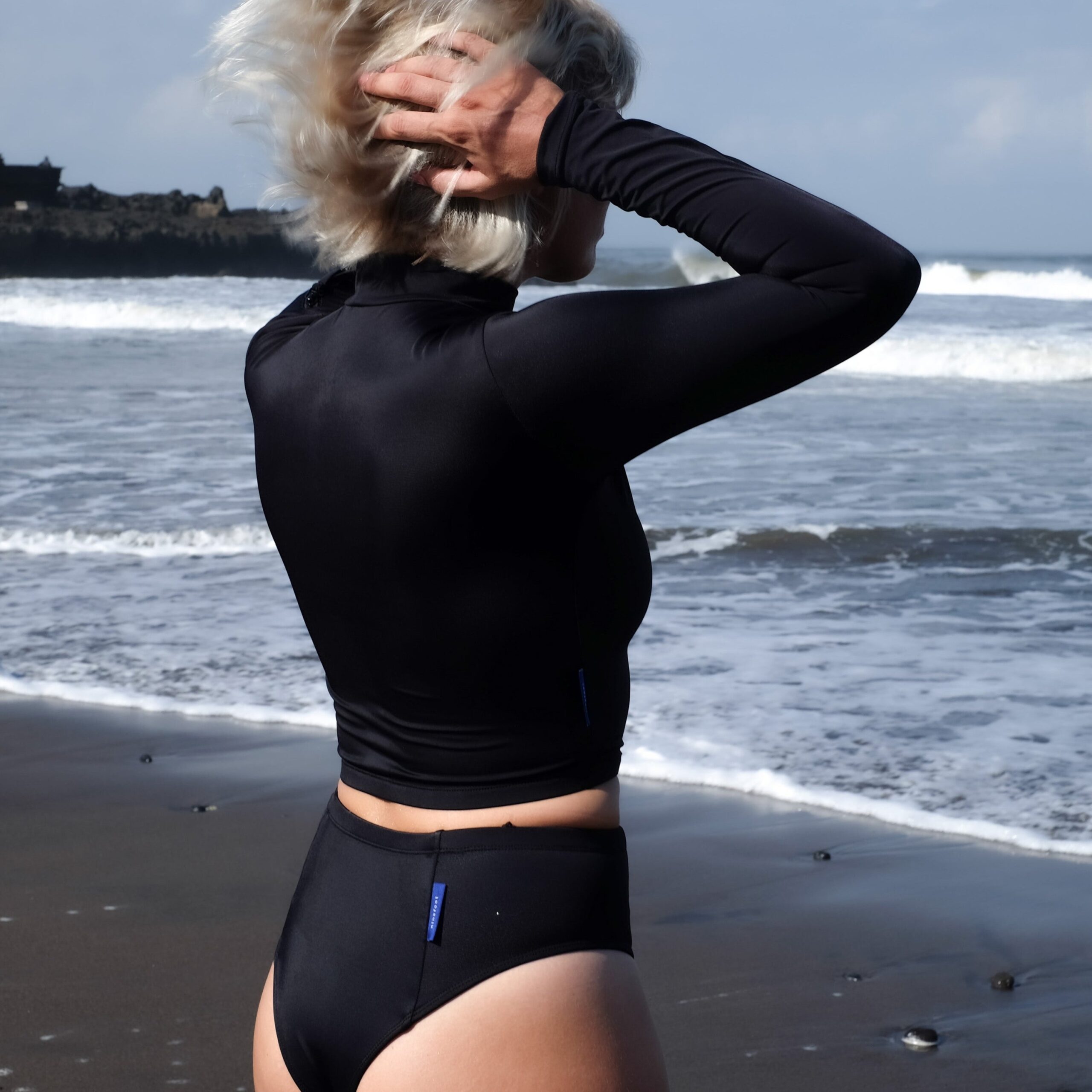
The rashguard was, in fact, a surf invention long before it became standard no-gi uniform. Surfers in the 1980s pulled tight nylon-spandex tops over their torsos to stop board wax and fiberglass from shredding their skin during pop-ups, and to take the edge off a wetsuit’s chafe. Grappling adopted the same garment for the same core reason: skin-on-skin and skin-on-mat friction causes rashes, mat burn, and infection vectors. The engineering DNA is shared. A compression panel that resists abrasion under a heel hook scramble is solving a cousin of the problem a surfer faces lying chest-down on a waxed deck for three hours.
That shared DNA is exactly why the crossover tempts people — and exactly why the failures are easy to miss. A top that performs identically on the mat and in the shore break can diverge sharply once you add salt, sustained sun, and repeated soaking. The fabric is the same; the workload is not.
What the Surf Actually Does to a Rashguard
Three forces act on a rashguard in water sports that barely register in a training room, and understanding them is the whole game.
Saltwater and the slow death of elastane
The stretch in your rashguard comes from elastane — the spandex or Lycra blended into the polyester or nylon. Saltwater is the single most aggressive thing you can do to that fiber short of chlorine. Salt crystals form inside the weave as the garment dries, working like microscopic abrasives on the elastic threads every time you move. Over a season of unrinsed beach days, a top that started as a tight second skin starts to bag at the shoulders and lose its snap at the cuffs. A gym-only rashguard that’s two years strong can go slack in a single salty summer if it’s never properly rinsed.

UV exposure over hours, not minutes
On the mat, the sun is irrelevant. In the lineup, it’s the main event. A surfer can spend four hours with their back, shoulders, and arms exposed to direct and water-reflected ultraviolet — and water reflects a meaningful share of UV straight back up at you. This is where a training rashguard and a water-sport rashguard genuinely part ways. Many no-gi tops carry no rated UPF at all, while a purpose-built surf or swim top will state a UPF 50+ figure, meaning it blocks roughly 98% of UV. A thin, light-colored gym rashguard stretched tight over your skin can transmit far more UV than you’d expect, and a sunburn through fabric is a miserable, surprising way to end a session.
Abrasion from the board, not the opponent
Grappling abrasion is multidirectional and intermittent. Surf abrasion is repetitive and localized: the same patch of chest and ribs dragging across a waxed deck on every paddle-out and every pop-up. Flatlock and bonded seams — the same seam construction that keeps a no-gi top from chewing your skin during scrambles — are what determine whether your sternum survives a long session. A raised overlock seam that you never notice on the mat can become a hot line of raw skin after two hours lying on a board.
Where Grappling Tops Win in the Water
It’s not all caveats. A well-made no-gi rashguard brings real advantages to water sports, and they’re worth naming because they’re the reason the crossover works at all.
Compression is the obvious one. A grappling top is engineered to stay locked to the body under violent movement, which means it won’t balloon, ride up, or drag when you duck-dive or kick. Cheap surf rashguards are often cut loose for comfort and pay for it with water resistance; a compression no-gi top moves with you. The seam quality on a mat-tested rashguard is usually superior to a budget beach top, because grappling punishes weak stitching faster than the ocean does — a top that’s survived a year of rolling has already proven its seams. And the fabric weight tends to be honest: a four-way-stretch polyester-elastane blend built for live rolling is the same family of fabric a serious water top uses, so the hand-feel and recovery are there.
Where They Quietly Fail
The failures are rarely dramatic. Nobody’s rashguard dissolves in the surf. Instead it underperforms in ways you don’t notice until you’re cold, burned, or replacing the top a season early.
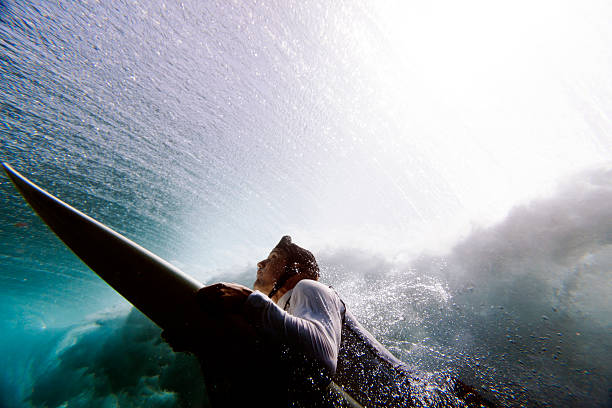
The first is sun. If your no-gi top has no rated UPF, you’re gambling on color, thickness, and stretch — and a stretched fabric transmits more UV than a relaxed one, precisely because the weave opens up when it’s pulled tight over your shoulders. The second is sublimated graphics. A lot of grappling rashguards are dye-sublimated with bold artwork, and while sublimation bonds the ink into the fiber, the surrounding fabric panels and any heat-pressed logos can fade fast under combined salt and UV. The third is fit logic. A grappling top is cut for a torso in constant flexion and rotation; a surf top is cut for a torso that’s prone and paddling. The difference is subtle, but a gym top can bind across the shoulder blades in the paddling position in a way it never does on the mat.
None of these are dealbreakers for an occasional beach day. They become real problems when the crossover top is your only top for a serious, sun-heavy, salt-heavy water habit.
Reading the Water-Sport Spec
If you’re choosing a rashguard that has to pull double duty — mat in the week, water on the weekend — there are four lines on the spec sheet that matter more than the brand name.
UPF rating. For anything beyond a quick dip, you want a stated UPF 50+. If the listing doesn’t mention UV protection at all, assume it offers little and plan your sunscreen and session length accordingly. Fabric blend. A polyester-dominant blend resists chlorine and salt better and holds color longer than nylon, while nylon feels softer and dries marginally faster; for surf and pool crossover, polyester-elastane is the more durable bet. Seam construction. Flatlock or bonded seams only for long water sessions — raised seams are what cause the sternum and underarm rash that the garment is supposed to prevent. Sleeve length and cut. Long sleeves are the right call for water sports for the same reason they’re popular in no-gi: full-arm coverage against sun, sting, and abrasion.
Matching the Top to the Sport
Not every water sport asks the same thing of a rashguard, and the crossover works better for some than others.
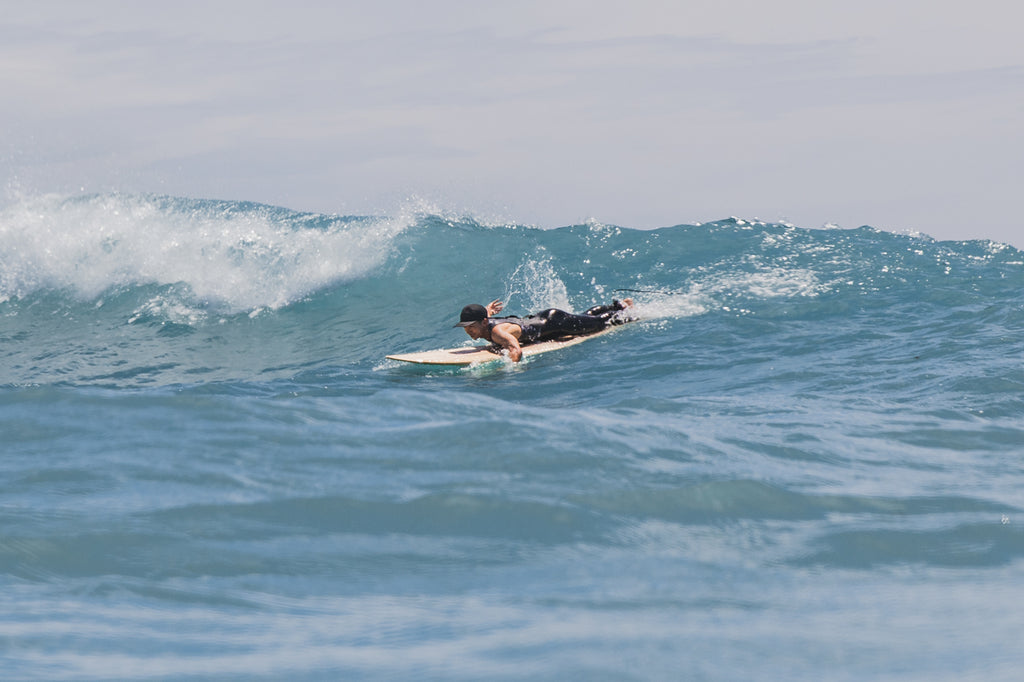
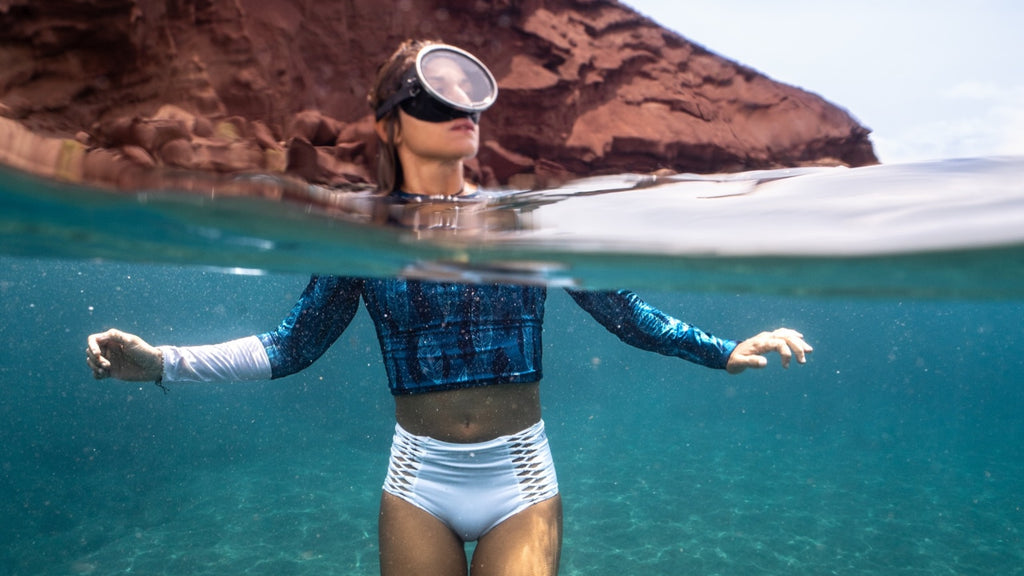
For surfing, the priorities are seam placement against the chest, UPF for the long exposed paddle, and a snug fit that won’t drag on duck-dives. A compression no-gi top with flatlock seams and a rated UPF is genuinely excellent here; one without a UV rating is a sunburn waiting to happen on a glassy afternoon. For stand-up paddleboarding, you’re upright and even more sun-exposed across the shoulders, so UPF moves to the top of the list while abrasion drops off — a lighter grappling top with good UV protection shines. For open-water swimming, drag and visibility matter most; a tight compression cut helps your stroke, but a dark sublimated grappling graphic is the opposite of the high-visibility color you actually want out past the buoys. And for snorkeling or long float sessions, thermal retention and UV over hours dominate, which is where a thin gym rashguard can leave you colder and more exposed than a purpose-built water top.
Keeping Saltwater From Killing It
Whichever top you take into the water, the single highest-leverage habit is the cheapest: rinse it in cool fresh water the moment you’re off the sand, before the salt dries and crystallizes in the fibers. Don’t wring it hard — twisting accelerates elastane breakdown — and never leave it balled up wet in a bag, where salt and bacteria do their worst work and the funk sets in permanently. Hang it to dry in the shade, not in direct sun, because the same UV that burns your skin also degrades the fabric and fades the graphics over time. Skip the hot dryer entirely; heat is what relaxes and kills the stretch fastest. Treated this way, a quality polyester-elastane rashguard will cross over between mat and surf for years. Neglected, it’ll bag out and stink within a season — and that’s true of a dedicated surf top just as much as a borrowed grappling one.
Making the Call
So can your no-gi rashguard go surfing? For the occasional beach day, almost certainly — the compression, the seam quality, and the abrasion resistance that earned their keep on the mat translate cleanly to a few hours in the shore break. The honest line is drawn at sun and salt. If your training top carries a real UPF rating, has flatlock seams, and you commit to rinsing it after every session, it’s a legitimate crossover piece that’ll save you the cost of a second garment. If it has no UV rating, a heavy sublimated graphic, and you’re planning long, sun-soaked, salt-heavy days on the water, you’ll be better served by a top built for that environment — and you’ll spare your gym rashguard an early death by saltwater.
The smartest move for most grapplers who also love the water in 2026 isn’t to force one top to do everything. It’s to know exactly what your training rashguard can and can’t take — and to buy the water-specific top only for the sessions that genuinely demand it.
Ready to gear up for the crossover? Browse current options for a UPF 50+ long-sleeve surf rashguard or a no-gi compression rashguard built for live rolling, and match the top to the water you’re actually getting into.
Sources
- Wikipedia — Rash guard (history and construction)
- Wikipedia — Ultraviolet Protection Factor (UPF)
- Wikipedia — Sun protective clothing
- Wikipedia — Spandex / elastane fiber properties
Browse our top-rated rashguards and no-gi gear at the RashguardGuy shop →