BJJ Guard Retention: No Gi Drills & Gear Guide
Your guard just got passed. Again. The frustration is real — you set up a nice open guard, had your frames in place, and somehow your training partner sliced right through. If this scenario plays out every round, you’re not alone. Guard retention is one of the most undertrained and misunderstood aspects of no-gi jiu-jitsu, and fixing it will transform your entire bottom game.
Unlike gi-based retention where you can grab sleeves and collars to slow your opponent down, no-gi guard retention demands sharper reflexes, better hip movement, and a deeper understanding of distance management. There are no handles to bail you out. Every frame, every angle, and every re-guard attempt has to come from body positioning and timing.
This guide breaks down the core principles, drills, and live training strategies that will make your guard harder to pass — whether you’re dealing with pressure passers, speed passers, or grapplers who chain multiple passing styles together.
Why Guard Retention Falls Apart Without the Gi
In the gi, guard players have a massive advantage: friction. The thick cotton fabric creates drag on every movement, giving you extra milliseconds to react. Collar grips, sleeve grips, and pant grips let you control distance from your back. Take all of that away, and the passer suddenly moves at full speed with nothing to slow them down.
This speed difference is the single biggest reason people who train mostly in the gi struggle when they switch to no-gi. Their guard retention timing is calibrated for a slower game. In no-gi, three things change dramatically:
- Grip fighting shifts to underhook battles. Instead of fighting for collar and sleeve control, you’re fighting for wrist control, collar ties, and underhooks. These connections are easier to break, so you need backup plans for when grips fail.
- Passing speed doubles. Without fabric friction, knee slices, leg drags, and toreando passes happen at twice the speed. Your reaction window shrinks from a full second down to fractions of one.
- Sweat becomes a factor. As rounds progress, bodies get slippery. That butterfly hook you relied on early in the round may slide off five minutes in. Your retention system needs to account for grip loss.
Understanding these differences is the first step. The second step is rebuilding your retention game around principles that work without fabric — and that’s what the rest of this article covers.
The Four Pillars of No-Gi Guard Retention
Every strong guard retention system, whether you learned it from Lachlan Giles, studied Mikey Musumeci’s approach, or pieced it together from years of rolling, comes back to four foundational principles.
1. Hip Alignment and Facing Your Opponent
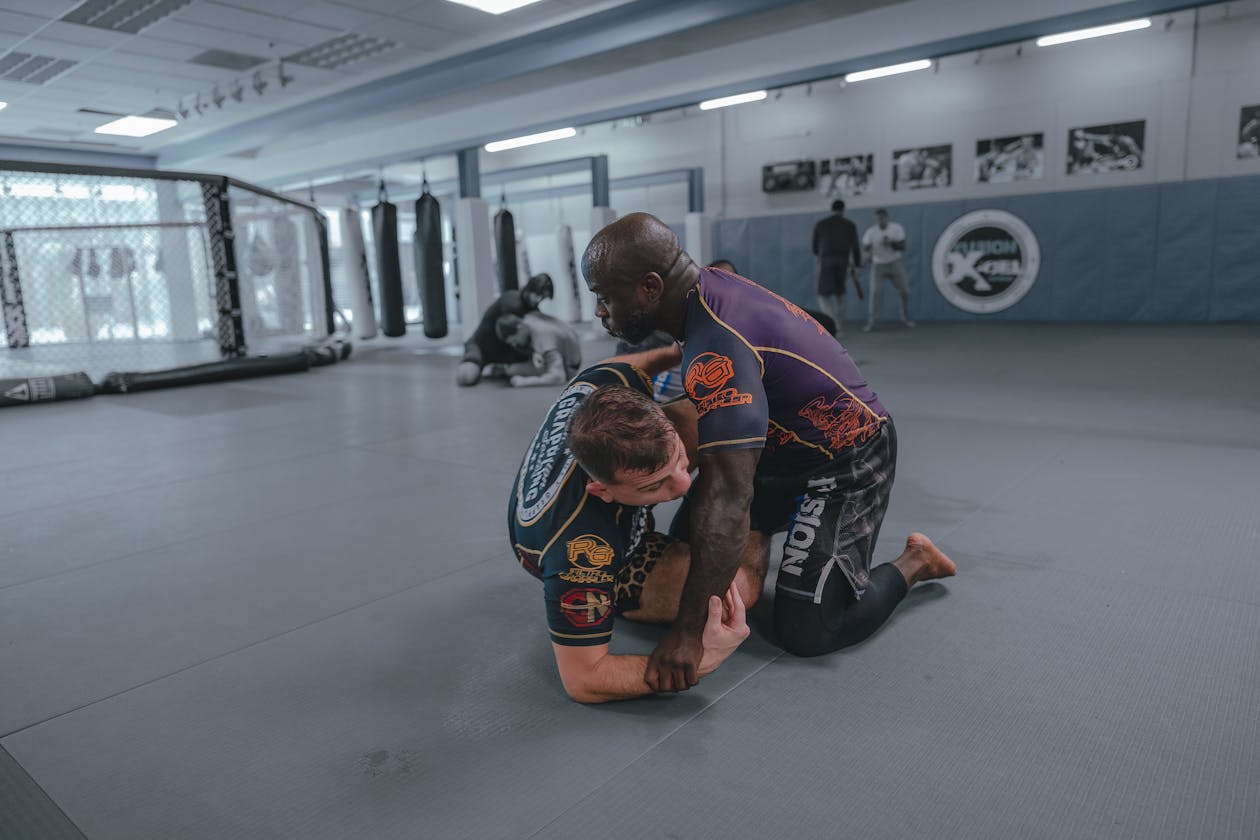
The most basic retention concept is also the one people violate most often: your hips should face your opponent. When a passer moves to your left, your hips need to follow. When they switch direction, your hips switch too. The moment your hips point at the ceiling while your opponent is at a 45-degree angle, you’ve already lost the retention battle.
In no-gi, this hip tracking has to be faster and more proactive. You can’t rely on a pant grip to buy you time while your hips catch up. Drill the habit of moving your hips before your opponent settles into a new angle. Anticipation beats reaction every time.
2. Frames Before Grips
Frames — using your forearms, elbows, and knees as structural barriers — are more reliable than grips in no-gi. A collar tie can be stripped. A wrist grip can be yanked free. But a properly placed knee shield or a stiff-arm frame against the shoulder is much harder to remove because it uses skeletal structure rather than muscular grip strength.
The priority order should be:
- Establish frames (knee shield, forearm across hip or shoulder)
- Use frames to create space
- Fill that space with guard hooks (butterfly, shin-to-shin, feet on hips)
- Only then, hunt for grips to solidify position
Too many grapplers try to grab first and frame second. When you reverse that order, your retention immediately improves because frames don’t slip off sweaty skin the way grips do.
3. Leg Pummeling and the “Legs as Hands” Concept
Your legs are your primary guard retention tools in no-gi. Think of your feet and knees the same way you think of your hands — they should constantly be touching, hooking, and redirecting your opponent. When a passer clears one leg, the other leg should already be inserting a new hook or frame.
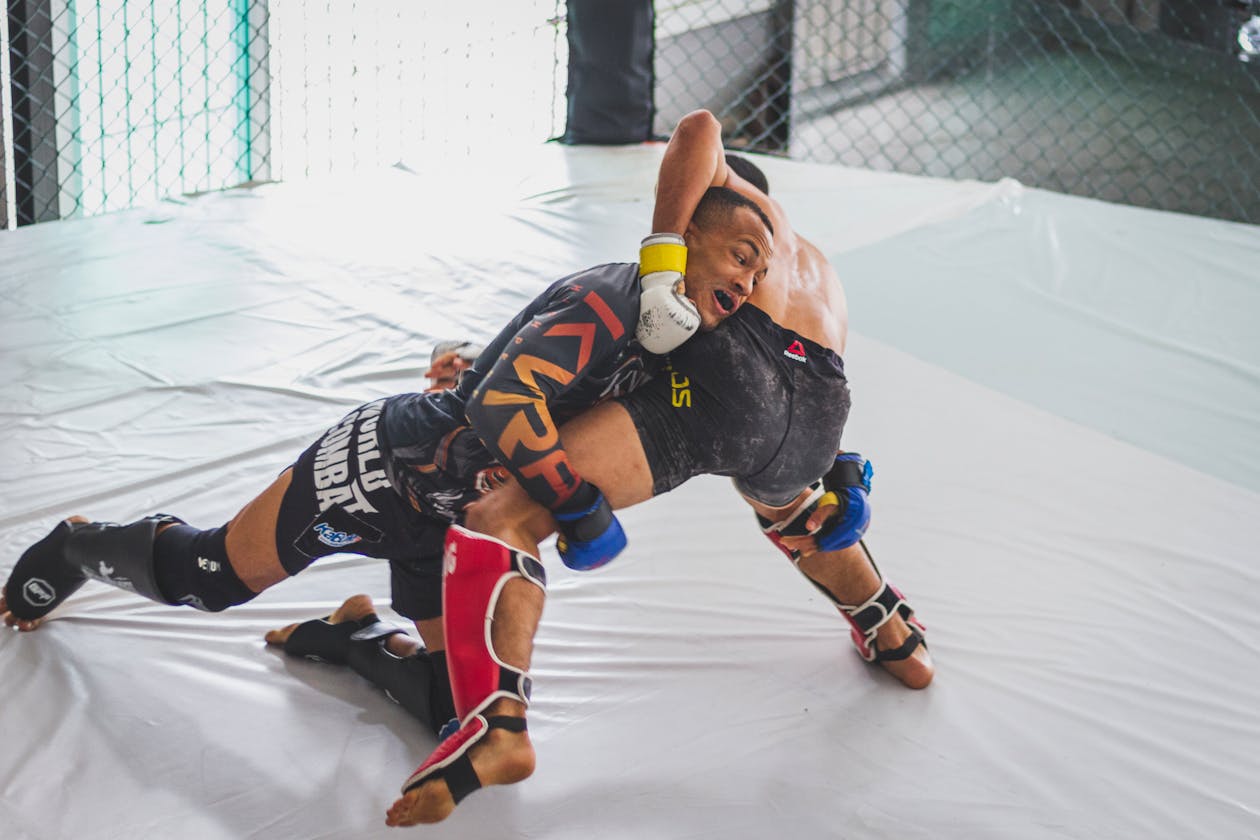
This constant leg activity is called “leg pummeling,” and it’s the hallmark of elite guard players. Watch any high-level no-gi competitor from the bottom and you’ll see their legs never stop moving. They’re not just defending — they’re actively disrupting the passer’s base and angles with every leg movement.
Key leg pummeling actions include:
- Inserting butterfly hooks when the passer’s hips come close
- Placing feet on hips or biceps to manage distance
- Using shin-to-shin contact to block knee slice attempts
- Switching from one open guard variation to another as the passer moves
4. The Granby Roll and Inversions
When all else fails and the passer has nearly consolidated past your legs, inversions give you one last line of defense. The Granby roll — shouldering through to re-face your opponent — is the most common inversion used for guard recovery. Variations include back rolls, single-shoulder rolls, and what some coaches call “sit-through” recoveries.
Inversions are not the first line of defense. They’re the emergency ejector seat. If you’re inverting every time someone passes your half guard, you have a retention problem upstream that inversions are just masking. But when used correctly and at the right moment, an inversion can turn a fully passed position back into an open guard within a second.
Five Drills That Build Retention Reflexes
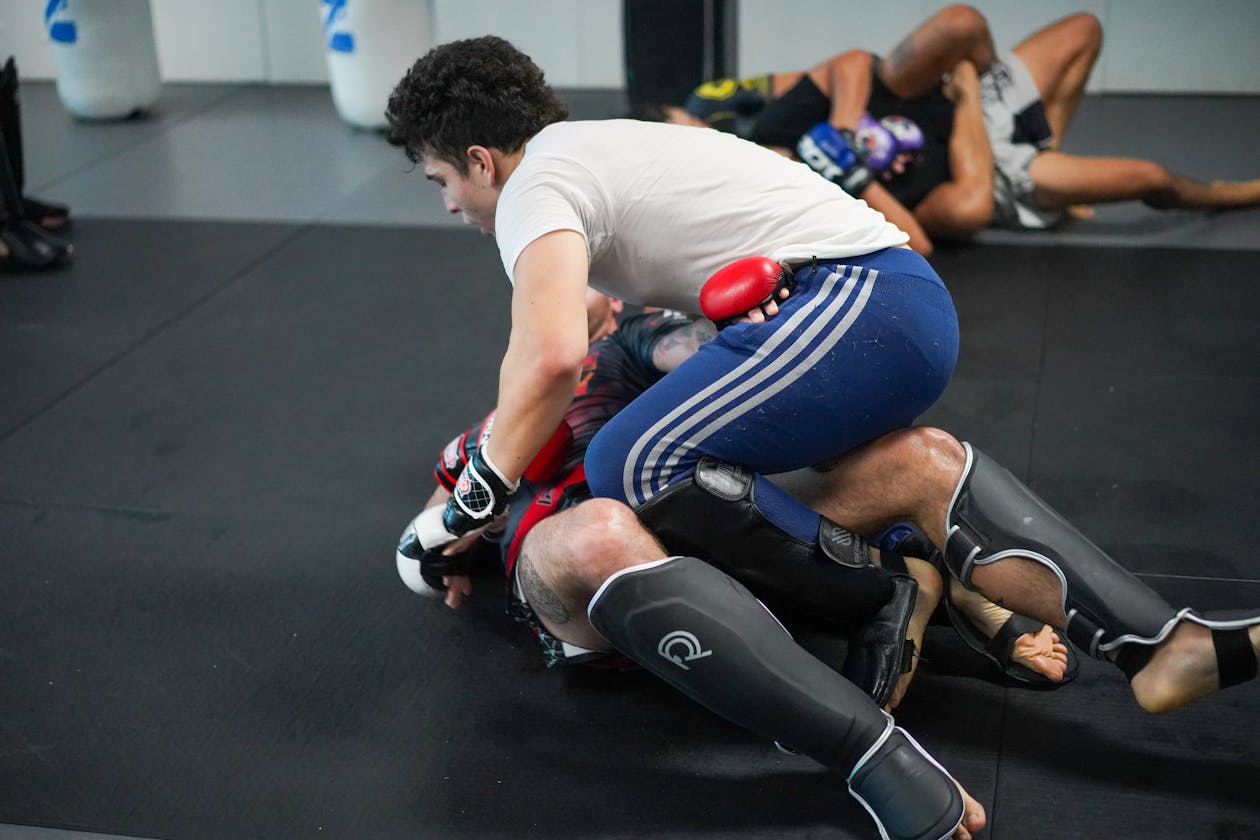
Understanding principles is half the battle. Drilling them into your nervous system is the other half. These five drills, done consistently over weeks and months, will hardwire guard retention movements into automatic responses.
Hip Escape Chains
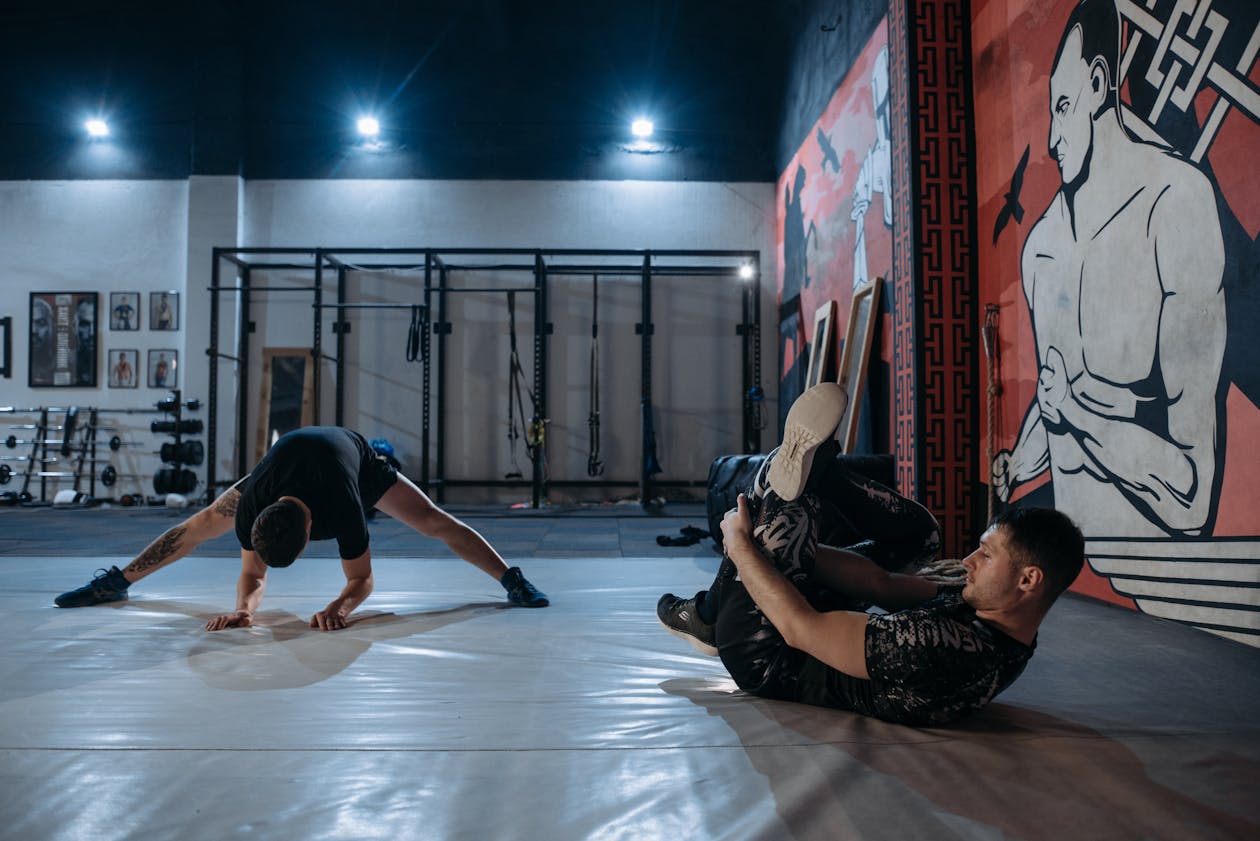
The standard solo hip escape is fine, but chaining them is where retention drilling lives. Start on your back, hip escape to one side, immediately hip escape to the other, and repeat across the mat. The goal is smooth, continuous movement with your hips never stopping. Do three trips across the mat as part of every warm-up.
Partner Leg Pummel Drill
With a partner in your guard, have them attempt slow, deliberate passes while you focus only on leg pummeling. No grips, no sweeps — just keep your legs active and re-insert hooks every time they’re cleared. Start at 30% speed and gradually increase to match tempo. This drill teaches your legs to operate independently of your upper body, which is exactly what you need during live retention.
Here’s an excellent breakdown of guard retention concepts from Lachlan Giles that covers many of these principles in a live context:
Wall Hip Switch Drill
Lie on your back with your feet against a wall. Alternate between left and right hip positions, using the wall as resistance to push off. This builds the explosive hip switching power needed for real-time retention. Sets of 20 switches, three to four times during warm-up, will noticeably improve your hip speed within two weeks.
Circle Drill (Dog Fight Recovery)
Start seated with your partner standing in front of you. They circle around you while you scoot and turn to always face them. The rule: they can move at whatever pace they want, but you can only use scooting, hip escapes, and technical stand-ups to keep facing them. No standing up fully. This drill builds the foundational movement pattern of always tracking your opponent with your hips.
Specific Sparring: Retention Rounds
Dedicate entire rolling rounds to guard retention practice. Start in an open guard position. The top player’s goal is to pass. Your goal is not to sweep or submit — it’s to retain guard for the entire round. If your guard gets passed, reset and start again. This type of purposeful no-gi training dramatically accelerates skill development compared to just free rolling.
Common Retention Mistakes (And How to Fix Them)
Even experienced grapplers make these errors. Fixing even one of them can mean the difference between holding guard and getting flattened out.
Reaching for grips with straight arms. Extended arms are easy to push aside and collapse. Keep your elbows close to your body when framing. Your forearms should create a barrier, not a lever your opponent can use against you.
Flat back retention. Lying flat on your back with your shoulders pinned to the mat kills your mobility. Stay on one hip or the other. A slight angle gives you access to hip escapes, granby rolls, and re-guarding movements that are impossible from a flat position. Check out our guide to BJJ gear for beginners if you’re just getting started with training.
Over-committing to one guard style. If you only play closed guard, a good passer will stand up and force you open. If you only play butterfly, they’ll smash your hooks flat. Strong retention means being comfortable transitioning between guard types — closed guard to butterfly to single-leg X to half guard and back again. Each position handles different passing styles, and your ability to flow between them is your real defense.
Ignoring upper body connections. Guard retention is a full-body system. While your legs pummel and your hips track, your hands should be managing distance with collar ties, wrist controls, or posting on the mat for base. Grapplers who focus only on leg activity forget that a good collar tie can stall a passer’s forward momentum long enough for your legs to catch up.
Holding positions too long. Retention is not about holding one position forever. It’s about smoothly transitioning to the next-best position when your current guard starts failing. If your half guard is getting smashed, don’t fight to hold it until you get passed — transition to deep half or re-guard to butterfly before the pass completes. Early transitions beat late ones every single time.
Building a Retention-First Game Plan
The best guard players don’t think about retention as a separate skill. They build their entire bottom game around it. Here’s what that looks like in practice:
Start every round from bottom with the mindset that your first job is not to sweep or submit. Your first job is to establish a guard that forces your opponent to deal with your legs. From there, sweeps and submissions happen naturally as your opponent makes mistakes trying to pass.
As Lachlan Giles and Ariel Tabak detail in their Guard Retention Anthology, the best retention comes from understanding the common passing patterns and having pre-planned responses for each one. When someone starts a knee slice, you don’t improvise — you execute your trained knee slice defense. When they switch to a leg drag, you flow into your leg drag recovery.
This structured approach turns guard retention from a reactive scramble into a proactive system. You’re not guessing what to do. You’re recognizing patterns and executing drills you’ve practiced hundreds of times.
Pair your retention training with the right gear. A quality rashguard built for no-gi training keeps sweat managed and gives you a layer of protection against mat burns during all those hip escapes and inversions. It won’t make your guard unpassable, but comfortable gear removes one more distraction from your training.
What Gear Supports Heavy Guard Work
Spending a lot of time on your back means a lot of contact with the mat. Your guard retention drilling sessions will involve repeated hip escapes, shoulder rolls, and inversions that put your skin in direct contact with sometimes rough mat surfaces.
A fitted rashguard prevents mat burns across your back, shoulders, and elbows — the three areas most affected by retention drilling. Look for flatlock stitching that won’t dig into your skin during prolonged ground work, and materials that wick sweat rather than absorbing it. When your gear is soaked and heavy, it creates drag that actually changes how your body moves on the mat.
Grappling shorts with a close fit also matter more for guard players than for top players. Baggy shorts catch on toes and knees during leg pummeling, creating snag points that disrupt your movement flow. Board-short style is fine for casual rolling, but dedicated grappling shorts with a tapered fit let your legs move freely through the constant pummel cycle that strong retention demands.
Your guard retention will only improve as fast as your consistency allows. Train these drills, roll with the principles in mind, and give yourself permission to “lose” rounds while you rebuild your bottom game around solid retention habits. The passes will still happen — but over time, they’ll happen less often and cost your opponents a lot more energy to earn.
Browse our top-rated rashguards and no-gi gear at the RashguardGuy shop →