
How a No-Gi Rashguard Is Built: Compression, Fabric Weight, and Seams That Survive Live Rolling
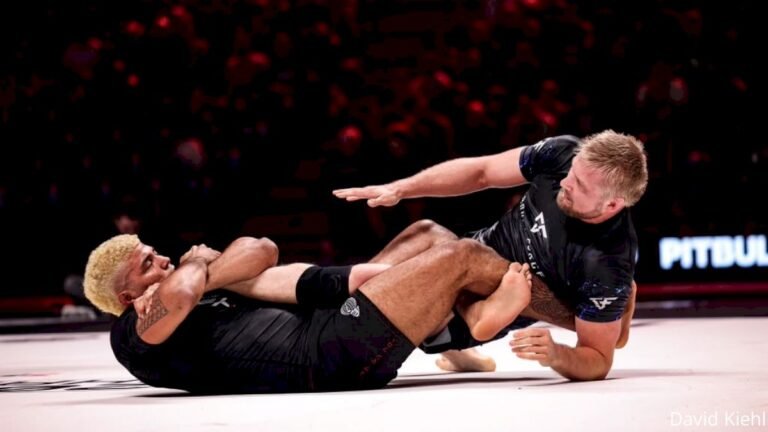
Most buying advice treats a rashguard as a graphic with a size tag. But the moment you start live rolling, a rashguard stops being apparel and becomes a piece of equipment under continuous mechanical stress. Grips drag across the shoulders, knees pin the chest to the mat, and an underhook torques the entire torso panel sideways. What decides whether your gear lasts a year or shreds in two months is not the print on the front — it’s three quiet construction choices: how the fabric is blended and weighted, how much compression the cut delivers, and how the panels are stitched together.
This is a look under the hood. If you understand how a no-gi rashguard is actually built, you can read past the marketing on any product page and predict how a garment will behave on the mat before you ever pull it on.
The Fabric Blend Is the Foundation
Almost every serious no-gi rashguard is a blend of polyester and elastane (sold under names like spandex or Lycra). Polyester does the structural work: it resists abrasion, dries fast, and holds its shape after hundreds of washes. Elastane is the stretch — it lets the fabric move with your shoulder rotation instead of fighting it, then recovers back to shape. The typical ratio sits somewhere between 80/20 and 88/12 polyester to elastane.
That ratio matters more than people realize. Push the elastane too high and you get a garment that feels luxurious in the store but goes baggy and translucent within weeks, because elastane fibers fatigue faster than polyester under repeated stretch-and-load cycles. Lean too heavily on polyester and the rashguard feels stiff, restricts the deep shoulder positions you hit constantly in no-gi, and traps heat. The sweet spot is a blend with enough elastane to move freely but a polyester backbone strong enough to take a year of friction.
Nylon-based blends exist too, and they feel softer against the skin, but nylon absorbs more moisture than polyester and dries slower — a real disadvantage in long sessions where you’re soaked through within the first round.
Why GSM (Fabric Weight) Is the Number to Hunt For
GSM — grams per square meter — is the single most useful spec on a rashguard, and the one most often left off the listing. It tells you how dense the fabric is. A lightweight rashguard might sit around 200–220 GSM: cool, breathable, ideal for hot rooms and summer training, but thinner and more prone to snags. A heavier rashguard in the 250–280 GSM range feels more durable, holds compression better, and resists going see-through, at the cost of running warmer.
Neither is “better” in the abstract. A grappler training in a sweltering, un-air-conditioned room benefits from low GSM and maximum breathability. Someone training in a cold garage gym, or anyone who’s torn through thin rashguards before, should weight toward the heavier end. If a product page hides the GSM entirely, that’s often a sign the fabric is on the thin side.
Compression Is a Design Decision, Not a Marketing Word
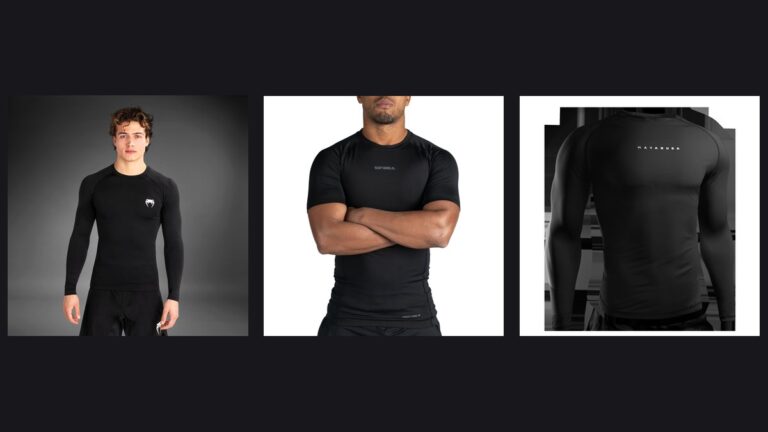
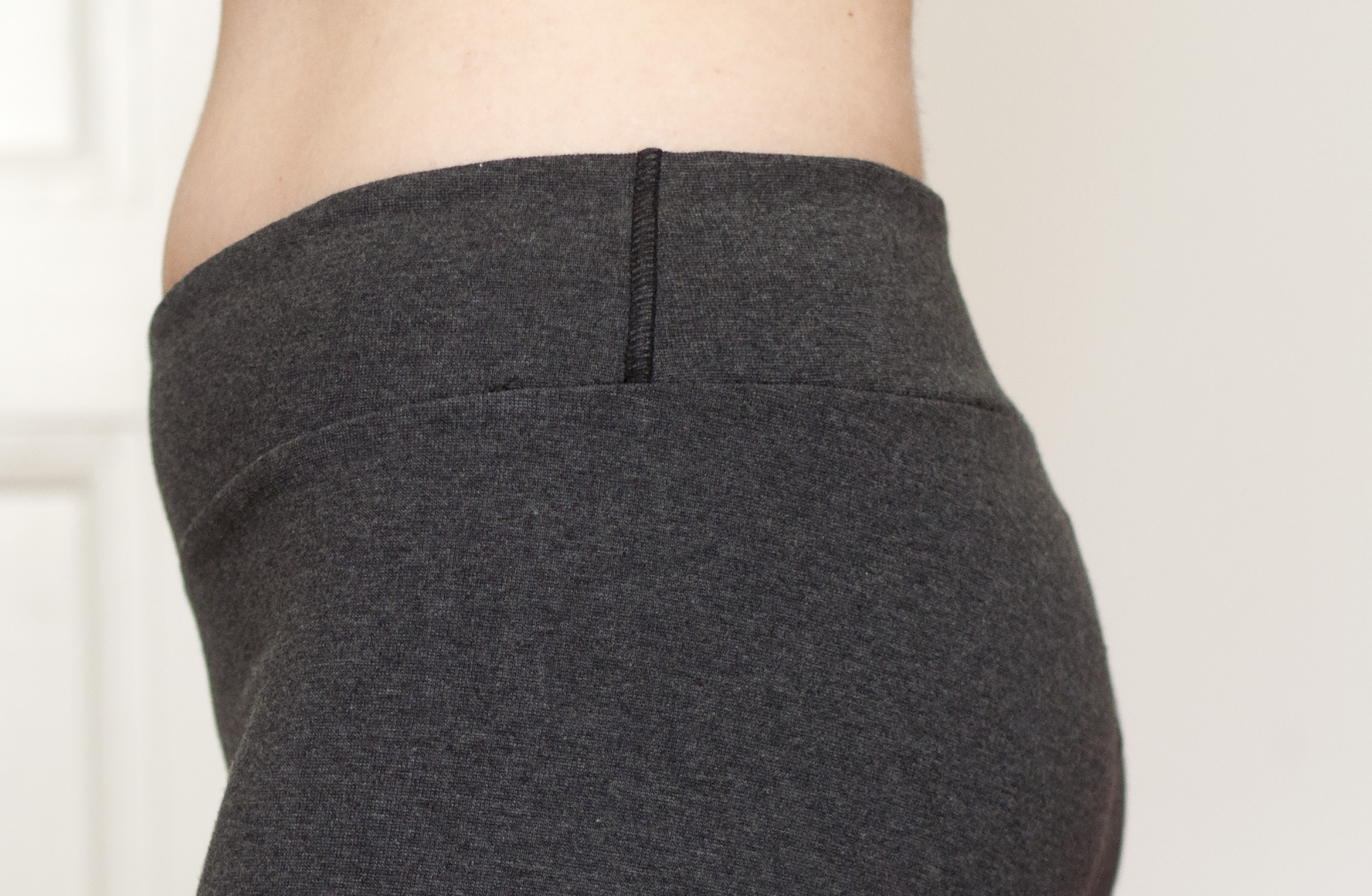
“Compression fit” gets stamped on nearly every rashguard, but real compression is a measurable, engineered property — it comes from cutting the panels smaller than your actual body dimensions so the fabric sits under constant tension against the skin. That tension is what stops the garment from rucking up, bunching under a grip, or sliding when an opponent posts on your chest.
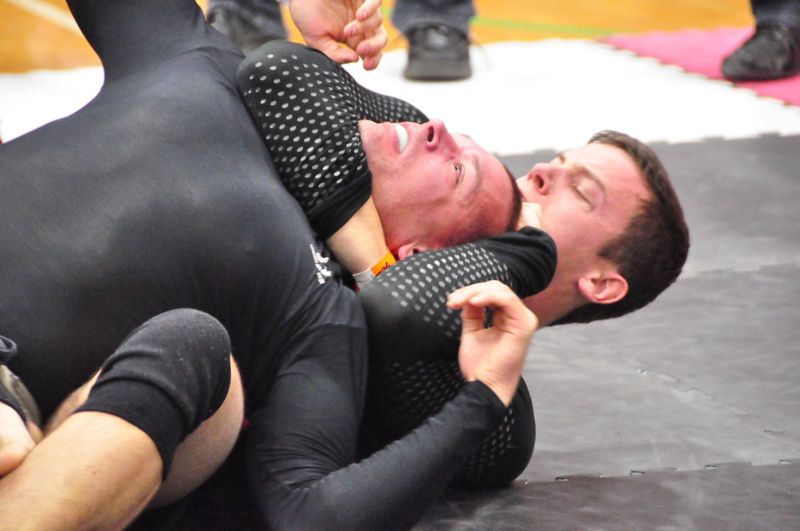
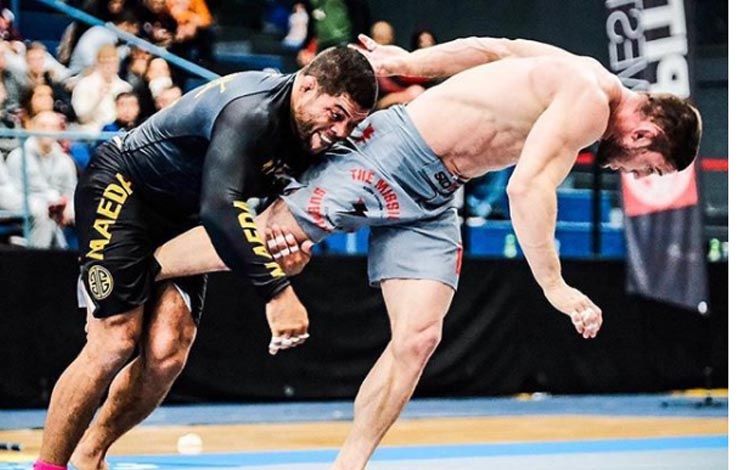
For no-gi specifically, compression does three jobs. First, it eliminates loose fabric that an opponent can grab — in no-gi the rashguard itself becomes a grip surface, and a tight one gives almost nothing to hold. Second, it provides a thin barrier against mat friction and skin-to-skin contact, which matters for hygiene. Third, there’s a modest proprioceptive and circulatory benefit: the gentle, even pressure helps the garment feel like a second skin rather than a flapping layer you’re constantly aware of.
The trade-off is that aggressive compression amplifies sizing errors. A rashguard cut for genuine compression has very little margin — go one size too small and it restricts your breathing and shoulder range; one size too big and you lose the compression entirely and it behaves like a loose shirt. This is exactly why no-gi sizing is so unforgiving, and why the same nominal “medium” feels completely different between brands depending on how much negative ease they design in.
Seams: Where Rashguards Actually Die
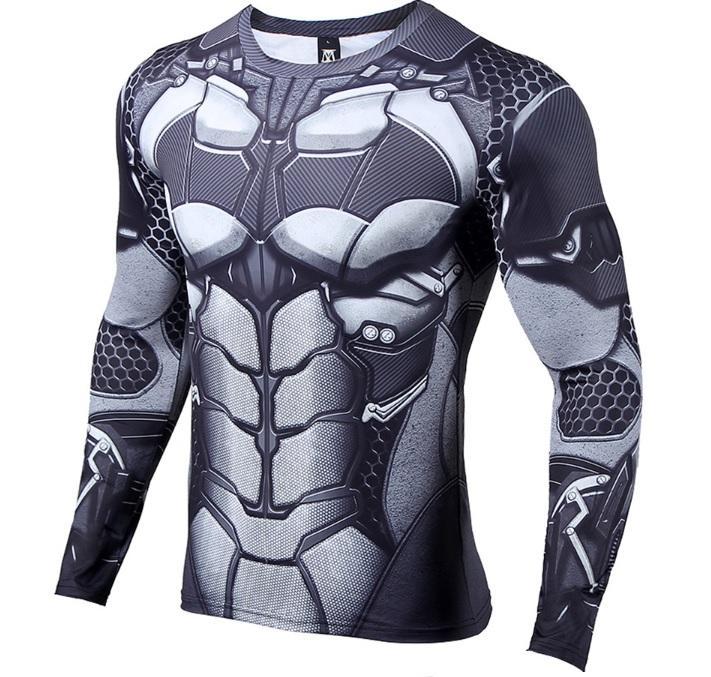
Ask anyone who’s owned a dozen rashguards where their gear failed, and the answer is almost never the fabric panel — it’s a seam. The shoulders, the underarm, and the side panels take enormous repeated stress, and the stitch type holding those panels together is the difference between a rashguard that survives a season and one that splits during a scramble.
Flatlock vs. Overlock Stitching
Two seam constructions dominate. An overlock seam — the standard on cheap shirts — folds the two fabric edges together and wraps them, leaving a small raised ridge on the inside. It’s fast and cheap to produce, but that ridge sits against your skin and becomes an abrasion point during long rolls, and the seam itself has less surface area gripping the fabric, so it’s more prone to popping under shear stress.
A flatlock seam interlocks the two panels edge-to-edge and stitches across the join, producing a flat, low-profile seam with thread on both sides. Flatlock seams lie flush against the skin — far less chafing over a two-hour session — and distribute load across a wider stitch area, so they resist the tearing that kills overlock seams. Nearly every quality no-gi rashguard uses flatlock construction at the high-stress joins for exactly this reason.
The premium step beyond stitching is seam taping or bonding, where panels are heat-welded or reinforced with a bonded strip instead of (or alongside) thread. Bonded seams remove the stitch entirely as a failure point and a chafe point. They’re more expensive and harder to repair, but on a rashguard you intend to compete in, they’re the most durable option available.

Panel Geometry and Why Some Rashguards Just Fit Better
A rashguard isn’t one tube of fabric — it’s a set of panels (front, back, sleeves, side gussets, sometimes a separate shoulder yoke) sewn into a three-dimensional shape. The number and placement of those panels is what determines whether the garment tracks your body through a deep underhook or pulls and twists.
Cheaper rashguards use fewer, larger panels because that’s cheaper to cut and sew. The result is a flatter garment that fits fine standing still but distorts the moment you reach overhead or rotate your torso, because flat panels can’t follow a curved, moving body without bunching. Better rashguards use more panels with curved seam lines that mirror the contours of the lats, shoulders, and obliques. Side gussets under the arms — a separate stretch panel where the sleeve meets the body — are a particularly good sign, because that’s the exact zone that blows out when you frame, post, or shoot.
This is also where the long-sleeve versus short-sleeve decision interacts with construction. Long sleeves add coverage and abrasion protection across the forearms but introduce two more high-stress seams at the elbows; on a poorly panelled rashguard those sleeves twist and ride up. Well-constructed long sleeves use a slightly pre-curved elbow and a snug cuff to stay put.

Printing Method: A Hidden Durability Factor
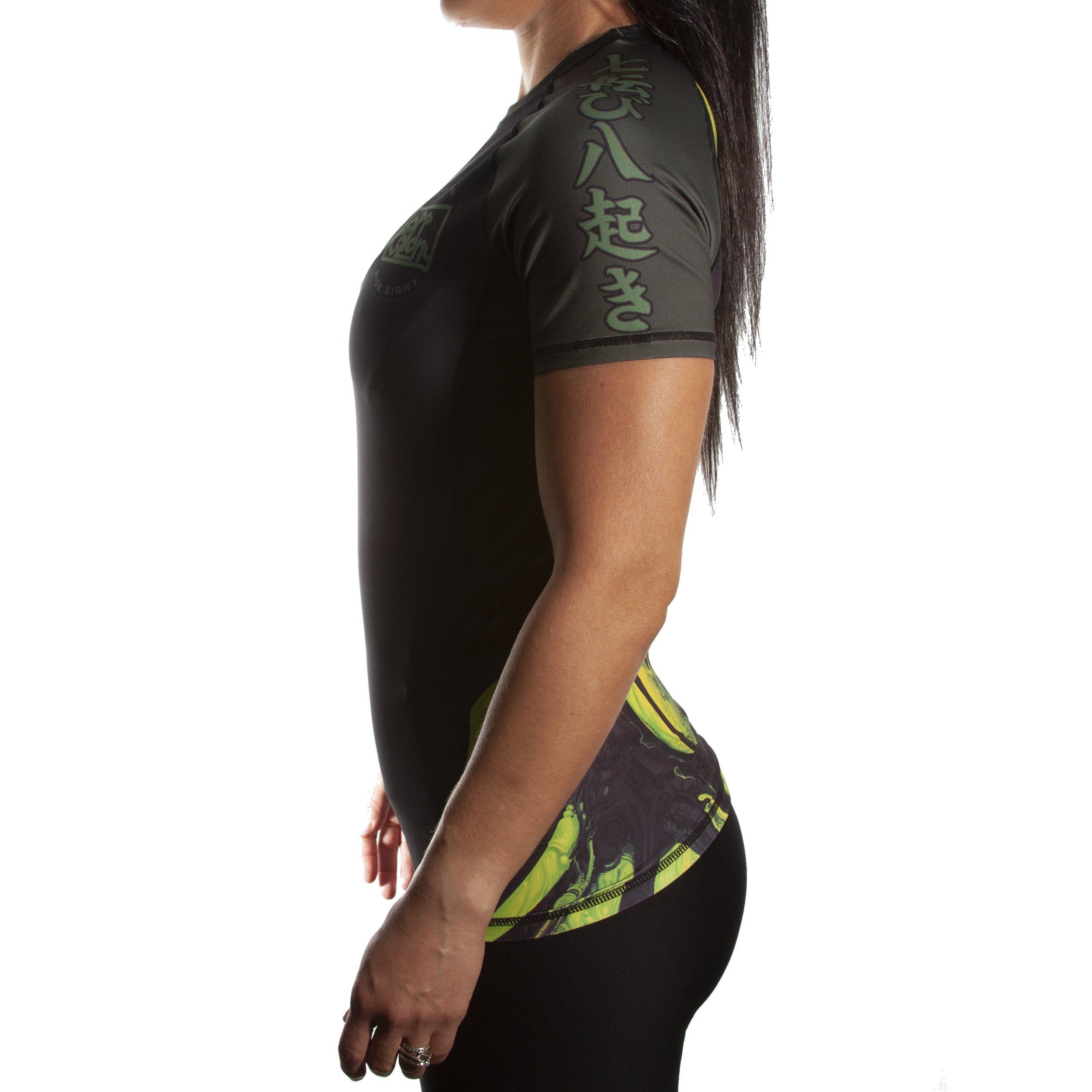
The graphic isn’t purely cosmetic — how it’s applied affects both durability and comfort. Sublimation printing dyes the ink directly into the polyester fibers, so the design is part of the fabric: it never cracks, peels, or adds weight, and the fabric breathes normally through it. This is the standard on quality no-gi rashguards and the reason their graphics survive years of washing.
The cheaper alternative is a screen-printed or heat-pressed graphic laid on top of the fabric. It looks fine new, but it sits as a non-breathable plastic layer on the surface — it traps heat, it cracks and flakes with stretch and washing, and the edges peel. If a rashguard’s main design feels rubbery or raised to the touch, it’s a surface print, and it will not age well under the abuse of regular training.
Reading a Real Product Page Through This Lens
Put it together and a listing becomes easy to decode. A rashguard worth your money will tell you its fabric blend (polyester-dominant with a sensible elastane percentage), ideally its GSM, that it uses flatlock or bonded seams, and that the graphics are sublimated. A listing that talks only about the artwork and the “premium feel” while staying silent on every one of those specs is telling you something by omission.
None of this means you need the most expensive option. A mid-priced rashguard with the right blend, flatlock seams, and sublimated print will out-survive a flashier garment built on thin fabric and surface prints. The goal is to match construction to how you train — heavier and bonded for competition and hard rounds, lighter and breathable for daily drilling in a hot room — and to stop paying for graphics that are about to peel.
Browse current no-gi rashguard options and compare specs directly: search no-gi BJJ rashguards, or narrow to long-sleeve grappling rashguards if you want forearm coverage.
Sources
- Wikipedia — Spandex (elastane) fiber properties
- Wikipedia — Polyester fiber characteristics
- Wikipedia — Dye-sublimation printing
- Wikipedia — Compression garments
Browse our top-rated rashguards and no-gi gear at the RashguardGuy shop →