Half Guard BJJ: 7 No-Gi Sweeps That Win Without a Gi
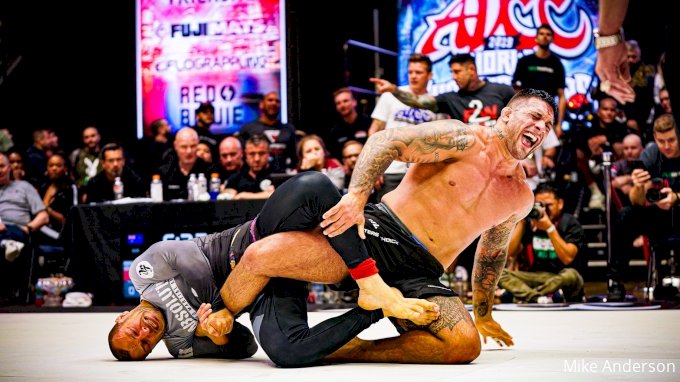
Bernardo Faria built five IBJJF World black belt titles around one position, and that position was not closed guard, not De La Riva, not even the deep half guard people think of when they hear his name — it was the over-under half guard, the boring one. Half guard BJJ remains the highest-percentage attacking guard in no-gi grappling because the underhook battle never stops working. Twenty years after Roberto “Gordo” Correa popularized it as an offensive position, the same shoulder-to-shoulder duel decides modern ADCC matches. Below are seven no-gi half guard sweeps that finish in 2026, the posture mistakes that bleed taps, and how the position fits inside the front-headlock and leg-lock heavy meta everyone is rolling against now.
Why Half Guard BJJ Still Wins in No-Gi 2026
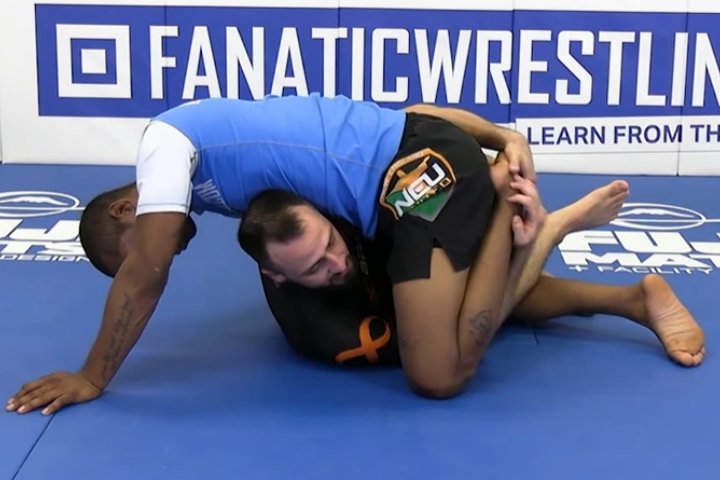
The position is older than the heel hook era and it has survived every leg-lock revolution thrown at it. The reason is simple: half guard is the only guard where you can wedge your opponent’s hip with a knee shield while your hands stay free to fight for the underhook. That underhook is the entire game. Get it, sweep. Lose it, get crushed. There is no fourth option.
Bernardo Faria has stated in multiple interviews that the over-under half guard works at the highest level because it forces the opponent to defend with both hands, which means they cannot post effectively while you elevate. Lachlan Giles, ADCC bronze medalist in 2019, runs nearly identical mechanics with no-gi adjustments: deeper knee shield, faster transitions to the back. The position has earned ADCC medals as recently as 2024.
The Posture That Makes Half Guard BJJ Work
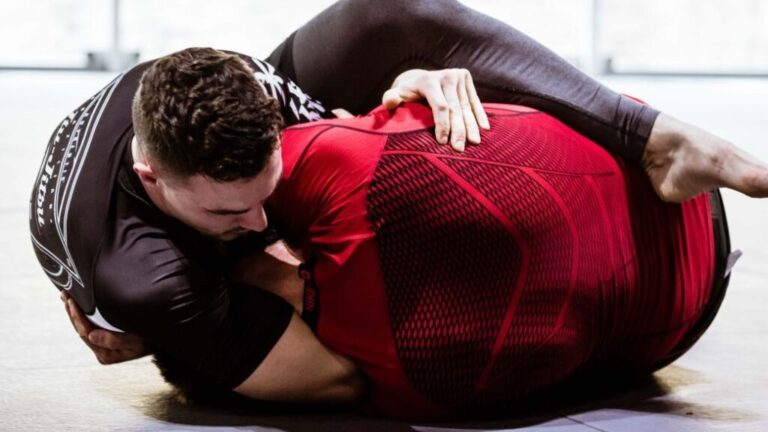
Most failed half guard rounds die at posture, not technique. Lying flat on your back is not half guard — it is bottom side control waiting to happen. Real half guard requires your shoulders elevated off the mat, your underhook arm in deep, and your knee shield pointing at their sternum. Your trapped leg locks their leg with a figure-four or a high lock around the thigh.
Your free hand controls their elbow or wrist on the underhook side. If their arm escapes, the sweep is gone before it starts. Train the hand-fight before you drill any sweep mechanic. The truth is, most half guard escape problems are upper-body problems — the legs are doing fine.
1. The Old School Sweep (Underhook + Knee Block)
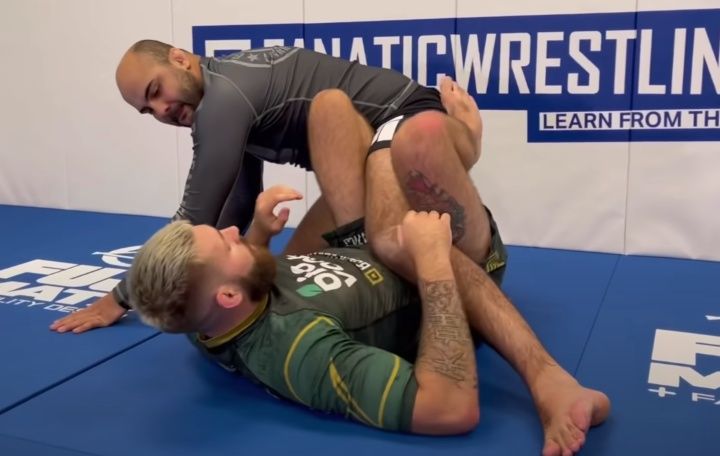
This is the sweep every blue belt should drill first. Establish a deep underhook with your forehead pressed against their armpit. Grab their far ankle with your free hand. Pop your hips into them, drive them onto their butt, and finish on top by sliding your knee through. The mistake is reaching for the ankle too early — the underhook does the off-balancing, the ankle grab just finishes it. Roberto “Gordo” Correa coined this exact sequence in the late 1990s, and no-gi mechanics have not changed since.
2. The Deep Half Guard Roll Under
When the opponent stuffs your underhook, switch to deep half guard. Slip your head under their hip on the trapped-leg side, hug their thigh with both arms, and use your bottom leg to off-balance them onto their hip. Jeff Glover built an entire competition career off this entry. Bernardo Faria’s no-gi version uses a gable grip on the trapped leg rather than a wrist-grip, which holds better when both athletes are sweaty. A clean deep half roll lands you with double underhooks on their leg and a sweep already finishing.
3. The Lockdown to Electric Chair
Eddie Bravo’s contribution. Triangle your legs around their trapped leg (the lockdown), stretch it out by bridging, then sit up and grab their far leg to dump them into the electric chair sweep. The 10th Planet curriculum still teaches this as a baseline no-gi finish. It works because the lockdown removes their ability to base, and the electric chair lands them with their leg trapped between yours — often opening straight into a heel hook entry. Use sparingly against leg-lock-trained opponents, who will counter into the saddle.
4. The Knee Shield Sweep (Wrestler Stopper)
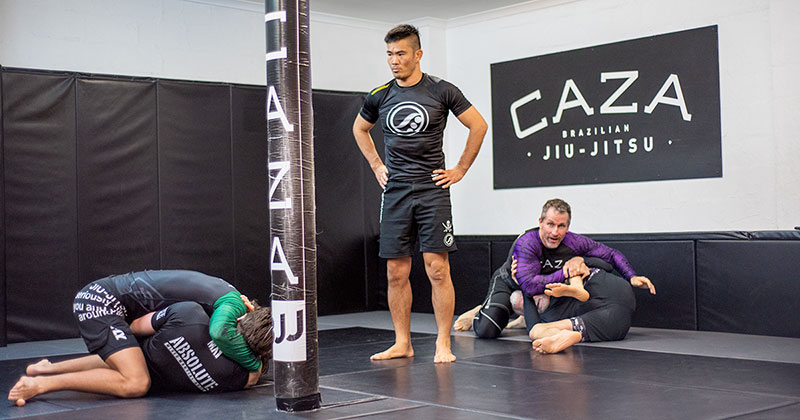
Built for the modern no-gi meta where every opponent has wrestled. Maintain a high knee shield across their sternum, frame on their bicep, and as they try to smash through, slide your hips toward their underhook side and shoot the underhook in mid-scramble. Once the underhook locks, sweep with the same mechanics as the old school. The knee shield half guard is what Lachlan Giles uses to stop wrestlers from passing — the shield buys you the half-second your hands need to win the grip fight.
5. The Plan B Sweep (When They Heavy-Hip)
An opponent drops their hip onto your trapped leg to flatten you. Most people panic. Instead, hand-fight to a two-on-one on the wrist you can reach, sit up sharply, switch your hips, and dump them backward over your shoulder. This is the half guard equivalent of a wrestling Granby roll — it converts a defensive position into a top scramble. Adam Wardzinski hit a version of this against Kaynan Duarte at Polaris and walked away with a back take.
6. The Butterfly Half (Hybrid Lift)
When you have one butterfly hook in and one half guard hook, you have the butterfly half. Establish your underhook, slip your free leg in as a butterfly hook on their hip, and elevate them up and over with both legs working together. The hybrid hits hard against bigger opponents because two hooks beat one every time. For more on the elevation principle, our butterfly guard BJJ sweep guide covers the underhook battle in detail — the same battle decides the butterfly half.
7. The Back Take From Failed Sweep
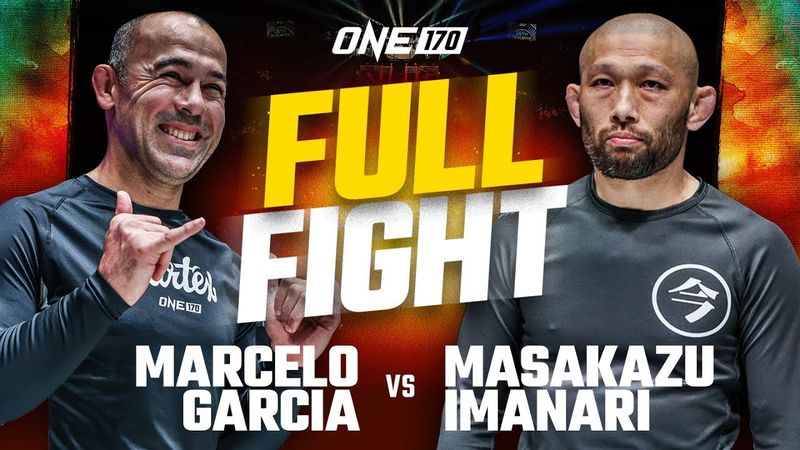
Every failed half guard sweep leaves the back exposed. When your old school sweep stalls because they posted a hand, do not reset — switch hands to their belt line, swing your inside leg over their thigh, and ride them to the back. This is the highest-percentage finish for any half guard player at black belt. Marcelo Garcia, who never trained gi after age 30, won most of his no-gi back takes off failed half guard sweeps. The sweep was the threat. The back take was the goal.
The Mechanics That Decide Every Half Guard BJJ Sweep
Three details separate a sweep from a guard pass. Get them right and any of the seven setups above finish in seconds.
The underhook lives below their armpit, not at it. A shallow underhook gets stripped by a single hand-fight motion. Drive your arm in until your shoulder is jammed into their ribs. That depth makes them sweepable; anything shallower makes you passable.
Knee shield points at their chin, not their chest. The angle is everything. A flat shield pointing across their chest gets smashed; a high shield aimed at the chin frames their entire upper body and gives you space to hip-switch.
Sit up before you sweep. No half guard sweep finishes from flat on your back. Every working entry starts with your shoulders coming off the mat first. The hip elevation comes second — not at the same time.
Half Guard BJJ in MMA — What Changes
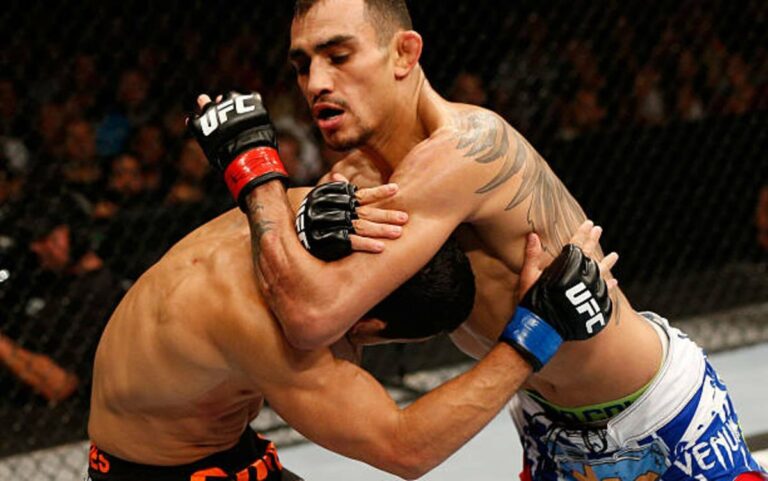
Half guard MMA looks identical to no-gi for the first three seconds, then diverges. You cannot stay on the bottom because of strikes. Every sweep must finish in under five seconds or you eat elbows. Demian Maia used the deep half guard in UFC for almost a decade, finishing single-leg-style sweeps when opponents postured to punch. His pattern was always the same: secure the leg, elevate before the elbow lands, finish on top.
The shorter window means MMA half guard players favor the deep half guard roll-under and the old school. The lockdown and the butterfly half show up rarely because they take longer to set up. If you are training for cage work, drill sweeps 2 and 1 from this list first.
Common Half Guard BJJ Mistakes
Three errors kill more rounds than any technical gap.
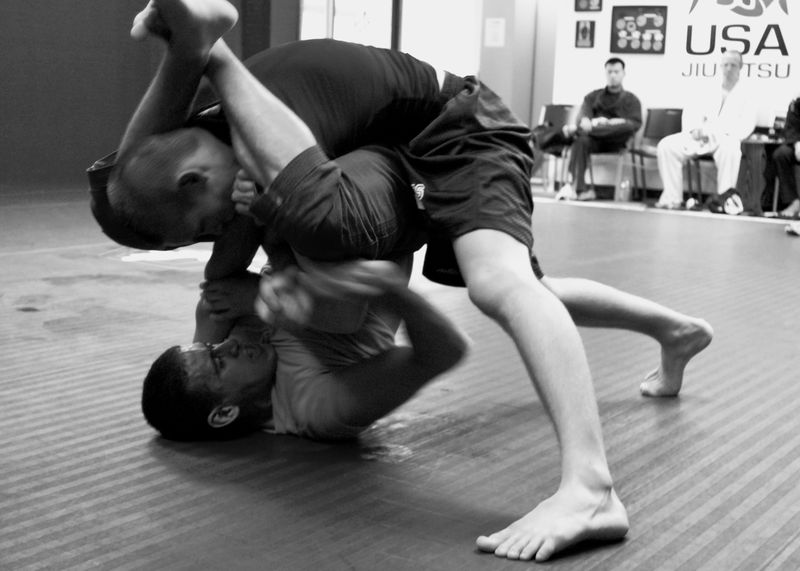
Flat back, no knee shield. The moment your shield drops, the cross-face arrives and you are in bottom side control. Maintain shield tension every second, not just when they move.
Reaching for the sweep grip too early. Most blue belts grab the far ankle before they have the underhook. The opponent posts, the sweep dies, the back is exposed. Underhook first, every time.
Forgetting the hand-fight. Half guard is decided by who controls the underhook arm. If you are not actively fighting for inside elbow position, you are losing without knowing it.
How to Escape Half Guard (Top-Side Perspective)
If you are passing, your job is the opposite of everything above. Strip the underhook with a strong cross-face. Drop your hip onto their trapped leg to neutralize the knee shield. Use a whizzer to threaten the kimura — if you can land the kimura from half guard top, you usually pass at the same time. The half guard escape from the bottom, if you are stuck and cannot get the underhook, is to recover full guard with a knee push — do not stay in half guard without an attacking position.
Drilling Half Guard for Competition
Half guard is a position-pressure sweep position, which means isolated drilling translates poorly. Drill it inside live scrambles, not from frozen grips.
Underhook battle rounds, three minutes. Start in half guard. The bottom player can only score by securing the underhook. The top player can only score by stripping it. No sweeps allowed. Five rounds builds more half guard than a month of technique class.
Sweep-or-back-take chain. Every old school attempt must end in either a finished sweep or a finished back take. No restart. This forces the second-option reflex that wins matches.
Sweaty rounds only. Half guard grips change completely when both athletes are dripping. Test the sweep in the back third of a hard session, not fresh.
Watch the Half Guard BJJ Sweep in Action
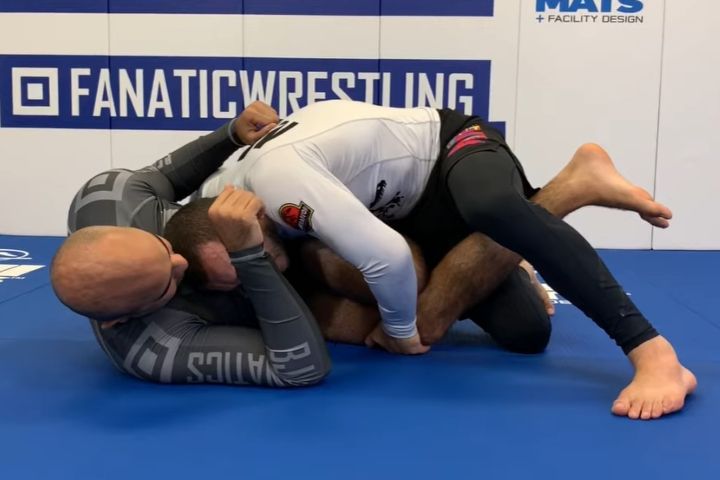
For a no-gi breakdown by one of the most credentialed half guard players in modern grappling, this Lachlan Giles walkthrough covers the underhook entry, the knee-shield frame, and the corner-step finish — the exact sequence he hits in ADCC trials.
Building a Half Guard BJJ Game
An athlete who can finish from half guard has solved a problem every grappler eventually faces — what to do when the takedown attempt fails or the guard gets half-passed. The path in is short. Three months of focused underhook drilling, the old school sweep, and the deep half roll-under will give any blue belt a competition-grade game. Six months of layering in the lockdown and the back-take counter will make them a half guard specialist.
If you want a model to study, watch how Wardzinski and Faria use the position against athletes who are technically faster — the half guard is a slowing position. It punishes the opponent for trying to scramble. In a sport where most guards live and die by speed, half guard wins by patience.
Sources
- BJJ Heroes — Roberto “Gordo” Correa — Profile of the modern half guard system’s originator.
- Wikipedia — Lachlan Giles — ADCC 2019 absolute bronze medalist, half guard specialist.
- BJJ Fanatics — The No-Gi Half Guard by Bernardo Faria — Five-time World black belt champion’s no-gi system.
- Evolve University — 4 Sweeps From Deep Half Guard You Need To Know — Deep half guard mechanics.
- BJJ University — Half Guard Position Library — Free video reference for sweep variations.
- BJJ Eastern Europe — The Old School Sweep From Half Guard — History and mechanics of the foundational sweep.
- Wikipedia — Eddie Bravo — Lockdown system creator and 10th Planet founder.
Browse our top-rated rashguards and no-gi gear at the RashguardGuy shop →