Kimura BJJ: 7 No-Gi Setups That Force the Tap
The kimura BJJ submission is the only attack in jiu-jitsu that finishes from every major position on the mat — guard, half guard, side control, mount, turtle, north-south, even back control. Frank Mir snapped Antonio Rodrigo Nogueira’s humerus with it at UFC 140 in 3:38 of round one, becoming the first fighter ever to submit Minotauro after 35 professional bouts.[1] The grip itself — a figure-four lock on the opponent’s wrist — predates Brazilian jiu-jitsu by decades, but no-gi grapplers have turned it into the most position-versatile submission in modern competition. Below are seven setups that actually finish at brown and black belt no-gi, plus the defenses you need to survive them.
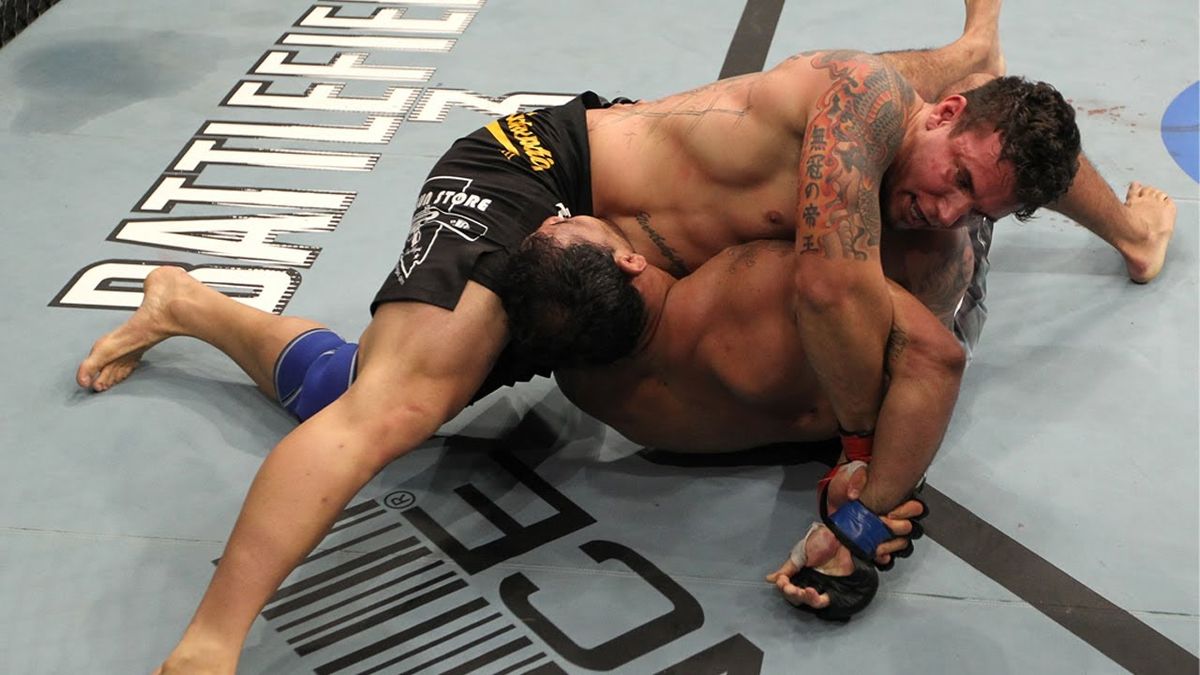
Frank Mir cranking the kimura BJJ finish on Antonio Rodrigo Nogueira at UFC 140 — the humerus snapped because Nogueira refused to tap.
What Is the Kimura BJJ Submission?
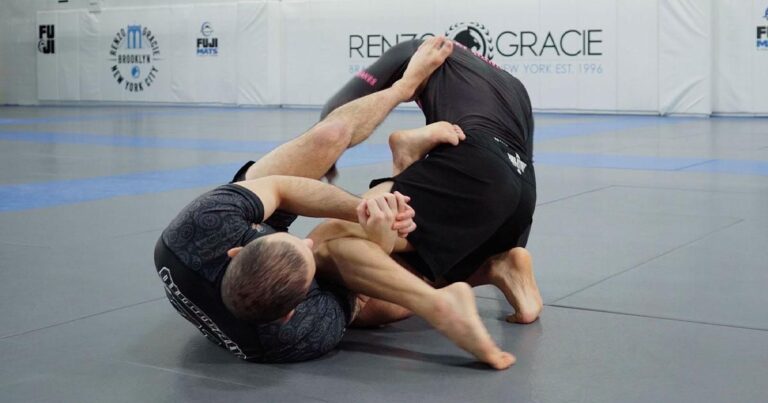
A kimura is a figure-four shoulder lock. You trap your opponent’s wrist with your same-side hand, reach behind their tricep with your opposite arm, and grab your own gripping wrist to close the figure-four. Rotating the trapped arm behind their back hyperextends the shoulder joint and forces the tap. The technique is named after Masahiko Kimura, the judoka who broke Hélio Gracie’s arm with it in their 1951 Maracanã match — a fight that ended only when Hélio’s corner threw in the towel because Hélio himself refused to tap.[2]
The kimura is called double wristlock in catch wrestling and gyaku ude-garami in judo. Catch wrestlers had used it as a primary submission for over a century before BJJ adopted it. What separates a kimura from an armbar or an omoplata is the direction of force: the rotation locks the shoulder joint, not the elbow. That distinction matters at the competition level because shoulder mobility varies massively between athletes. Some pros tap at 30 degrees of rotation. Others can ride it to 90 before something gives. Knowing where your opponent breaks tells you how hard to commit.
Side Control: The Highest-Percentage Kimura BJJ Entry
Side control is where most kimura BJJ finishes happen at the regional no-gi level — and for one reason. When your opponent frames into your hip with their bottom arm to create space, that arm becomes a free gift. You secure the figure-four grip, step over the head into a 90-degree perpendicular angle, and finish.
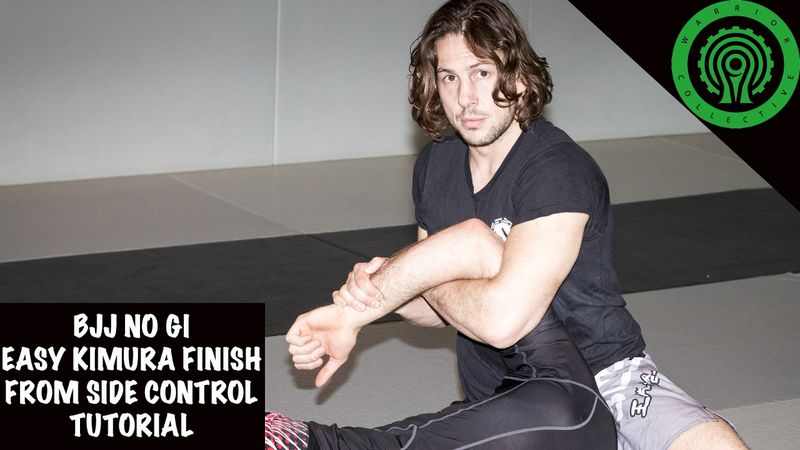
The mistake most blue and purple belts make is reaching for the figure-four grip before pinning the wrist. The wrist has to die first. Use your chest to pin the wrist flat against the mat, then build the figure-four on top of dead weight. If the wrist is still alive when you reach for it, the kimura turns into a wrestling match for the grip — and the bigger athlete wins that fight every single time. That single fix takes most kimura attempts from a 30% finish rate to a 70% finish rate at no-gi local tournaments.
Half Guard Bottom: The Sweep-or-Tap Trap
The bottom half guard kimura is the most underrated entry in no-gi. From an underhook half guard, you swim your top arm around the opponent’s shoulder, secure the wrist as they post their hand on the mat, and either finish the kimura on the ground or use the grip to sweep into a sit-up reversal. Two outcomes from one grip — that’s why high-percentage athletes keep coming back to it.
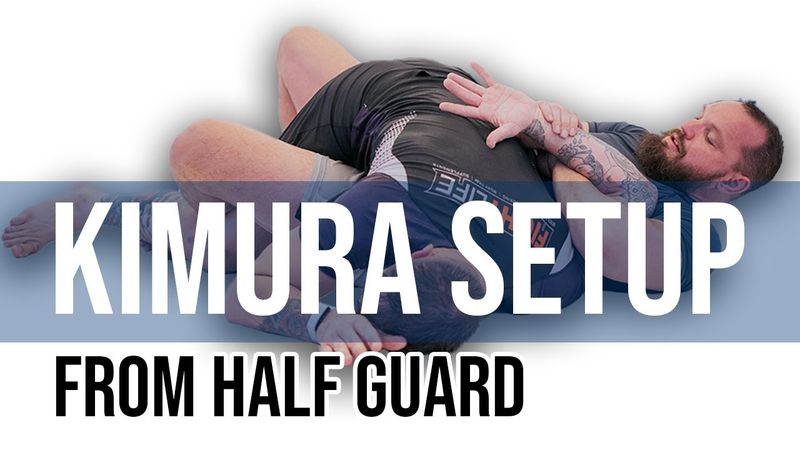
The reason this works in no-gi specifically is grip survival. Without sleeve or collar grips slowing things down, the speed of the figure-four lock outpaces the opponent’s ability to clear it. Once you secure the wrist plus the back of the elbow, the only options are tap, give up the back, or get swept. Roger Gracie built half his closed-guard system around this exact decision tree against larger opponents, and Bernardo Faria carried the half-guard version into the over-40 masters division at a 60%+ submission rate.
Closed Guard: When the Push-Off Sets the Trap
The closed guard kimura is the first one most BJJ students learn — and the first one most of them quit using by purple belt because it gets stuffed. The problem is they’re attacking the kimura against a posture-correct opponent. The correct read: only attack the closed-guard kimura when your opponent posts a hand on the mat to push off your hips.
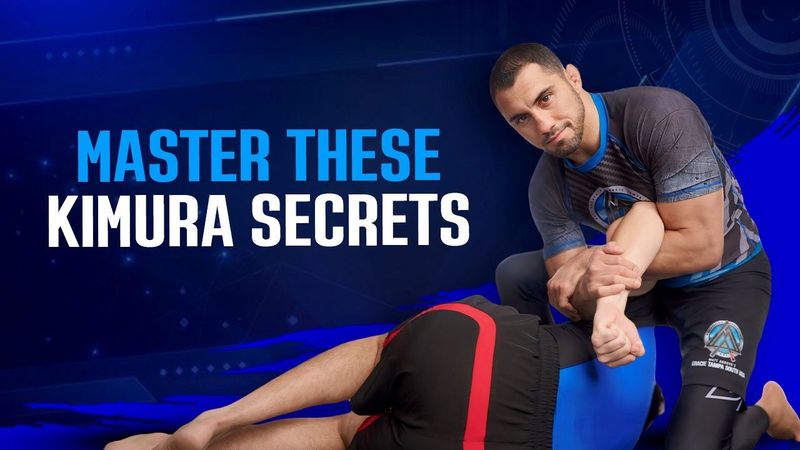
The instant that post hits the mat, you sit up on your same-side elbow, swim the opposite arm around the tricep, secure the figure-four, and pivot to a perpendicular angle. Sitting up off the mat is non-negotiable here. If you stay flat, your back becomes the fulcrum the opponent uses to rip the grip apart. Sitting up shifts the fulcrum to your hip and locks the shoulder out before defense catches up. The detail almost nobody teaches: your gripping elbow needs to ride along the opponent’s ribs, not float in space.
North-South: The Marcelo Garcia Bridge
The north-south kimura was Marcelo Garcia’s signature for almost a decade. From north-south position, you bridge your hips over the opponent’s shoulder line, secure the figure-four on the far-side wrist, and walk your knees in a tight arc until the shoulder pops. Marcelo finished it on Pablo Popovitch, Dustin Akbari, and dozens of others at black-belt ADCC competition.
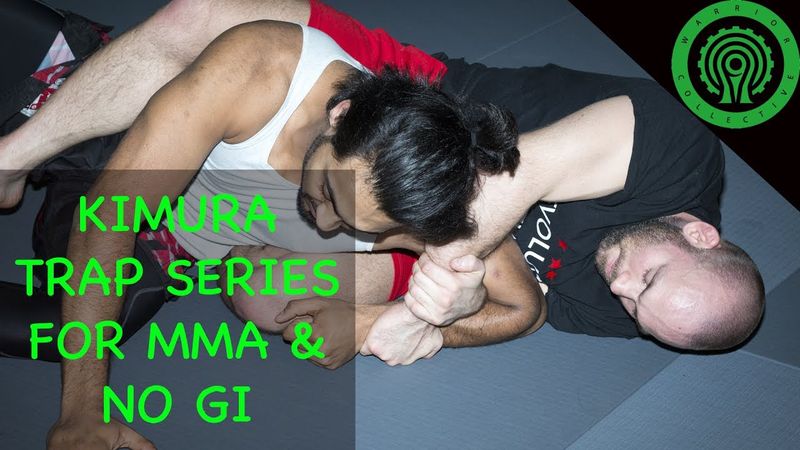
Most coaches teach north-south kimura with the legs split wide. That’s wrong for no-gi. The legs should stay tight to the head with the knees pinching the opponent’s ear and shoulder. Tight knees kill the bridge-and-roll escape before it starts. Garcia’s actual finishing detail — clear in his old MGJJ academy footage but rarely in modern instructionals — was a small forward walk on the toes, not a backward walk on the heels. The forward walk drags the shoulder up and out of the joint capsule.
If you want the matching choke from this same position, our breakdown of the north-south choke no-gi finish pairs naturally with the kimura attack from the same setup. The two threats together force a tap from almost every defense.
Top Turtle: The Crucifix-Adjacent Finish
Turtle position is the most slept-on kimura BJJ angle in no-gi grappling. When your opponent goes to turtle, their elbows tuck tight to their body — but the moment they reach to grip your leg or post away, the near arm exposes. You drive your near-side knee under the exposed armpit, secure the figure-four on the far wrist, and roll back into a finishing position that looks like a crucifix-kimura hybrid.
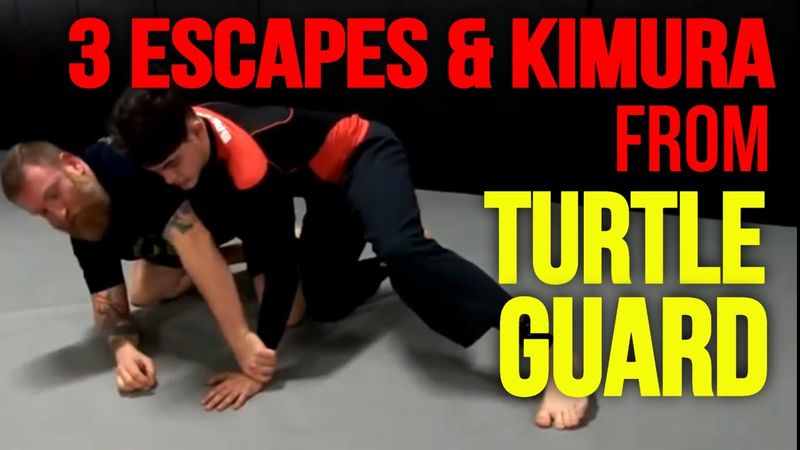
This is the entry Lachlan Giles teaches in his back-attack system and the one Gordon Ryan chains with rear-naked choke threats. It’s also one of the few kimuras that doesn’t force a positional swap — you can finish from on top of the turtle without exposing your own back. For grapplers chaining attacks, this overlaps with the same offensive logic behind the darce vs anaconda decision — turtle exposes specific arm angles, and the smart grappler attacks whichever one shows up first.
How Painful Is a Kimura BJJ Submission?
The kimura is one of the most painful submissions in BJJ when an opponent refuses to tap, because the rotational force on the shoulder ramps up exponentially in the final 10 degrees of motion. Most trained grapplers feel pressure at 30 degrees of rotation, real pain at 60, and structural failure between 80 and 100 degrees. The Mir-Nogueira finish at UFC 140 went past 100 because Nogueira refused to tap — the humerus broke before the shoulder joint did.[3]
If you’re rolling and you feel the grip lock in but the rotation hasn’t started yet, tap. The window between “I can survive this” and “my shoulder is gone” is sometimes one second. Brown belts who pride themselves on not tapping to a kimura are the brown belts who end up on the surgery table for a labrum repair. Pride doesn’t heal shoulders. Six months of rehab does.
Common Kimura BJJ Mistakes Brown Belts Still Make
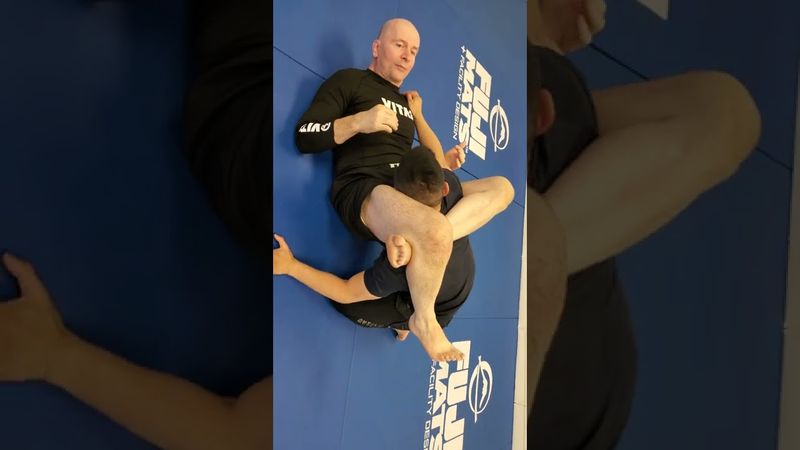
The biggest kimura BJJ error at every belt is grip-first thinking. The figure-four lock is not the technique — pinning the wrist is the technique. The grip is just the consequence. Coaches who teach the grip first produce blue belts who chase the figure-four during scrambles and lose it 80% of the time. Pin-first instruction would fix half the bad kimura habits in American jiu-jitsu overnight.
Three more common errors that show up at brown belt:
- Loose elbow. If your gripping elbow flares away from the opponent’s body, they can swim out. Glue the elbow to their ribs and the swim disappears.
- Wrong rotation direction. The kimura rotates the wrist toward the opponent’s head, never toward their feet. Reverse rotation turns the lock into an Americana, which is a weaker submission against athletic opponents and almost never finishes at black-belt no-gi.
- Letting the opponent grab their own waist. If the trapped hand reaches the belt line, the kimura is functionally dead. Strip that grip before you commit to rotation — usually by bridging your hips to break their elbow seal, or by sliding the figure-four down toward the wrist for more torque.
How to Defend the Kimura BJJ Attack
Defense starts before the grip lands. If you see the figure-four building, the answer is to clasp your own hands — a Gable grip or a wrist-to-wrist lock — before they finish closing the figure-four. Once the grip is fully built, the only defenses left are escape and sweep, and both are uphill.
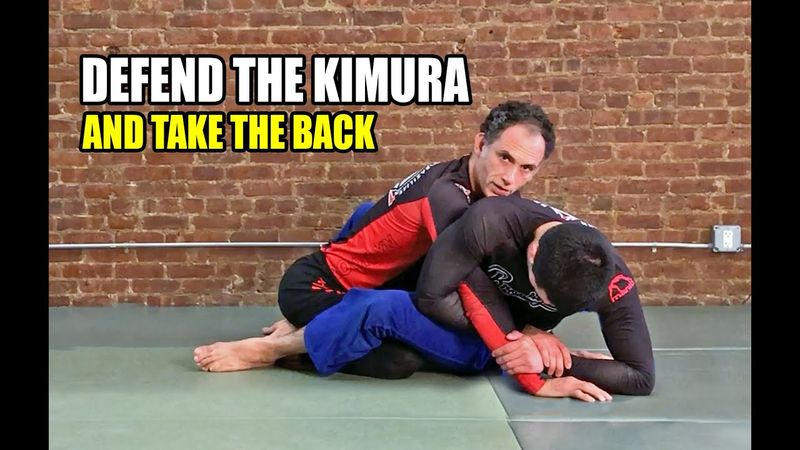
The cleanest counter to a side-control kimura is the hip escape under the elbow: shrimp your hips away from the gripping arm, free your trapped wrist, and recover guard. Against a north-south kimura, the answer is the same as defending an armbar from that position — bridge into the gripper, never away. The instinct is to roll away from the pressure. The instinct is wrong. Bridging in collapses the grip’s torque and creates the inch you need to clear the wrist.
The fastest way to actually develop kimura defense is to start every roll already in a bad position and ask training partners to chase the submission. Drill 10 sequences a week from side-control bottom with the kimura grip already set. Within six weeks the escape becomes automatic, and your opponents will quit chasing it because they can’t finish. The same drill logic works for heel hook defense in no-gi — start in the bad spot and force the escape pattern into muscle memory.
Watch the Kimura BJJ Finish in Action
This walkthrough from Stuart Tomlinson breaks down the no-gi kimura from side control with the same wrist-pin priority discussed above — a clean demonstration of pin-first, grip-second order.
The Kimura as Position, Not Submission
The most useful mental shift for grapplers under brown belt is to stop chasing the kimura as a submission and start using it as a control position. Gordon Ryan’s no-gi system treats the figure-four lock as a steering wheel — once the grip is set, the opponent has to move where the grip lets them move. From that controlled position the submission becomes optional. You can finish the kimura, slide to a back take, transition to an arm drag, or trade the grip for a sweep. The grip itself is the value. The tap is a bonus.
That shift also explains why the kimura survives across rulesets while other submissions fade. ADCC, EBI, Submission Underground, IBJJF no-gi, MMA — the figure-four works under every ruleset because it doesn’t depend on grips, points strategy, or position-specific stalling rules. It’s a universal grip on a universal joint, and that’s a piece of mechanical control that doesn’t expire when the ruleset changes.
Sources
- UFC 140: Jones vs. Machida — Wikipedia entry covering Frank Mir’s kimura finish of Antonio Rodrigo Nogueira on December 10, 2011.
- Masahiko Kimura — Wikipedia entry on the Japanese judoka and his 1951 match against Hélio Gracie at the Maracanã.
- Kimura Lock (Submission) — BJJ Heroes technique reference on the mechanics, history, and naming of the kimura lock.
Browse our top-rated rashguards and no-gi gear at the RashguardGuy shop →