Best No-Gi Shorts for BJJ: What ADCC Pros Wear in 2026
Walk into any no-gi open mat in 2026 and you will see a half-dozen short styles fighting for floor space. Velcro-flapped MMA trunks, split-side grappling shorts, side-vented competition cuts, even the occasional pair of running shorts on a confused white belt. The keyword “best no-gi shorts for BJJ” is a popular search because the answer keeps moving — fabric weights have dropped, waistbands have evolved past Velcro, and the leg-lock era reshaped what cuts actually survive a heel-hook entry without tearing. This guide skips the affiliate-bait list and looks at what pros are wearing at ADCC trials and the Craig Jones Invitational right now, then breaks down the four specs that decide whether a short lasts six months or six years.
What Counts as a No-Gi Short in 2026
A no-gi short, in the BJJ sense, is not the same thing as a board short or an MMA trunk. The category covers three overlapping cuts: dedicated grappling shorts (stretchy, mid-thigh, designed for mat work), MMA fight shorts (heavier construction, longer drop, built for a cage with strikes), and hybrid compression shorts worn over or under spats. The wrong cut shows up in subtle ways — a board-short waistband does not survive a Saulo pass, an MMA short with a stiff front panel stops you from finishing the kimura grip, and untreated polyester eats sweat like a sponge by week three.
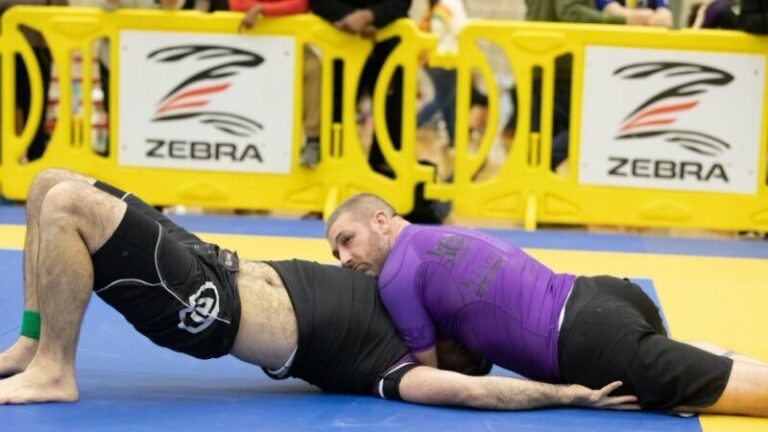
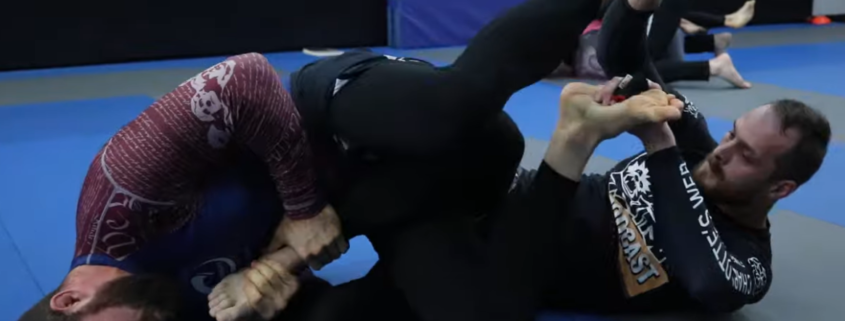
Watch elite no-gi competition footage and you will notice every top grappler is wearing one of two builds: a split-side grappling short (4-way stretch panels on the hip, a closed-hem leg opening, no internal pockets) or a low-profile compression short worn solo. Both share the same core feature — nothing that can hook a finger or a toe. This is the single design constraint that separates a real no-gi short from a cosmetic one.
Grappling Shorts vs MMA Fight Shorts vs Compression
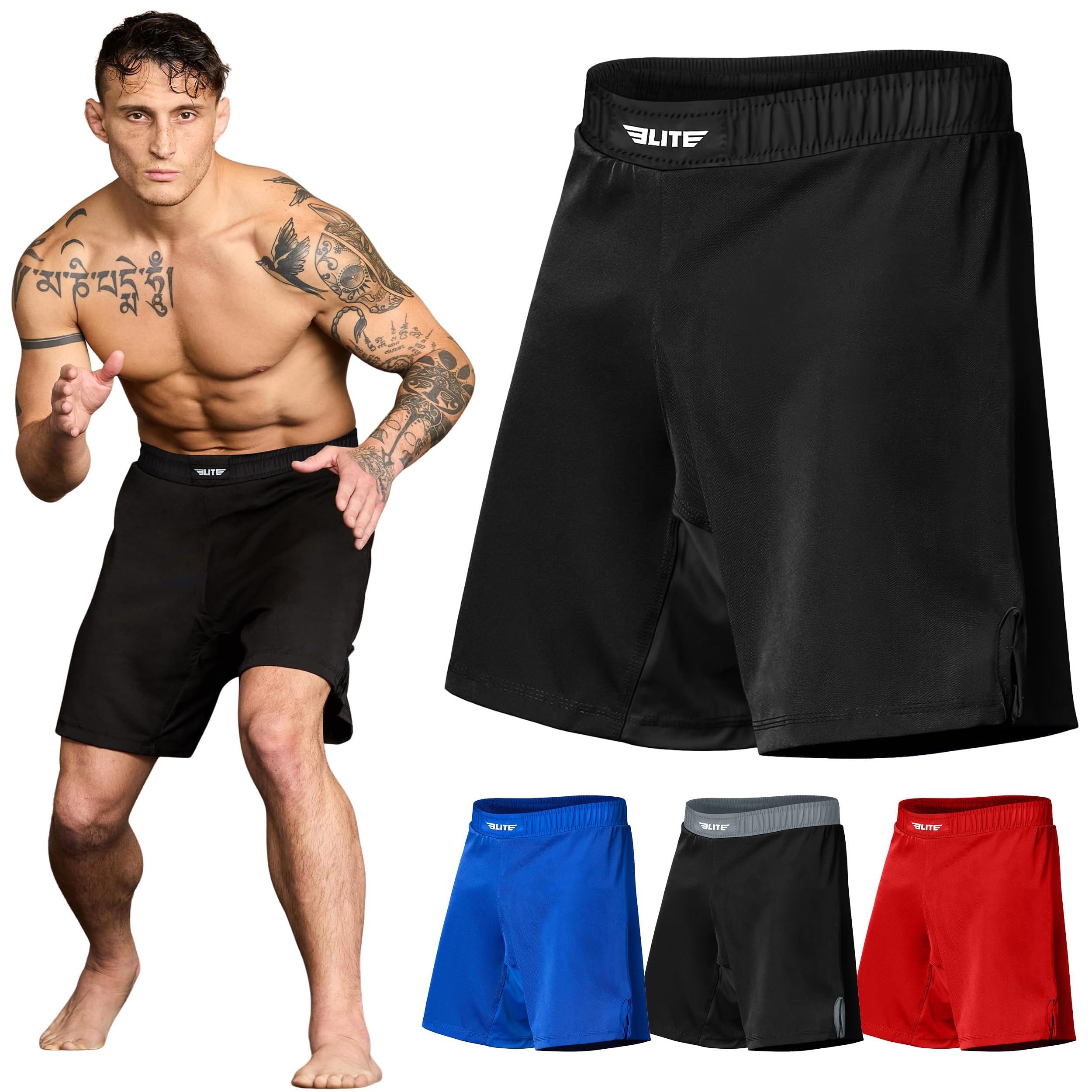
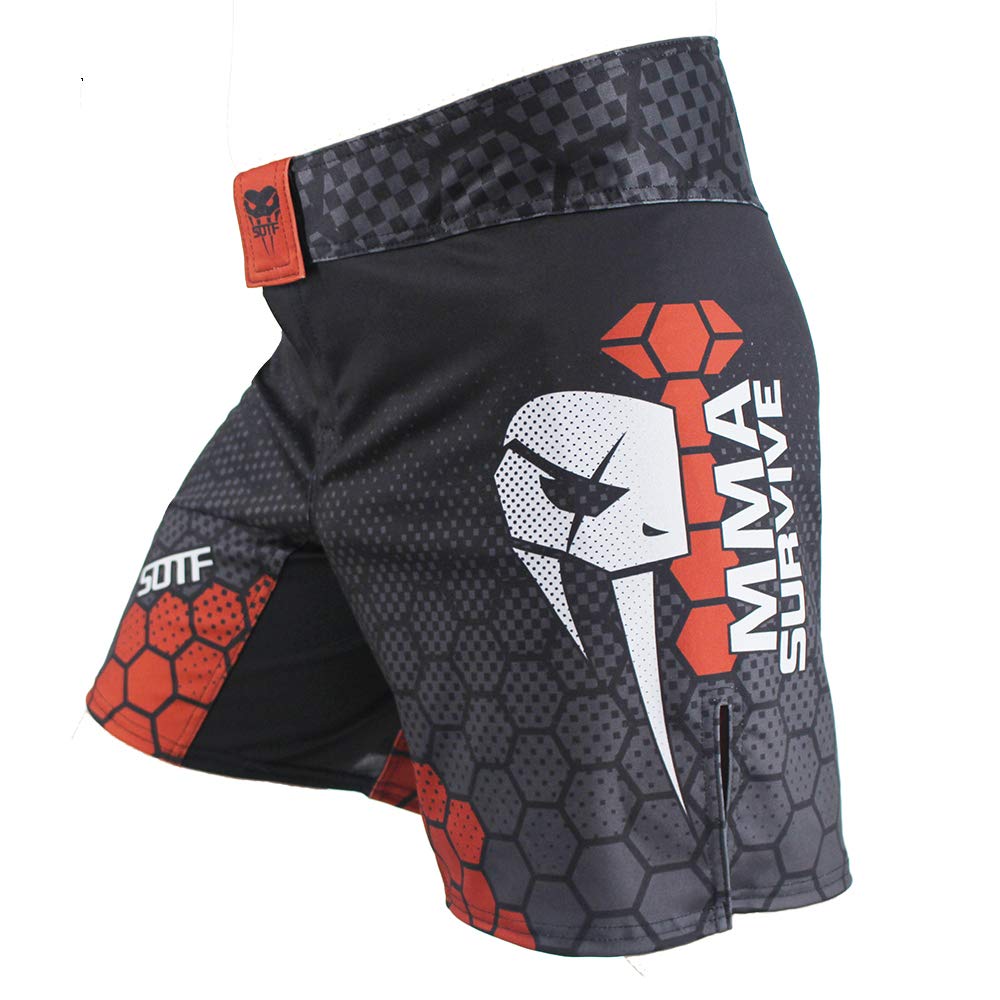
These three cuts overlap in product listings but behave differently the moment you are on the mat. Grappling shorts run 6–9 inch inseams, use a single-piece front panel for unrestricted hip flexion, and almost always have stretch side panels covering the IT band. MMA fight shorts run longer — often 10+ inches — with a heavier shell, reinforced crotch gusset, and side splits cut for high kicks. The MMA cut is overbuilt for pure grappling: the extra weight slows you down and the longer leg drapes into your opponent’s grips when you are playing guard.
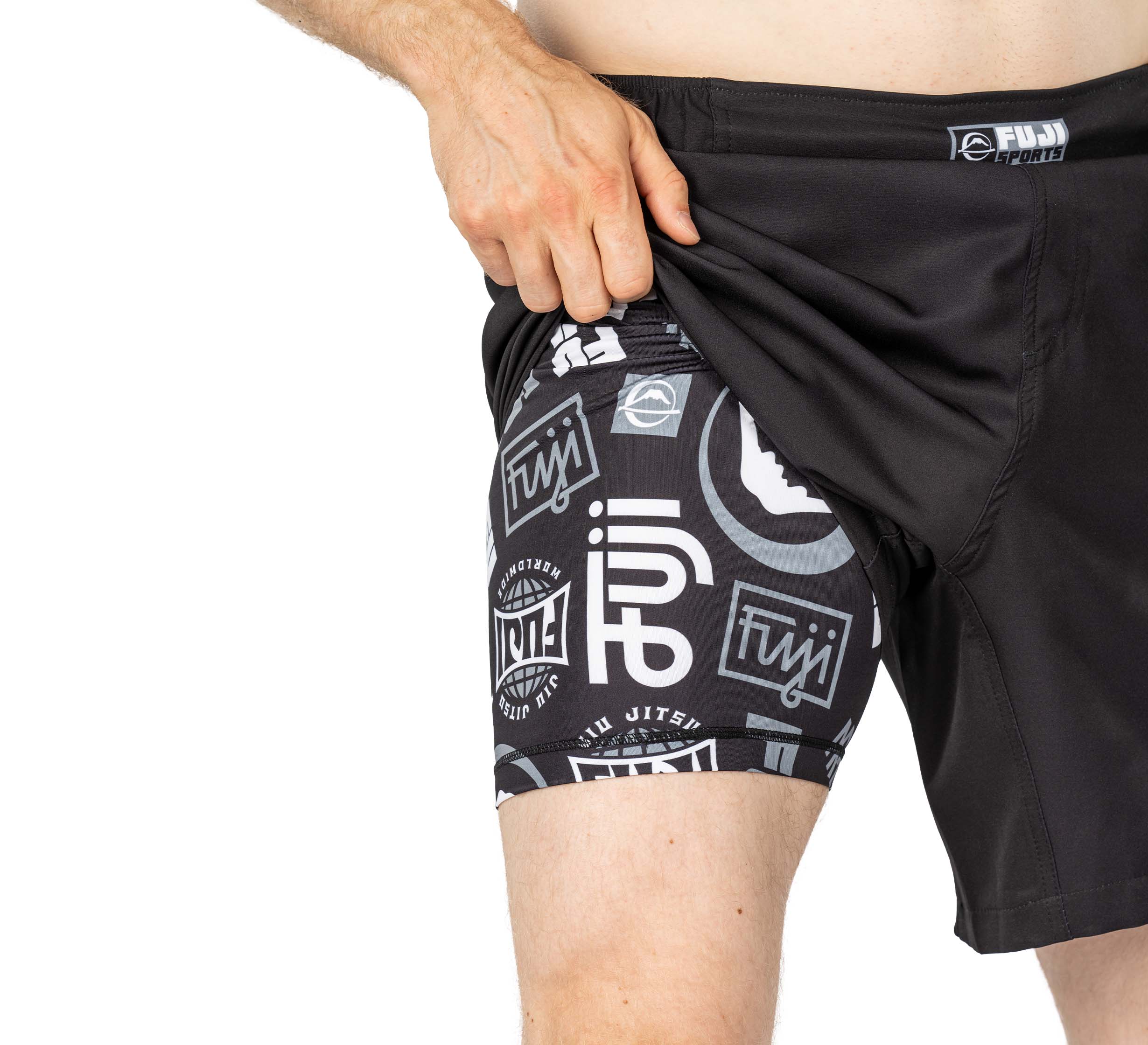
Compression shorts solve the grip problem entirely by removing fabric for the opponent to grab. The leg-lock era pushed a lot of competitors into compression-only setups because every loose hem became a potential frame for an opponent to anchor on. The downside is exposure — most academies still expect a covering layer in open mat, and pure compression does not hide the inevitable cup outline. The hybrid solution is a compression base under a short-inseam grappling short, which is exactly what you will see on a majority of CJI competitors.

What Pros Are Actually Wearing
ADCC trials and CJI footage in 2026 give a clean read on the current pro short standard. The dominant build is a split-side grappling short in the 7-inch inseam range, with a tie-cord-and-internal-elastic waistband (no Velcro, no exposed plastic clips), a perforated mid-thigh panel for ventilation, and a flatlock-stitched inner gusset. Brand-wise, you will see plenty of mid-tier specialists — Hayabusa, Scramble, Tatami, Sanabul, and a growing number of fight-camp house brands — over the bigger MMA labels.
The New Wave Influence
Watch any of the Danaher offshoot squads compete and the short stays out of the highlight reel for a reason: it is not adding anything. The pros sponsoring through Sanabul and Hayabusa run a 7-inch inseam, plain dark color, no logo on the leg. The aesthetic decision is functional — busy graphics distract referees on tight calls, and lighter fabrics dry faster between matches at a multi-day tournament.
The Younger Pro Look
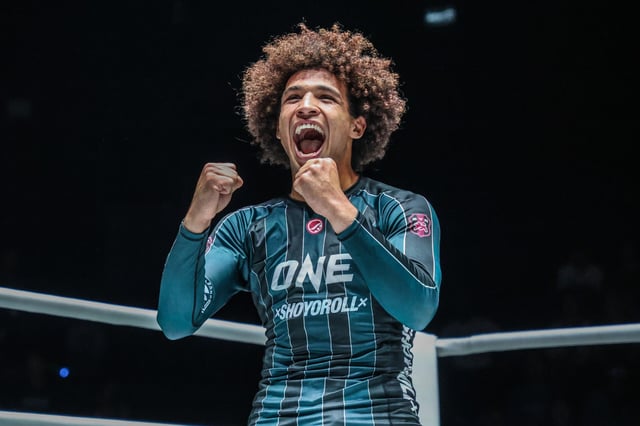
The younger competitive set leans into shorter inseams (5–6 inches) and bolder brand graphics. The shorter cut clears more knee room for inverted guard work and shin-on-shin entanglements. Watch a Kade Ruotolo match and you will notice how much of his leg-lock setup happens with the foot already inside his own short’s leg opening — a longer fight-short cut would catch on the wrist of an inside heel-hook control. The shorter inseam is a leg-lock-era adaptation, not a fashion choice.
The Four Specs That Decide Quality
Once you strip out branding, every no-gi short comes down to four design decisions. Get all four right and the short outlasts the rashguards you train it with.
Waistband Closure
The waistband is where 90% of failures happen. Velcro waistbands look secure in the store but degrade fast — sweat salt destroys hook-and-loop adhesion inside 30 wash cycles, and a half-stuck Velcro tab is what grabs an opponent’s wrist in armdrag scrambles. The current pro standard is an internal elastic ring with an external drawstring you knot once and forget. No Velcro, no plastic clips, no exposed grommets.
Inseam Length
The 7-inch inseam is the safe middle. Shorter than 5 inches and you expose enough thigh that wrist-grip frames on your leg become easy. Longer than 9 inches and the bottom hem becomes a grip handle when you are playing guard. The compression-layer math is similar but skews shorter, since the spat or compression short sits under the outer layer and never needs to cover for modesty reasons alone.
Stretch Panel Placement
The hip is the make-or-break zone. Cheap shorts use the same fabric across the entire shell, which means the front panel resists deep hip flexion (read: every guard pass and every shrimp). Quality grappling shorts use a 4-way stretch insert from waistband to mid-thigh on each hip, sometimes wrapping the crotch gusset entirely in stretch fabric. Skip any short that does not list “stretch panel” or “4-way stretch” in the construction spec.
Stitching Pattern
Run a finger inside the leg opening before you buy. A flatlock seam (raised but flat, almost ribbon-like) will not chafe. A standard serged seam (rough, looped) will burn the inside of your thigh during 6+ minute rolls. Crotch gusset stitching matters too — a single straight stitch fails inside three months of hard training. A diamond-shaped gusset with reinforced bar tacks at the four corners is the durability standard.
Budget Brackets — What You Actually Get
The under-$40 bracket gets you a usable short but expect to replace it inside a year. Sanabul Essential, Anthem Athletics, and similar entry-tier brands deliver the basic split-side cut with internal elastic and a 7-inch inseam, but the fabric weight is lighter than premium and the stitching density is lower. They are an honest starter pick — buy two pairs and you have covered a full week of training.
The $40–80 sweet spot is where most serious training-day shorts live. Hayabusa, Scramble, Tatami, and Origin all operate here with full-spec construction — proper stretch panels, reinforced gussets, dry-fast fabric treatments. This is the bracket to shop if you train four or more times a week.
Above $80, you are paying for materials science (Italian-milled stretch fabrics, antimicrobial silver-thread treatments) and competition-cut details. Specialty no-gi houses push into this range. The performance bump over the $60 tier is real but small — worth it for an elite competitor, overkill for a once-a-week hobbyist.
Care, Smell, and the 100-Wash Test
A no-gi short lives or dies by how it is washed. Cold water, mild detergent, no fabric softener (it kills the wicking treatment), and air dry whenever possible — a dryer cycle is the fastest way to break down elastic. Two shorts in rotation will both outlast one short used every session.
The smell test is its own benchmark. Polyester traps odor inside its fibers in a way cotton does not, and cheap no-gi shorts hit the unrecoverable smell threshold inside 90 days. The fix is white vinegar in a presoak — half a cup per gallon of cold water, 20 minutes, then wash normally. This single habit will double the usable life of any short under $60.
Final Pick Logic
If you train no-gi three or more sessions a week, the short answer to “best no-gi shorts for BJJ” is a 7-inch-inseam split-side grappling short in the $50–70 bracket, paired with a compression short underneath. Skip Velcro. Skip pockets. Skip MMA fight shorts unless you are actually doing MMA. Skip anything with a 10+ inch inseam unless you specifically train at a school that bans the shorter cut.
- 7-inch inseam, split-side grappling cut
- Internal elastic + drawstring waistband (no Velcro)
- 4-way stretch hip panels
- Flatlock seams + diamond crotch gusset
- Plain dark color for competition use
- Two pairs in rotation, cold wash, air dry
Buy two pairs in rotation, treat them with the cold-vinegar wash protocol, and they will last about 18 months before the gusset starts to give. For competition day, keep one pair brand-new in your gear bag — there is no faster way to look like a hobbyist than wearing a sun-bleached training short at ADCC trials.
The no-gi shorts category has stabilized into a clear standard in 2026, and the pro-vs-amateur gap is much smaller than it used to be. Buy on construction details, not branding, and the only thing separating your shorts from a CJI competitor’s pair is what is happening between the rounds.
Sources
- Abu Dhabi Combat Club (ADCC) — Wikipedia
- Brazilian Jiu-Jitsu — Wikipedia
- International Brazilian Jiu-Jitsu Federation
- No-Gi BJJ Shorts on Amazon
Browse our top-rated rashguards and no-gi gear at the RashguardGuy shop →