Triangle Escape No-Gi: 7 Keys to Pop Your Head Free Fast
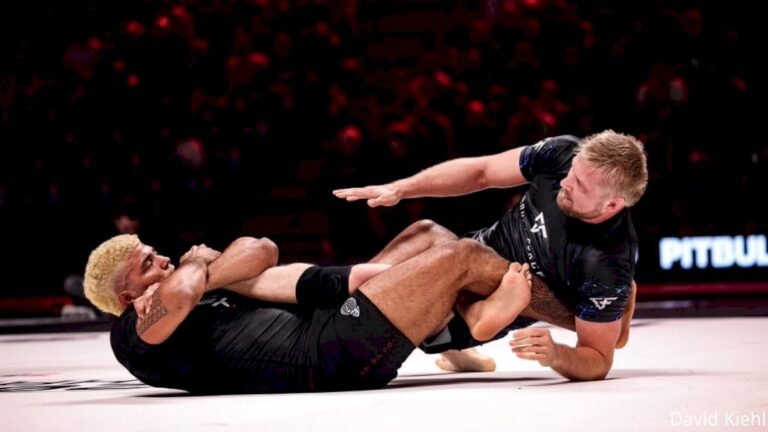
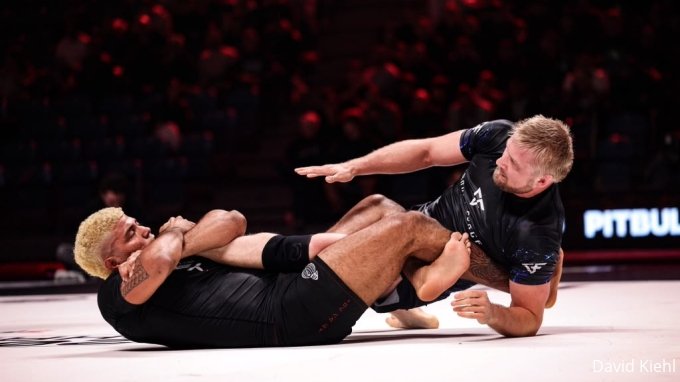
Royler Gracie had faced nearly every style of jiu-jitsu by 2003. He hadn’t faced Eddie Bravo’s rubber guard, and it cost him a submission loss at ADCC that year1 — proof that even a four-time world champion can get caught flat-footed by a triangle he didn’t see building. The leg-around-the-neck position isn’t rare in no-gi; without a gi collar to grip, grapplers lean harder on triangles, armbars, and leg entanglements because the finishes don’t depend on fabric. If you roll no-gi more than a handful of times a month, you will get your head caught in one. A clean triangle escape no-gi sequence takes about three seconds to run — and what happens in those three seconds decides whether you tap or reset.

The Mistake That Costs You the Tap
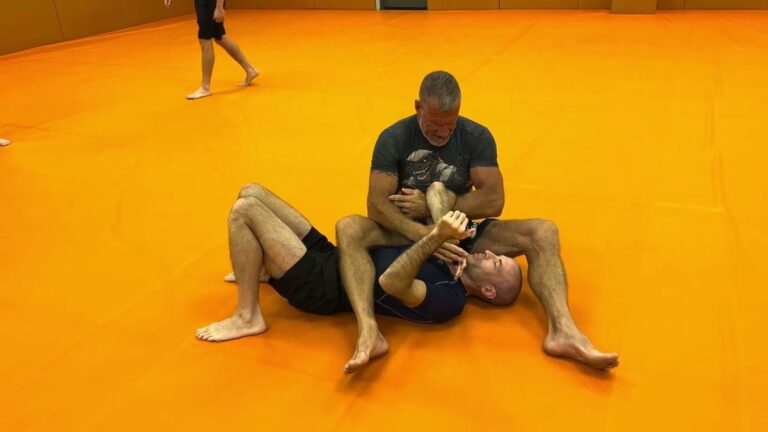
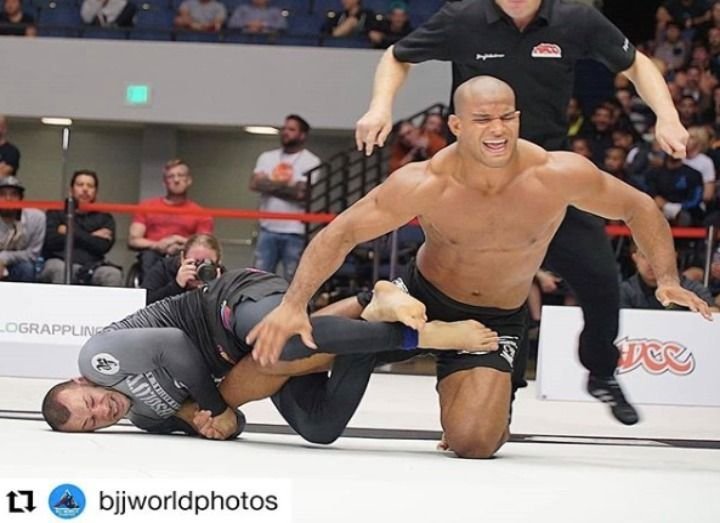
Most grapplers who get caught in a triangle do the same wrong thing first: they grab their own head with their free hand and try to physically pull it out. It doesn’t work. The geometry of a triangle locks your neck between a thigh and a calf — your head isn’t held in place by grip strength, it’s held in place by bone and angle. Pulling against that just burns the ten seconds you actually have to do something useful.
The second common mistake is leaning back. It feels safer to retreat from pressure, but leaning away from a triangle opens the angle wider and gives the finisher room to adjust their hips and cinch the choke tighter. Everything that actually works runs the opposite direction: forward, into them, not away.
1. The Triangle Escape No-Gi Sequence Starts With Posture
The single biggest factor in whether a triangle escape works is timing. A triangle that hasn’t locked yet is a different problem than a triangle that has — and the window between the two is short. The moment you feel a leg come up over your shoulder, drive your hips forward and straighten your spine before the ankle crosses behind your head. A grappler with good posture and a straight back is hard to triangle at all, because the choke depends on your head dropping down into their hips.
If you’re already flat and the legs are climbing, your first job isn’t to escape — it’s to stop the choke from locking in the first place. Everything after this key assumes you missed that window and the legs are already crossed.
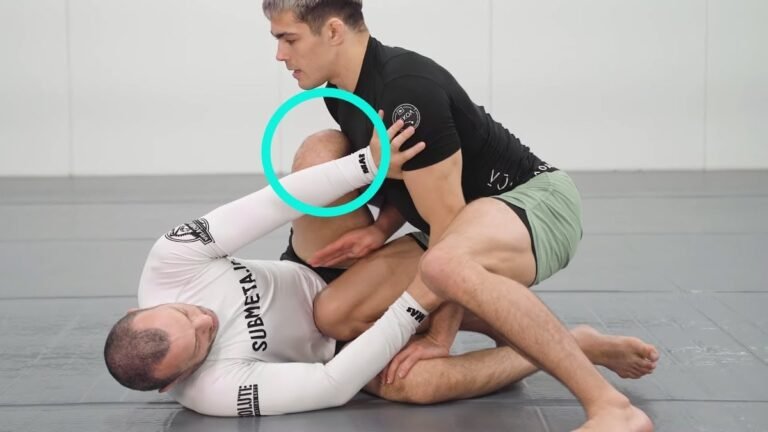
2. Clear Your Trapped Arm Across Your Centerline
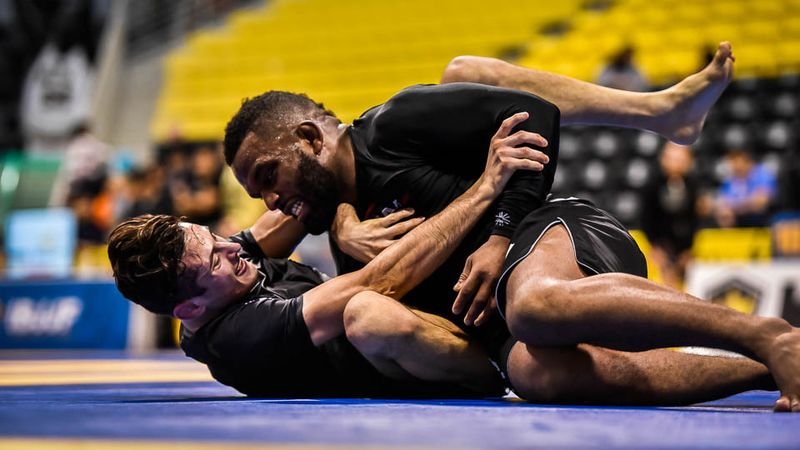
A triangle only works cleanly with one of your arms trapped inside the figure-four. If that arm stays bent and tucked against your own chest, you’re also feeding a same-side armbar or an inverted triangle-armbar combo — you can lose the fight on two fronts instead of one. Drive the trapped arm across your own body toward the far hip rather than trying to yank it straight back out. Moving it laterally across the centerline gets it clear of the choke mechanics without fighting the full strength of their adductors head-on.
This step matters more in no-gi than gi grappling. Without sleeve fabric to grip, your opponent can’t re-trap a slipping arm as easily — once it’s out and across your body, it tends to stay out.
3. Stack Their Hips Onto Their Own Shoulders
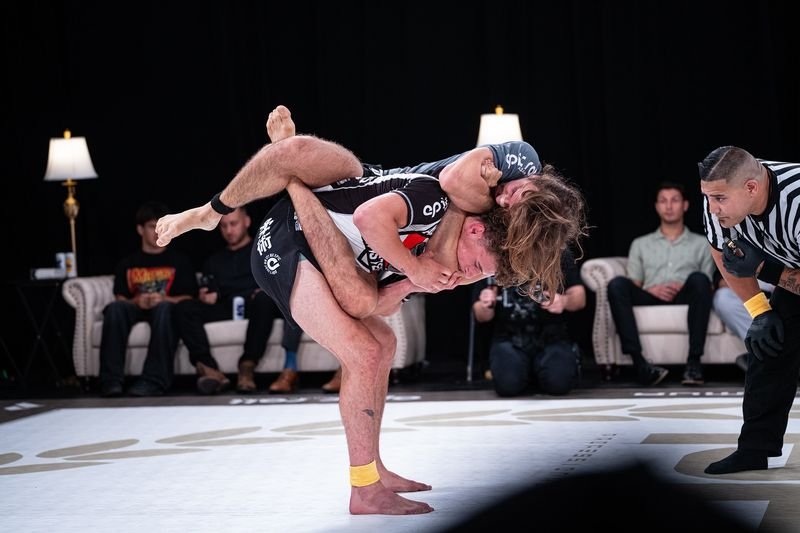
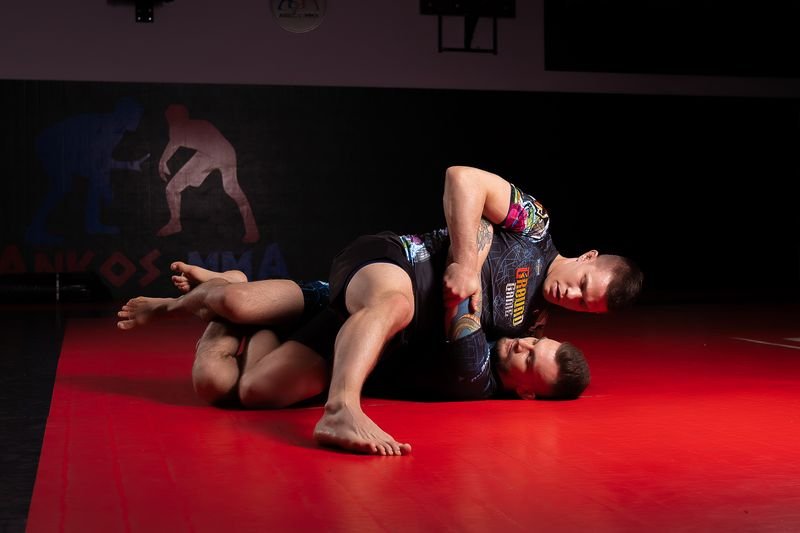
Stacking is the mechanical core of almost every triangle escape, and it’s worth understanding why it works rather than just memorizing the step. A triangle choke needs your opponent’s hips to stay elevated so their legs can scissor your neck with real force. When you drive forward and fold their hips up over their own shoulders — essentially forcing them into a compressed, folded position — you take away the hip mobility the choke depends on. A triangle with no hip movement behind it loses most of its finishing pressure, even if the legs are still technically locked.
To get there, post both hands on the mat or on their hips, square your shoulders to theirs, and walk your weight up and over rather than trying to power through with your back. This is a weight-transfer problem, not a strength problem — a lighter grappler can stack a heavier one if the angle is right.
4. Walk Toward Their Head, Not Away From It
Once the stack is on, direction matters. Walking your feet and hips toward your opponent’s head — not backward, not sideways — keeps the stack loaded and starts collapsing the angle the triangle needs to survive. Grapplers who stack correctly but then try to back out of the position usually un-stack themselves in the process, handing the angle right back.
Think of it as finishing a job you already started rather than a separate step. The stack and the walk are one continuous motion, not two moves with a pause in between.
5. Peel the Crossing Ankle Before You Pull Anything
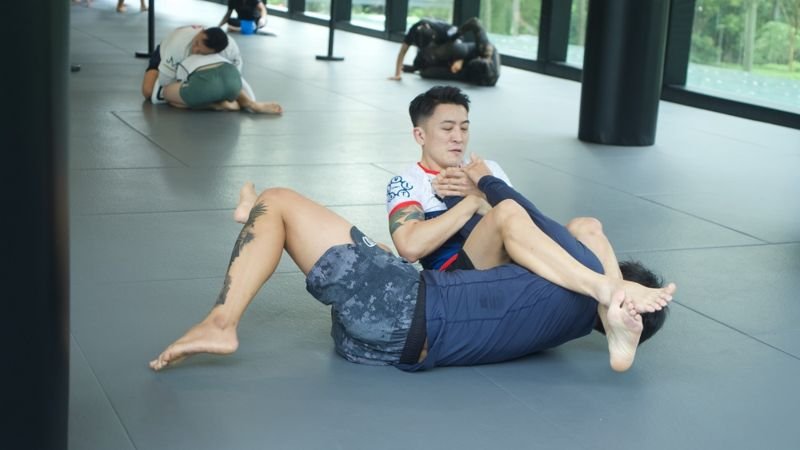
With the stack holding and the arm clear, the last mechanical piece is the crossing foot — the ankle hooked behind your head that locks the figure-four in place. Reach up and peel that foot forward, off the back of your neck, rather than trying to pry the knees apart. The knees are the strongest part of the lock; the ankle lock-in is the weakest link, and it’s usually loose enough to walk forward and off once the stack has killed the power behind it.
Pull the ankle in the direction your opponent’s toes are already pointing. Fighting it sideways against the joint just resets their grip on your head.

6. Adjust If the Choke Is Already Tight
Everything above assumes you reacted early. If the triangle is already locked tight and your air is genuinely compromised, stacking still helps but it’s no longer the whole plan — you also need to protect your neck directly. Turn your head and chin toward the leg that’s choking you (not away from it) to open a sliver of space in the carotid pressure, and keep both hands working the ankle rather than wasting a hand trying to grip the mat for base. A tight triangle rewards someone who keeps solving the problem calmly over someone who panics and goes rigid, which only helps the choke lock deeper.
This is also the point where tapping early and resetting is the correct technical decision, not a failure. Grapplers who build a reputation for escaping triangles are usually the ones who tapped to a hundred of them in training first and learned exactly where the late-stage window closes.
7. Account for the No-Gi Friction Difference
In gi grappling, the choking grappler can grip your sleeve or collar to help control your trapped arm and slow your escape. In no-gi, there’s nothing to grab but skin and a rashguard, which cuts both ways. It’s easier for your arm to slip free once you start moving it, but it’s also easier for a sweaty finisher to adjust their leg lock and re-angle the choke without grip resistance slowing them down. Expect the window to escape to open and close faster in no-gi than it does in the gi — which is exactly why timing, not strength, decides most triangle escapes at this speed.
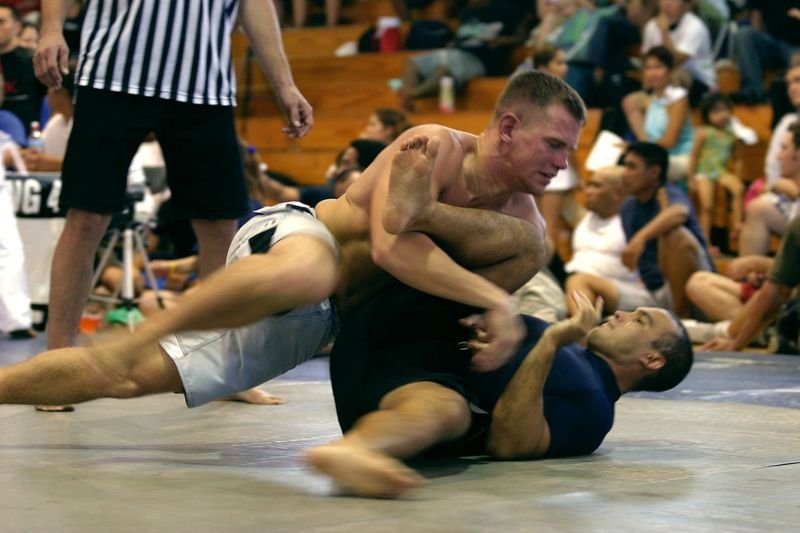
A Legend Who Didn’t Escape One
Eddie Bravo’s win over Royler Gracie at the 2003 ADCC World Championship is still one of the sport’s most cited upsets, and it’s a useful case study precisely because Bravo wasn’t escaping a triangle — he was finishing one, against a grappler who couldn’t find his way out. Bravo, a brown belt at the time, worked from his rubber guard into a triangle and submitted Gracie in a 66kg quarterfinal match that ran close to nine minutes.1 Gracie had the experience and the credentials; what he didn’t have in that moment was the specific timing this article is built around — posturing up and clearing the arm before the legs finished climbing.
Bravo and Gracie rolled again eleven years later at Metamoris 3 in Los Angeles, and that one ended in a draw after twenty minutes2 — a reminder that the same two grapplers, the same basic exchange, can go very differently depending on who wins the race to react first.
Drill It Before You Need It
Nobody solves a tight triangle by reasoning through seven steps in real time. The grapplers who escape triangles calmly are the ones who’ve drilled the stack-and-peel sequence enough times that it fires without conscious thought — ideally starting from a triangle that’s already half-locked, not just from a clean setup. Ask a training partner to lock a loose triangle on purpose a few times a week and run the sequence slowly: posture, clear the arm, stack, walk, peel. Speed comes later. Sequence comes first.
If you’re still getting caught in triangles in the first place, that’s usually a guard-passing or posture problem upstream of this article — worth pairing this with work on side control escapes and armbar escapes so you’re not relearning the same posture principles three different times. And if you’d rather learn to finish triangles instead of escape them, the setups work the same way in reverse.
Sources
- Eddie Bravo — Wikipedia — background on the 2003 ADCC quarterfinal submission win over Royler Gracie.
- Metamoris — Wikipedia — details on the March 2014 Metamoris 3 rematch between Bravo and Gracie.
- MMAmania — Ultimate Submissions breakdown — additional context on triangle choke setups in competition.