Spats vs Tights for No-Gi: Why Gym Pairs Fail on the Mat
Walk into any no-gi class and half the room is wearing what looks like the same thing: full-length compression leg coverings. Look closer. Some are purpose-built BJJ spats. Others are running tights pulled from a gym bag because they happened to be black and tight. Both feel identical when you put them on. They are not identical when a heavier training partner steps into 50/50, drives a knee across your shin, and starts hunting heel hooks. One survives ninety days of that. The other gets a hole in the inner thigh by week six.
The differences between spats and compression tights are not marketing. They are real construction choices, and they decide whether your leg gear lasts a training cycle or shreds before the next stripe test. This guide breaks down what actually changes between the two, where compression tights fail under grappling load, and the few scenarios where reaching for the gym pair still makes sense.
What Spats Actually Are
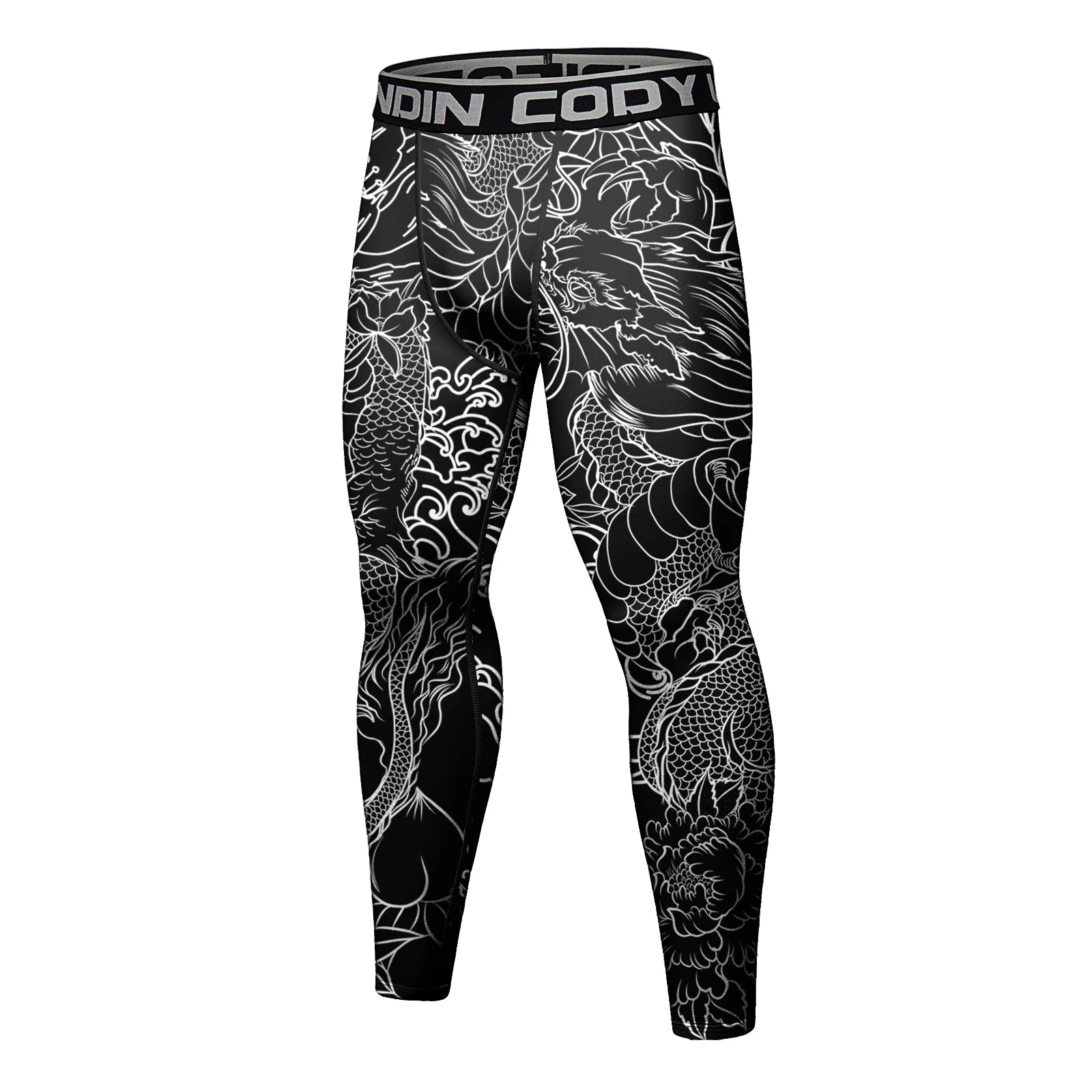
Spats are full-length leg coverings designed specifically for grappling. The category exists because BJJ and submission wrestling chew through normal athletic apparel. A spat is built around three assumptions: the fabric will be dragged across rubber mats hundreds of times per session, it will be gripped and twisted by an opponent’s hands and feet, and the wearer needs to bridge, invert, and split into positions that ordinary running tights were never engineered for.
Most quality spats use a heavier denier nylon-spandex blend, somewhere in the 200 to 280 gsm range. The thicker fabric resists pilling and small tears caused by toenail catches and zipper grip from teammates’ rashguards. Flatlock seams sit on the outside of the leg to keep stitching out of friction zones. A gusseted crotch, usually a diamond or triangular insert, prevents the inner seam from blowing out the first time you shoot a deep half guard entry.
What Compression Tights Are Built For
Compression tights, by contrast, are engineered for a completely different load profile. The use case is running, cycling, lifting, and recovery. The fabric is optimized for moisture wicking and graduated compression, not abrasion resistance. Gym tights typically run 140 to 180 gsm, which is thinner than purpose-built spats because the gym wearer does not need extra material to survive being scraped across vinyl mats.
Seam construction reflects the same priority. Running tights often use overlock or coverstitch seams designed to lie flat against skin during repetitive linear movement. They are not engineered for the rotational shear forces that show up when a partner traps your ankle and rotates into a heel hook entry. The seam holds fine when you are jogging. It pops when an inverted opponent’s foot drives sideways across the inner thigh stitch line.
Fabric Weight: Where the Real Gap Lives
The single most consequential difference between spats and compression tights is fabric gsm. Most gym shoppers never look at this number. They will if they roll in the wrong pair twice.
Cheap running tights at the 140 gsm mark feel almost like pantyhose. The material has just enough body to hold compression but practically no abrasion budget. Drag that fabric across the textured surface of a mat for a single sixty-minute round, and you can already see micro-pilling on the calves and inner knees. By week four of regular training, the fabric near the knees has gone from matte black to a faded charcoal. By week eight there is usually a thin spot you can see daylight through.
BJJ spats in the 220 to 260 gsm range carry more material exactly where it gets destroyed. The fabric still compresses well, still wicks sweat, but it has somewhere between 30 and 70 percent more material per square meter than entry-level athletic tights. That extra mass is the buffer that absorbs friction without thinning the structural weave.
Seam Construction: Where Compression Tights Fail First
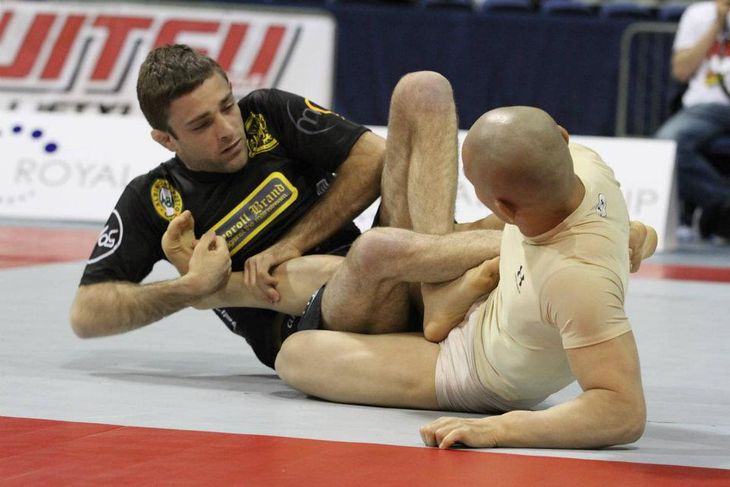
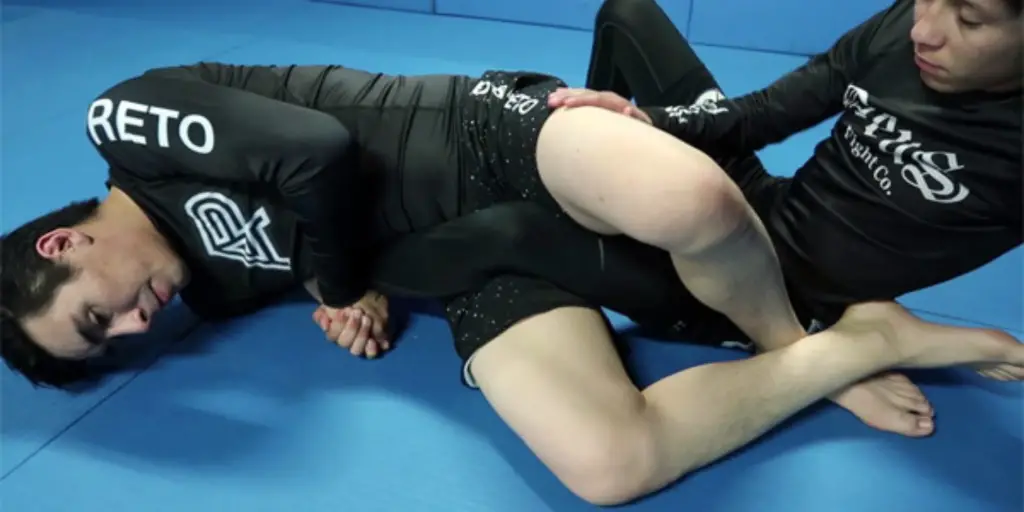
Spend any time in a heel hook battle and you will understand why seam placement matters. The inner thigh seam on a pair of running tights runs straight up the leg with no reinforcement at the crotch junction. When a partner’s foot drives across that seam while you are inverted, the load goes directly into the weakest stitch line on the garment. The seam splits. Usually right at the union point where four panels meet.

Purpose-built spats handle this in two ways. First, the gusset insert moves the high-stress junction away from the seam meeting point and onto a single reinforced panel. Second, the seams themselves are flatlock-stitched, which interlocks two pieces of fabric in a way that distributes pull force across more stitches. A flatlock seam under rotational shear holds. An overlock seam at the same load gives up the ghost.
Waistband: A Quiet but Critical Difference
Compression tights for running use a wide elastic waistband, usually two to three inches, with a single drawstring or no drawstring at all. The assumption is that you will tie your tights at home, then run in a straight line for forty minutes. The waistband never needs to handle dynamic re-tightening mid-session.
BJJ spats use a different waistband logic. The drawstring is reinforced, often tied through a fabric-lined eyelet rather than just a hole in the elastic. The elastic itself is heavier and often bonded to the outer fabric rather than threaded loose. This matters because your spats will get yanked down at least four or five times in any hard rolling session. A flimsy waistband eventually surrenders and the spats start sliding before the round is over. A bonded spat waistband stays put even when an opponent climbs to mount and bunches the fabric north.
Hygiene and Antimicrobial Treatment
This is the difference no one notices until two weeks in. Compression tights from general athletic brands sometimes include antimicrobial treatment, sometimes do not. When they do, it is usually applied for a treadmill or yoga use case where the garment is worn for sixty to ninety minutes and then washed.
BJJ apparel exists in a worse environment. Mats are heavily contaminated with skin oils, sweat, and bacteria from every previous training partner. Quality spats use silver-ion or fluorocarbon-based antimicrobial finishes specifically tuned for combat sport hygiene. The treatment is bonded into the fabric, not just sprayed on, so it survives wash cycles. Wear an untreated pair of cheap tights for two months of no-gi and the smell never fully comes out. The fabric has absorbed enough bacterial residue that even hot wash plus vinegar soak cannot reset it.
Range of Motion and the Gusset Insert
Try this experiment in any running tights: stand in front of a mirror, drop into a deep low single shot, and look down. The fabric in the crotch is already taut. Now try splitting your legs into a butterfly position on the floor. The seam line is straining.
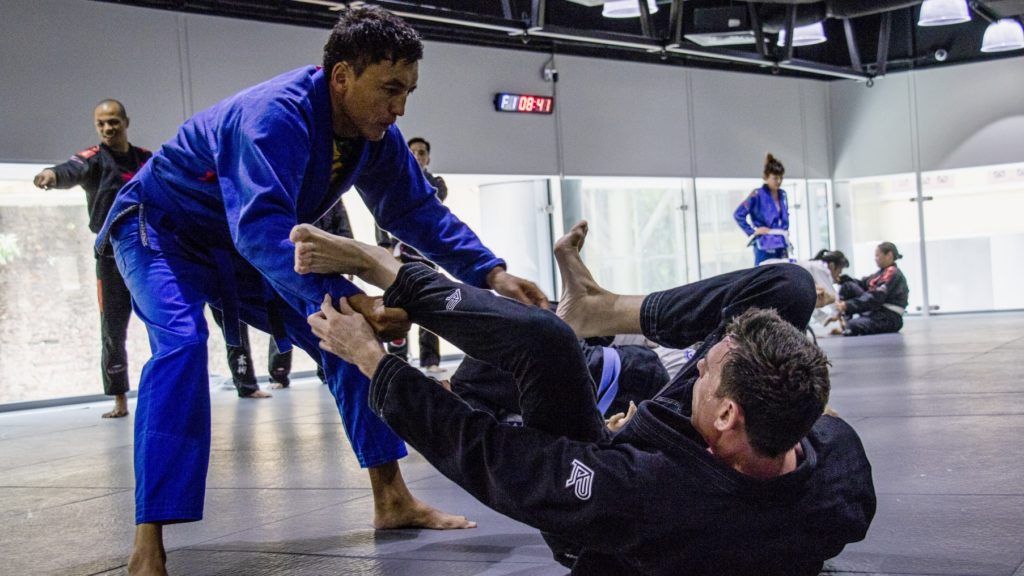
Now do the same in real BJJ spats with a gusseted crotch. The diamond-shaped fabric insert in the union of the legs gives you another two to four inches of stretch in every direction. That extra range is the difference between a comfortable closed guard pull and a pair of tights that feels like it is choking your hip flexors when you try to set up a triangle. The gusset is not a marketing add-on. It is the reason BJJ spats can survive positions that running tights cannot even reach without straining.
Price vs Lifespan: Doing the Math
Compression tights from athletic brands run cheaper at the entry level. You can find a pair of basic running tights for 18 to 25 USD on sale. BJJ spats usually start around 35 USD and rise quickly toward 60 to 80 USD for the better-known brands.
On paper the gym tights look like the smarter purchase. The math changes when you track lifespan. A pair of running tights used for hard no-gi typically dies in 6 to 10 weeks. A real pair of spats from a respected grappling brand usually survives 9 to 18 months of regular training. Even at the higher purchase price, the cost-per-session for actual spats is meaningfully lower. You spend less, you smell less, and you avoid the embarrassing mid-roll seam blow that everyone in the gym notices.
When Compression Tights Still Make Sense
There are scenarios where reaching for the gym pair is fine. Drilling-only nights at light intensity where you are not going hard into leg entanglements do not produce the shear forces that destroy compression tights. A solo conditioning session with shrimping, animal movements, and bridges puts almost no rotational load on the inner thigh seams. Compression tights handle that load profile without complaint.
Light Sessions Where Tights Are Fine
- Solo warm-up and shrimping work outside of class
- Technique-only drilling at 20 percent resistance
- Recovery sessions focused on stretching and mobility
- Wearing under a gi during occasional gi crossover training
- Travel days when you only brought one pair of leg coverings
Sessions Where You Need Real Spats
- Any live rolling at over 60 percent intensity
- Competition-style sparring with full submissions
- Leg lock specific sessions with extended entanglement positions
- Open mats with unfamiliar partners
- Tournament training cycles
What to Look for When Buying Spats
The checklist for a first quality pair is shorter than most buying guides make it. Look for fabric weight stated on the product page, ideally 220 gsm or higher. Confirm the presence of a gusseted crotch panel in the product photos, which usually shows up as a contrasting diamond shape in the inner thigh region. Verify flatlock seam construction in the description. Check that the antimicrobial treatment is named, not just claimed in vague terms. If all four boxes are checked, the pair will almost certainly survive a year of training.
Brands that consistently hit these specs in the no-gi space include the major BJJ apparel houses that sponsor competition athletes. Their spats are built around the actual mat use case, not pulled from a general athletic catalog. Search results on Amazon for purpose-built BJJ spats from competition-tested brands will get you to the right options without paying boutique prices.
Final Verdict on Spats vs Compression Tights
Spats and compression tights look identical for the first thirty seconds you wear them. They are different products built for different stress profiles. A pair of gym tights will hold up for some easy drilling but will not survive months of hard no-gi rolling. Purpose-built BJJ spats cost more upfront and last several times longer in mat conditions. If you train no-gi more than twice a week, spats are not a luxury upgrade. They are the cheaper option per session and the only category designed for what actually happens on the mats.
The next time someone in your gym shows up in running tights and asks why their legs are getting cold after eight weeks, you already know the answer. The fabric was never going to make it. The seams were never going to make it. They just had not been told there was a difference.
Sources
- Wikipedia: Compression garment
- Wikipedia: Brazilian Jiu-Jitsu
- Amazon: BJJ spats search
- Amazon: Compression tights for grappling
Need help ranking on Google? RankOnRepeat manages your entire blog — keyword research, writing, and publishing — so your business shows up when customers search. See how it works →
Browse our top-rated rashguards and no-gi gear at the RashguardGuy shop →