Long Step Pass No-Gi: 7 Keys
Terere built his entire passing game around this one step in the early 2000s, and it’s still showing up in ADCC brackets two decades later. Pawel Jaworski used a version of it twice on his way to leg lock gold at ADCC 2026, stepping around a stalled Ashi Garami entry before his opponent could reset. That’s the real selling point: the long step doesn’t ask you to out-muscle anyone. It asks you to read one moment of lost leg angle and commit to it.
What Is the Long Step Pass No-Gi?
The long step pass starts from what most modern grapplers call the headquarters position — you’re kneeling between your opponent’s legs with one of their legs pinned flat between your own knees, facing them directly. From there, instead of forcing your way through with pressure, you step your trailing leg in a long circular path around their hip line, clearing both of their hooks in one motion and landing on the far side in side control.
It’s technically a gi-era pass — Fernando “Terere” Augusto popularized it with lapel control as his anchor — but the mechanics never actually needed the gi. What needed replacing was the grip. Swap the collar tie for head control or an underhook, and the step itself works exactly the same against a bare leg as it does against a pant leg.

Why the Long Step Still Wins in a No-Grip System
Most of the common no-gi passes — the knee cut, the stack pass, the body lock — are pressure passes. You’re fighting your opponent’s frames directly, matching force with force until something gives. The long step is different. You’re moving into open space the moment their leg angle breaks down, which means you’re rarely in a position where they can simply out-strength you back to guard.
That matters more in no-gi than it ever did in the gi. Without a collar to drag someone’s head down or a pant leg to control their hips, a lot of modern no-gi passing becomes a slow grind of forehead-on-forehead pressure. The long step skips that grind entirely when the timing is right. You’re not driving through anything — you’re walking around it.
Entering the Long Step Pass No-Gi From Headquarters
Everything starts with getting one of their legs trapped between your knees while you’re square to your opponent. From there the sequence runs in three parts.
First, pin the near leg flat against the mat with both of your knees pinching it from either side — this is what separates headquarters from a loose scramble position. Second, establish upper body control before you move your feet. In the gi version this is a collar grip; in no-gi, reach for a same-side collar tie on the neck, a cross-face, or an underhook on their far arm. Third, once you feel their trapped leg lose tension — usually the instant they try to re-angle it or frame off your hip — step your free leg in a wide arc toward their head, clearing their free leg’s hook as you go, and drop your trail knee to the mat on the far side.
The step has to be long. A short, cautious step leaves your ankle inside their guard’s range and gives them a lane to recover. Committing to the full arc is what gives the pass its name and its security.
The Grip Swap That Actually Decides If It Works
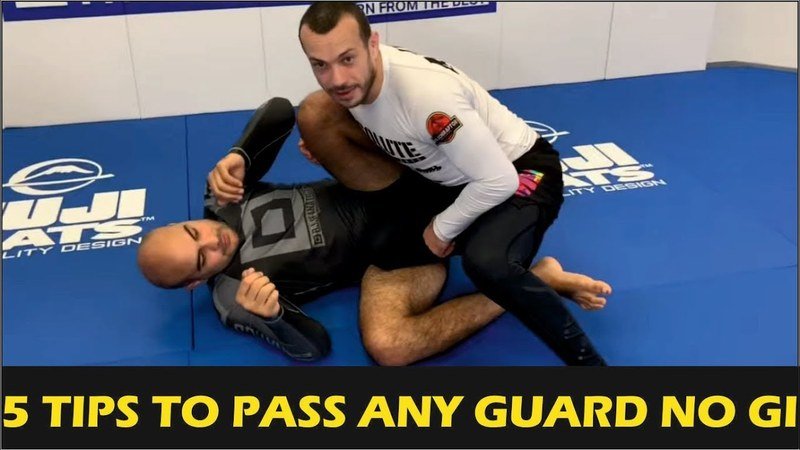
Ask ten no-gi black belts what’s different about the long step without a gi and nine of them will say the same thing: the upper body control. In the gi, that collar grip does two jobs at once — it controls posture and it anchors your base while you step. Lose the collar and you lose both unless you replace it deliberately.
Three replacements hold up in no-gi. A collar tie (hand behind the neck, thumb along the spine) gives you the closest feel to the original grip and works well against opponents who try to sit up and frame. A cross-face turns their head away from the direction you’re stepping, which buys you an extra half-second before they can reorient. An underhook on the far-side arm is the least secure of the three but the fastest to get, useful when you only have a brief window before they recover their angle.
Pick the grip based on what they give you, not what you’d prefer. Chasing a collar tie against someone actively framing is how a clean long step turns into a 10-second scramble.
Finishing to Side Control, or Continuing to the Back
Once your trail knee hits the mat on the far side, you’re not done — you’re one bad pause away from giving the position back. Drive your far-side hand into their near hip immediately to block them from recovering a frame, then flatten your chest onto theirs before you settle into side control. Rushing straight to a pin without blocking the hip first is the single most common way people lose a completed long step.
If your opponent turtles instead of accepting side control, don’t fight for the pin. The long step naturally exposes their back on that side — a seatbelt grip and a hook are often sitting right there once you’ve cleared their legs. Takers who try to force bottom-side-control against a turtling opponent usually end up back in a scramble; takers who follow the turtle to the back finish the exchange in a stronger spot.
Three Mistakes That Turn a Long Step Into a Scramble
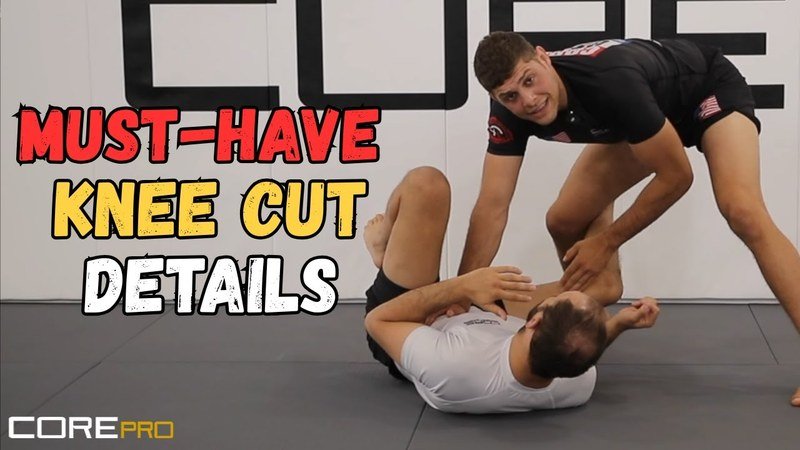
- Stepping before the leg is actually pinned. If headquarters isn’t locked in — both knees pinching, no gap for them to shrimp through — the step just gives them a free lane to recover guard.
- Dropping your upper body grip to step faster. The grip is what stops them from sitting up and following your hips. Let go of it mid-step and you’re passing on one leg with zero control of their posture.
- Stepping short. A half-committed step leaves your foot inside the range of their free leg’s hook. Go the full arc or don’t go at all.
Defending the Long Step From the Bottom
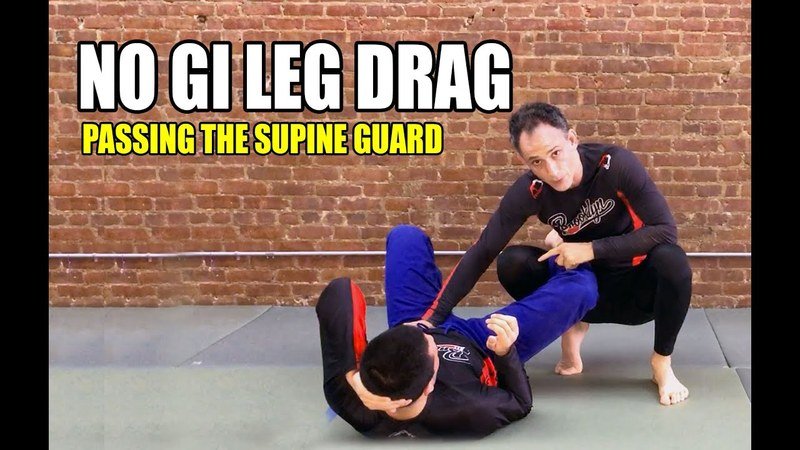
The defense window is narrow but real. The moment you feel your trapped leg losing angle, your first job is re-framing it before the step completes — a foot on their hip or a knee shield reinserted buys you the half-second you need. If the step is already underway, turn into it rather than away from it. Turning away just helps them finish the arc faster; turning toward their stepping leg collapses the space they need to land their knee.
Grabbing a single leg X entry or re-establishing an ashi garami hook as they step is the highest-percentage counter at a competitive level — it’s the same leg entanglement they were trying to pass out of in the first place, and a stepping opponent is momentarily vulnerable to it.
Chaining the Long Step With Toreando and Knee Cut
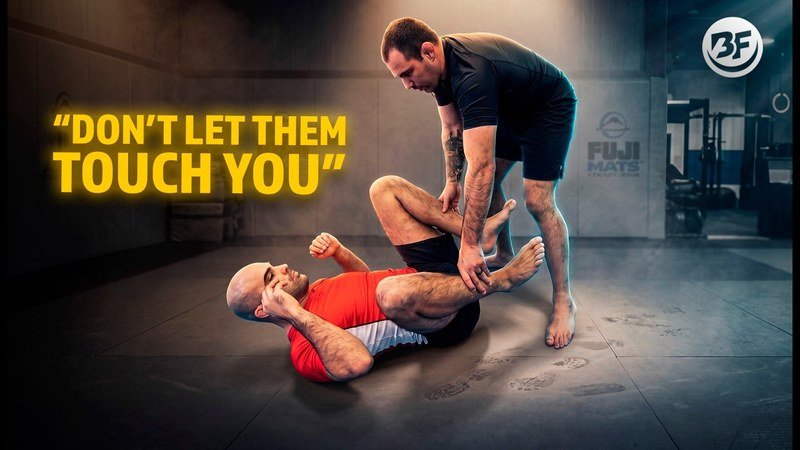
Few grapplers hit the long step as a standalone first move. It’s usually the third option in a chain: toreando first to test if they’ll give up an angle standing, knee cut next if they defend the toreando by pulling their knees tight, and the long step as the answer when they defend the knee cut by reframing their trapped leg. Each defense sets up the next attack, which is why coaches drill all three as one combination rather than three separate techniques.
Our torreando pass breakdown and stack pass guide cover the other two links in that chain in more detail, and if your long step gets stuffed and you end up fighting over a leg entanglement, the saddle position article picks up exactly where this one leaves off.
Drilling It Without a Partner Fighting Back
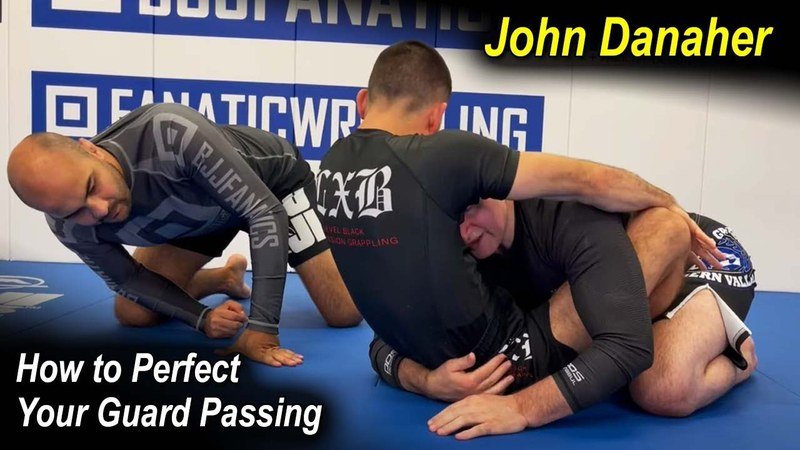
Solo reps matter more for this pass than for most. Because the step is a single continuous arc, grapplers who only drill it live tend to shorten the step under resistance — exactly the mistake that gets it stuffed. Shadow-drilling the full step, knee-to-mat, hip-block sequence on an empty mat for a few minutes before live rolling fixes that habit faster than any amount of coaching cues mid-roll.
Once the step feels automatic empty, add a stationary partner who just holds headquarters position passively while you step around them at full speed. Only after that should you add resistance. Skipping straight to live resistance is why most people’s first twenty attempts at this pass look identical to a short step — the body defaults to the safer, smaller motion under pressure unless it’s been grooved first.
Sources
- ADCC 2026 Live Updates: Highlights From Day 1 — FloGrappling — competition coverage referencing modern top-position passing trends at ADCC 2026.
- How To Perfect The Long Step Pass In BJJ — Evolve MMA — background on the pass’s gi origins and basic mechanics.
- 3 Simple No Gi Guard Passes From Headquarters — DVG Jiu Jitsu — no-gi instructional demonstrating headquarters-based passing entries.