The Partner Variable: How Who You Train With Determines Ear Risk in No-Gi
Most no-gi grapplers who start thinking seriously about cauliflower ear prevention focus immediately on positions—the double underhooks, the headlock sequences, the referee’s position scrambles where your ear gets driven into the mat. That’s the right instinct, but it only addresses half of the equation. The person sitting across from you when you slap hands is at least as important a variable as the technique being drilled. Partner selection and partner experience level shape ear injury risk in ways that most ear protection guides never address, and understanding that dynamic changes how you should think about when ear guards are truly non-negotiable.

What Beginners Do to Your Ears Without Knowing It
There’s a particular kind of ear trauma that experienced no-gi grapplers recognize intuitively: the kind that comes from training with someone who hasn’t yet developed body awareness on the mat. New practitioners—people in their first several months of no-gi grappling—move with a quality that veteran grapplers sometimes describe as erratic, though that label undersells the biomechanical reality. They grab, push, and brace with their full body simultaneously, without the developed proprioception to know where their limbs are in relation to a partner’s head.
When you’re working offensive positions against a newer training partner, their defensive reactions create repeated micro-pressure events around your ear. A beginner defending against a clinch entry will instinctively push with their hands and pull with their arms in ways that press your ear against their shoulder, head, or forearm in brief but repeated contacts. This pattern differs fundamentally from the single acute trauma of a hard headlock—it’s the accumulation of dozens of low-grade contacts across a single session, and over weeks and months, accumulative pressure is precisely the mechanism through which auricular hematoma develops. The fluid under the ear’s perichondrium forms gradually, building with each session of micro-trauma before the visible swelling appears.
The drilling phase makes this worse. When both partners are stationary for extended periods in risk-prone positions—working entries to back control, drilling referee’s position escapes, building turtle defense—a beginner partner’s uncertainty means your ear is under low-grade pressure for far longer than it would be during live rolling. They dwell in positions longer because they’re still processing what to do next, and that contact time adds up across the full session in ways that a single hard round never would.
The Wrestler Problem in No-Gi Training
Wrestlers present a categorically different risk profile. An experienced wrestler transitioning into no-gi BJJ or submission grappling arrives with a deeply ingrained library of movement habits built around head position, neck control, and clinch dynamics—and many of those habits involve applying direct force against an opponent’s head. The double underhook, the headlock off a failed single-leg, the sprawl-and-head-press against turtle: these are not intentional attacks on your ears. They’re reflexive defensive patterns reinforced through thousands of repetitions over years of wrestling training.
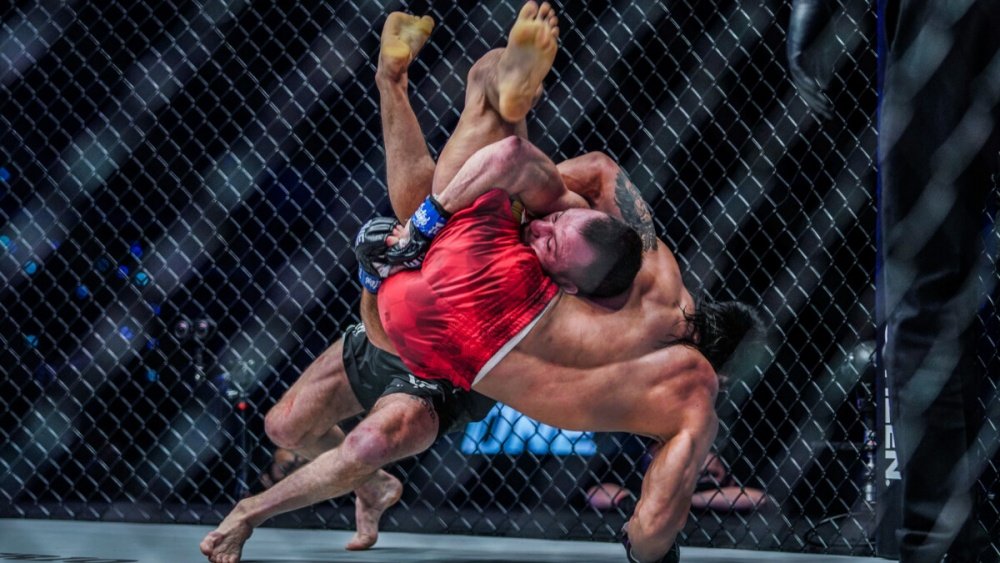
What makes wrestlers particularly high-risk as training partners isn’t aggression—it’s the speed and certainty with which they execute these movements. A collegiate or freestyle wrestler dropping into a tight headlock as a natural defensive reaction does so with the force and commitment of deeply grooved muscle memory. That produces exactly the kind of sudden shearing stress that can initiate acute auricular hematoma formation on first contact. This is distinct from the slow accumulation of beginner micro-contacts; a single hard wrestling-style exchange with an experienced wrestler can result in meaningful fluid accumulation in one session, not over weeks.
This matters especially in gyms where MMA fighters and wrestlers train alongside pure grapplers. In those environments, the training population’s default movement vocabulary includes far more ear-contact scenarios than a traditional BJJ-focused no-gi class. It’s not uncommon in those settings for practitioners to walk away from drilling sessions—not even live rolling—with ears that feel hot and tender before any hematoma is visible.
Size and Strength as Multipliers
Overlaid on top of experience level and background is a more mechanical variable: the physical size and strength of your training partner. A larger beginner creates a compound risk that neither element—size alone or inexperience alone—would produce independently. Their untrained movement generates the same unpredictable, ear-contact-heavy patterns as any other beginner, but the force behind each contact is proportionally greater. A 220-pound practitioner six months into no-gi who defaults to muscle when uncertain applies more shearing force to your ear tissue than a 150-pound beginner doing exactly the same thing in exactly the same position.
For practitioners who regularly train with larger partners as part of developing their guard game or defensive scrambling—a deliberate training choice that builds genuine defensive skill—this is worth factoring into ear protection decisions explicitly. Positions that require extended contact with a larger partner’s body, such as working from underneath in turtle or defending back attack entries during drilling, generate more sustained ear compression than the same positions with a smaller partner at similar experience levels. The geometry is the same; the pressure is not.
Why Advanced Training Partners Carry Lower Acute Risk
The contrast to all of this is what happens when you train predominantly with technically proficient, experienced no-gi grapplers. Practitioners who have logged serious competition hours have internalized the body mechanics of grappling with enough precision that their movement becomes controlled and deliberate. Their headlock transitions are purposeful setups, not panicked grabs. Their defensive clinch work uses frames and angles rather than full-body tension. They understand where they are in space relative to their partner and adjust accordingly—often without conscious thought.
This doesn’t make elite-level training ear-safe in any absolute sense. The top competitors at events like ADCC and the highest-level FloGrappling invitationals frequently develop some degree of ear deformation over long careers—the accumulated contact of thousands of hours of deliberate, skilled grappling creates its own long-term toll. But the injury pattern differs from the acute scenario. Gradual deformation from sustained training volume is a different mechanism from sudden hematoma events triggered by a single high-pressure session. The rapid-onset ear damage that sends grapplers to urgent care looking for drainage is far more likely to come from a session dominated by beginners or wrestlers running on muscle memory than from a technically clean roll with a high-level no-gi specialist.
Reading Your Gym’s Demographics
Understanding the partner dynamic has concrete implications for how you structure your ear protection habits. Gyms vary enormously in their training populations, and that variation maps directly onto ear risk. A no-gi program that draws heavily from a collegiate wrestling program is a materially different environment than a club populated primarily by experienced BJJ practitioners who have added no-gi to their game. A gym that hosts regular open mats welcoming practitioners from multiple backgrounds carries different stakes than a closed session with a consistent group of familiar training partners who have all been training together for years.
This isn’t about avoiding certain partners—working with beginners and wrestlers is essential for developing a genuinely complete no-gi game, and both populations offer things that training exclusively with experienced specialists cannot replicate. The point is that ear risk is not uniform across training environments. Treating it as uniform leads to either consistent over-protection that some grapplers eventually abandon as burdensome, or consistent under-protection that creates vulnerability during the highest-risk sessions. Calibrating your ear guard use to your actual training context—rather than adopting an undifferentiated blanket rule—is a more accurate response to how ear damage actually occurs in practice.
Communication as a Risk Management Tool
There’s a communication dimension to ear protection that rarely comes up in gear guides. Experienced grapplers can meaningfully shape the risk profile of a session through pre-roll conversation. Letting a beginning partner know you’re protecting your ears, and asking them to be mindful of head contact during clinch work, is straightforward and typically well-received. Most beginning practitioners don’t realize the patterns their defensive movement creates, and a brief request—asking them to use frames rather than headlocks when working defensively—redirects behavior without friction and without making the session feel confrontational.
With wrestlers, the conversation often goes more easily than expected. Many experienced wrestlers have either developed ear deformation themselves or trained for years in environments where it was routine, giving them firsthand understanding of the mechanism. Flagging that you’re wearing ear guards, or asking a wrestling-background training partner to be conscious of their headlock habits during drilling, is completely normal in wrestling culture. The shared vocabulary is already there, and most experienced wrestlers need very little explanation before adjusting how they apply head pressure during positional work.
Building Your Ear Guard Strategy Around Who You Actually Train With
The practical outcome of thinking through the partner variable is a more calibrated ear guard strategy. Sessions dominated by technically skilled, experienced no-gi grapplers carry lower acute injury risk—still present, but lower. Sessions with beginners, with wrestlers transitioning into submission grappling, or at open mats with unknown partners carry materially higher risk. The highest-risk single sessions are often the ones that feel least intense: structured drilling with a large beginner working through defensive positions where your head remains in contact range for extended periods without the urgency or movement of live rolling to interrupt the pressure.
For grapplers who have already established ear guard habits, this framing provides a useful second layer of decision-making about when protection is absolutely non-negotiable versus situationally lower priority. For those just starting to think about protection, the clearest takeaway is this: the gym’s most technical, highest-level session is probably not where your first cauliflower ear incident will happen. It’s far more likely to be an open mat, a fundamentals class you help teach, or a session where a transitioning wrestler with different grappling instincts is your primary drilling partner. Ear guards designed for no-gi use—low-profile enough to stay secure during scrambles, comfortable enough to wear through full drilling sessions—are the tool for exactly those sessions, and recognizing when you’re in one is where their value becomes most concrete.
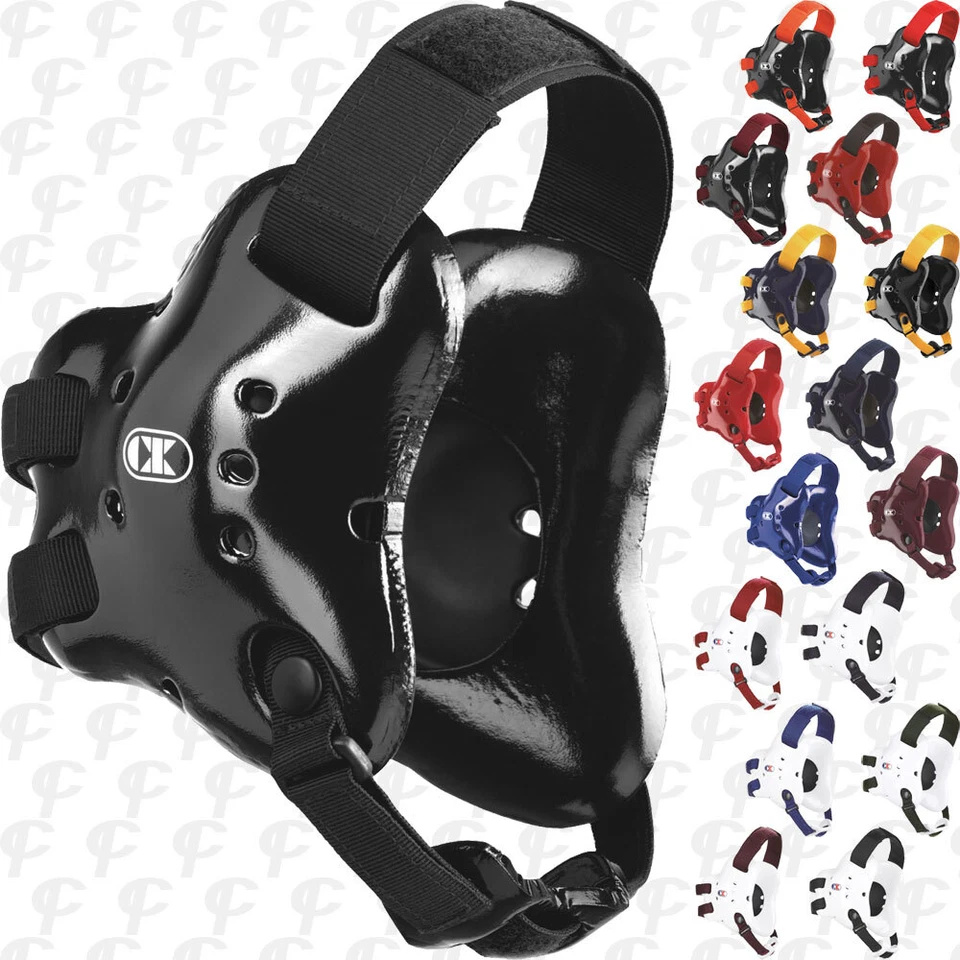
If you’re building or upgrading your ear protection setup for no-gi training, search Amazon for no-gi ear guards to compare low-profile options designed for drilling and hard rolling use.
Sources
- Cauliflower Ear — Wikipedia
- FloGrappling — No-Gi Competition Coverage
- PubMed — National Library of Medicine