What No-Gi Grappling Actually Demands from Compression Shorts
Walk into any no-gi gym and you’ll spot two or three different approaches to compression shorts within the first five minutes. One athlete is wearing spandex cycling shorts repurposed from a road ride. Another has a name-brand pair from a rashguard company that cost twice as much. A third is in something labeled “MMA shorts” with a compression liner sewn in. All three are technically wearing compression shorts. None of them are making the same decision, and only one of them probably got it right for this specific context.
The compression shorts buying guide problem isn’t a lack of options—it’s a lack of criteria specific to no-gi grappling. Fitness apparel, cycling gear, and running tights all use compression as a selling point. But grappling applies torque, friction, and sustained pressure in ways those activities don’t. A pair of shorts that performs beautifully on a Peloton will fail under a top-pressure passing sequence inside of six weeks. What follows is a framework for identifying the differences that matter before the mat exposes them.
What Fabric Composition Actually Tells You
Compression shorts marketed to grapplers almost always cite spandex—or elastane—content as a quality signal. Higher spandex percentage means more stretch recovery, which sounds like exactly what you want. The catch is that spandex percentage alone tells you almost nothing without knowing what it’s blended with and how the fabric is constructed at the thread level.
Most grappling-specific compression shorts use a polyester-spandex blend, typically ranging from 80/20 to 90/10. Polyester handles moisture transfer and structural integrity; spandex provides the four-way stretch. Nylon-spandex blends—sometimes 85/15 or 88/12—are noticeably softer against the skin and tend to resist pilling longer, but they’re heavier and trap more heat. For training in a warm room, that heat trapping becomes a real problem by round three of a five-round session.
What you’re looking for in the fabric spec isn’t a specific percentage—it’s a blend that balances compression memory with breathability for the duration of a typical training session. Shorts that lose their shape mid-class are signaling that the elastane quality is low, regardless of the percentage on the tag. Shorts that compress so aggressively they restrict hip flexion above 90 degrees have prioritized compression marketing over functional range of motion. Both failures are visible only once you’re on the mat, which is why understanding the blend before purchase matters.
The Waistband: Where Most Compression Shorts Fail Grapplers
No part of a compression short absorbs more abuse in no-gi grappling than the waistband. Sprawls, standing back takes, seated guard entries—every one of these movements applies a load to the waistband that fitness-oriented compression tights were simply not built to handle over hundreds of training hours.
Flat elastic waistbands are the most common construction you’ll encounter. They’re comfortable, low-profile, and inexpensive to manufacture. They’re also the most likely to fold over or roll during extended rolling sessions, especially if there’s any mismatch between the waistband diameter and your body’s actual proportions. Once a flat elastic waistband starts rolling, it stays rolled until you stop to fix it—which you can’t always do in a live round without giving up position.
Wide waistbands—typically three to four inches—distribute pressure more evenly and resist rolling in a way flat bands don’t. Several grappling-specific brands have moved toward a structured wide-band construction that incorporates a drawstring channel, giving you the option to cinch down if needed. This matters less in pure grappling and more if you’re cross-training in shorts worn over the compression layer, where repeated grab-and-pull dynamics on the waistband compound over time.
Silicone grip strips on the interior waistband edge are worth examining closely. Done well, they prevent the short from migrating up the thigh during leg lock entries and high-guard work. Done cheaply, they peel away from the fabric after ten wash cycles and leave the waistband rolling anyway. The distinction is usually between brands that integrate the grip strip into the waistband construction versus those that bond it onto the surface after the fact. The latter peels; the former doesn’t.
Seam Placement and Why It Determines Comfort Under Pressure
Seam placement is the detail most buyers skip because it’s invisible in product photos and irrelevant in static try-ons. It’s also the detail most likely to cause concentrated friction within the first three training sessions once dynamic movement begins.
The inseam and crotch gusset are the critical zones. Compression shorts designed for running typically place seams straight down the inseam, which functions fine for repetitive linear motion in a single direction. No-gi grappling involves extreme hip abduction—takedown shots, guard work, inside heel hooks—that puts those seams under shear stress in directions they weren’t engineered to absorb. The result is both accelerated seam failure and concentrated ridge pressure against the body in positions you’ll hold for extended periods during leg entanglements.
Flatlock seaming is the construction technique that addresses this most directly. Instead of a standard overlap seam that creates a ridge against the skin, flatlock joins fabric edges side by side, producing a nearly flush seam line. It’s more expensive to produce and not universal even among grappling-specific brands, but it eliminates the hotspot problem across the inseam entirely. If a brand doesn’t specify flatlock or flat-seam construction in the product description, assume it’s using a standard overlapped construction.
Gusset shape is the secondary variable. A simple two-panel gusset provides marginally more range of motion than no gusset. A four-panel or diamond gusset—common in higher-end grappling shorts and BJJ spats—maps more closely to the actual range-of-motion demands in guard play and takedown defense. The diamond gusset specifically allows simultaneous hip abduction and knee flexion without the fabric pulling taut at the crotch junction, which matters most when transitioning between leg positions at speed.
Compression Level vs. Range of Motion: Finding the Functional Balance
The word “compression” in compression shorts can mean almost anything depending on the brand’s intent. There’s graduated compression—tighter at the ankle, progressively looser toward the waist—designed for circulation during recovery. There’s uniform compression across the entire garment. And there’s what a substantial portion of the market sells as compression that’s really just a tight fit without any meaningful pressure gradient at all.
For no-gi grappling, the practical question isn’t compression level in the clinical sense—it’s whether the garment resists deformation under load while still allowing full hip extension, hip abduction, and knee flexion simultaneously. You need to be able to shoot a double leg, hit a high crotch, pull guard, and sit to heel hooks without the fabric pulling your hips short at any point in those movement chains. A garment that passes a static try-on can still fail this test under the speed and range of actual drilling.
The most reliable pre-purchase test is to perform the movement before paying for the gear. Squat below parallel. Execute a single-leg setup motion from standing. Pull one knee to chest while standing on the other leg. If the waistband digs into your hip flexor or the inseam restricts at any of these points, the compression level is actively working against technique rather than supporting musculature as intended.
Very high compression garments—those designed primarily for post-workout circulation recovery—tend to restrict grappling movement in ways that surface quickly once you’re under pressure from a training partner. The functional sweet spot for active grappling sits in the moderate-to-firm range: enough compression to support the hip flexors and adductors during extended guard work and prevent garment shift during scrambles, but not so much that you’re fighting the shorts to complete technique.
Fit Across Body Types and the Inseam Length Decision
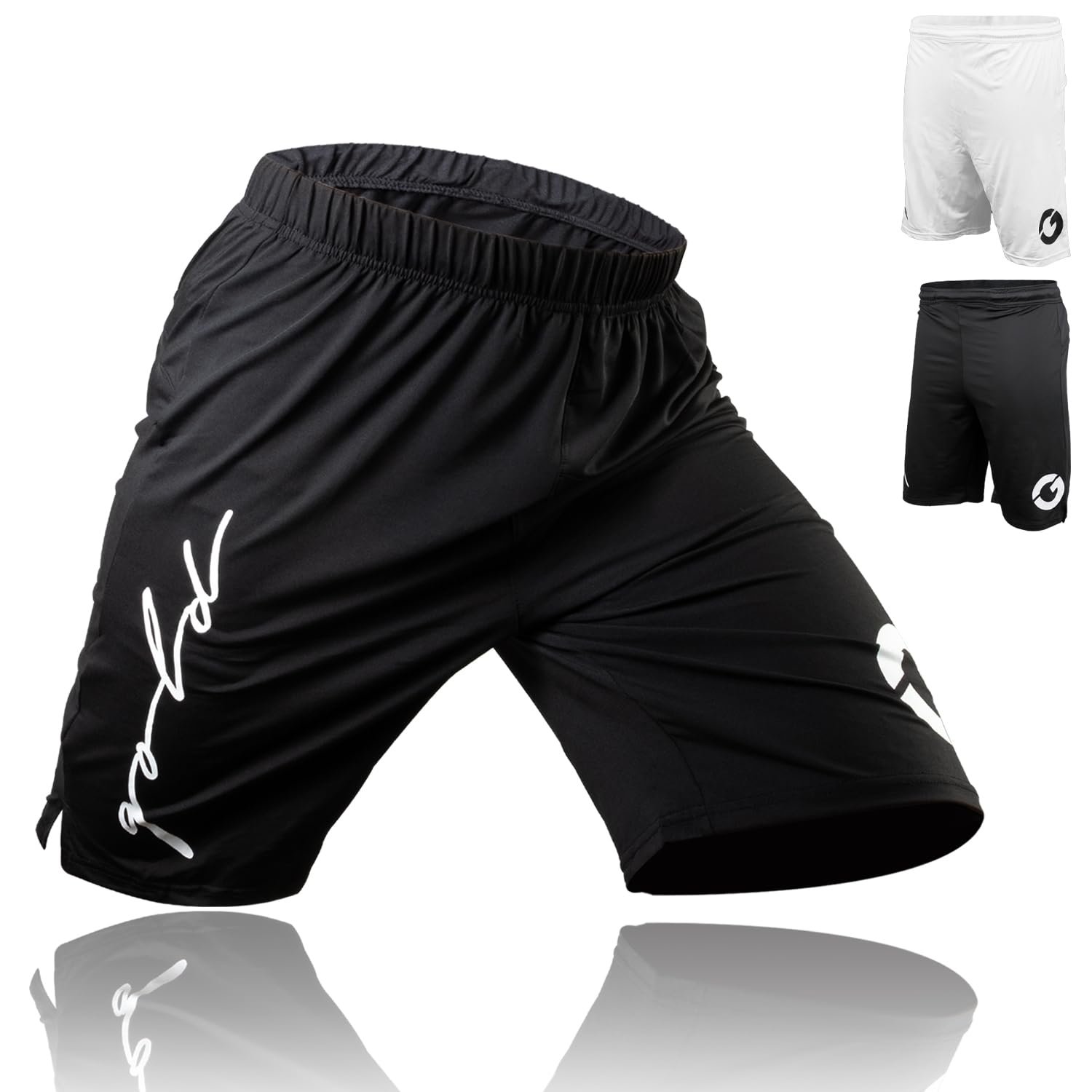
Compression shorts for grappling come in two meaningful inseam lengths: short at roughly four to six inches and mid-thigh at seven to nine inches. The choice isn’t purely aesthetic—it affects function in specific positional contexts in ways that become apparent during extended drilling.
Shorter inseams provide more freedom of movement for explosive lower-body entries and tend to feel less restrictive for wrestlers and athletes with a wrestling background transitioning into no-gi. The tradeoff is reduced coverage during sustained leg lock exchanges, where mat contact against the inner thigh compounds significantly over the course of a ninety-minute class. For heel hook specialists or athletes spending extended time in leg entanglements, that skin-on-mat contact is a real variable, not a minor inconvenience.
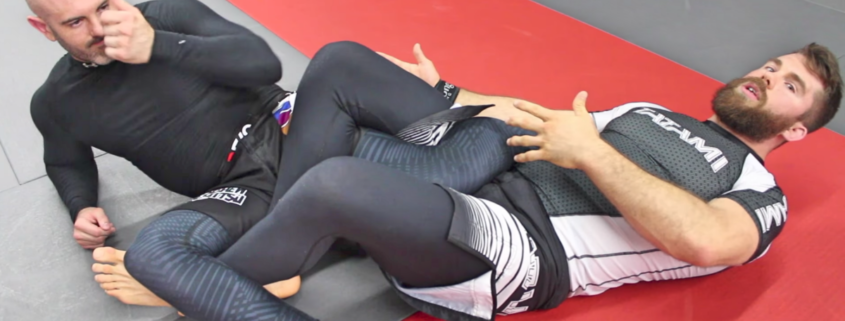
Mid-thigh compression shorts provide better protection for the inner thigh in leg lock positions and cross-body entanglements, and they stay put more reliably during guard work because more fabric surface area contacts the leg, reducing migration. For athletes who train leg locks heavily or spend significant time in rubber guard and related positions, mid-thigh coverage is worth the slightly reduced knee-level freedom.
The harder fitting challenge isn’t length—it’s waist-to-thigh ratio. Athletes with significant quad and hamstring development relative to waist circumference consistently find that compression shorts sized to fit the waist don’t accommodate the legs. The fabric overstretches across the thigh, losing compression properties and wearing out prematurely at the highest-stress point. If your thighs consistently split seams in fitted lower-body apparel, look for brands that offer athletic-cut sizing or size by thigh measurement rather than waist alone. Buying to fit the thigh and belting the waist slightly is a more functional solution than undersizing to fit the waist and overstretching the leg panels.
Training Volume vs. Competition Builds: Why One Pair Isn’t Always Enough
The compression shorts you’re washing three times a week under five-day training volume need to be built differently from the pair you pull out for a tournament twice a year. Most recreational and intermediate grapplers don’t need competition-specification gear for daily training—they need something that lasts eighteen months of consistent use without the seams blowing out or the compression degrading after thirty wash cycles.
Training-grade compression shorts typically use slightly heavier fabric that absorbs more mechanical stress per square inch across extended weekly volume. The compression may not be as precisely graduated as a competition-specific garment, but it holds up to the constant wash-dry-wear cycle that a serious training schedule demands. Compression degradation—where shorts that felt firm on purchase feel loose and unsupportive six months later—is almost always a training-volume problem, not a brand quality problem. Some compression loss under that volume is structural, not a defect.
Competition-grade options from grappling-specific brands tend to use lighter, higher-thread-count fabric designed to minimize drag during exchanges and maximize range of motion under tournament conditions. That lighter construction struggles under the volume of a five-day training schedule. Competitors who bring a dedicated competition pair—kept unworn except for the week leading up to an event—are protecting compression integrity in a way that a single-pair approach can’t replicate.
If you’re buying a single pair on a limited budget, prioritize training durability. If you’re building a sustainable kit, two pairs—one designated training, one reserved for competition—is a more economical long-term decision than one premium pair that wears out under training volume before you’ve extracted the competition value from it.
What the Mat Filters Out
A compression shorts buying guide for no-gi grappling ultimately reduces to a sequence of practical filters. Fabric: a polyester-spandex or nylon-spandex blend with genuine four-way stretch that recovers shape session after session. Waistband: wide or structured enough to resist rolling, with grip strip construction integrated rather than surface-bonded. Seams: flatlock or near-flat inseam construction with a gusset sized for simultaneous hip abduction and knee flexion. Compression level: moderate to firm, confirmed by dynamic movement test rather than static fit alone. Inseam length: matched to your primary positions and inner thigh contact tolerance. Durability tier: training-grade for volume, competition-grade held in reserve.
The brands that check most of these boxes build specifically for grappling, not for the gym-fitness market where most compression shorts originate. You don’t have to spend the most on the shelf to get gear that holds up under no-gi training volume. You do need to spend with someone who understands what no-gi movement actually looks like at the level of seam placement and waistband engineering. That distinction filters out the majority of options before you ever step on the mat.
Sources
Wikipedia: Compression Sportswear | FloGrappling | BJJ Compression Shorts on Amazon