
How Women’s No-Gi Competition Has Redefined the Rashguard Standard
Women’s no-gi grappling has never been taken more seriously than it is right now. The ADCC 2022 women’s divisions drew some of the largest audiences in the event’s history, with Ffion Davies and Mayssa Bastos competing in front of global streaming crowds that had previously only existed for men’s brackets. FloGrappling broadcasts, Polaris competitions, and WNO cards have put female grapplers in front of audiences week after week. That visibility has created a measurable shift in what female competitors expect from their training gear — and at the center of that shift is the rashguard.
The market has not always kept pace. For years, women’s-specific rashguards meant taking a men’s design, tightening the waist, and printing it in a different colorway. But the gap between a rebranded men’s cut and a properly engineered women’s rashguard is real, and women competing at any serious level have learned how to feel that difference within a few sessions on the mat. Understanding what the sport now demands from women’s gear — structurally, technically, and under competition rules — is the starting point for making better purchasing decisions.

Why Competition Rewrites the Rashguard Equation
Training and competition impose different demands on a rashguard, and that gap is wider for women than it is for men. In a regular training session, a rashguard that shifts slightly off-axis or creeps up during guard work is an inconvenience. On the competition mat, it becomes a distraction that breaks rhythm at the worst possible moment — and, under some rulesets, a technical problem if coverage drops below the required standard mid-match.
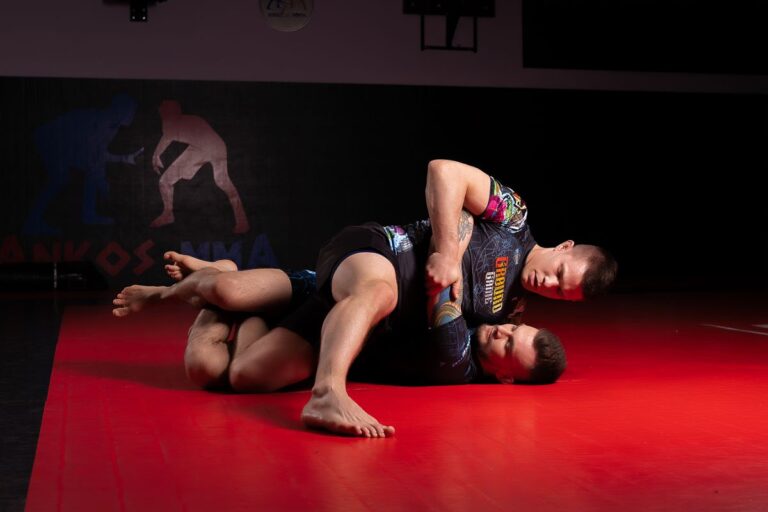
No-gi grappling involves constant physical pressure across the torso: opponents posting with their forearms, grips closing on your sleeves, cross-face pressure riding against your collar line. A women’s rashguard that isn’t engineered to stay anchored during those exchanges will shift in ways that interrupt focus. The compression level that keeps a rashguard fixed during a single-leg takedown is not the same compression level that allows a full hip extension from closed guard. Getting both demands right simultaneously — anchored under load, free during extension — is the design challenge most entry-level women’s rashguards fail to solve.
There is also an identity dimension to competition gear that doesn’t exist in the same way during training. Under lights and in front of cameras, your rashguard is visible to everyone watching. Female competitors at ADCC, Polaris, and WNO have spent the last several years approaching gear selection with the same intentionality they bring to any other piece of high-stakes equipment. The result is a competitor population that is significantly better educated about what a high-performance women’s rashguard should actually do.

What the Rules Actually Require
ADCC does not enforce specific color requirements for rashguards beyond general visual distinction between competitors. IBJJF no-gi rules are substantially more prescriptive: rashguards must be blue, black, or white, with the competitor’s IBJJF affiliation patch displayed, and shorts must follow the same color protocol. Understanding which ruleset governs your next event directly changes your gear requirements before you ever step on the scale.
For women competing under IBJJF rules, a rashguard wardrobe built entirely around fashion-forward prints and non-standard colorways creates a compliance problem at registration. ADCC and submission-only formats like those on FloGrappling and WNO are more permissive, which is partly why those broadcasts feature such a wide range of colors, graphics, and sponsor representations. If your competition calendar spans both IBJJF events and open submission formats, owning at least one IBJJF-compliant rashguard in blue, black, or white alongside your design-forward gear is the practical solution.
Sleeve length is a compliance variable that matters more than it appears. IBJJF rules require rashguards to extend to the elbow. Shorter compression tops that have appeared in some women’s athletic lines — designed for general fitness use rather than grappling competition — do not meet that standard. Verify sleeve length against the ruleset you will be competing under before committing to a purchase. It is not a detail that should be discovered at weigh-ins.
The Anatomy of a Women’s-Cut Rashguard
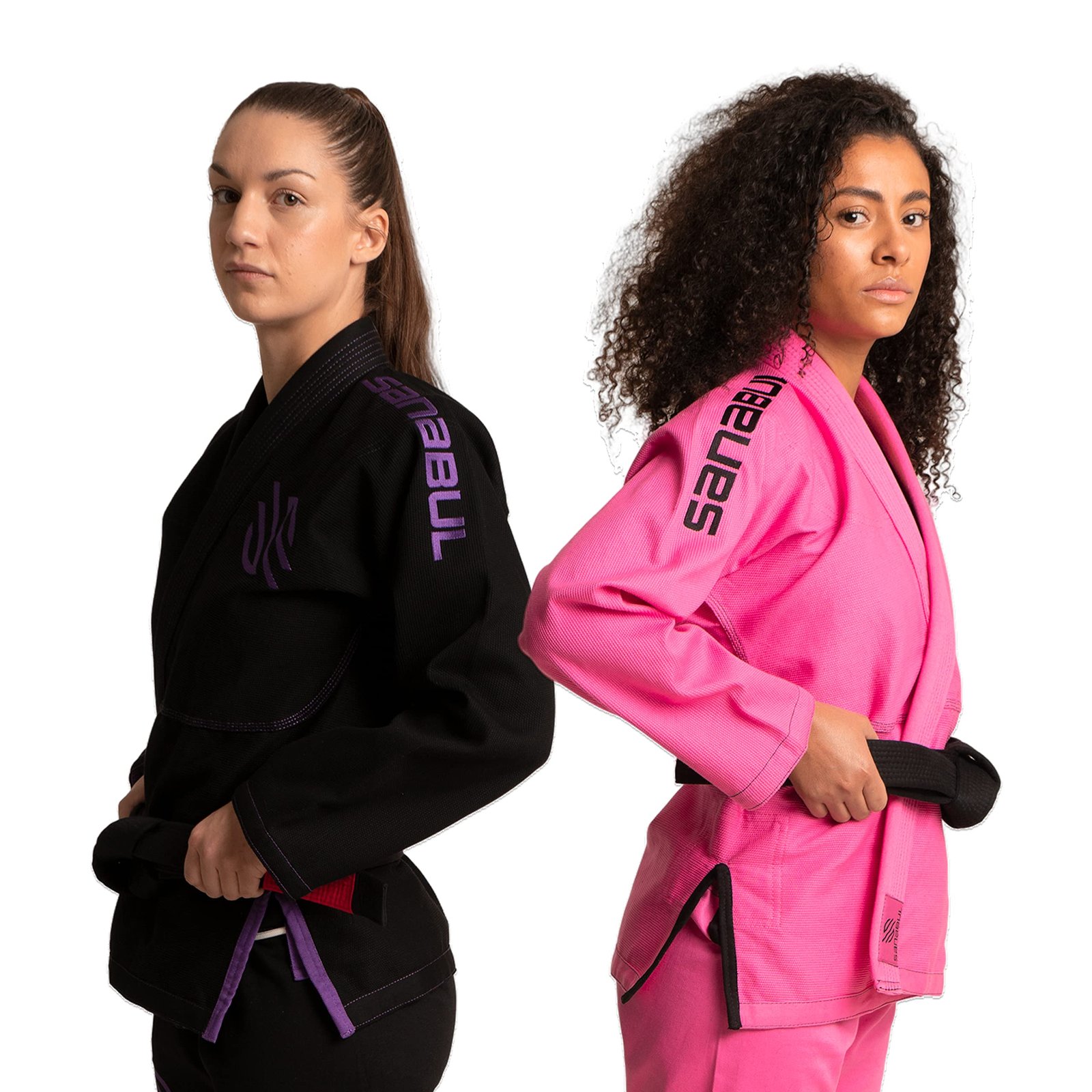
The difference between a women’s-specific cut and a unisex rashguard is structural, not cosmetic. A genuinely engineered women’s cut accommodates a different torso geometry: narrower shoulder width relative to hip width, a more defined waist-to-hip differential, and chest panel construction designed for a wider range of body types than the standard male pattern uses as its baseline.
Shoulder seam placement is one of the most immediately noticeable differences, and one of the most consequential for grappling performance. On a unisex rashguard worn by a female athlete, the shoulder seams typically fall off the natural shoulder line — sitting slightly toward the upper arm rather than directly at the joint. This creates a tension point during overhead movements, which appear constantly in no-gi: underhook battles, reaching for whizzer defense, hip escapes from bottom position. A shoulder seam placed correctly on a women’s pattern sits at the actual shoulder joint and allows the arm and shoulder complex to move through their full range without resistance from the garment seam.
Waist panel construction is the second major structural consideration. Women’s bodies carry a natural waist definition that a straight-cut men’s rashguard ignores. A rashguard that tapers correctly through the midsection creates better garment anchoring during dynamic movement — the narrower waist panel gives the fabric a point to hold against as the body moves through grappling positions. Rashguards without adequate waist taper tend to migrate upward at the hem during leg lock exchanges and guard passing sequences, a distraction that compounds over the course of a long competition bracket.

Fabric, Seams, and the Construction Details That Survive Competition
No-gi competition is a wet sport. By the second or third match of a tournament day, the mat is damp, your opponent is damp, and the rashguard’s moisture management properties shift from marketing claims to functional requirements. Nylon-spandex blends in the 80/20 to 85/15 range have remained the performance standard for competition rashguards because nylon wicks efficiently, holds compression under sustained moisture load, and outlasts polyester-spandex alternatives in the same price bracket by a significant margin. A women’s rashguard marketed at competition price points using a polyester-dominant blend should prompt serious scrutiny before purchase.
Seam construction determines how a rashguard behaves under mat contact and how it ages across a competitive season. Flatlock seams — where both fabric edges are laid flat and stitched across the surface — produce a seam that sits flush against the skin with no raised ridge. This matters in no-gi because opponents’ arms and hands are constantly traversing your torso in grip attempts, guard passes, and scrambles. A raised overlock seam creates drag and focal pressure points that a flatlock construction eliminates. Not all rashguards specify seam type prominently in product listings, but close-up review photos and interior garment shots typically reveal the construction method clearly.
Sublimation printing is the final construction variable worth confirming before purchase. Sublimated graphics — where pigment is transferred into the fabric fibers under heat rather than applied on top of the material — do not crack, peel, or fade under repeated washing and mat abrasion. Surface-printed graphics do all three, typically within six to twelve months of regular training use. Women’s rashguards in the mid-range and above should use sublimation as a baseline expectation. At budget price points this is often not the case, which has direct implications for how long a competition rashguard remains competition-grade.

What Elite Female Competitors Have Changed About How They Buy
Watch a FloGrappling broadcast of a major women’s no-gi card and pay attention to what the top competitors are wearing. Female athletes at the ADCC and WNO level have shifted away from brand-name defaults toward gear they have tested through hundreds of mat hours, often mixing specialist brands with larger manufacturers based on specific performance criteria rather than sponsorship. Ffion Davies, who won the ADCC 2022 women’s 60 kg division, and Danielle Kelly, one of the most active and visible female no-gi competitors on the circuit, have both discussed gear preferences publicly in ways that reveal a highly specific evaluation process built around performance rather than aesthetics.
What competitors at that level are looking for is not a brand name — it is a particular combination of compression grade, sleeve length, waist construction, and seam quality that they have validated under live competition pressure. The market has responded to that informed demand. Brands that historically treated women’s rashguards as secondary product lines have released genuinely engineered women’s cuts in the last two years, driven by a competitor population that now has clear language for what those garments should do and can identify precisely when they are falling short.
The practical implication for female grapplers at any level is to apply the same evaluation framework: test compression under movement rather than on the hanger; confirm seam placement against your shoulder line while moving through guard positions; check sleeve length against the rulesets on your competition calendar. A rashguard that holds up well in Tuesday night sparring is not automatically a rashguard that performs through a seven-match bracket on competition day.

Training Load vs. Competition Reserve
Many female grapplers try to make a single rashguard serve both training and competition across its full lifespan. The practical math on that approach is not favorable. Training rashguards absorb significant mechanical load — weekly washing cycles, mat abrasion across the full garment surface, and thousands of stretch-and-release cycles through positional drilling and live rounds. Within six to twelve months of regular training use, even high-quality nylon-spandex blends show measurable compression degradation. A rashguard performing at eighty percent of its original compression is a serviceable training tool. It is not competition-grade gear.
The more effective model — one common among female competitors who train consistently across a long competition season — is to maintain at least two rashguards in rotation: a training set that absorbs daily wear and can be replaced without significant financial consequence, and a competition rashguard that is washed carefully, stored flat, and reserved for events and the hardest sparring sessions closest to a competition date. This approach extends the functional life of competition-grade gear substantially and eliminates the risk of entering a major bracket with a garment no longer performing at the specification its construction was designed to deliver.

The Standard Has Moved — So Has the Gear
The best rashguards for women in no-gi grappling in 2026 are not the ones with the largest marketing budgets or the most visible sponsorships. They are the ones built from the ground up around a female grappler’s movement patterns, tested under actual competition conditions, and constructed with the seam quality, fabric composition, and structural engineering to perform through a full bracket without failing in the details. Women’s no-gi has grown into a serious, globally watched competitive sport. The gear that matches that level of seriousness exists — and understanding the construction criteria that separate it from the field is the first step toward finding it.
Sources
- IBJJF Official Rules and Regulations
- ADCC Submission Wrestling World Championship
- FloGrappling — No-Gi Competition Coverage