Choosing a Rashguard for Snorkeling: A No-Gi Grappler’s Guide to Water-Ready Gear
If you train no-gi and you travel, sooner or later your rashguard ends up doing double duty. A friend invites you out to a reef, the resort dive shop hands you a mask, and the only long-sleeve top in your bag is the one you wore to open mat the night before. It works. Sort of. By the end of the second day you notice the seams are stiffer than they should be, the chest panel feels like it lost a fight with the sun, and the fabric stinks in a way that no mat session has ever produced. That gap, the one between a rashguard built for grappling and a rashguard built for hours in saltwater, is wider than most no-gi athletes realize until they have to live inside it.
This is a guide to closing that gap. Not a product roundup, not a brand ranking, just a working framework for how a no-gi grappler should think about a rashguard whose job description now includes snorkeling. The criteria shift. The fit shifts. The fabric chemistry that survives sweat and a sweaty kimura grip does not always survive UV plus salt plus a six-hour float over a reef. Understanding why is the difference between buying once and buying three times.
Why Snorkeling Demands More From a Rashguard Than the Mat
A no-gi training session is, in fabric terms, a short and dirty event. You wear the rashguard for an hour. Sweat soaks it. Friction grinds at the shoulders and ribs. Then it goes in the wash. The total UV dose is whatever the drive to the gym contributed, which is essentially nothing. The total salt exposure is whatever your skin produced, which is real but mild.
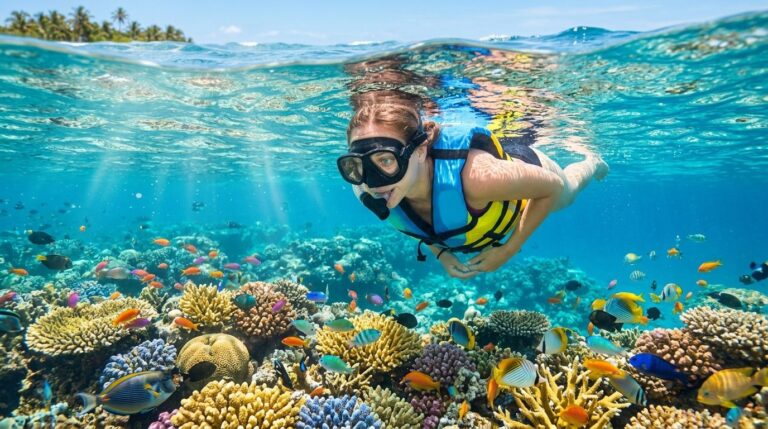
Snorkeling reverses every one of those variables. You are stationary in the water for hours, not seconds. The sun hits the same panel of fabric the entire time, magnified by the surface reflection of the ocean. Saltwater saturates every fiber and dries in salt crystals inside the weave. There is no opponent grabbing your collar, but there is constant, low-grade abrasion from your buoyancy compensator or from rolling in shallow surf to reach the boat. A snorkel session is a marathon for the textile in a way that a five-minute round is not.
The result is that a rashguard rated for hard training does not automatically transfer to hard snorkeling. The threats are different. A grappling-first rashguard is engineered to resist seam blowout under shear load. A water-first rashguard is engineered to resist UV degradation, salt creep, and chlorine memory if it ever sees a pool. Whether your favorite no-gi top can do both depends on how it was actually built, not which brand stitched the logo on it.
The Sun Exposure Math Most Grapplers Get Wrong
UPF is the rating system that tells you how much ultraviolet radiation a fabric blocks. UPF 50+ blocks roughly 98 percent of UV. It sounds airtight on paper. In a tropical snorkeling context it is barely adequate, because UV protection is not a stable number, it is a budget that depletes with every wash, every hour of sun exposure, and every salt cycle. We covered the lifecycle of UPF degradation in a separate piece on the site, and the headline is that a fabric labeled UPF 50+ at the factory may be functioning at half that protection by year two.

For snorkeling specifically, the math is unforgiving. A four-hour float at noon in equatorial water is equivalent in UV load to roughly forty to sixty mat sessions. Whatever degradation curve your rashguard is on, snorkeling accelerates it. This is why grapplers who travel with one beloved competition top often come home with a piece of gear that looks fine on the hanger but no longer holds color, no longer recovers shape, and no longer blocks the UV it claims to.
The practical takeaway is that the rashguard you take snorkeling should not be the rashguard you wear under your competition setup. They are doing different jobs and they should be different garments, even if they look identical hanging side by side. Treat the snorkeling rashguard as consumable. Buy something with a clear UPF rating, accept that it will wear out faster than its land-only sibling, and rotate.
Saltwater and Fabric Chemistry
Polyester-spandex blends, which dominate the no-gi rashguard market, handle saltwater better than nylon-spandex blends. Nylon absorbs water at a higher rate, which means longer drying times, more weight while you are in the water, and a higher chance of salt crystals lodging between fibers. Polyester sheds water faster and recovers shape more reliably after a salt soak. For a snorkeling-first piece, polyester is the safer choice, even though many premium no-gi rashguards lean into nylon for its softer hand feel on dry land.
The spandex content matters too, and not in the way most people assume. More spandex means better stretch and recovery, but spandex is the fiber most vulnerable to chlorine and to repeated salt cycles. A rashguard at 20 percent spandex feels glorious the first ten times you wear it, and is also the first thing in your gear bag to go saggy after a heavy week of beach use. For a snorkeling rashguard, look for something in the 10 to 15 percent spandex range. That is enough stretch to fit cleanly under or over a wetsuit top, and conservative enough to survive saltwater.
Fit Considerations: Mat Versus Water
A grappling rashguard is sized to grip the skin so an opponent cannot use the fabric as a handle. That tightness is intentional and it is one of the things that separates a real rashguard from a generic athletic top. The same compression that prevents a no-gi opponent from grabbing your sleeve becomes a liability in the water, because tight fabric over wet skin amplifies cold, restricts the deep breathing you need for surface dives, and chafes faster when salt crystals develop at the seam lines.
For snorkeling, you generally want a half size up from your competition fit. The rashguard should still be close to the body so it does not balloon while you swim, but not so compressive that you feel ribbed when you take a full breath at the surface. The neckline matters more than grapplers expect. A high crew neckline that disappears under a gi collar becomes a chafing zone under a snorkel strap. A slightly lower crew, or even a quarter zip designed for water sports, sits cleaner under mask and strap hardware.
Sleeve length is another quiet decision. Many no-gi athletes default to long sleeve for sun coverage, which is correct for snorkeling, but the sleeve cuff design matters. A cuff that locks at the wrist with elastic is fine for rolling. In the water, it can trap a pocket of cold seawater that flushes against the forearm with every kick. A looser cuff that drains is more comfortable for long sessions, even though it would be a disadvantage on the mat.
Coverage, Reef Safety, and the Forgotten Lower Back
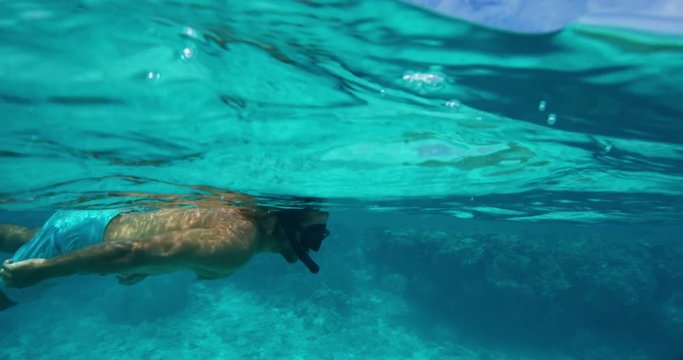
One of the most consistent post-snorkel complaints from grapplers who used their mat rashguard is a sunburn ring across the lower back, exactly at the spot where the rashguard rides up when you arch to surface dive. Competition rashguards are cut at a hem length optimized for closed-guard posture. They sit just below the waistband when you are upright. They ride a full inch or two higher when you are horizontal in the water with your back arched and your legs trailing.
A snorkeling-appropriate rashguard either runs longer in the torso or has a silicone gripper band along the hem to keep it anchored to the lower back. Some brands market this as a swim hem. It is not a gimmick. After three or four hours floating face down, a hem that stays put is the difference between intact skin and a stripe of sunburn that will not let you train for a week.
Reef-safety considerations also lean toward more coverage rather than less. Sunscreen runoff is a serious issue for coral, and many destinations now restrict the chemical sunscreens grapplers tend to pack. Wearing a long-sleeve rashguard with a longer hem dramatically reduces the surface area you need to dose with sunscreen at all. That is good for the reef, good for your skin, and good for the rashguard, because oily sunscreen residues are themselves hard on synthetic fibers over time.
Drying, Storage, and the Beach Bag Stink Problem
The mistake that ruins more rashguards on snorkeling trips than any fabric defect is the wet ball at the bottom of the bag. A grappling rashguard goes from your back into a hot car into a washing machine within an hour or two. A snorkeling rashguard often goes from your back into a wet pile in a hotel bathroom and stays there until the next morning, then gets rinsed, then goes back into the bag damp.
The bacteria that grow in that cycle are the same ones that produce the unmistakable funk no amount of regular detergent fully removes. The fabric does not bring that smell home from the ocean. It develops it in the bag. The fix is unglamorous but essential. Rinse the rashguard in clean fresh water as soon as you are off the boat. Wring it out properly, not gently. Hang it in shade or in air conditioning, not in direct sun, because direct UV on wet fabric accelerates color loss. Then, before it goes back in the bag, make sure it is fully dry to the touch on both sides.
The article we ran on washing and caring for rashguards goes deeper into the wash side of this. For travel snorkeling specifically, the only addition is the freshwater rinse step. Skipping it is the single fastest way to kill any rashguard, whether it cost forty dollars or one hundred and twenty.
When Your Mat Rashguard Earns Its Beach Day
Some no-gi rashguards do cross over well. The traits to look for are a polyester-dominant blend, a moderate spandex percentage, a clear and recent UPF 50+ rating, a hem long enough to stay anchored when you are horizontal, and a sleeve cuff that does not strangle the wrist. If your favorite training top hits all of those, take it snorkeling. Just understand that you are spending its lifespan twice as fast as someone who uses theirs only on the mat.

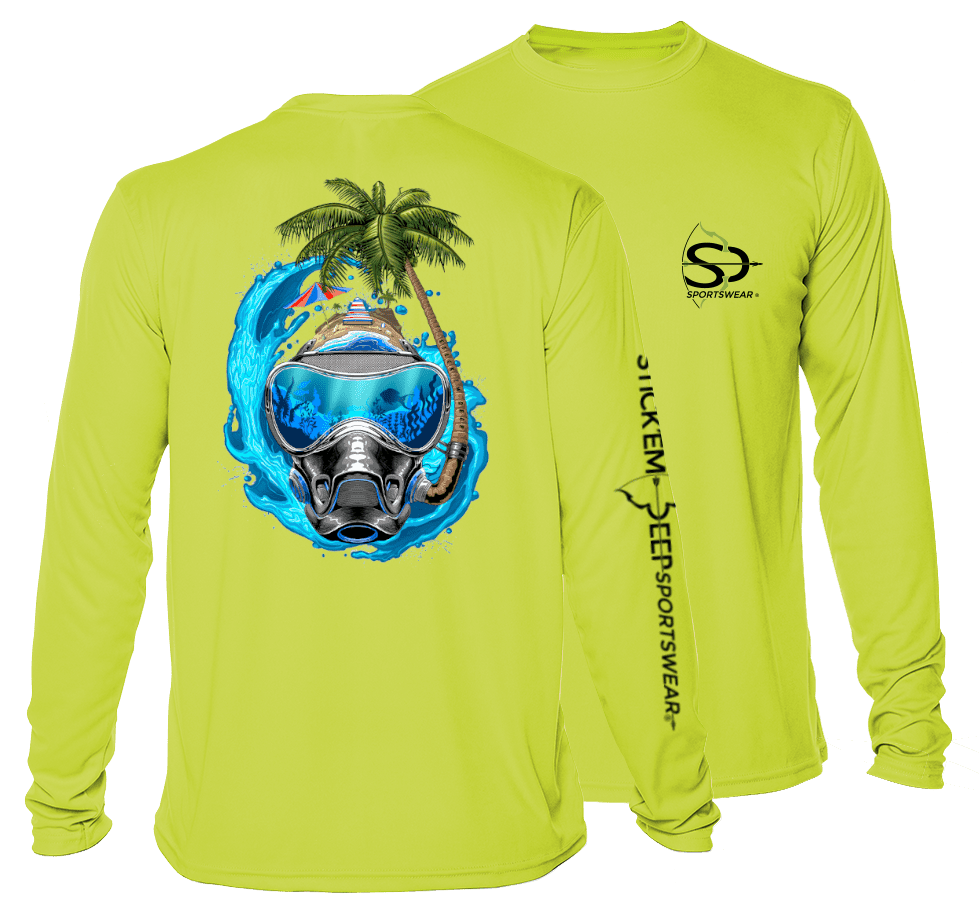
A better setup for the grappler who travels often is a two-rashguard system. One competition-fit no-gi rashguard for the mat, kept out of the sun and salt. One slightly looser, snorkel-rated long sleeve in a simple color, treated as a working tool. The total cost is modest. The headache it prevents, especially the moment you pull a faded, salt-stiff competition top out of your gear bag the morning of a tournament, is significant.
What to Skip
A few categories of rashguard look promising on a product page and disappoint at the reef. Sublimation-heavy designs with full-coverage prints tend to fade unevenly under marine UV, leaving you with a top that is more visible map of sun damage than garment. Cotton-blend rashguards, which still exist at the budget end of the market, are non-starters. They absorb water, hold it, and chill you immediately. So-called swim shirts marketed to the general resort crowd are often loose, low-spandex shells that flap in the water and offer almost no UPF after the first season. None of these are bad products on their own terms. They are simply not the right tool for a grappler who wants the same garment to feel familiar in the water as it does on the mat.
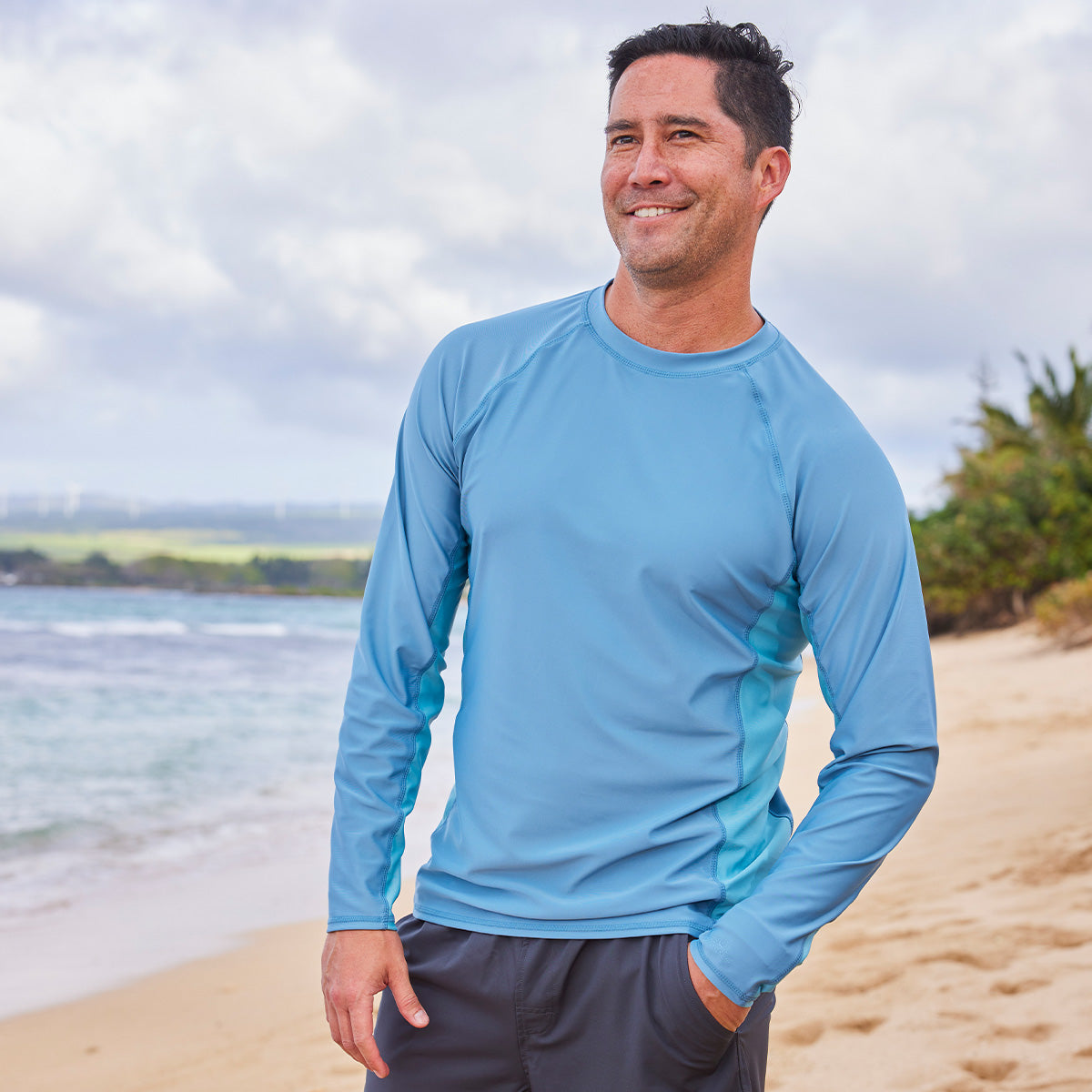
The strongest move, if you are about to buy, is to look at established no-gi brands that publish their fabric composition openly and have a long-sleeve option built on a polyester-spandex base with a longer cut hem. Search around, compare specs, and treat the purchase as a piece of travel equipment rather than fight gear. The rashguard you would wear into ADCC trials does not have to be the rashguard you wear over a reef in Okinawa, Bali, or the Caribbean. Letting them be two pieces of gear, deliberately chosen for their respective jobs, is how grapplers who travel with snorkels keep both wardrobes intact.
Looking for options worth comparing? A solid starting point is to browse the long-sleeve UPF 50+ rashguard category and filter for polyester-dominant blends, then cross-check against the same brand’s no-gi training line to confirm the fabric story matches.
Sources
For deeper reading on the science and standards behind the fabric and sun-exposure points referenced above:
- The Skin Cancer Foundation — UPF rating standards and sun-protective clothing guidance.
- U.S. Environmental Protection Agency — UV index and exposure data used to calibrate sun-load expectations.
- NOAA National Ocean Service — reef-safety and sunscreen-runoff information relevant to snorkeling destinations.
- Wikipedia: Ultraviolet Protection Factor — overview of how UPF is measured and what the ratings mean.
Browse our top-rated rashguards and no-gi gear at the RashguardGuy shop →