Heel Hook BJJ: 7 No-Gi Setups That Force the Tap
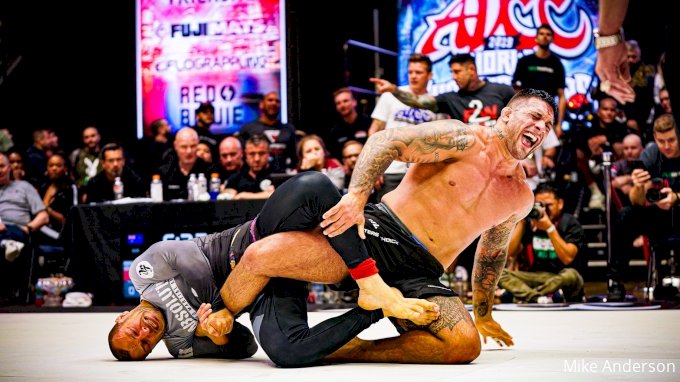
Lachlan Giles weighs 77 kilograms. At ADCC 2019 he submitted three opponents who collectively outweighed him by more than 200 pounds — Patrick Gaudio, Mahamed Aly, and Kaynan Duarte — using the same submission every single time. The heel hook BJJ coaches treated as a forbidden party trick a decade ago is now the highest-percentage finish in modern no-gi grappling, and the gap between players who understand it and players who don’t shows up on every roll, every tournament, every promotion film.
This article walks through seven heel hook setups that consistently force the tap at brown belt and above, with the mechanics, the entry, and the safety call that separates a clean finish from a destroyed knee. If you train at a gym where leg locks are still treated as something only “the leg lockers” do, this is your scouting report.
Why the Heel Hook BJJ Players Avoided for Decades Is Now Dominant
For 25 years the heel hook was banned at every IBJJF event. Coaches told white belts to leave the legs alone because the submission was “too dangerous to train with control.” That changed in 2021, when the IBJJF finally allowed brown and black belts to use heel hooks in no-gi divisions, codifying what professional submission grappling had already been doing for over a decade.
The numbers shifted fast. In ADCC, CJI, and the Who’s Number One series, heel hooks now produce more finishes than every choke combined. They are the only no-gi submission you can complete without ever having to pass your opponent’s guard. That economics — a high-percentage finish available from the bottom — rewards the player who learns the position over the player who only learns to pass. The truth is, gyms that still avoid leg locks aren’t keeping their students safer. They’re sending them into competition with a hole in their game the size of a sankaku.
Inside Heel Hook vs. Outside Heel Hook: Which One You Should Actually Hunt
The inside heel hook attacks the heel that points away from your opponent’s centerline. The outside heel hook attacks the heel that points toward you. The mechanical difference looks small. The damage profile is not.
Inside heel hooks rotate the foot in a direction the knee has almost no ligament protection against. They break the ACL, MCL, and meniscus in fractions of a second once tension hits the joint. The outside heel hook, by comparison, rotates the foot in a direction the knee can briefly absorb — opponents sometimes survive long enough to spin out before the tap. The takeaway: if you only have time to drill ten thousand reps of one variation, drill the inside heel hook. It is the submission John Danaher’s lineage finishes 90% of high-level matches with.
Setup 1: Inside Heel Hook From the Saddle (Honey Hole)
The saddle — also called the inside sankaku, the 411, or the honey hole — is the highest-control leg-locking position in modern no-gi BJJ. Your inside leg passes between your opponent’s legs and triangles with your outside leg, your hip locks against theirs, and the attacked leg cannot rotate, bend, or escape without your permission.
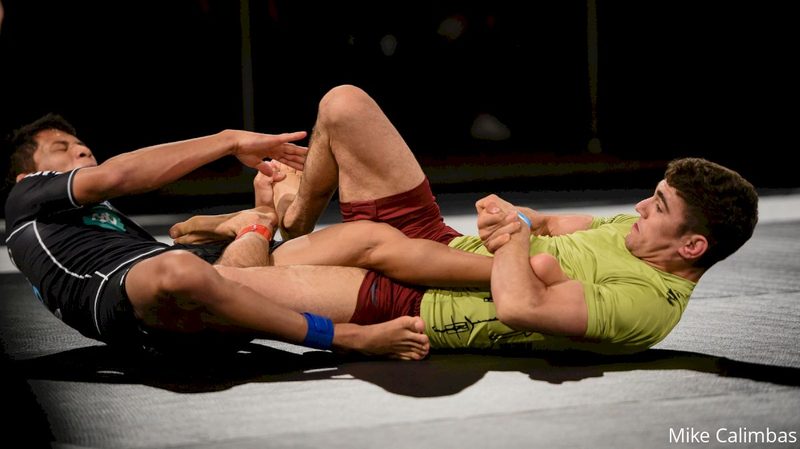
Entry: shoot a single leg into deep half, frame their far hip with your bottom knee, and thread your top leg through to the inside. As you fall into the saddle, swim your inside arm under their attacked leg and trap the heel against your forearm. Squeeze your elbow to your ribs and rotate your shoulder away from the leg — never crank the heel by twisting the wrist alone. The tap comes within two seconds of finish position. If it doesn’t, your hip alignment is wrong, not your grip.
Setup 2: Outside Heel Hook From Single Leg X
Single leg X (SLX) is the same entanglement Marcelo Garcia rode to a decade of EBI-style wins. Most players use it to elevate and sweep. The leg lock player uses it to attack.
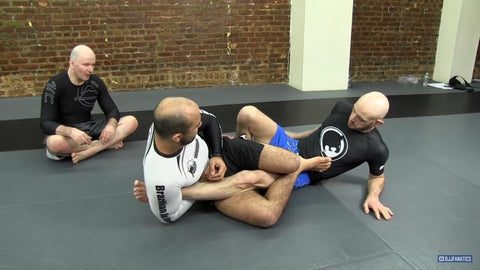
From bottom SLX the opponent’s leg is already isolated. The outside ashi garami is one foot adjustment away. Bring your top knee across their thigh, keep their foot pinned to your hip, and reach over the leg to your own thigh — grip the heel like you’re cradling a baseball bat with your bicep. Fall to your attacking side and finish with rotation, not jerk. The opponent usually feels the tap before they see the entry happen, which is why this setup wins so often against wrestlers who are still trying to base out and stand up.
Setup 3: Inside Heel Hook From 50/50
50/50 in 2026 is a leg-lock chess match. Whoever gets a hand on a heel first usually finishes. The setup that breaks the stalemate is the cross-ashi step-over: from a neutral 50/50, post on your inside elbow, crunch your knee toward your chest, and rotate your hips so your outside leg comes across your opponent’s hip line. That single motion converts 50/50 into inside sankaku and exposes the inside heel.
Reach across with the opposite-side arm — if you’re attacking the left leg, your right arm hunts the left heel — and seat the heel in the crook of your elbow. The finish is identical to the saddle: squeeze, rotate, no jerking. If your opponent is also a leg locker, they will recognize the step-over the instant your hip moves. That’s why the entry has to be a single committed motion, not a tentative test. Half-speed entries get countered with the same submission going the other way.
Setup 4: Outside Heel Hook From Bottom Half Guard Roll
This one is for the gym half-guard player who is still trying to use half guard like it’s 2008. When your opponent flattens you out and looks to free their trapped leg, sit up Marcelo-style, frame their near knee with both hands, and roll under them as if you were chasing a basic sweep. Instead of landing in top half guard, your bottom leg has hooked their far leg and you arrive in outside ashi.
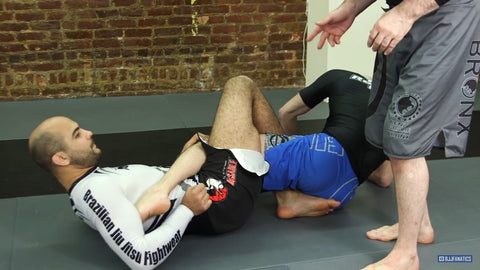
The opponent’s reaction is almost always to base out on their hands and look for an underhook. That base hand is your timer. You have about two seconds to catch the heel before they recognize the position and start spinning to escape. Catch it, fall back, finish. The reason this setup works in 2026 is that most half-guard players above purple belt have stopped expecting it — the leg-lock counter to the half-guard sweep was supposed to be solved by 2015, but a generation of grapplers learned to pass top half without ever defending it from bottom.
Setup 5: Inside Heel Hook From the Standing False Reap
This is Craig Jones’ signature entry from standing. As a leg-grab takedown attempt comes in, you post one foot on the inside of the attacker’s lead thigh and use that frame to drop straight to your hip — never your back. The foot you posted with sits on their inside, the other foot triangles, and you have a saddle the moment your hip touches the mat.
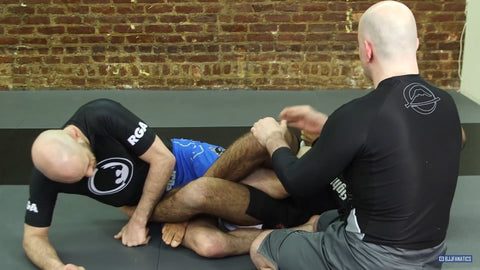
The setup catches everyone who learned to pass under a wrestling-first coach. They’re so used to chaining takedown defenses that the false reap landing looks like you just gave up your back. By the time they realize you’re in the most powerful leg attack in the system, the heel is already trapped against your ribs and the rotation is starting. Craig Jones has used some version of this exact entry to finish opponents 40 pounds heavier than him on every continent.
Setup 6: Heel Hook Off the Berimbolo Counter
Modern no-gi berimbolos collapse into a leg-lock counter more often than they finish the back take. When the bottom player whips their legs across to invert, the standing player can catch the top foot, drop their weight, and slip into outside ashi as the inverting opponent loses orientation. This is one of the cleanest punishments available for berimbolo players who haven’t updated their game past 2019.
This setup rewards the player who has drilled ashi entries from every angle. The berimbolo player is upside down for roughly half a second between invert and back take. That half second is the entire window. Catch the foot at the apex of the inversion, secure outside ashi as their hips land, and attack the outside heel before they can post their hands and base. If you wait until they finish the rotation, you’ll lose the position to their back take. The whole thing has to happen on the fly, which is why it only shows up in players who have drilled the entry as muscle memory.
Setup 7: Reverse Ashi Heel Hook From Back Take Failure
The most underrated entry. When your back take stalls and your opponent flattens out on top of you, do not fight to hold the seat belt. Drop your top hook off their hip and let your bottom leg slide across the hip to set reverse ashi. Your body rotates so your head ends up where their head was, and the heel is sitting in your hands.
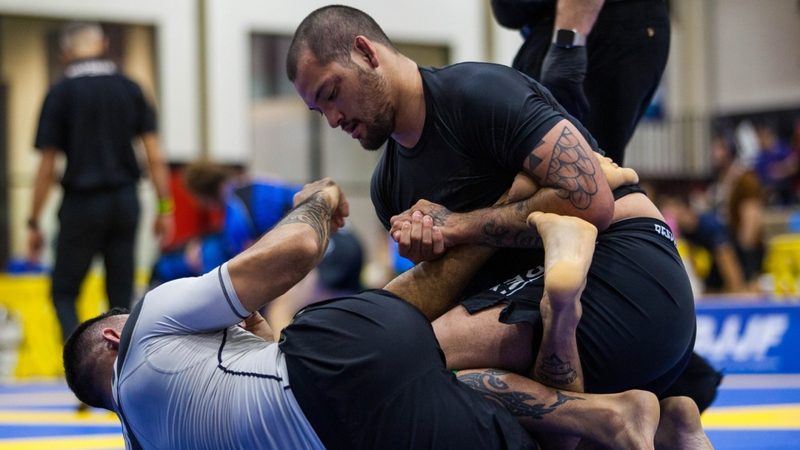
This is the highest-value back take counter in the modern game. FloGrappling’s deep dive on the history of heel hooks notes that early no-gi specialists like Eddie Cummings and Garry Tonon built their entire competitive game around exactly this kind of “your offense is my entry” mindset. They didn’t have to win the back take. They just had to make it expensive enough that their opponent traded the back for an exposed leg, and then they finished the leg.
How to Finish a Heel Hook Without Hurting Anyone
This is the non-negotiable section. If you start attacking heel hooks and your training partners stop wanting to roll with you, you are doing it wrong, and no amount of “but they tapped late” defense will fix the reputation that follows you around the gym.
The finish is rotational — never a jerk, never a twist by the wrist alone. Squeeze your elbow to your ribs. Rotate your entire torso, not just your forearm. Give your partner one to two seconds to recognize the position and tap. Heel hooks do not hurt the way an armbar hurts — there is no warning pain, just a pop. Your partner has no early signal to tap to. You have to be the safety system.
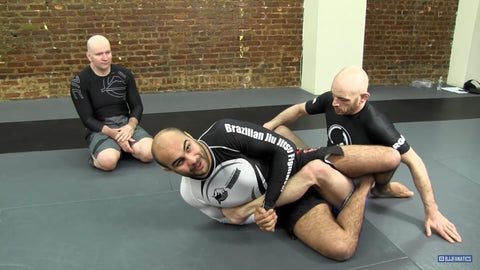
If a roll partner taps, release instantly and reset. If they don’t tap and you feel even minor resistance in the knee, release anyway, reset, and explain the position to them after the round. The reputation that follows you around your gym is built in those small moments — and so is the longevity of the partners who agree to drill leg locks with you next week.
For anyone training in a gym that allows leg locks, our heel hook defense guide should be drilled in the same session as the attacks. Knowing how to escape is what gives you the courage to enter — and the awareness to release on time when you’re the one finishing.
For a primer on the basic finishing mechanics, this Evolve University tutorial walks through the safe drilling progression with a no-gi black belt demonstrating:
Where Heel Hook BJJ Training Goes Next
The heel hook is no longer the niche move that wins one match per major event. It is the dominant submission in professional no-gi grappling, and the gym that doesn’t drill it weekly is already two generations behind. The most useful next step is to build the entry chain — every guard pull, every sweep, every back take should have a leg-lock option attached, not just a pass option.
Start with the seven ashi garami entanglements that set up these heel hooks. Add the safety equipment — our kneepad and joint-support guide for the leg-lock era covers what to wear before drilling heavy on hardwood. Then drill one of the seven setups above, every session, for a month. Pick the setup that fits the guard you already use. The position will start showing up in live rolls within a week — and the people you roll with will start asking how you learned to chain leg locks without breaking anyone.
Sources
- Lachlan Giles Joins ADCC Absolute Legends With Inspirational Submissions — FloGrappling coverage of the 2019 ADCC absolute run that proved the heel hook works at the open-weight level.
- The History of Heel Hooks — FloGrappling timeline tracing the submission from sambo through the IBJJF rule shift.
- The New IBJJF Rules For Heel Hooks And Leg Reaping in 2021 — FloGrappling breakdown of the rule change that legalized heel hooks for brown and black belts in IBJJF no-gi divisions.
- The Advanced And Complete Guide To The BJJ Heel Hook — Evolve MMA’s technical primer on inside vs. outside heel hook mechanics.
Browse our top-rated rashguards and no-gi gear at the RashguardGuy shop →