Snorkeling in a BJJ Rashguard: What Works in Saltwater and What Falls Apart
The rashguard sitting in your gear bag was engineered to survive collar ties and floor friction, not coral and saltwater. But the same fabric stack that keeps your shoulders from getting mat-burned during half-guard rolls is, almost by accident, one of the better materials for a long day on a snorkel boat. The crossover works — but only if you know which features actually matter on the reef and which ones fall apart the moment your shirt meets the ocean.
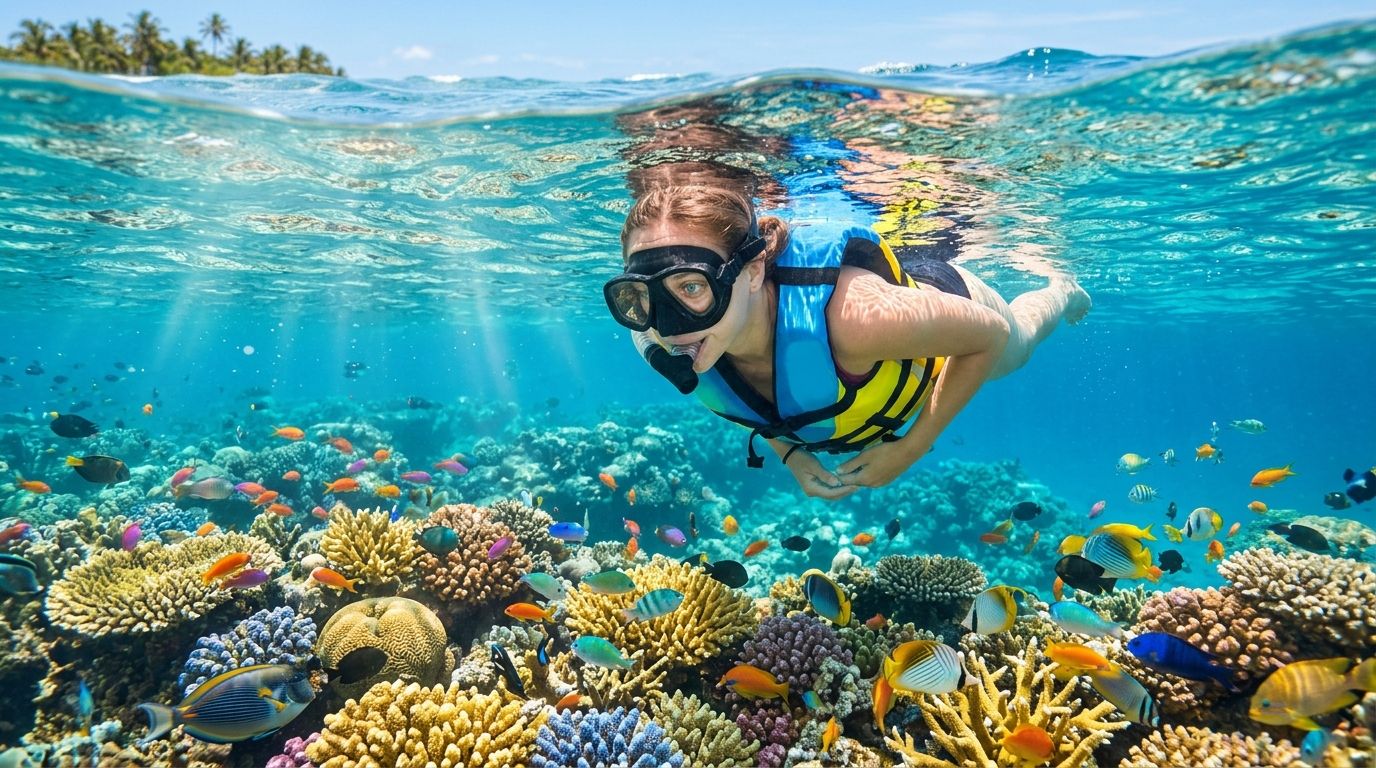
Why grapplers already own most of what snorkelers need
A purpose-built snorkeling rashguard and a no-gi BJJ rashguard share the same DNA: polyester-spandex blend, flatlock seams, UPF-rated dye, four-way stretch. The marketing teams target different demographics, but the cut-and-sew specs overlap heavily. A snorkeler needs sun protection across the shoulders and back where the burn hits hardest. A grappler needs abrasion resistance across the shoulders and back, plus stretch through the lats and sleeves for full range of motion. Both end up with roughly the same garment.
The differences are smaller than the gear industry pretends. Most swim shirts sold at beach gift shops are looser, lighter-weight polyester that flaps in current and rides up the moment you kick. A competition no-gi rashguard fits snug enough to stay put when someone is actively trying to rip it off your back, which is exactly the fit you want when you’re face-down for two hours watching parrotfish. Tight, smooth, no bunching, no chafing under the snorkel strap.
What snorkeling actually demands from a shirt
Snorkeling is a low-intensity activity that delivers a high cumulative dose of stress to whatever you’re wearing. Each requirement is small in isolation; together they add up to something that punishes cheap garments.
Sun exposure that dwarfs a training session
A two-hour roll session keeps you indoors, in a gym, under controlled lighting. A two-hour snorkel session puts your back at roughly 90 degrees to direct equatorial sun, with reflected UV bouncing up from the water surface. Total UV exposure on a snorkel day can easily exceed what your rashguard absorbs across an entire month of training. UPF 50+ rashguards block roughly 98% of UV across the covered area, which is why tropical dive operators increasingly recommend them over reapplied sunscreen for back-of-body coverage.
Saltwater and the abrasion of nothing
Saltwater is mildly abrasive on textiles — not because the salt physically scrapes the fabric, but because crystallized salt left in the fibers attracts and holds moisture, accelerating elastic breakdown over time. Rashguards designed for grappling spend their abrasive life on rubber mat surfaces and under the grip of training partners. That’s concentrated, mechanical wear in known spots. Saltwater is the opposite: diffuse, chemical, everywhere, and never localized to one shoulder or one rib panel.
Mild thermal regulation without a wetsuit
Most snorkeling happens in 75–84°F water. That’s warm enough to skip a wetsuit but cool enough that a thin polyester layer adds meaningful warmth over an hour. A BJJ rashguard delivers that same mild insulation without trapping water against the skin the way a neoprene shorty would. You get just enough warmth to extend your session by 30–45 minutes without overheating when you climb back on the boat into direct sun.
Where no-gi rashguards win on the reef
Fit is the first win. Competition no-gi rashguards are cut close — tight enough at the hem and waist that they don’t ride up during a guard pass. That same hem grip stops a snorkel shirt from balloon-floating up your back when you kick down to look at a moray eel. Looser swim shirts catch water like a parachute. A competition cut hugs the torso and stays put even with a weight belt on top of it.
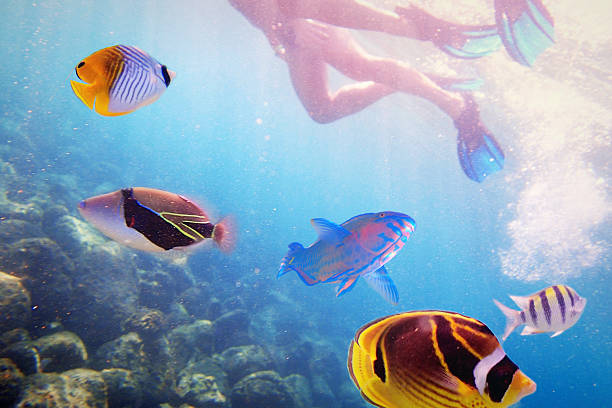
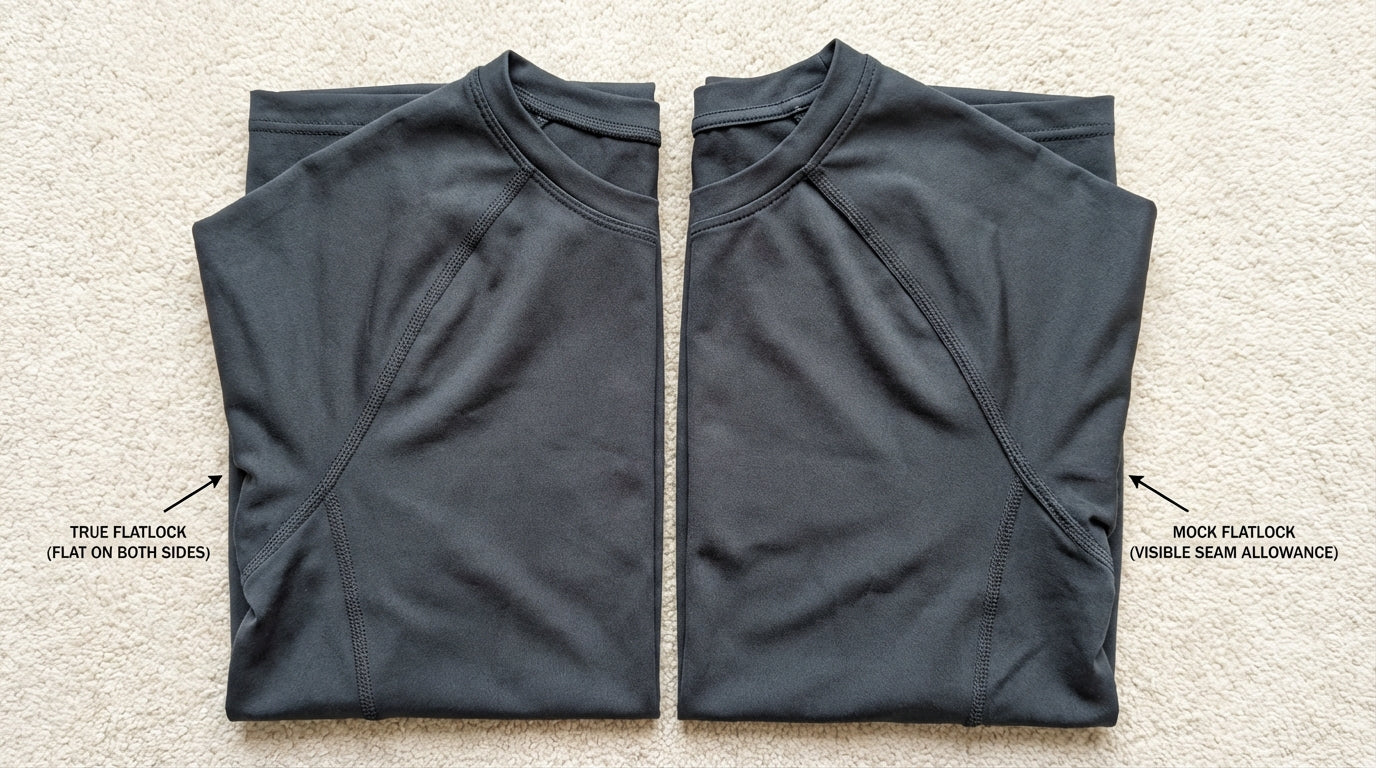
Seam construction is the second win. Most reputable no-gi brands use flatlock seams across the shoulders and ribs, designed to survive the friction of an opponent’s grip. That same flat seam profile won’t chafe under a snorkel mask strap, a vest, or a weight belt during a longer freedive session. Cheap swim shirts often use overlock seams that protrude and irritate after an hour of repeated mask adjustments.
UPF coverage is the third win. Any rashguard rated UPF 50+ by an independent test (look for AATCC 183 or AS/NZS 4399 certification on the brand site) blocks the same UV whether you’re rolling indoors or floating on the surface. The dye is the protection; the polyester is the substrate. The reef doesn’t care that the logo on your chest says Hayabusa instead of Speedo.
Where they break down in saltwater
This is the part the marketing teams skip. Not every BJJ rashguard survives ocean use, and the failure modes are predictable enough that you can pick around them at purchase time.
Dye loss accelerates in saltwater plus sun
Sublimation-printed rashguards — the kind where the design is heat-pressed into the fiber rather than screened onto the surface — hold up better in chlorine than salt. The salt-and-UV combination at the surface of the water creates an oxidizing environment that fades vibrant colors faster than gym training does. A black or navy rashguard you’ve used in the ocean five times often looks like one you’ve trained in for six months. If you’re attached to a competition graphic, save it for the mats and buy a beater for the beach.
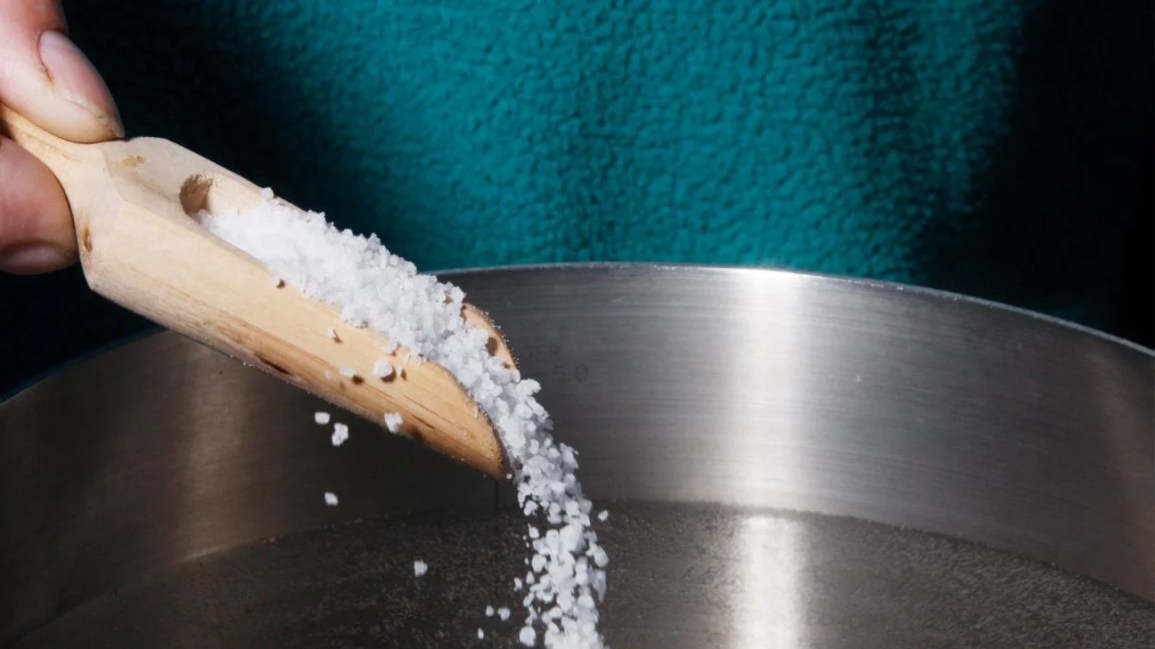
Screen-printed graphics peel
A lot of mid-tier no-gi rashguards use screen-printed brand logos on top of the polyester. Screen printing has weaker bonding than sublimation. After repeated salt exposure followed by warm-water rinsing, the ink starts to lift at the edges, then peels off in chunks. If you want a rashguard that survives both mats and ocean, pick a fully sublimated design with no plastisol ink layered on top. Check the inside of the chest: if you can feel a raised plastic patch where the logo is, that’s the part that won’t make it past summer.
Elastic at the neck and cuffs gives up first
The spandex blended into the polyester is what gives a rashguard its compressive feel. Spandex is the most chlorine-resistant of common synthetic elastics, but it’s not particularly salt-resistant. After 15 to 20 ocean sessions, you’ll start to feel the neckline lose its snap and the sleeve cuffs widen. The body of the rashguard usually outlasts the elastic by a wide margin, which means the shirt fails functionally before it fails visually.
How to pick a no-gi rashguard you can take in the ocean
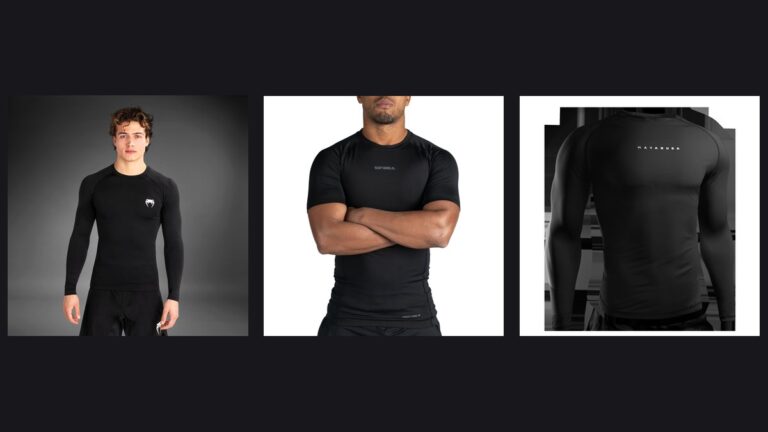
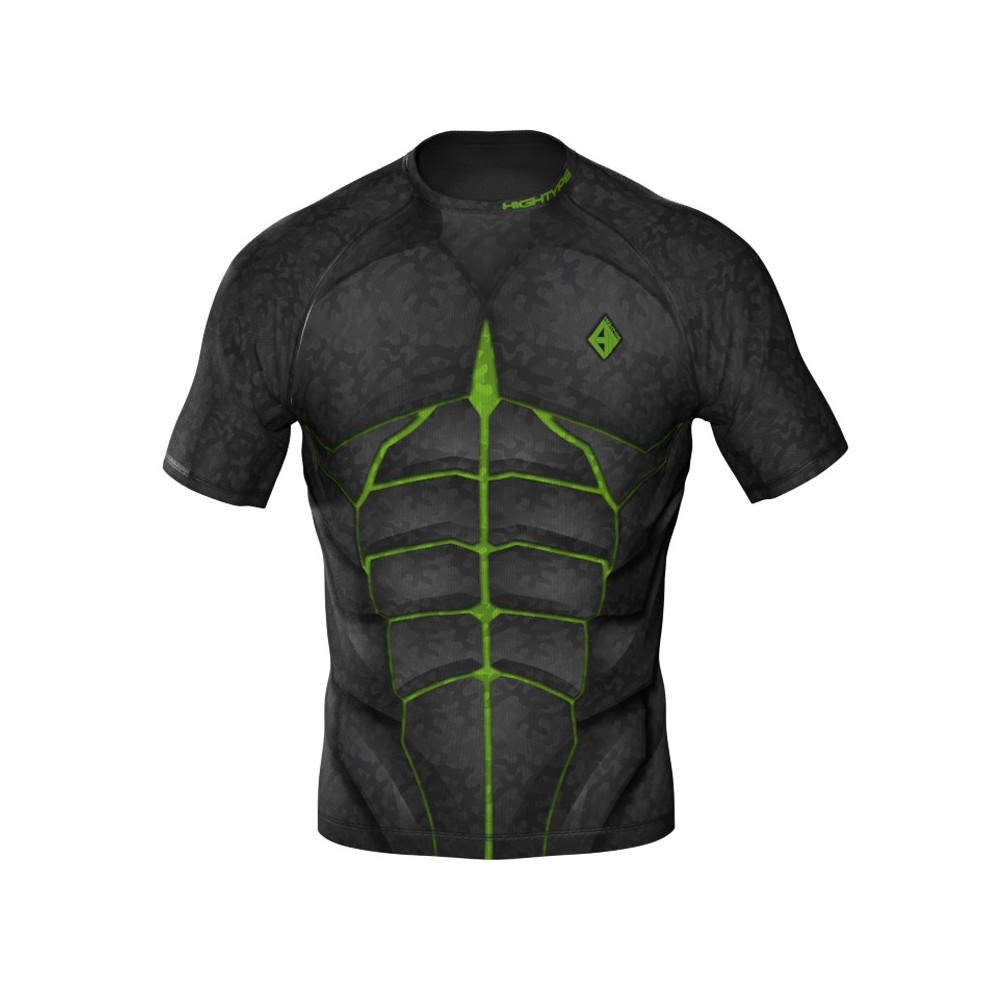
A few specific things to look for if you want one shirt to do both jobs. A sublimated full-body print with no screened logos on the surface. A UPF 50+ rating confirmed by the manufacturer on a spec sheet, not just claimed on the hangtag. A long-sleeve cut for shoulder and forearm coverage — short-sleeve rashguards leave the worst-burning zone exposed when you’re face-down on the surface. A close, competition-grade fit at the hem so it stays put when you kick. A darker color if you want to retain dye longevity; a lighter color if you want a lower surface temperature in tropical sun.
Avoid anything labeled as fight-style with thermal-bonded panels or rubberized grip strips. Those panels delaminate fast in saltwater. The same goes for rashguards with thick silicone hem grippers — they peel within a season. If the rashguard has any feature that looks glued, painted, or bonded rather than woven or stitched, expect the ocean to find it first.
How to care for a rashguard you use in both worlds
The rinse matters more than the wash. After every snorkel session, rinse the rashguard in fresh cool water within an hour of getting out of the ocean. Don’t wait until you’re home and the salt has dried into the fibers. A quick freshwater dunk at the dive shop or under a beach shower restores most of the longevity that gets lost when saltwater sits in a wet rashguard inside a bag for the boat ride back.
Wash it inside-out in cold water with a mild detergent — not regular laundry soap, which often contains optical brighteners that accelerate UV degradation of polyester. Hang dry in shade. Never tumble dry. Don’t leave it wet in a beach bag overnight, even if it’s just freshwater inside, because trapped moisture and warmth grow the kind of bacteria that turns rashguards into something you don’t want to put your face near. The same rule that applies to gym bags applies double to dive bags.
One more thing: keep your ocean rashguard separate from your training rashguard once you’ve decided which one is which. Crossing them over works in theory but in practice the ocean shirt ends up smelling like the gym and the gym shirt ends up faded in irregular patches. Two cheap rashguards in two roles last longer than one premium one trying to cover both.
The verdict
A high-quality no-gi rashguard works better for snorkeling than most purpose-built swim shirts because the construction standards required for grappling — close fit, flat seams, UPF dye, full-stretch four-way fabric — happen to be exactly what a snorkeler needs for an extended day on the water. The catch is that ocean use ages the garment faster than mat use does, mostly through dye loss and elastic breakdown around the neck and cuffs.
Pick a rashguard you’d be okay wearing as a backup to training. Skip the ones with painted logos or rubberized panels. Rinse it the moment you’re back on land. Do that, and you have a piece of gear that earns its place in both your gym bag and your beach bag — which is more than most snorkel-specific shirts can claim.
If you’re shopping for a fresh one to take on a trip, UPF 50 long-sleeve rashguards on Amazon covers most of the no-gi brands that hit the spec sheet above. Filter by long-sleeve, sublimated print, and reviews mentioning saltwater or snorkeling before committing.
Sources
- Wikipedia — Ultraviolet Protection Factor (UPF)
- U.S. EPA — Sun Safety
- NOAA — National Ocean Service
- Wikipedia — Rash Guard
- American Academy of Dermatology
Browse our top-rated rashguards and no-gi gear at the RashguardGuy shop →