The No-Gi Sizing Problem: Why Brand Mediums Don’t Match
You order a medium rashguard from Hayabusa. It fits like a sausage casing. You order a medium from Sanabul. It hangs like a t-shirt. Same size label, same person, two completely different garments. This is not a quality control issue — it is the reality of no-gi grappling apparel, where every brand builds to its own pattern and there is no governing body forcing anyone to agree on what medium means.
This guide walks through how the major no-gi brands actually size — fabric by fabric, cut by cut — and what to check before you click buy. By the end you will know why your Tatami fits one way and your Origin fits another, and how to read a size chart so you stop returning rashguards twice a month.
There Is No Standard for Grappling Apparel
In street clothing, sizes drift but the floor is somewhat anchored — a US men’s medium t-shirt expects a chest measurement somewhere between 38 and 40 inches. In grappling, that floor does not exist. Brands started in different countries, with different target markets, on different fabric mills, and they all built their patterns from scratch.
Japanese brands like Hayabusa cut for a leaner Asian build. Brazilian brands like Venum cut for the South American competitor — slightly broader in the shoulder, shorter in the torso, tighter at the bicep. US brands like Origin and Sanabul cut for an American market that ranges wildly in body type, and they tend to add length and ease.
That is before we even talk about elite versus recreational lines. Hayabusa’s pro competition rashguards run noticeably tighter than their everyday Geo line. Tatami’s Estilo collection fits closer than their Nova Absolute. Same brand, two completely different fits depending on which line you pull off the shelf.
The Fabric Decides the Fit More Than the Label
A rashguard’s printed size is almost meaningless without the fabric weight and stretch percentage. Two rashguards both labeled medium can fit you completely differently if one is built with 220 gsm 80/20 polyester-spandex and the other is 180 gsm 90/10. The first will compress and bounce back. The second will stretch and stay stretched after the first hard roll.
Higher spandex content (15 to 20 percent) gives you a more forgiving fit — you can be off by half a size and still get something wearable. Lower spandex (5 to 10 percent) means the label has to be exactly right. This is why Hayabusa’s competition rashguards feel unforgiving. They use a denser, lower-stretch fabric for IBJJF compliance and panel print durability. Sanabul’s entry-level rashguards use stretchier blends, which is part of why they feel forgiving in the size you think you are.
For shorts, the fabric story is different. Four-way stretch panels on the crotch and inseam matter more than the overall denier number. A pair of Origin shorts might say 32 inch waist but the panel construction lets them sit comfortably from 31 to 33. A pair of older Venum shorts with woven side panels will not have the same range.
How the Major No-Gi Brands Actually Fit
Hayabusa
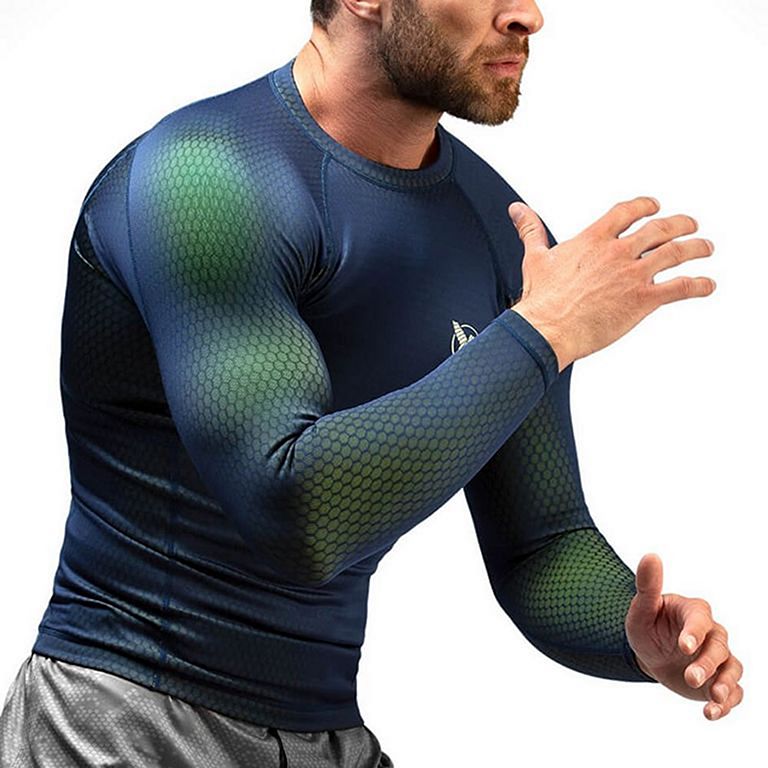
The reigning gold standard for pro fit. Hayabusa’s competition rashguards run a full size small compared to a US t-shirt. If you wear a US medium tee, you almost certainly need a large in Hayabusa’s Mid-Line or Geo competition tops. The compression is real — designed to flatten against the body and not give opponents anything to grip. Sleeve length is longer than average, which trips up shorter grapplers who suddenly have cuffs covering half their hand.
Their shorts run closer to true waist size but the inseam is short — typically 13 to 14 inches. If you have long legs, the hem sits higher on the thigh than you expect from product photos.
Tatami
Tatami sits in the middle of the bell curve. Their Estilo and Nova rashguards run true to size for European builds and a half-size tight for American builds. Length-wise they are generous in the torso, which is why tall grapplers gravitate to the brand. The fabric stretches well and forgives a half-size mismatch better than most competition cuts.
Tatami shorts are where the brand shines for cross-training grapplers — the patterning allows for deep squats and high knees without pulling at the waistband. Waist labels run true. Inseam is typically 15 to 16 inches on their Dweller and Impact lines, which is longer than Hayabusa and closer to what most American grapplers expect.
Sanabul
The most forgiving cut of the major brands. Sanabul’s standard rashguards run a half-size large with significant stretch. If you wear a medium in most brands, you can probably wear a medium in Sanabul and still be comfortable — there is room to spare. This is why Sanabul has become the default first rashguard for newcomers: the fit is generous enough that beginners do not feel exposed during their first weeks on the mat.
That generosity comes with a tradeoff. The compression is lighter, the fabric is thinner, and competitive grapplers usually graduate to tighter brands once they understand what real compression should feel like during scrambles and underhook battles.
Venum
Venum sits between Hayabusa and Sanabul. Their no-gi rashguards run true to size but with shorter sleeves and a slightly cropped torso. If you are tall — over 6 feet — you will find Venum shows skin at the wrist and waist during scrambles. If you are average height and lean, the cut is excellent and the printwork is among the most durable in the price range.
Venum shorts run small in the waist label. A 32 inch Venum tends to feel like a 31. Their flex-panel construction is good but the waistband is narrower than the US brands, which can dig in during transitions where you are folded at the hip.
Origin
Origin is the American premium answer to Hayabusa. Their rashguards run true to size with US sizing logic — meaning if you wear a medium US tee, you wear a medium Origin rashguard with a comfortable but compressive fit. Sleeve length is long, torso is long, and the fabric is thick and durable enough to outlast most of what you train in.
Origin shorts run slightly large in the waist. Their Athlete Originals line uses a wider waistband and longer inseam than most competitors, so they suit lifters and bigger grapplers who hate the thigh-pinch of European cuts.
Shoyoroll and the Boutique Tier
Shoyoroll’s no-gi pieces are limited but tend to run small and tight, comparable to Hayabusa competition fit. Boutique brands like Vulkan, Kingz, and Albino & Preto follow a similar pattern — closer to Hayabusa than Sanabul. If you are new to any of these brands and between sizes, size up.
The Three Measurements That Actually Matter
Forget waist and chest as standalone numbers. The three measurements that decide whether a rashguard fits during live rolling are far more specific than what most charts foreground.
Shoulder seam to wrist. If this is too short, the cuff rides up your forearm every time you frame on an opponent. Most brands publish this number, and most buyers ignore it. For grapplers over 5’10”, you want at least 24 inches from shoulder seam to wrist on a long-sleeve rashguard.
Torso length from collar to hem. This decides whether the rashguard rides up over your kidneys during a scramble. Tatami and Origin are generous here. Venum and older Hayabusa lines are short. If the size chart does not list torso length, email the brand or skip the buy.
Bicep circumference. The most overlooked spec. If your biceps are over 15 inches, most competition rashguards will be painfully tight at the sleeve regardless of how the body fits. Sanabul accommodates larger arms. Hayabusa and Origin do not unless you size up their entire chart, which then makes the torso too long for anyone shorter than 6 feet.
Shorts Are a Different Animal
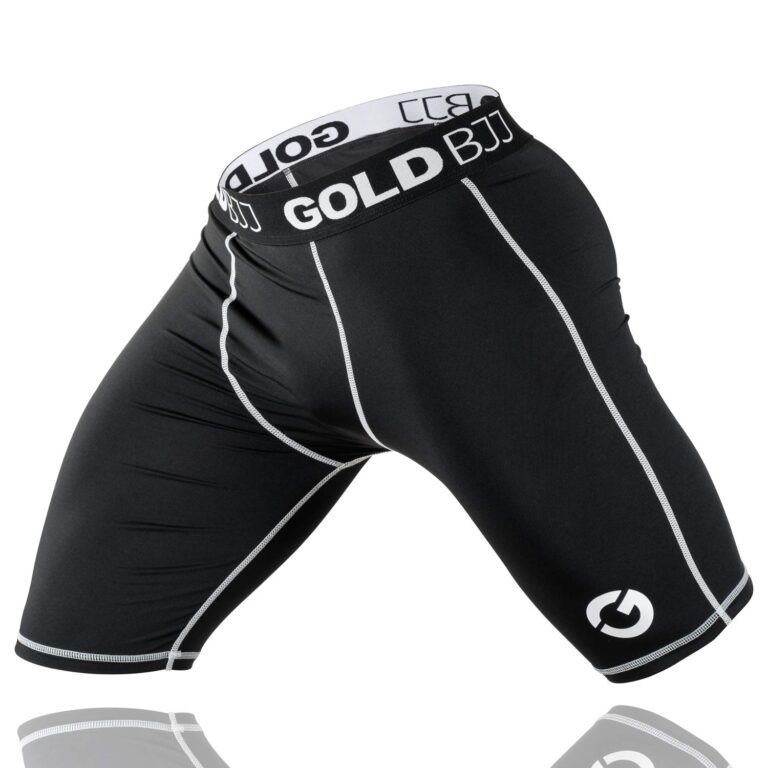
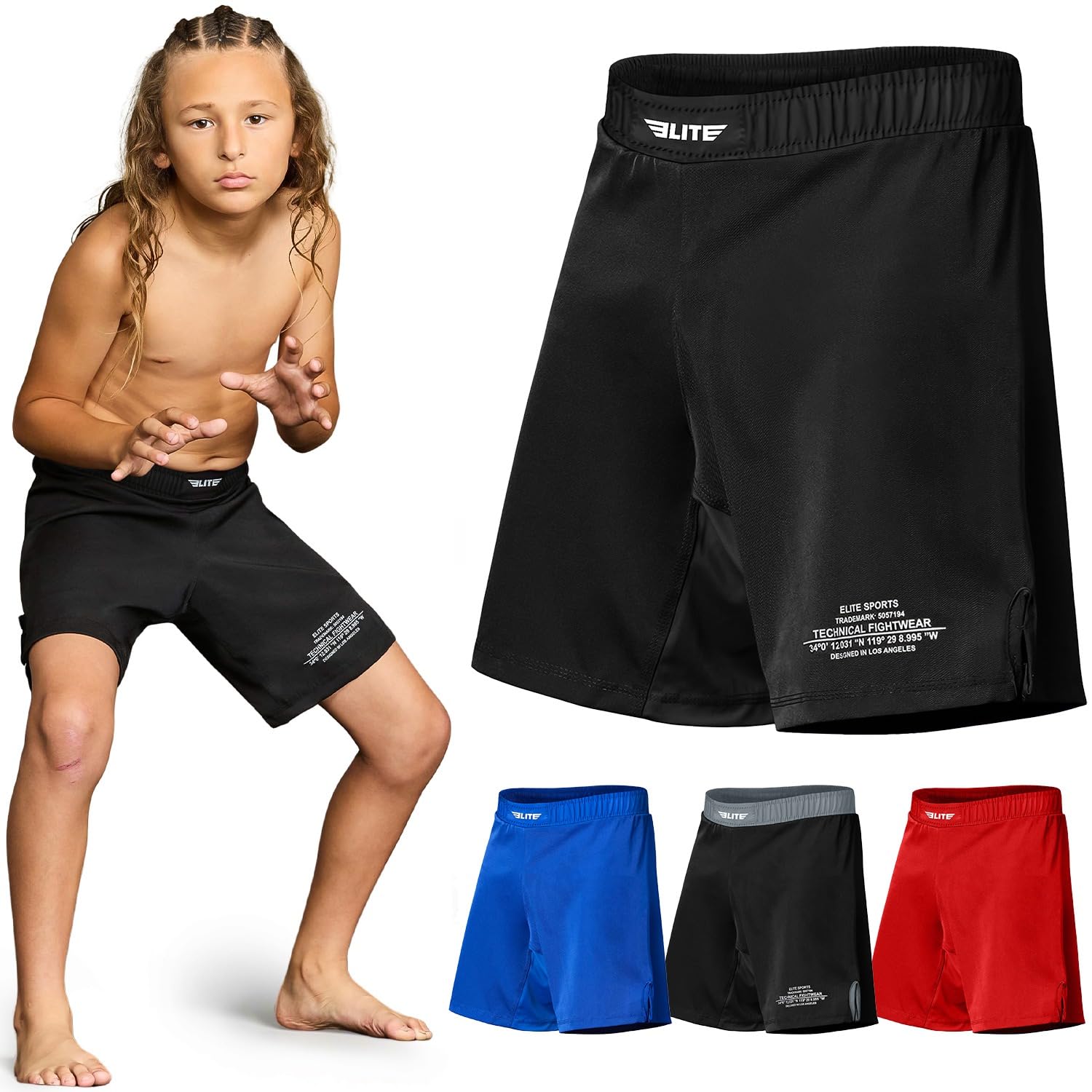
Shorts sizing breaks down by waist circumference, inseam length, and crotch gusset construction. Waist labels are inconsistent — a 32 from Venum is not the same circumference as a 32 from Origin. Always measure your actual waist where the shorts will sit (usually one inch below the navel) and compare to the brand’s chart, not your jeans size.
Inseam matters because it controls how the hem sits during guard work. Shorter inseams (under 14 inches) give freedom but show more thigh and ride up during high-knee positions. Longer inseams (15 inches and up) stay put but can bunch behind the knee in deep squats. Most competitive grapplers settle around 15 inches as the practical middle ground.
The crotch gusset is the panel between your legs that takes the stress when you shoot a single. Look for a diamond-shaped four-way stretch gusset, not a flat seam. Cheap shorts split here within a month. Premium shorts use a stitched or bonded diamond gusset that holds up for years of hard training.
When to Size Up, When to Size Down
Size up when you are between sizes and the brand is known to run small (Hayabusa, Venum, Shoyoroll), when you wear arm sleeves or have larger biceps, when you are tall and the torso length is short on the chart, or when you plan to wash hot. Rashguards shrink a half-size over their first year regardless of care label promises.
Size down when you are between sizes and the brand is known to run large (Sanabul, Origin), when you want maximum compression for competition, when the fabric content is over 15 percent spandex and will stretch with use, or when you are buying a rashguard you will only wear under a fight kit and want it skin-tight so it does not bunch under the outer shell.
When in doubt, ordering one size up tends to be the safer mistake. A slightly loose rashguard is still functional. A too-tight one cuts off shoulder mobility, restricts breathing during cardio sets, and gives opponents grip purchase exactly where you do not want it.
Reading the Size Chart Like a Grappler
Brands publish size charts for a reason — they are protecting themselves from returns. The charts are usually accurate if you read them carefully and measure yourself honestly. Buy a tailor’s tape for ten dollars and measure your chest at the widest point with arms relaxed, your waist where the shorts will sit, your bicep flexed, and your inseam from crotch to ankle bone.
Write those numbers down. Compare them to every brand’s chart before you order. If your numbers fall between two sizes on the chart, the brand’s cut philosophy decides the direction — competition brands like Hayabusa want you in the smaller size, recreational brands like Sanabul want you in the larger. Your training intensity decides which philosophy you actually want on your body.
The grapplers who never have sizing problems are not lucky. They measured themselves once, wrote it down, and they cross-reference every order against the chart for that specific brand. It takes two minutes per order. It saves the constant cycle of return-and-reorder that most beginners burn through their first year of training.
Sources
Browse our top-rated rashguards and no-gi gear at the RashguardGuy shop →