North South Choke: 7 No-Gi Steps to a Marcelo Finish
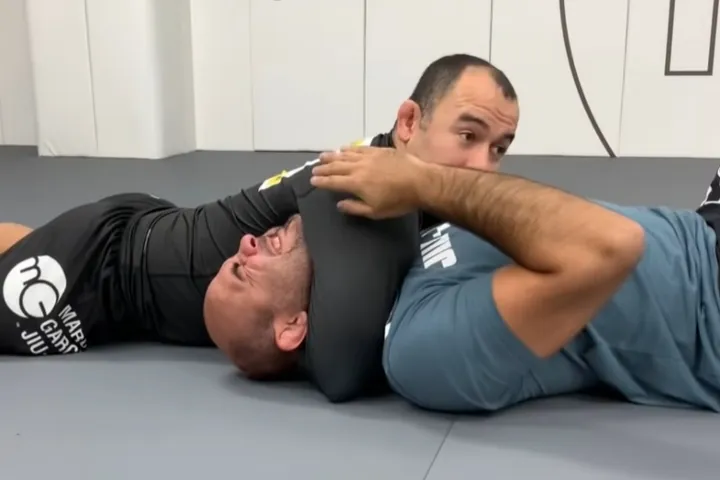
Marcelo Garcia walked into ADCC with a 72 percent submission rate against the best no-gi grapplers in the world, and the north south choke closed two of those finishes. That number sounds small until you remember Garcia was choking world-class wrestlers and Olympic medalists with an attack most blue belts have never landed in sparring. The choke is no-gi by design, anatomically brutal, and finishable in under ten seconds if you know what your shoulder is supposed to do. Below are the seven steps Garcia repeats every time he hits it — plus what John Danaher, Andre Galvao, and Gordon Ryan add when their version goes off script.
Why the North South Choke Owns the No-Gi Game
Most chokes lose teeth without a collar. The north south choke does the opposite — it only works once the gi disappears. Your bicep, your shoulder, and the side of your ribcage replace the lapel, and slick skin under a rashguard actually makes the angle tighter. That is why Marcelo Garcia, Rani Yahya, and Jeff Monson stacked entire careers on it instead of guillotines. Monson, the Las Vegas heavyweight who outlived three eras of MMA, has 17 documented finishes by this exact attack.
What the Choke Actually Does to the Neck
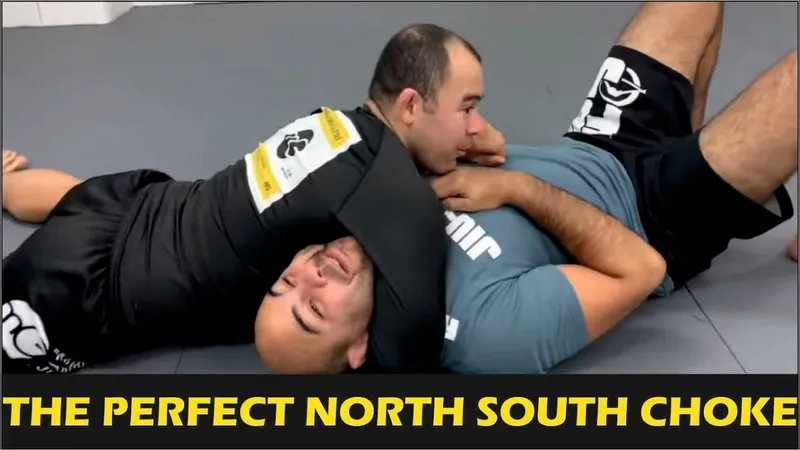
The mechanism is a one-sided carotid pinch — not a windpipe crush. Your bicep traps the far carotid against the side of the neck, and your shoulder sinks across the jaw to cut the near carotid. Blood stops flowing in roughly nine seconds when the angle is clean, which is faster than most guillotines and roughly the time it takes to ask your partner if they want to go again. There is no airway involvement, which is also why opponents who refuse to tap go limp without warning — the choke does not hurt enough to alarm them until it is finished.
Step 1 — Walk From Side Control to True North South
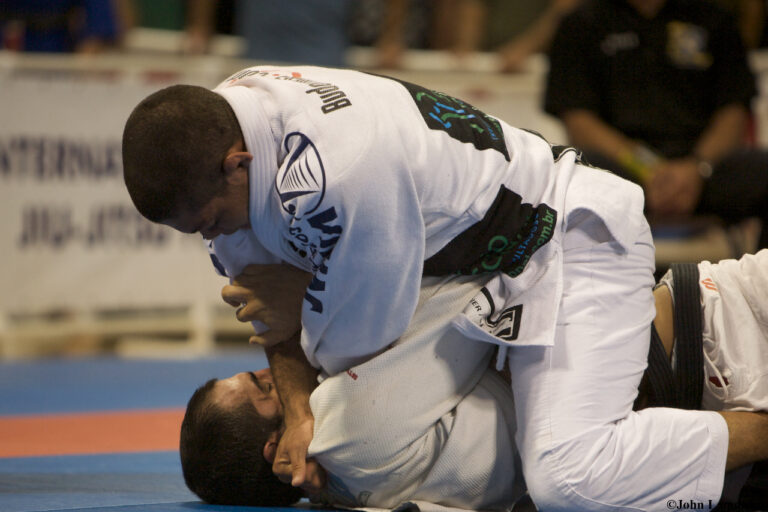
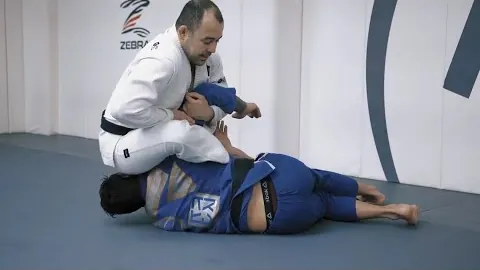
Almost every failed attempt happens because the attacker enters the position at 45 degrees instead of 180. Side control with the head over the chest is not north south — it is a halfway house where the opponent can shrimp out before the choke begins. Garcia does the walk in two short steps: he pins the far shoulder with his chest, then pivots his hips so his belt line ends up parallel to his opponent’s belt line. Knees stay tight to the ribs. If your knee drifts wide, the bottom player creates a frame and the entire attack dies before grip selection.
Step 2 — Trap the Far Arm Before You Reach for the Neck
Beginners reach for the neck first. That is backwards. The far arm is the lever the bottom player will use to bridge into you, so it has to be killed before your choking hand leaves home base. Garcia kills it three ways depending on what the opponent gives him: he pins the wrist to the mat with his hip, he hugs it to his own ribs with his lat, or he ties up the elbow with the underhook from side control. Pick one and commit. A trapped arm makes the rest of the choke a paperwork formality.
Step 3 — Burrow the Choking Arm Under the Chin
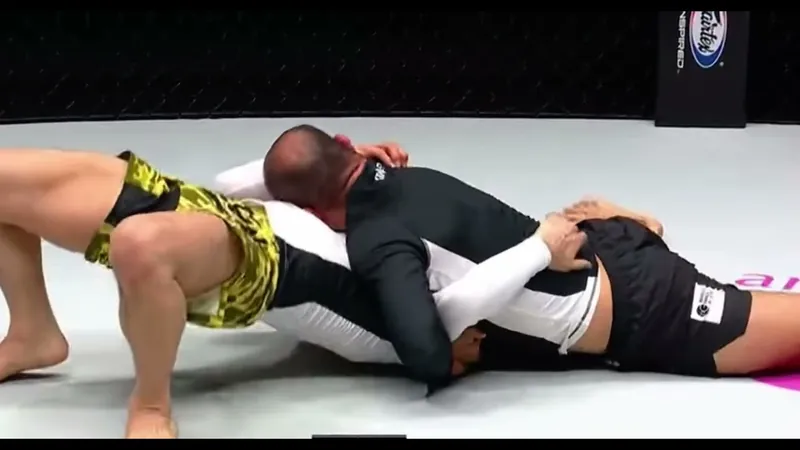
The choking arm needs to slide between the opponent’s chin and chest, not between their ear and shoulder. Slip it shallow and you have a face crank that gets ugly without finishing anyone. Garcia threads the arm in palm-up, drives until his bicep crosses the centerline of the throat, then rotates his thumb to the floor. That small rotation is the difference between a soft squeeze and a real choke. Your bicep peak should land directly under the chin like you are about to flex it.
Step 4 — Lock the Grip and Bury Your Shoulder Over the Mouth
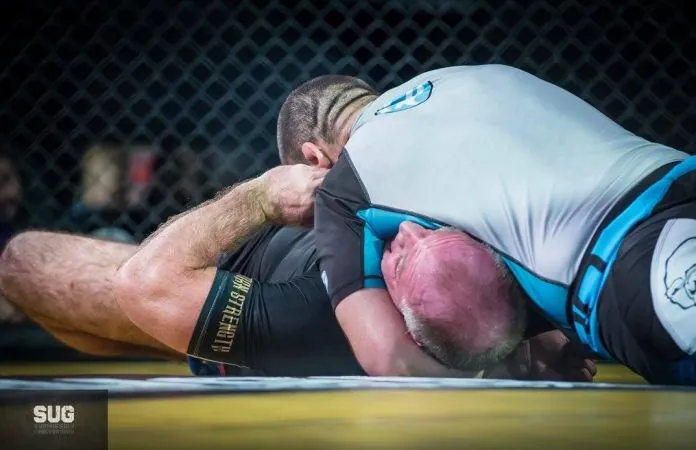
The grip is the cheapest part of the system. Anything sealed works — gable, palm-to-palm, or the cupped Marcelo grip where the choking hand grabs your own opposite bicep. What separates a finish from a forty-second stall is the shoulder. It has to descend onto the opponent’s mouth and nose like you are trying to plant your shoulder bone through their teeth. That single detail cuts the second carotid. Without it you are just hugging the head.
Step 5 — Walk Your Hips Down and Drop the Pelvis to the Mat
Up to this point most people are squeezing with their arms and going nowhere. Garcia walks his knees backward in small steps and lowers his pelvis until it kisses the mat. That backward walk drags the opponent’s head up into the choke without you ever pulling with your hands. The pelvis on the floor turns your body into one long lever from heel to shoulder. Squeezing harder will not finish a choke that is not aligned — but a quarter-inch of hip travel will.
Step 6 — Pull Backward, Don’t Squeeze
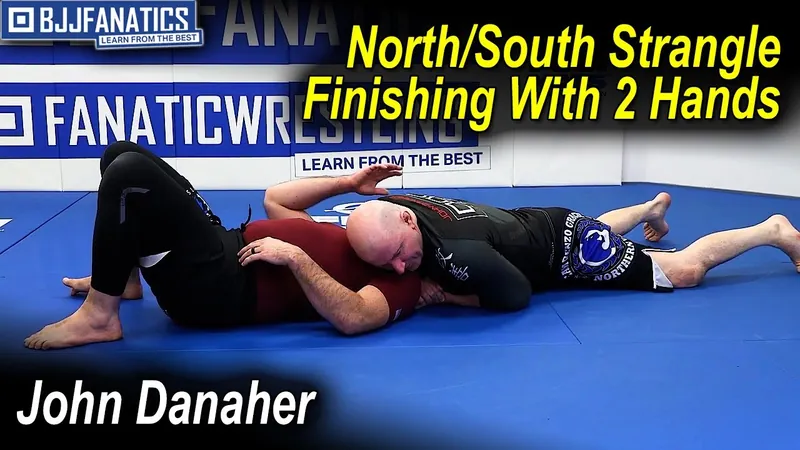
Stephan Kesting calls this the lat squeeze, John Danaher calls it the elbow drive. Same idea: power comes from pulling your locked grip backward toward your own belly button, not from clamping the arms together. Test it on a heavy bag. Clamp without pulling and nothing moves. Pull backward and the bag rolls toward your knees. That is what happens to the opponent’s head in real time — it gets dragged into the bicep wedge while the shoulder sinks into the jaw.
Step 7 — Switch to the North South Kimura When the Choke Stalls
The choke stalls when the opponent buries their chin deep into their own chest. Smart bottom players figure this out by purple belt. The fix is built into the position — if the chin is unreachable, the far arm is now glued to the body in a way that surrenders the kimura grip. Andre Galvao teaches the switch as a single motion: spin your hips toward the trapped elbow, scoop the wrist, and finish the kimura while your knees stay in their old spot. The opponent has to pick a poison. Most pick the kimura because it hurts before it breaks anything.

Five Mistakes That Stall the Finish
These are the failure patterns that show up at every no-gi gym in the country. If you cannot finish the choke, one of these is almost certainly the reason.
- Choking with the wrist instead of the bicep. The wrist bone slides on sweaty skin and the choke skates off the carotid.
- Knees flared wide in north south. Wide knees give the bottom player a bridging lane straight into your hips.
- Squeezing arms before fixing the angle. No amount of squeeze beats a 30-degree misalignment.
- Letting the shoulder ride high off the face. If your opponent can breathe through their nose, the choke is half-built.
- Pulling with the elbows instead of walking with the hips. Hip travel finishes — arm pull spins your partner out.
What Danaher and Galvao Add to Marcelo’s Recipe
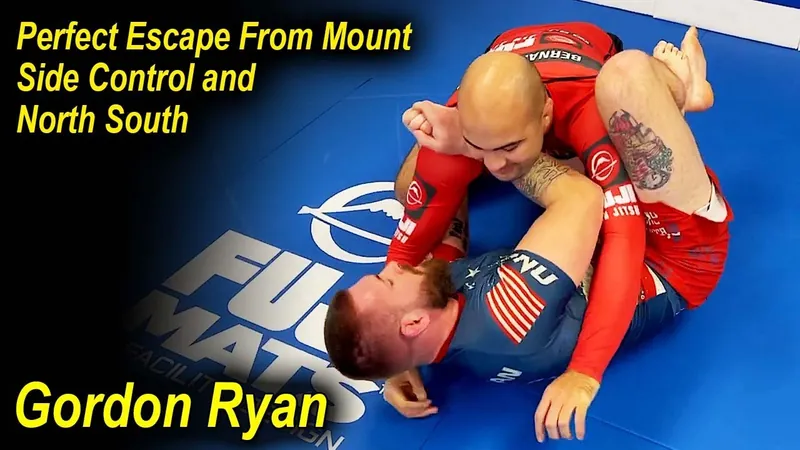
The Marcelo version is the cleanest, but it leaves money on the table when you cannot get a chin lift. John Danaher’s two-handed finish solves the chin tuck by replacing the bicep grip with both hands cupping behind the skull — that change pulls the head into the shoulder instead of relying on the bicep to do the slicing. Andre Galvao runs the same entry but uses a chest-press detail that sinks the shoulder a full inch deeper than most people manage. Gordon Ryan’s contribution is more about the reverse: his pin escape lessons map every angle the bottom player can use to spoil your setup. If you only watch Marcelo, you stop learning at Step 6. The other three teach you what to do when the position breaks.
How to Drill the North South Choke Without Hurting Your Partner
This choke is the easiest sub on the mat to overshoot. The tap window is short and the pain signal lags the loss of consciousness, so partners who refuse to tap will sleep without warning. Drill in slow rounds. Start with the position locked in, ten percent pressure, and a tap on contact. Build up to live entries from side control only after both partners can finish at half pace without anyone going dizzy. Use it in live rolling on partners your size or smaller until the entry feels boring — that is the marker that says your reps are real, not lucky.
The choke rewards reps the way most submissions do not. It is one of three subs in jiu jitsu where ten quiet minutes of position drilling outperforms an hour of live attempts. Stitch it into your no-gi game by chaining it with the wrestling-based pass series that leads to north south on the regular, and pair it with other no-gi front headlock chokes so your bottom partners cannot read the position before you arrive. The grapplers who own this attack are not faster than you — they walk their hips one step further and tap people who could not feel it coming.
Treat it the way Marcelo did. Hide the arm, bury the shoulder, walk the hips, and let the carotid do the work. The next time you finish a roll with a quiet tap and no sweat, you will know why Garcia bet his ADCC career on a submission that only works in a rashguard. For more no-gi finishes you can chain into the same position, the leg attack series that owned the last era of grappling still pays rent — and the choke that owns the next one will still be this one.
Sources
- Marcelo Garcia Fighter Profile — BJJ Heroes — Career record, ADCC submission breakdown, and biographical detail on Marcelo Garcia.
- The Legendary ADCC Career of Marcelo Garcia — FloGrappling — Match-by-match breakdown of Garcia’s 23 ADCC submissions including his two north south choke finishes.
- North–south choke — Wikipedia — Mechanism, history, and notable practitioners of the submission.
- How To Do the North South Choke — Grapplearts — Stephan Kesting’s technical breakdown of the choke alongside Marcelo Garcia.
- Marcelo Garcia Shows How To Perfect The North South Choke — BJJ Eastern Europe — Detail notes from Marcelo’s signature finishing position.
Browse our top-rated rashguards and no-gi gear at the RashguardGuy shop →