$30 vs $50 Rashguards: What the Extra $20 Actually Buys You in No-Gi BJJ
When you walk into a BJJ academy supply store or scroll through Amazon, the same pattern repeats across every brand: a rashguard at $28-$30, a near-identical-looking model at $48-$52, and a sales tag that doesn’t explain why. The cheaper one looks fine. The packaging is similar. The sublimation print is even louder. So what does the extra $20 actually buy when you cross from sub-$30 into the $50 tier?
After six months of rolling in rashguards from both price brackets — Sanabul, Hayabusa entry-level, Venum Contender, Tatami Nova, Gold BJJ, Elite Sports, Scramble, and a handful of Amazon house brands — the answer isn’t “double the quality.” It’s more nuanced and more practical: certain failure modes appear consistently below $30, while the $50 tier tends to fix three of them and leaves the rest to fit and personal preference.
This is a head-to-head breakdown of exactly where the money goes, and when the upgrade is worth it for the way you train.
The $20 Question
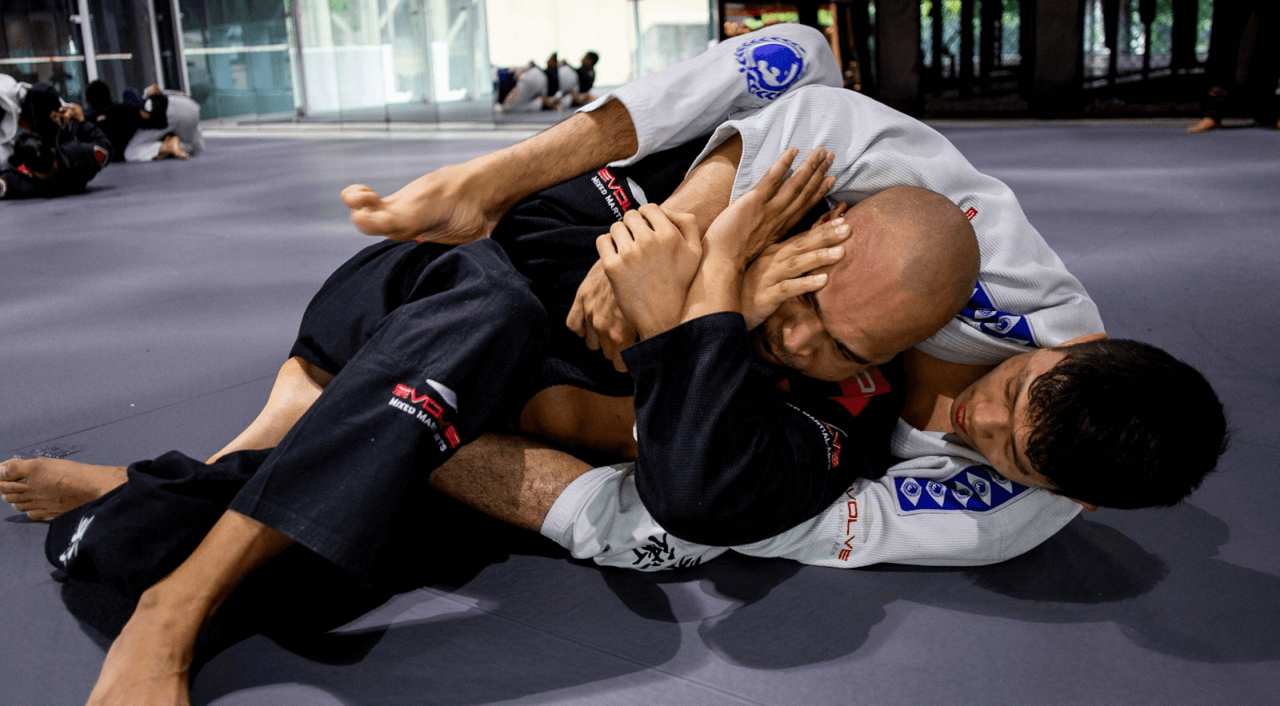
A no-gi student rolling four times a week burns through 2-3 rashguards a year if they wash them properly and 4-5 if they don’t. At $30 each, that’s $90-$150 annually. At $50, it’s $150-$250. The premium isn’t trivial when you stack it across a year of training, but it also doesn’t account for what happens when a $30 rashguard fails three months in versus a $50 one lasting eight.
The honest framing isn’t “which one wins.” It’s: which failures show up at $30 that you should expect to inherit, and which of them are gone or reduced at $50?
Fabric and GSM: Where Budget Bites First
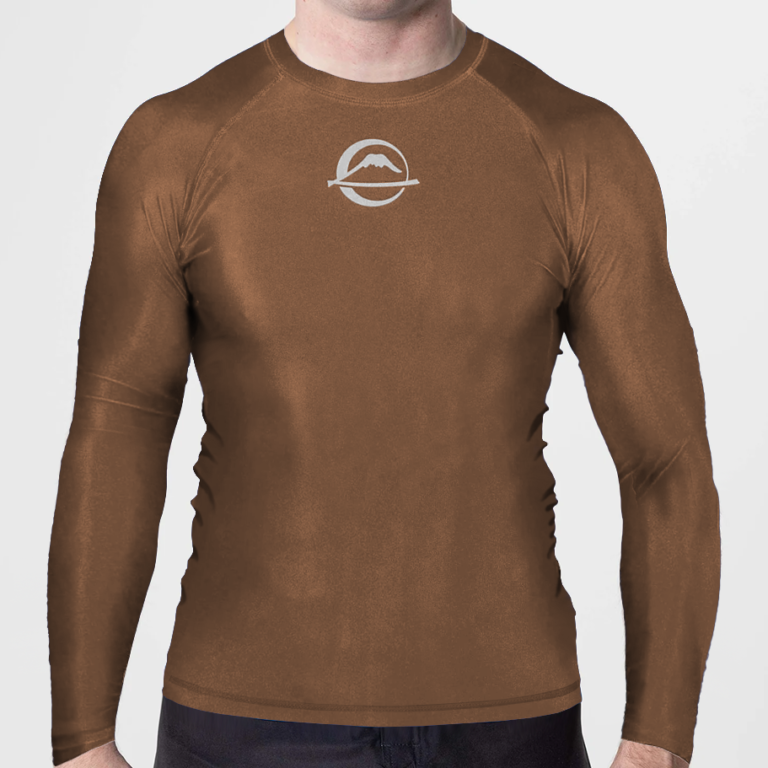
The single biggest invisible difference between the two price points is GSM — grams per square meter — and the polyester-spandex blend ratio. Sub-$30 rashguards almost universally land in the 180-210 GSM range with a 78/22 or 80/20 polyester-spandex blend. The $50 tier typically sits at 220-260 GSM with 82/18 or 85/15 blends, often with a heavier-knit chest panel for compression and a lighter underarm for breathability.
Sub-$30 Fabric Realities
At 180 GSM you’ll notice three things over time: the chest panel starts showing pilling around training partners’ fingernail contact zones after 8-10 washes, the underarm seams thin out faster, and aggressive sublimation prints fade noticeably by month four. The fabric itself isn’t bad — it’s the same family of polyester used in athletic apparel — but the lighter weight means less buffer between hard rolling and visible wear.
What $50 Unlocks
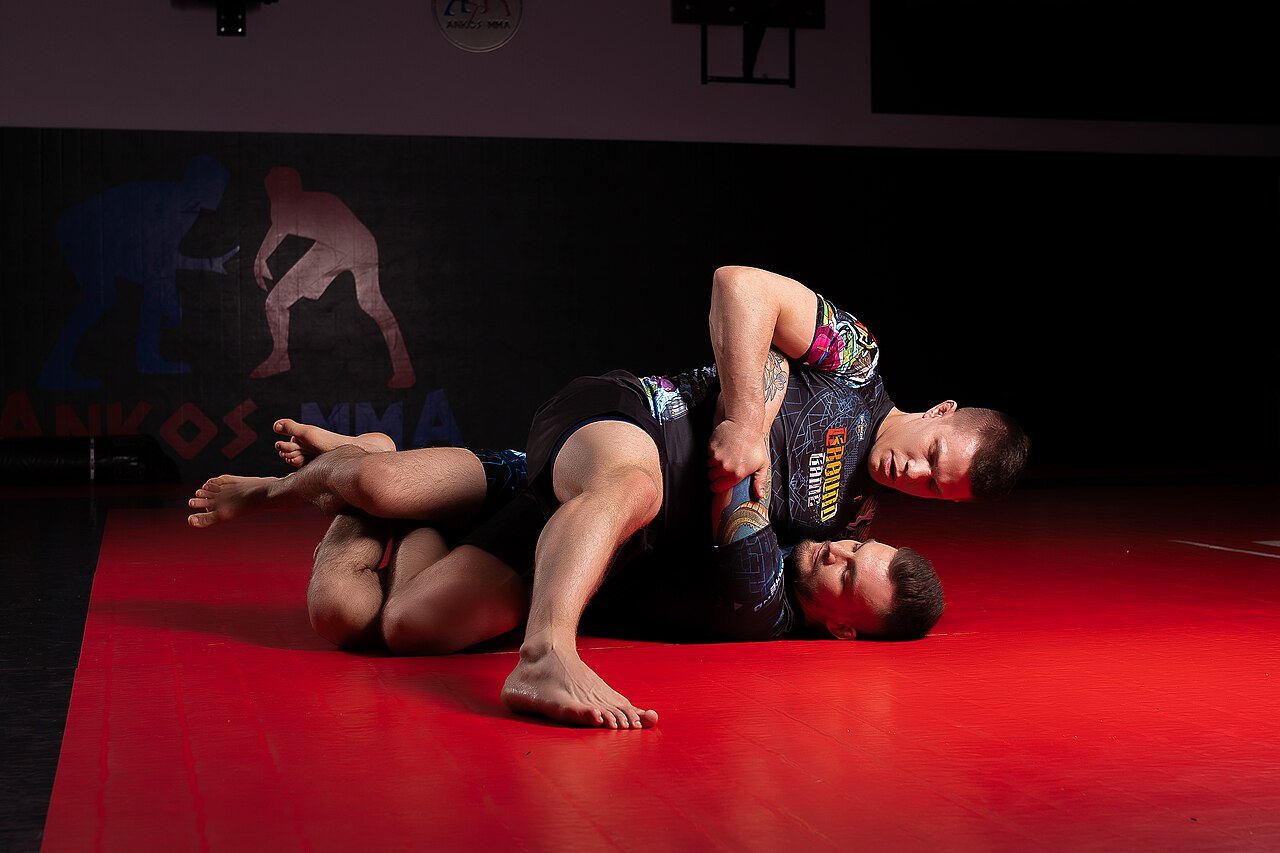
The 240 GSM range is where rashguards start to behave like dedicated grappling gear rather than repurposed athletic wear. Stretch recovers faster after long rolls, the fabric holds compression through 20+ washes, and the heavier knit resists the visible pilling that makes a $30 rashguard look five months old after six weeks.
Stitching and Seam Construction
This is where the gap is most measurable and most likely to determine actual lifespan.
Flatlock vs Overlock
Almost every sub-$30 rashguard uses overlock stitching — fast, cheap, and prone to opening at the underarm or rib panels when stressed by deep underhooks. Look at the inside seam of any budget rashguard and you’ll see a single ridge of thread that catches on collar drags and knee-on-belly pressure.

The $50 tier almost universally uses flatlock stitching at high-stress seams (underarm, side panel, shoulder) and reinforced double-stitching at the neck and sleeve cuffs. Flatlock lies flat against the skin, reduces chafe on long sessions, and — most importantly — doesn’t blow open the first time someone clamps a body-lock from side control.
Practical test: pinch and pull a seam between thumb and forefinger. If the threads visibly separate or the fabric puckers, that’s an overlock seam waiting to fail.
Sublimation Quality and Fade Resistance
Both tiers use sublimation printing — ink is gas-transferred into the polyester fibers rather than printed on top. The difference is in pre-print fabric prep, ink density, and curing time, all of which scale with manufacturing budget.

Sub-$30 sublimation tends to:
- Lose 15-25% of color saturation by the 20th wash
- Develop a faint white “ghosting” at high-stress folds (groin, armpit)
- Bleed slightly into white panels after hot washes
$50 sublimation usually holds through 40-60 wash cycles before visible fade, and white panels stay white if you avoid hot water and bleach-based detergents. If aesthetics matter — and for many grapplers they do, because rashguards are uniform-adjacent at no-gi gyms — this is where the upgrade is visible in the mirror.
Fit and Pattern Engineering
Here’s where price stops being the dominant variable and personal anatomy takes over. A $30 Sanabul might fit your torso better than a $50 Hayabusa, and vice versa.
What does change at the $50 tier:
- More size options (XS-XXXL vs S-XL at budget tier)
- Articulated panels at shoulders and elbows that follow grappling range of motion rather than generic athletic-shirt cuts
- Longer torso lengths designed to stay tucked during inversions and guard work
- Better-engineered necklines that don’t gap under collar grips
If you’re 5’10” and 175 lbs with average proportions, a $30 rashguard will fit acceptably. If you’re 6’3″ with a long torso, or 5’4″ with a short one, the size availability alone often pushes you into the $50 tier by necessity.
Compression and Recovery
True compression rashguards — the kind that genuinely support muscle recovery and reduce post-roll soreness — start around the $45-$60 range. Sub-$30 rashguards offer what’s better described as a “snug fit” rather than functional compression. The fabric stretches to your shape but doesn’t apply meaningful pressure to the muscle.
For most recreational grapplers training 2-3 times a week, this distinction doesn’t matter much. For competitors training daily and stacking lifting sessions, the recovery benefit of a proper compression cut is real and measurable in next-day soreness.
Brand Track Record at Each Price Point
Track record matters more at $30 than $50, because the variance in quality control is wider at the budget tier. Brands that consistently deliver acceptable sub-$30 rashguards:
- Sanabul Essentials — 200 GSM, basic flatlock at key seams, sublimation holds well for the price
- Elite Sports Standard — light fabric but reliable construction, available in bulk for academies
- Gold BJJ Basics — surprisingly durable for sub-$30, good neckline engineering
- FUJI Sports entry line — slightly heavier fabric than peers at the same price
In the $50 tier, more brands compete on equal footing because the manufacturing baseline is consistent. Hayabusa, Tatami Nova, Venum Contender, Scramble, Manto, and Origin all deliver fabric and construction that meets the standard. The differentiation moves to design, fit profile, and customer service.
When $30 Is Enough
Sub-$30 rashguards are the right answer if:
- You’re training 1-3 times a week and rotating through 4+ rashguards
- You’re a beginner and not yet committed enough to justify the premium
- You wash on cold and air-dry — this triples the life of any rashguard regardless of price
- You care more about fabric weight and breathability than print longevity
- You’re stocking up for an academy team or seminar swag
For a new white belt buying their first kit, two $30 rashguards make more sense than one $60 rashguard. You’ll figure out your fit preferences before the cheap ones wear out, and you’ll be better calibrated when it’s time to upgrade.
When $50 Pays Off
The upgrade earns its premium when:
- You’re training 4+ times a week and rotating through fewer rashguards faster
- You’re competing and need IBJJF-legal construction that holds through warm-up, weigh-in, and bracket runs
- Your body type sits outside standard sizing and the extra range matters
- You’re tall, long-torso, or muscular through the chest — the pattern engineering at $50 fits better
- You care about how the rashguard looks at month six, not just month one
- You’ve worn out 3+ sub-$30 rashguards and the math is starting to favor longevity
The honest answer to “what does the extra $20 buy?” is: better seams, heavier fabric, more durable sublimation, and a fit pattern engineered for grappling rather than generic athletics. Whether that’s worth it depends entirely on how much you train, how hard you wash, and whether visible wear bothers you.
For most committed grapplers training 3+ times a week, the cost-per-wear math tilts toward the $50 tier within 12-18 months. For everyone else, sub-$30 rashguards are not a compromise — they’re the right tool for the volume.
Care and Washing: Where the $20 Actually Survives
Most rashguards don’t die on the mat — they die in the laundry. The single biggest variable in whether a $30 rashguard outlasts a $50 one isn’t the price tag; it’s the wash protocol. Hot water, fabric softener, and a tumble dryer will destroy elastane fibers faster than any armbar. That’s true at every price point, but it bites harder on cheaper rashguards because their elastane content is already lower and their seam tape is more vulnerable to heat.
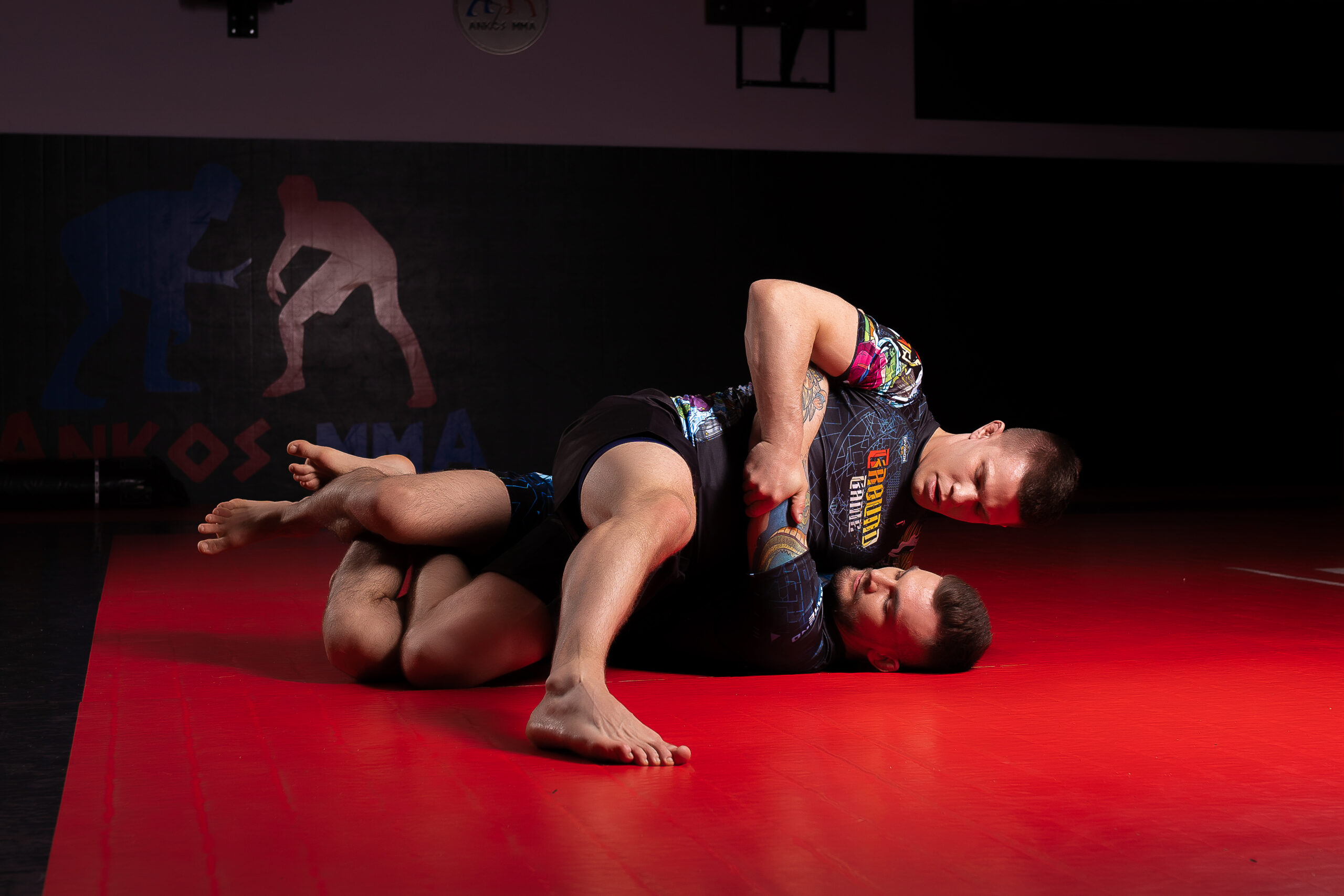
Here’s the protocol that gets either tier to its full lifespan: cold wash, inside out, mild detergent, no softener, hang dry. Skip the dryer entirely. Fabric softener coats the polyester fibers and kills the moisture-wicking, which is the whole point of a rashguard. Bleach is obvious — never. But the less obvious killer is over-washing. If you’re training daily and rotating only two rashguards, each one is hitting 150+ wash cycles a year. That’s where the $50 tier’s heavier fabric and reinforced stitching start to show their value: they tolerate more cycles before the sublimation dulls or the cuffs lose their stretch.
One overlooked detail: don’t fold rashguards wet. Mildew sets into the seams within hours and the smell never fully washes out, regardless of what you paid. Toss them over a chair the moment you get home from training, even before showering. That single habit extends a $30 rashguard’s life by months.
If you want to see how grapplers actually treat their gear between sessions, this short breakdown covers the basics:
Bottom line on care: the $20 price difference between tiers is real, but how you wash your rashguard determines whether either one lives past 18 months. Treat a $30 rashguard like premium gear and it will outlast a $50 rashguard thrown in the dryer.
Sources
- IBJJF — Official rulebook and uniform regulations
- FloGrappling — No-gi competition coverage
- BJJ Heroes — Athlete gear references
- Amazon — No-gi BJJ rashguard search
Browse our top-rated rashguards and no-gi gear at the RashguardGuy shop →