Training Volume and Ear Risk in No-Gi: When Ear Guards Stop Being Optional
The standard ear guard conversation in no-gi goes like this: you train for a while, your ear starts to swell after a hard roll, and someone tells you to get ear protection. That’s the reactive version, and it’s how most grapplers end up managing damage instead of preventing it. What the reactive approach misses is that ear risk in no-gi doesn’t arrive as a single event — it scales with training volume, and the threshold where unprotected ears become genuinely vulnerable is lower than most grapplers expect.
Training two days a week and training six days a week are not the same ear risk profile. Neither are drilling-heavy sessions and live-sparring-heavy sessions. Understanding how contact actually accumulates across your full training schedule — not just in any single roll — is what tells you when ear guards stop being optional gear and become a necessary part of training.
How Ear Contact Accumulates in No-Gi
Drilling and live grappling produce very different levels of ear contact. In a technique drill, you and your partner are working through a specific movement in a controlled, predictable way. Head position is consistent; contact that occurs is intentional or at least anticipated. That’s not where ear damage typically originates.
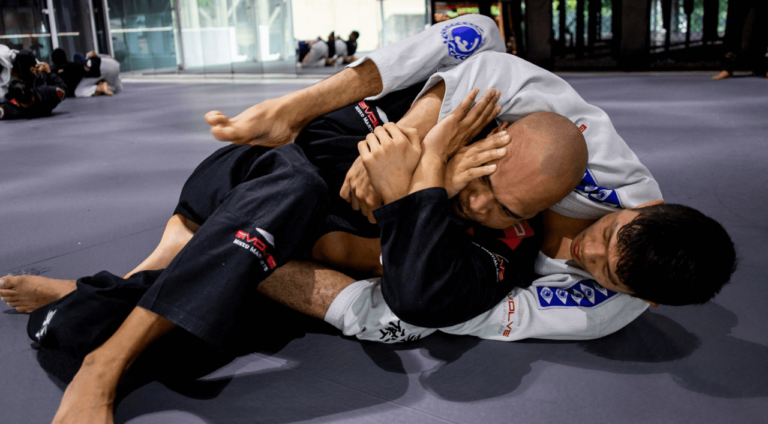
In live rolling, contact becomes unpredictable. Every scramble, every failed takedown entry, every head fight in the clinch creates ear contact events that neither you nor your partner can fully control. A wrestling-style tie-up presses your ear against your partner’s chest, shoulder, or arm in ways that neither person is managing deliberately. A takedown scramble that ends on the mat generates contact across the entire side of your head — including around and against the ear — through friction and body weight rather than any single impact.
Individually, each of these contact events is low-risk. The problem is that a single live sparring session can produce dozens of them. Multiply that across multiple training partners, multiple rounds, and multiple sessions per week, and the contact accumulation is substantial even before you feel any symptom. Ear damage in no-gi grapplers isn’t usually caused by one bad roll. It’s caused by the aggregate.
The Recreational Grappler’s Risk Profile
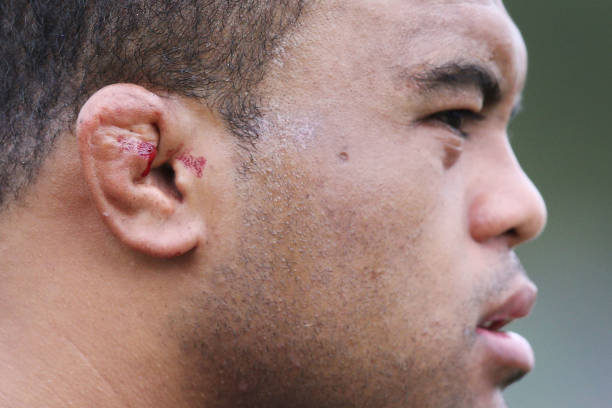
Grapplers training two or three times per week with a mix of drilling and some live sparring are in a moderate risk window. At this volume, ear thickening can develop over years of consistent training — but it tends to happen gradually enough that many grapplers don’t connect the cause to a specific roll or session. The ear changes slowly, and by the time visible thickening appears, the process has been underway for months.
The composition of those sessions matters as much as the count. A grappler doing three technique-heavy classes with one or two rounds of sparring each has substantially lower ear contact volume per week than someone doing three hard open-mat sessions where the majority of time is live rolling. The intensity and proportion of live grappling within your training week is the more relevant variable — not just how often you show up.
This is why recreational grapplers sometimes train for years without visible ear damage while others develop cauliflower ear within their first twelve months. The difference almost always comes down to how much of their training time is spent in live, high-contact situations versus controlled drilling — and whether they were wearing ear guards when the contact volume was highest.
Competition Training and the Ear Risk Spike
When a grappler shifts into competition preparation, the ear risk profile changes significantly. Competition prep typically means more sessions per week, more live sparring per session, higher intensity, and a greater proportion of wrestling-style entries and scrambles. Every one of those factors increases the rate of ear contact accumulation.
A grappler moving from three recreational sessions per week to five or six competition-focused sessions per week may be generating three to four times the ear contact volume weekly — not just doubling it. The combination of higher frequency and higher intensity within each session compounds in a way that simple session counting doesn’t capture. More sessions plus harder sessions plus more live rolling per session creates a multiplicative effect on exposure, not an additive one.
The six-to-twelve month window of sustained competition training without ear protection is where most competitive no-gi grapplers report their first significant ear changes. This isn’t universal — some develop problems sooner, some later, based on the positions they favor and how much head contact their style generates. But if you’re in competition prep and training without ear guards, that window is when to pay close attention to what your ears are telling you.
The Positions That Drive Volume Damage
Not all positions contribute equally to ear contact accumulation. In high-volume training, the positions you spend the most time in and transition through the most frequently are the ones generating the bulk of your ear risk.
Takedown entries and tie-up positions are among the highest-contact situations in no-gi. Any wrestling-style clinch — collar ties, underhooks, double-unders — presses heads and shoulders together in ways that load the outer ear. The head-to-shoulder and head-to-chest contact in a body lock or double-leg attempt isn’t severe in isolation, but it’s a position that high-volume grapplers pass through hundreds of times per week in drilling and live training combined.
Back takes and back defense create similar dynamics, particularly when the grappler being attacked is turning into their opponent and using head pressure as part of their defense or escape. Guard passing — especially smashing-style passing with the forehead or temple against the hip or mat — generates ear contact through grinding pressure rather than impact, which is harder to perceive in the moment but accumulates just as effectively over training volume.
The key point is that at high training volumes, you cycle through all of these positions repeatedly, not occasionally. That repetition is what transforms individually minor contact events into cumulative ear damage. The grappler who cross-faces in wrestling drills for twenty minutes every session and then sparring for forty more minutes is accumulating ear contact on a schedule that will eventually show up — with or without any single dramatic incident.
What Elite No-Gi Athletes’ Ears Tell You
Look at the ears of elite no-gi competitors and you’ll find significant variation — some athletes with severe cauliflower ear, others with ears that show little visible damage despite years of high-volume training. The assumption is often that this comes down to genetics or tissue susceptibility. Those factors do play a role. But training history and protection habits explain at least as much of the variation as biology does.
Athletes who started wearing ear guards before visible damage developed tend to show less cumulative ear deformity than athletes who trained unprotected through their development years and added ear guards only after problems began. This pattern holds even when comparing athletes with similar training volumes and competitive histories. The protective habit — started before the damage threshold was crossed — made a measurable difference in long-term outcome.
Style also matters alongside volume. Elite athletes who train in wrestling-heavy systems, where takedowns and clinch work dominate daily training, generally show more ear damage than those who came up in guard-focused systems — even at comparable total training volumes. The type of contact, and how frequently specific high-contact positions appear in your training, shapes your ear risk as much as total hours on the mat.
Calibrating Your Protection to Your Training Load
The practical question is: at what point does your training schedule make ear guards non-negotiable?
For grapplers training three or more times per week with live sparring in each session, you’re in a risk range where unprotected training is a slow accumulation problem. This isn’t about single-session risk — it’s about what three or four months of that schedule does to unprotected ears. At that training density, the contact volume is high enough that ear damage becomes a question of when, not if, assuming you continue without protection.
For grapplers in active competition preparation — five or six sessions per week, multiple hard sparring rounds per session — ear protection is non-negotiable. At this volume, the body cannot clear the micro-trauma from each session before the next session adds more. The cumulative loading is what produces rapid damage, and this is the training profile where grapplers most commonly report fast-onset cauliflower ear within a single training cycle.
Even for lower-volume grapplers, the habit of wearing ear guards is worth building before damage forces the issue. Introducing ear guards into training when you’re already dealing with early swelling means you’ve shifted from prevention to damage management. The gear itself hasn’t changed; the window in which it’s most effective has passed.
Building the Habit Before You Need It
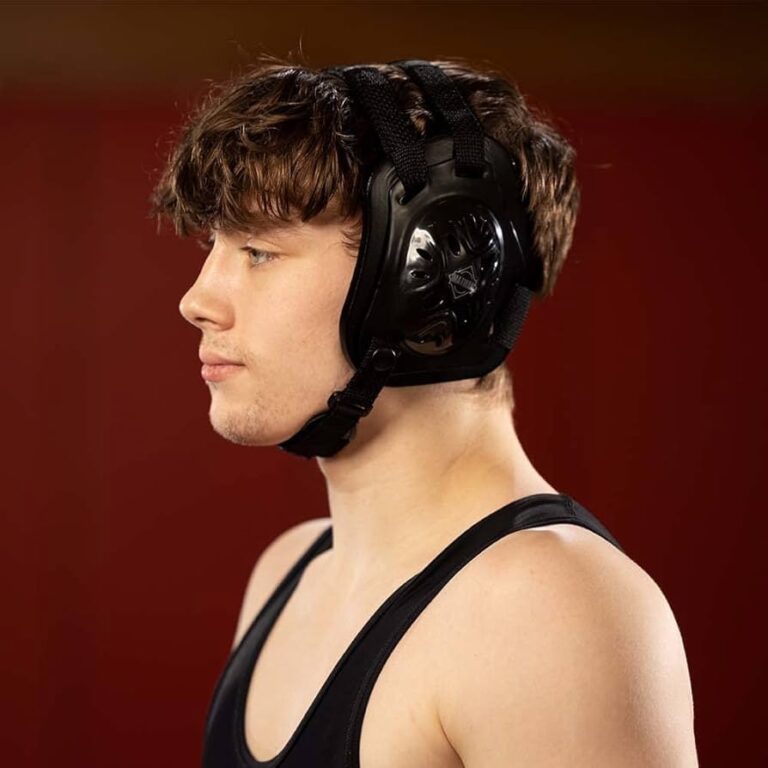
The reason ear guard adoption often lags behind ear risk in no-gi training is behavioral. Wearing ear guards from the start — or from the point where your training escalates to higher volume — removes the friction of adding new gear mid-routine. The grappler who never trained without them doesn’t have to recalibrate their movement or head position awareness. They just wear it, and it becomes part of the training environment.
The grappler who adds ear guards after years of unprotected training faces a real adjustment period. The gear feels foreign, alters how they perceive head contact, and requires modification of habits that are already deeply ingrained. That adjustment is worth making, especially for anyone already training with damaged ears. But it’s significantly easier to avoid than to manage after the fact.
Volume-based thinking about ear protection shifts the frame from reactive to strategic. Instead of waiting until ears feel wrong, you read your training schedule and recognize when you’ve crossed the threshold where protection is no longer optional. At three sessions of live sparring per week, ear guards become a sensible precaution. At five or six hard sessions per week in competition prep, they’re a training essential with the same status as a rashguard. That calculation — grounded in volume, not symptoms — is what keeps ears healthy through a long no-gi career.
Sources
Wikipedia: Cauliflower Ear — mechanism, pathophysiology, and treatment overview.
Mayo Clinic — reference for hematoma formation and soft tissue trauma management.
FloGrappling — elite no-gi competition coverage and competitor footage.
Image credit: alfred.com