
Matching Compression Shorts to Your No-Gi Grappling Game
Most buying guides for compression shorts stop at thread count and waistband style. That information matters, but it answers the wrong question first. Before comparing fabrics and inseams, you need to understand what your grappling game actually asks of the shorts you wear. A wrestler who lives in outside leg trips and lateral hip throws has fundamentally different demands than a guard player spending rounds in closed guard or ashi garami. Getting that match right is the real decision — everything else becomes refinement once you have that answer.
Start with Your Primary Position
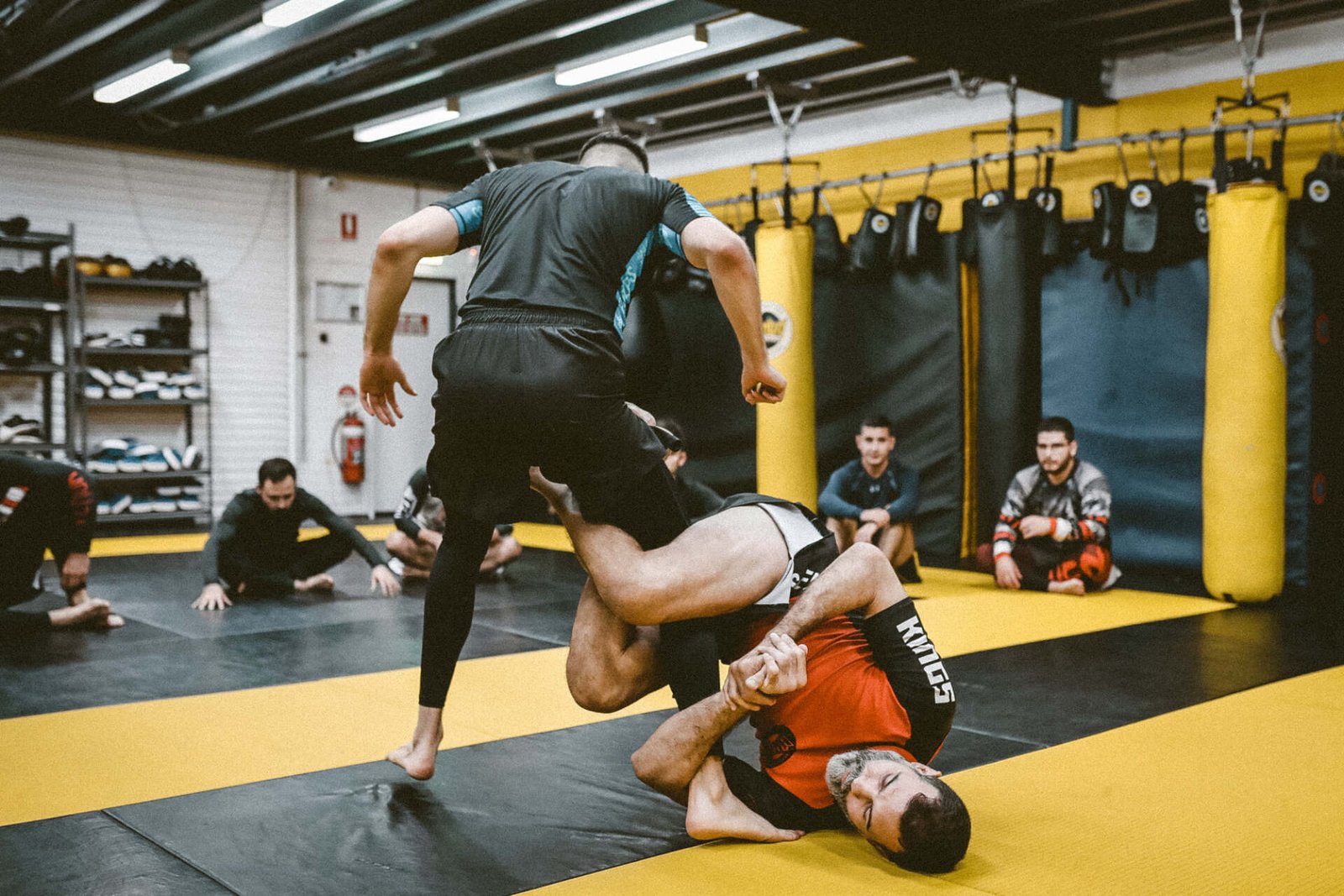
The clearest way to approach compression shorts selection is to identify where you actually spend most of your mat time — not where you plan to be, but where you realistically end up during a hard training round or competition match.
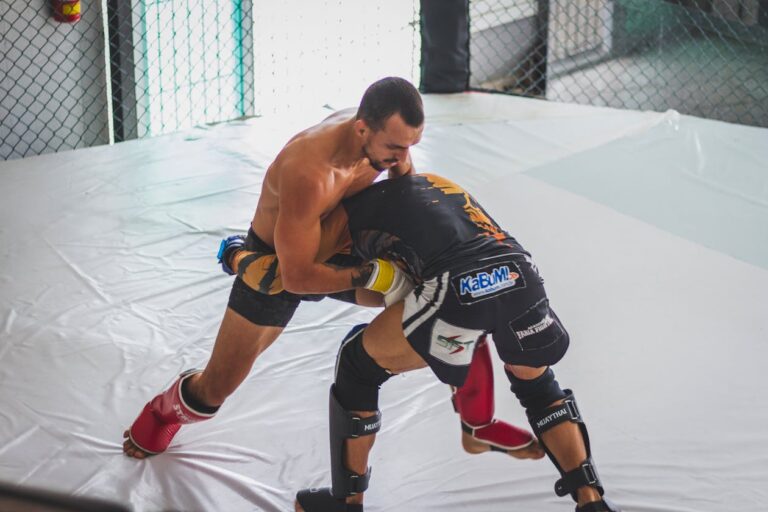
If you are primarily a top-game grappler — working pressure passes, wrestling for takedowns, grinding from north-south — your compression shorts take the most punishment from mat abrasion and repeated hip rotation through a moderate range of motion. The waistband and hip panel flex constantly through forward lunges, level changes, and standing scrambles. These movements place the most stress on the fabric at the hip flexor crease and the inner thigh junction. Shorts cut too short will ride up during sprawls and stand-up scrambles, exposing the upper thigh to direct mat contact precisely when you need clean movement and stable footing.
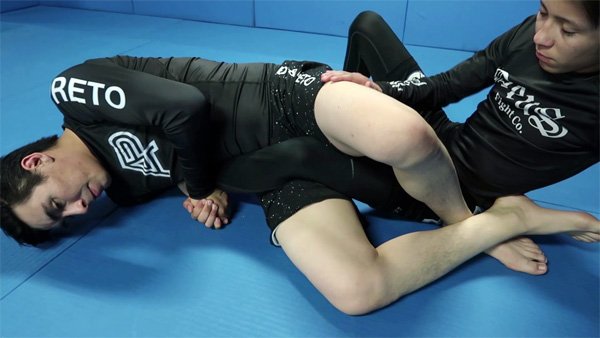
Guard players — especially those who run high guard positions like rubber guard, mission control, or triangle setups from the bottom — place extreme range-of-motion demands on the hip flexor zone and the inner thigh panel. Every time you pull knee to chest or triangle your legs around a partner’s arm, the short’s inseam and hip panel flex toward maximum extension. Material that lacks genuine four-way stretch drags against the skin or limits the movement itself. The shorts work against your game rather than disappearing from your awareness the way gear should.
Leg lock specialists occupy a different category entirely. Ashi garami, outside heel hook entries, saddle and 411 positions keep your legs and a partner’s legs completely intertwined at all times. The shorts need to stay in place through every entry, re-entry, and positional scramble. They cannot bunch, twist, or ride up, because any excess fabric inside leg entanglements creates friction that works directly against your control and entry speed. This is the strongest practical argument for a longer inseam in compression shorts for no-gi grappling, and it is one of the scenarios where many experienced grapplers eventually decide to train in spats instead.
Inseam Length and What It Actually Controls
The inseam debate in no-gi compression gear rarely gets resolved clearly in gear discussions, partly because the advice is almost always written without specifying what game the grappler plays. Short inseams in the three-to-five-inch range originated from wrestling traditions — they allow full hip mobility and keep fabric out of the way during stance work and penetration steps into a double-leg or single-leg. Longer inseams in the six-to-nine-inch range emerged from hybrid BJJ and MMA wear traditions where mat burn protection and fabric stability under leg entanglements mattered more than wrestling-specific mobility at the hip.
For takedown-focused grapplers, a shorter inseam keeps fabric out of the way during level changes and does not restrict hip drive through a double-leg finish. The trade-off emerges during guard pulls and leg entanglements, where a short compression short creeps toward the hip. This creates two problems simultaneously: exposed skin contacts the mat, and fabric bunching creates friction at exactly the point where leg control happens. If your game includes any meaningful time in bottom position or leg lock entries, a short inseam will cost you grip and stability over the course of a session.
For guard players and leg lock specialists, an inseam of seven inches or longer keeps fabric anchored during extreme hip flexion. The compression material stays flush against the leg through closed guard, triangle setups, and ashi garami control. The mild trade-off is that wrestling-style penetration steps feel marginally more restricted — but this rarely affects grapplers whose takedown game relies on grip fighting, trips, and inside foot position rather than deep-level changes with full hip drive behind them.
The Competition Rule Variable
The inseam question also intersects with competition rules in a practical way. Most no-gi grappling organizations require board shorts or fight shorts worn over compression gear. For events that enforce this requirement, a long inseam visible below board shorts reads differently than a shorter inseam that stays fully concealed. Some athletes prefer a shorter compression inseam that disappears under fight shorts for a cleaner appearance on the mat. Others prefer longer coverage for stability and accept the visible layer. This is an aesthetic call rather than a performance one — but knowing it before you buy prevents a last-minute equipment problem at weigh-ins.
Waistband Design and How It Interacts with Your Training
The waistband is one of the most under-discussed aspects of compression shorts for grappling. The two dominant designs are wide elastic waistbands without a drawstring, and narrower waistbands with an integrated drawstring and inner tack point.
Wide elastic waistbands without a drawstring are simpler and have nothing to dig into a training partner’s hip during a clinch or tight top position. The disadvantage is that they rely entirely on elastic tension to hold position across a training session. As the material stretches over repeated washing cycles, the waistband progressively loses its grip, and the shorts may shift during extended scrambles. This design is consistently preferred by leg lock specialists because there is no drawstring to become tangled during heel hook entries or leg re-entanglement — a minor but genuinely frustrating problem once you have experienced it mid-round.
Drawstring waistbands offer more adjustability and hold position more reliably for grapplers with a meaningful difference between their waist and hip measurements. The drawstring should be tied and tucked before every session — this is not something to improvise mid-roll. A loose or partially-tucked drawstring inside a leg entanglement becomes exactly the nuisance you would expect it to be. The best drawstring designs route the tie point inside a small sewn channel so the knot cannot flip out and contact a training partner, but not every brand executes this detail correctly. Check the tuck before you buy.
Training Volume and How It Shapes the Buy Decision
How often you train each week directly determines whether longevity should factor heavily into your compression shorts selection — and whether you are buying one pair or building a working rotation.
A grappler training twice a week can reasonably rotate two pairs of compression shorts and maintain them in working condition for eighteen months to two years before the material loses meaningful compression pressure. A grappler training five or six times per week puts those same shorts through dramatically accelerated wear cycles — three to four pairs minimum is the practical threshold for that volume. High-frequency training also demands more from fabric construction: the same seams, panels, and waistband that hold up fine for two sessions per week may begin separating or losing shape within four months under daily training loads. Buying the cheapest available pair and replacing it every three to four months often costs more annually than investing in a more durable pair at a higher initial price point.
The specific failure point to watch for in compression shorts is not visible damage — it is the progressive loss of compression memory. Fabric under heavy rotation loses its ability to snap back after washing. When you pull on a pair and the thigh panel feels noticeably loose rather than firmly anchored against the muscle, those shorts should be retired regardless of how they look from the outside. Loose compression shorts that shift during rolls create two problems: they expose skin to mat contact at points where the fabric was supposed to act as a barrier, and they remove the positional stability that made compression wear worth the cost in the first place.
When Spats Are Actually the Better Answer
The honest answer in any compression shorts buying guide for no-gi grappling is that for some athletes, the better purchase is spats rather than shorts. Knowing when that applies to your training saves you from cycling through compression short problems that a different product category would solve from the start.
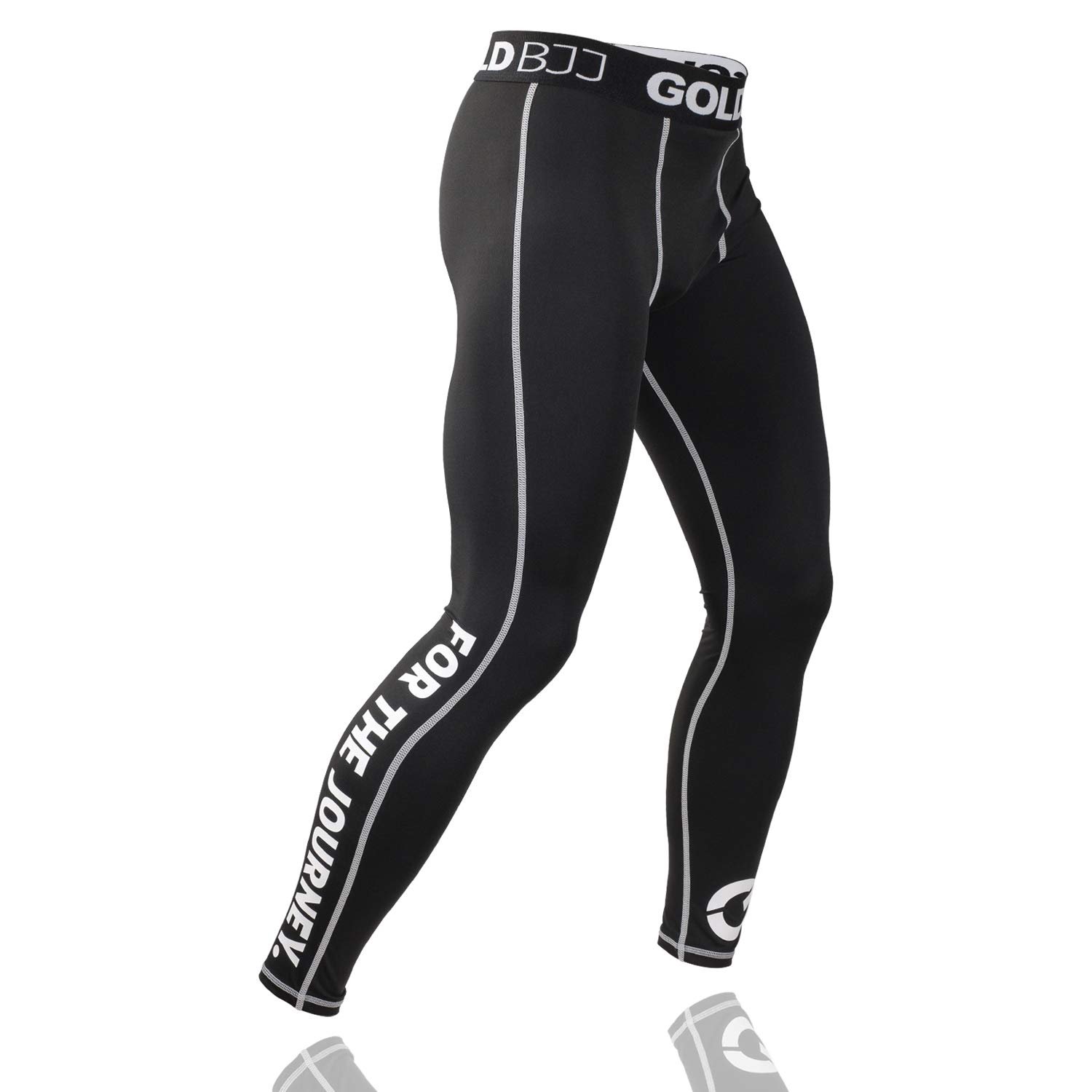
Spats cover the full leg and eliminate mat burn from knee to ankle. For leg lock specialists, they remove the fabric-bunching problem entirely — the material is anchored at the ankle and has nowhere to ride during heel hook entries or ashi garami cycles. For guard players training on rough or older mats, spats eliminate the most common source of mat rash on the inner thigh and calf. Many experienced grapplers who train at high volume run both: spats for training sessions centered on guard work and leg lock drilling, compression shorts for competition where the board-shorts-over-compression format is required or preferred for appearance.
The practical limitation of spats is heat management. A fully-covered leg traps considerably more heat than compression shorts during long sessions in gyms without reliable climate control. In hot and humid training environments, this becomes a real endurance factor by the second or third round of a two-hour session. In competition, the layered look of spats under board shorts also reads differently aesthetically — some athletes prefer the cleaner profile of compression shorts that stay hidden below fight shorts. Neither factor is a performance argument against spats. They are comfort and context variables that shift the decision based on your specific training environment and personal preference.

Making the Final Call
The compression shorts that actually work for no-gi grappling are the ones that match your game before they match a specification sheet. Identify your primary position on the mat. Determine what inseam length your entries and guard work actually require. Decide whether a drawstring or elastic waistband fits your training density and movement patterns. Assess your training frequency against the rotation you can realistically maintain. And be honest about whether spats would solve problems that compression shorts can only partially address.
Once those questions have clear answers, material quality and construction details become a meaningful filter rather than the starting point of a decision you are not ready to make. The right compression shorts are the ones you never think about during a hard round — which is exactly where gear selection should land you every time.
Sources
- FloGrappling — premier coverage of no-gi grappling competition
- ADCC Submission Wrestling — official ADCC organization and competition rules
- Wikipedia: Compression Garment — overview of compression fabric mechanics and athletic applications