BJJ Rashguard Breakdown 2026: How to Match Your Gear to Your Game
The phrase “best rashguards for BJJ and grappling” gets typed into Google thousands of times every month, and the answers that come back are usually the same: a numbered countdown with affiliate links, stock photos of generic compression gear, and writing that reads like it was never near a mat. If you’ve trained no-gi for any length of time, you’ve learned this the hard way at least once. This guide works differently. Rather than handing you a ranked list, it breaks down how the rashguard market actually works in 2026, what separates functional gear from wasted money, and how to match what you buy to how you actually train and compete.
One Keyword, Four Different Products
The rashguard market in BJJ is not one category — it’s four, and conflating them leads to consistently wrong purchases. Understanding which type you are shopping for changes everything about how to evaluate what is on the market.
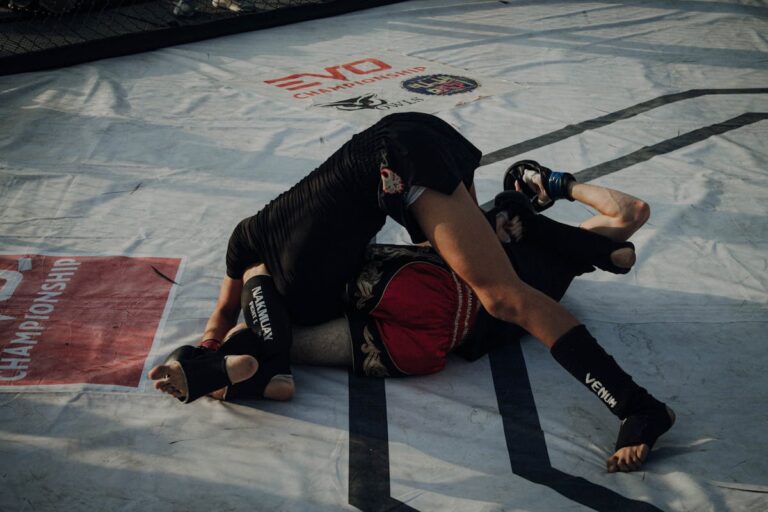
Competition rashguards are cut specifically for submission grappling events. They tend toward lighter fabric weight, precise compression, and IBJJF-compliant colors — solid black, white, blue, or red for ranking differentiation. These are the rashguards you see at ADCC, Submission Underground, and FloGrappling broadcast events, worn by athletes who have very specific performance requirements from their gear.
Training rashguards are built for repetition. Five sessions a week, year-round, across hot competition seasons and cold mat winters. They prioritize material durability and seam reinforcement over gram weight or precision fit. These are the workhorses of no-gi training kits, and they are a genuinely different product from competition gear despite looking nearly identical on a product page.
Crossover pieces — from surf brands, MMA training brands, or general athletic compression lines — often look the part but lack construction details specific to grappling: flatlock stitching, anti-roll hems, fabric that holds compression through stretching rather than just standing still. They work adequately for casual training. They do not last under serious grappling use.
Budget training pieces fill out the fourth category: sub-$40 options that work fine for hobbyist grapplers who train twice a week and want functional gear without significant investment. The 2026 market has genuinely good options at this tier — but they belong in a separate purchase decision from competition-grade gear, and confusing the two is the most common expensive mistake new grapplers make.
What Fabric Actually Does Under Pressure
Most rashguards use polyester-elastane blends, with nylon-elastane as the premium alternative. The practical difference matters more than the label on the tag.
Polyester blends are lighter, dry faster, and hold sublimated printing better over time. They are the standard for a reason — affordable, functional, and available at every price point. The downside is that cheaper polyester blends lose compression through repeated washing faster than nylon equivalents. The elastane breaks down under heat and friction, the garment stretches out, and you lose the one property that makes a rashguard worth wearing in a grappling context.
Nylon-elastane blends have a softer hand feel, stretch more consistently in all four directions, and hold their compression curve through hundreds of wash cycles better than budget polyester. This is why premium rashguards from dedicated BJJ brands tend toward nylon — it is a material property difference, not marketing language.
Fabric weight measured in grams per square meter (gsm) also matters in ways the product listing usually does not mention. Lighter fabrics around 200 gsm feel fast and are preferred for competition where weight and freedom of movement take priority. Heavier fabrics at 240–280 gsm last longer in high-frequency training where you are grinding against another body’s weight for hours each week.
Seam Construction and Why It Matters
Flatlock stitching runs the seam flat against the body with interlocking threads, distributing stress across a wider surface area and creating no raised ridge that digs into skin during ground work. Overlock stitching creates a raised seam that, under sustained pressure from another body’s weight during guard passing or back control, becomes a genuine friction and discomfort issue over longer training sessions.
Any rashguard you plan to train in seriously should have flatlock seams at the shoulders and along the sides at minimum. This single construction detail separates functional BJJ gear from athletic compression wear that happens to look similar on a product page. If a listing does not specify flatlock stitching, assume overlock and adjust your longevity expectations accordingly.
The Long-Sleeve Question
IBJJF regulations require long-sleeve rashguards for adult competitors in no-gi divisions. ADCC has historically been more permissive, focusing on logo and sponsor restrictions rather than sleeve length requirements. Regional circuits — NAGA, Grappling Industries, Combat Sport League — vary by division and ruleset, but most allow both short and long sleeve provided the gear meets color rules.
For training purposes, the long vs. short sleeve decision is practical and personal. Long-sleeve rashguards offer more coverage against mat burn on the forearms and elbows — a real advantage during sprawl-heavy scrambles and high-volume guard passing. Short-sleeve rashguards run cooler, are less restrictive around the elbow joint for athletes who work heavily from arm lock positions, and are perfectly adequate for most non-IBJJF training environments.
The position most experienced no-gi practitioners land on: one long-sleeve rashguard in an IBJJF-compliant color for competition travel, and short-sleeve as primary daily training gear. Budget for both over time rather than searching for a single rashguard that fully serves both contexts — they have genuinely different performance profiles that pulling from opposite ends of one garment cannot resolve.
Price Tiers and What Actually Changes
The rashguard market in 2026 spans roughly $25 to $140 retail, and the price differences reflect real manufacturing decisions — though not always where the marketing directs your attention.
Entry tier ($25–$50) delivers functional gear for hobbyist training. Polyester blends at this price point have adequate compression for two-to-three sessions per week, hold up reasonably with proper care — cold wash, air dry, no tumble dryer — and cover the fundamentals of no-gi training. The limitations become visible under high-frequency use: they stretch out faster, and compression consistency drops off sooner than mid or premium alternatives. For a hobbyist, that trade-off is entirely reasonable.
Mid tier ($60–$90) is where construction quality starts to differentiate meaningfully. Better fabric blends, proper flatlock stitching, more consistent sizing across production runs, and reinforcement at stress points — collar, cuffs, shoulder seams. If you train four or more days per week, this tier pays for itself in longevity. A $75 rashguard that lasts two years costs less per mat hour than a $35 rashguard replaced every eight months.
Premium tier ($100+) buys competition-grade compression precision, name-brand construction from BJJ-specialist companies, and often better size charts that account for athletic proportions — broader shoulders, longer torsos. The build quality difference at this tier is real and measurable in material performance over hundreds of training sessions. Whether it translates to on-mat advantage is a separate question, and the honest answer is that it does not. Your rashguard does not submit anyone.
What Gets Worn at the Top Level
Watching FloGrappling broadcasts and ADCC main events is one of the most practical research tools available for no-gi gear decisions, and the brand diversity on display is more instructive than any compiled buying guide. Elite athletes are not sponsored into gear that fails during live competition — the commercial relationship requires performance, which means the field gives you a realistic quality signal.
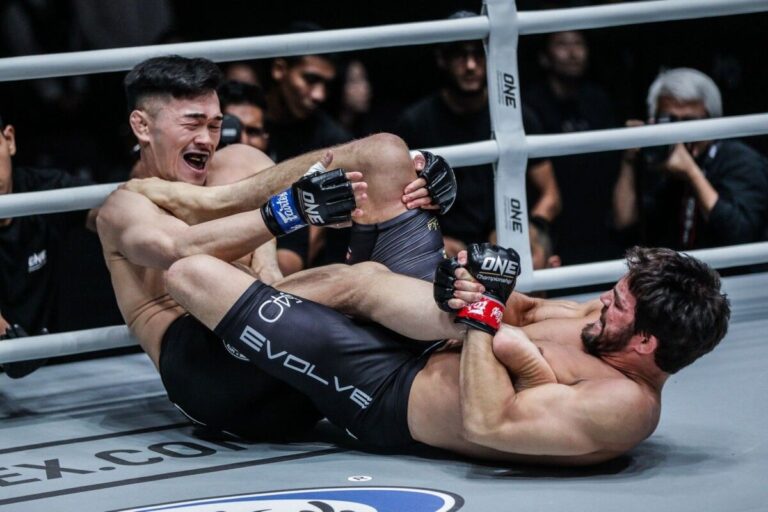
Gordon Ryan has worn Hyperfly and B-Team branded gear across ADCC competition cycles. Garry Tonon’s career in ONE Championship saw consistent use of purpose-built competition cuts designed for performance under broadcast lighting over extended event days. At Submission Underground and EBI-format events, team-branded rashguards from dedicated academies sit alongside commercial brand gear with no visible performance differential in the match footage.
What you consistently do not see at the elite level: gear that shifts during scrambles, raised seams visible through the fabric, or rashguards that bunch at the collar during guard exchanges. The gear is invisible because it is working correctly. That is the actual performance bar worth calibrating toward when making a purchase — not a specific brand name or ranking.
Getting Fit Right When You Cannot Try It On
Most rashguard purchases happen online, and size charts are notoriously inconsistent across brands. The common failure mode: buying based on clothing size — medium shirt equals medium rashguard — which produces a fit that is either too loose in the body or too short in the torso for anyone with an athletic build.
The correct approach is to measure your chest circumference at the widest point and your torso length from shoulder to waistband, then compare against the brand’s specific size chart rather than a generic compression wear reference. BJJ-specific brands tend to size more athletically — shorter torso, wider shoulder — than general athletic wear brands that use standard garment proportions designed for a different body type.
If you are between sizes, size down for competition rashguards where locked-in compression is the primary performance goal. Go with the chart for training rashguards where all-day comfort over extended rolling sessions matters more than maximum compression. Getting this wrong is a $70 lesson that most grapplers only need to take once.
Red Flags When Buying
Watch for size charts that omit torso length entirely, listings that use only chest measurement, and product photos featuring gi jackets or kimono imagery — a clear signal the brand does not specialize in no-gi gear and likely does not understand the construction requirements. Avoid stretch claims above 300% that do not specify whether that is 2-way or 4-way. Any brand that cannot list fabric gsm on the product page is almost certainly at the low end of construction quality regardless of what it charges at retail.
Making the Purchase Decision
The best rashguards for BJJ and grappling in 2026 resolve differently depending on who is making the purchase. A hobbyist training twice a week has genuinely different requirements from a competitor logging five mat sessions before a tournament weekend, and the market has strong options at both ends of that range.
Train once or twice per week as a hobbyist: the entry tier covers everything you need. Put the difference in cost toward mat time, seminars, or instruction rather than gear upgrades that will not meaningfully change your experience on the mat at that training volume.
Train four or more days per week and compete occasionally at regional events: a mid-tier long-sleeve rashguard in an IBJJF-compliant color covers both training and competition in a single purchase. That efficiency matters when you are buying gear to support a serious training schedule rather than a hobby.
Compete nationally or internationally with on-camera exposure and multi-day event schedules: the premium tier is appropriate, and the build quality difference justifies the cost at that level of use. Team-branded rashguards from your affiliate may also be relevant here for sponsorship, team identity, and matching kit requirements at major events like ADCC or FloGrappling invitationals.
The rashguard market in 2026 is better than it has ever been at every price point. The mistake is rarely underspending or overspending in absolute terms — it is buying without clarity on which of the four categories you are actually shopping in, and which training context you are solving for. Resolve that first and the rest of the decision follows.
Sources
- International Brazilian Jiu-Jitsu Federation (IBJJF) — Official competition ruleset and rashguard compliance requirements
- FloGrappling — No-gi competition broadcast coverage and event results
- Wikipedia — Rash Guard — Material composition and construction overview