How to Wash and Care for Rashguards Without Killing the Fabric
A rashguard takes more abuse in a single training week than most workout shirts see in a year. Six rounds of sweat, the friction of a body-lock pass, the chemical wash of mat disinfectant soaking through the weave — by Friday the fabric has been through a chemistry experiment. How you wash it after that is the difference between a rashguard you wear for two years and one that smells like a damp gym bag after eight weeks.
Most grapplers do the wrong thing on autopilot. Hot water, regular detergent, tumble dry, repeat. Then they wonder why the cuffs sag, the sublimation print peels, and the back panel holds a permanent funk no matter how much OxiClean they pour in. The fix is not exotic. It is just a small set of rules followed every wash.

Why Rashguards Stink in the First Place
Cotton absorbs sweat and holds bacteria in the fibers, where soap can flush it out. Polyester and spandex — the two fabrics that make up almost every modern no-gi rashguard — do the opposite. They are hydrophobic. Sweat does not soak into the yarn. It sits on the surface, mixes with skin oil, and feeds a bacterial film that the polyester itself protects from detergent.
That is why a brand-new rashguard can develop a sour smell after a single hot wash that the laundry never seems to remove. The bacteria are not in the fabric. They are bonded to the oil layer on top of the fabric. If you do not strip that oil layer, the funk lives there permanently.
This is the central rule of rashguard care: the goal of every wash is to remove oil, not just sweat. Everything else follows from that.
The Washing Method That Actually Works
Cold Water, Always
Hot water feels like it should clean better, but it does the opposite for synthetic fabric. Heat sets the oil into the polyester surface and breaks down the spandex faster than mechanical wear ever will. Cold water — under 30 °C, or whatever your machine labels as cold — keeps the elastane intact and lets the detergent do the lifting.
A rashguard washed in hot water for six months will lose about 15 percent of its elastic recovery. The collar will sag, the wrist cuffs will stop sealing against the forearm, and the panel will balloon at the lower back. None of that is normal wear. It is heat damage.
Turn It Inside Out, Use a Mesh Bag
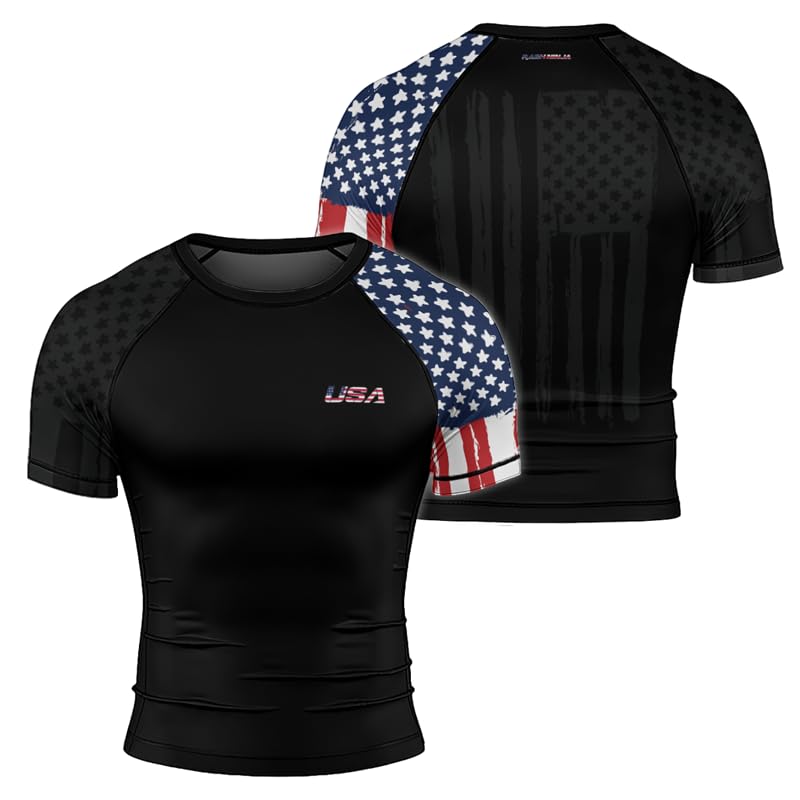
Two minutes of prep, ten percent more lifespan. Inside-out exposes the side of the fabric that actually touched your skin to the detergent, which is where the oil and bacteria live. The printed outer surface stays protected from abrasion against zippers and buttons in the same wash load.
A mesh laundry bag does the rest. It stops the rashguard from twisting around denim seams, getting snagged on hooks, or rubbing against rougher fabrics during the spin cycle. The print on a sublimated rashguard is dye inside the polyester fiber — it cannot wear off chemically — but it can scuff against rough fabric and look faded. The mesh bag prevents that.
Detergent Choices Matter More Than You Think
Most household detergents are formulated for cotton. They contain enzymes that break down protein and starch stains but leave synthetic oils mostly untouched. For rashguards, look for a detergent labeled for synthetic athletic wear, or use a small amount of regular detergent plus a degreasing additive.
- Sport-specific detergent (Tide Hygienic Clean, WIN, HEX Performance, Defunkify) — designed to lift oils from synthetic fiber
- A capful of white vinegar in the rinse cycle — neutralizes the alkaline residue that traps odor
- For deep funk: pre-soak in cold water with one cup of baking soda for two hours before washing
Skip the bleach. Chlorine bleach attacks spandex and removes the dye from sublimated panels. Oxygen-based bleach (OxiClean) is safer on the fabric but still hard on elastic — use it sparingly and only on a deeply stained rashguard you are willing to risk.

What Kills Rashguards Fastest
The Dryer Is the Enemy
Heat is the single biggest factor in rashguard death. A standard hot dryer cycle runs at around 60–65 °C. Spandex begins to degrade at 70 °C. The margin is thin, and every cycle eats a small amount of elasticity that the fabric never gets back.
If you must use a dryer, run it on the lowest heat setting and pull the rashguard out while it is still slightly damp. Better: hang it on a plastic hanger in a ventilated room. A wet polyester rashguard dries in two to three hours indoors, faster if you have a fan running. No dryer rack required.
Fabric Softener Is a Trap
Fabric softener coats fibers with a layer of waxy chemicals that make cotton feel soft. On polyester, those same chemicals block the fabric’s ability to wick sweat. After two or three softener washes, a rashguard will trap moisture against your skin during a roll, raise your skin temperature, and develop a permanent musty smell that no normal wash can remove.
Dryer sheets do the same thing in dry form. If you share a household laundry routine with someone who uses softener or dryer sheets, wash rashguards separately or in clearly labeled loads.
Direct Sun Bleaches the Print
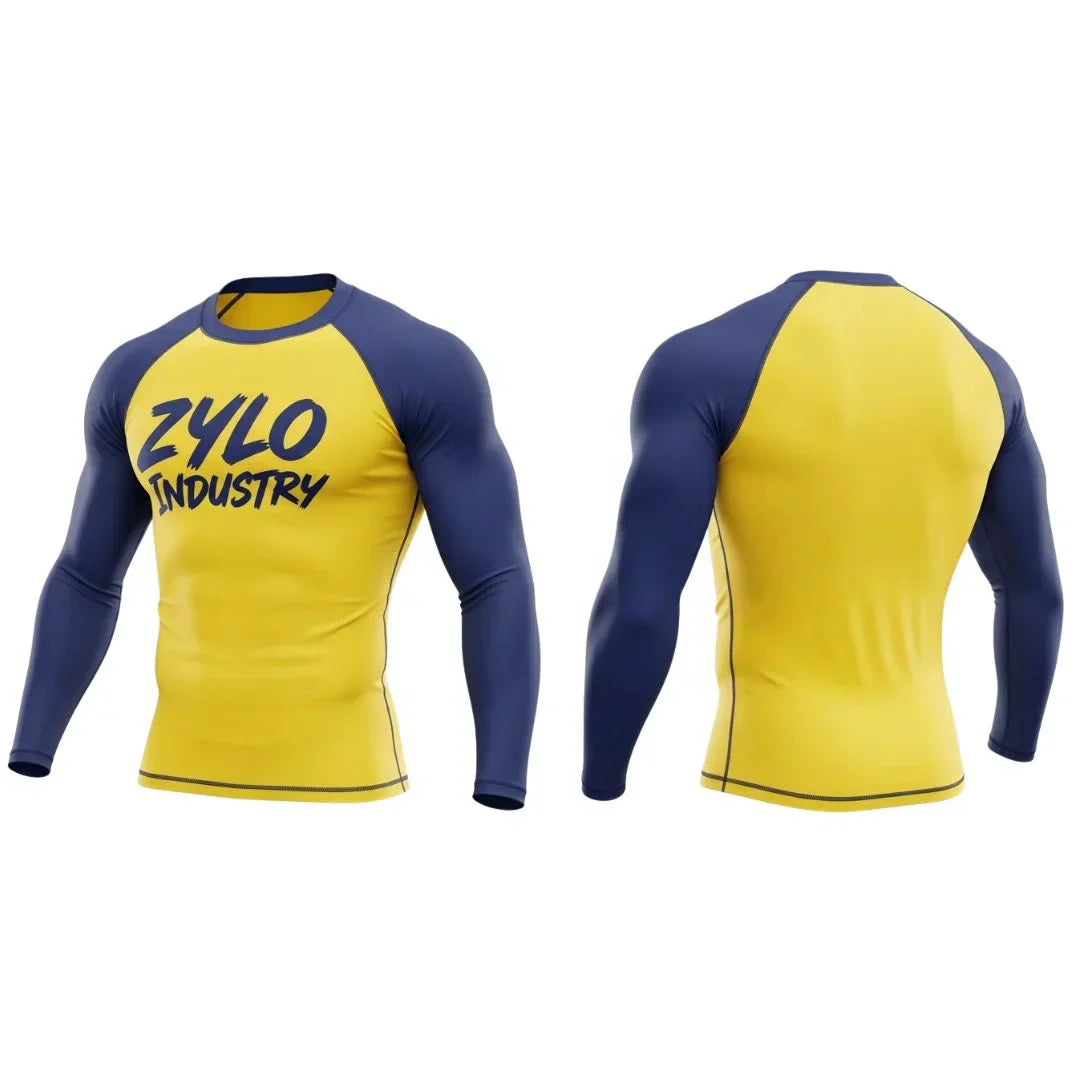
Air-drying is the gold standard, but direct sunlight on a sublimated rashguard for hours at a time will fade the print over months. The dyes are stable but not UV-proof. Hang rashguards in a shaded outdoor spot or indoors near an open window. Same drying speed, no color loss.
Drying Without Damaging Sublimation
Sublimation prints are bonded into the polyester fiber at high heat during manufacturing. That is why a quality no-gi rashguard does not have a peeling logo three months in — there is nothing on the surface to peel. But the print can lose vibrancy through repeated heat exposure, abrasion, and UV.
The simple rule: hang it shaded, hang it inside-out, do not iron it ever. If a rashguard comes out of the wash wrinkled and you cannot stand it, a brief tumble on the no-heat air-fluff setting will smooth it out without damage.
The Rotation Question
If you train four or more times a week, owning two rashguards is the minimum. Three is better. The fabric needs at least 24 hours of true dry time between wears to fully release the moisture it absorbed from the last wash and any residual sweat from training. Wearing a rashguard the day after washing — when it spent fifteen minutes in the dryer instead of overnight on a hanger — is the fastest way to start a permanent funk.
Some grapplers buy six identical rashguards to simplify rotation. There is logic to this if your gym requires a specific top for competition team training. For everyone else, three rashguards in different colors makes it obvious which one needs to be washed and which one is ready to go.
When to Replace a Rashguard
A well-cared-for rashguard from a quality manufacturer should last 18 to 24 months of three-to-five-day-a-week training. The signs that the fabric is done:
- Collar no longer holds shape when pulled away from the neck
- Sleeve cuffs roll up during a roll instead of staying anchored
- The fabric feels thin or transparent under sweat
- A musty smell returns within 24 hours of a clean wash
- Visible pilling along the side seams or the back panel
The smell test is the most reliable. Polyester at the end of its life loses its ability to be cleaned — the bacterial bond becomes permanent. Once a rashguard smells musty fresh out of the wash, no amount of detergent will save it. That is the signal to retire it.

The Quick-Reference Routine
If you only remember one thing from this, remember the routine:
- Rinse the rashguard in cold water in the sink immediately after training to flush surface oil before bacteria settle in.
- Hang it to dry while you wait for laundry day — do not toss it sweaty into a hamper.
- Wash inside-out, in a mesh bag, in cold water, with a sport detergent.
- Skip the softener. Add a splash of white vinegar to the rinse if you have hard water.
- Air dry on a plastic hanger out of direct sunlight.
Five steps, no equipment, doubles the lifespan of every rashguard you own. A $50 rashguard that lasts two years costs $25 a year. A $50 rashguard washed wrong that lasts six months costs $100 a year. The math on doing this right is more obvious than most gear decisions in grappling.
A Final Word on Mat Hygiene
Rashguard care is part of a larger hygiene system that protects you and the people you train with. Ringworm, staph, and MRSA spread on shared mats, and a contaminated rashguard worn back to training is one of the most common vectors. A clean rashguard for every session is not just a comfort preference. It is the gym etiquette that keeps you welcome at training and keeps your skin off antibiotics.
If you ever skip a wash because you only had one rashguard and ran out of time, do not wear that rashguard again. Wash it, dry it fully, and either skip the next session or borrow a clean top from a teammate. The cost of a skin infection — in money, training time, and explanations to your coach — is always higher than the cost of buying a second rashguard.
Sources
- Polyester fiber properties — Wikipedia
- Spandex fabric and heat tolerance — Wikipedia
- IBJJF — International Brazilian Jiu-Jitsu Federation
- Sport detergents for synthetic athletic wear — Amazon search
- Mesh laundry bags for activewear — Amazon search
Browse our top-rated rashguards and no-gi gear at the RashguardGuy shop →