Rashguards Under $30 and $50: A Budget Buying Guide for Hard Rolling
Walk into any no-gi class on a Tuesday night and you will see the same thing: a roomful of grapplers wearing rashguards, and most of them did not pay $90 for the privilege. Budget rashguards have come a long way. The cheap stuff used to feel like wearing a plastic bag — now $25 will buy you a shirt that survives a year of hard rolling if you pick the right one. This is a guide to spending less on rashguards without ending up with gear that pills, peels, or splits a seam during a guard pass.
Why Cheap Rashguards Used to Be Garbage (and What Changed)
Five years ago, the under-$30 rashguard market was a graveyard. Generic resale brands cut corners on fabric weight, stitching, and grip elastic, and the shirts came out feeling closer to swim tops than grappling gear. The sleeves stretched out by month two. The hem rolled up under your belt every roll. Sublimation prints cracked after a dozen washes, and the seams chewed your armpits raw.
That changed for two reasons. First, sublimation printing equipment got cheap, so small brands could run small batches without minimum orders that forced them to dump rejects into the bargain bin. Second, customers got better at reviewing. Reddit, BJJ forums, and YouTube put pressure on every brand that tried to sell trash at a discount. A budget rashguard that pills in three weeks gets called out within hours now, and brands respond.
The result: there is a real, defensible tier of rashguards under $30 that perform competently for casual rolling. And the $30 to $50 bracket has become surprisingly competitive with the $70 to $90 shirts from established brands, with the main difference being branding and aesthetic rather than function on the mat.
What to Look For Under $30
The sub-$30 tier is where you stop assuming the product works and start checking specs. Three things matter more than anything else: fabric weight, stitching, and the silicone gripper at the hem. Get those right and you have a usable shirt. Miss any one of them and you are buying disappointment.
Fabric Weight and Stretch
A real grappling rashguard sits between 180 and 230 grams per square meter of polyester-spandex blend, usually around an 85/15 ratio. Anything lighter pills fast and lets opponents bite into your skin during grip fights. Most budget brands publish their fabric weight on the product page — if they do not, that is your first red flag.
Stitching and Seams
Flatlock stitching is non-negotiable. If a budget rashguard uses regular overlock seams, the inside of the shirt will chafe your armpits and torso after twenty minutes on the mat. Look for product photos that show the inside of the seam: flatlock looks like a flat ladder, overlock looks like a rolled tube. The honest budget brands all show this in their photos.
The Hem Gripper
A one-to-two centimeter silicone strip on the inside hem keeps the rashguard tucked. Without it, your shirt rides up every time someone hits a butterfly hook or stacks you. Some budget shirts skip the gripper to save costs — those are fine for casual gym use and miserable for live rolling.
Sub-$30 Picks That Actually Hold Up
The honest answer about under-$30 rashguards is that the gap between a $25 shirt and a $45 shirt is smaller than the gap between a $25 shirt and a $15 shirt. Below $20 you are usually buying generic resale stock. Above $20 there are real competitors worth a slot in your rotation.
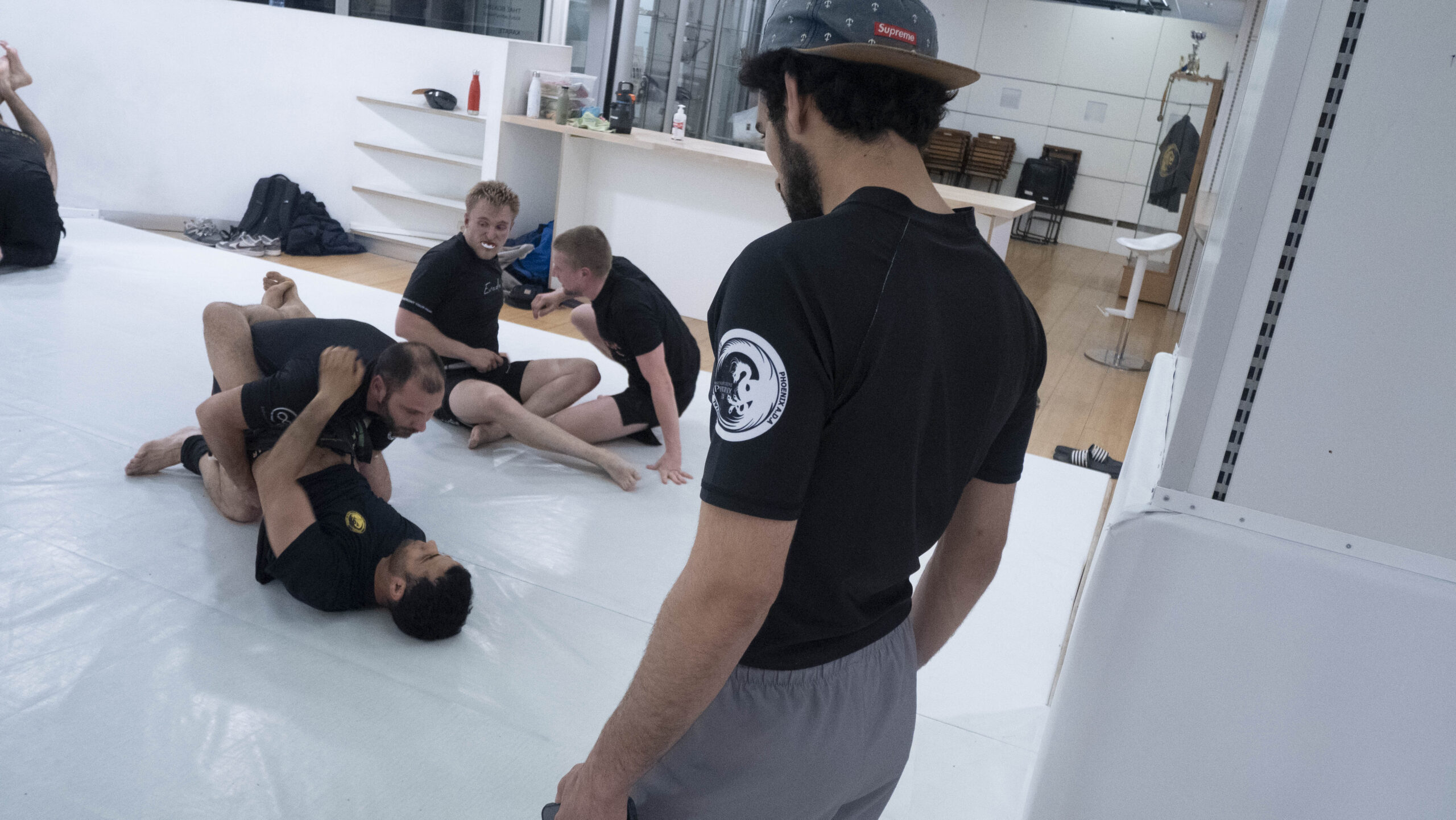
- Sanabul Essential. The default budget answer. Runs $22 to $28 depending on color. Flatlock seams, 220 gsm fabric, silicone hem strip. Sizing runs a touch big — order down if you are between sizes.
- Hayabusa Geo Mid-Sleeve. Occasionally drops to $29 on sale. Quality matches Hayabusa’s full-price offerings; the only loss is print variety.
- Elite Sports Standard. The wild card. Sits at $18 to $24, gives you flatlock seams and decent compression, but the print fades faster than the competition. Fine as a backup gym shirt.
- Gold BJJ Foundation. A newer entry around $25. Solid hem grip, slightly thinner fabric than Sanabul, runs true to size.
What to avoid in this tier: any brand whose product page does not mention flatlock seams, anything sold as a multi-pack of three shirts for under $40, and any sublimation print that looks airbrushed rather than crisp. Those are the tells of low-batch generic stock that was made for fitness use and relabeled for grappling.
What Changes Between $30 and $50
Spending up to $50 buys you three real upgrades. First, fabric quality climbs — you get cleaner 230 to 250 gsm weights with better four-way stretch and less wash fade. Second, print durability improves because mid-tier brands actually run quality control rather than relying on factory output as-is. Third, the cut becomes more sport-specific: longer torsos, articulated sleeves, gussets under the arms.
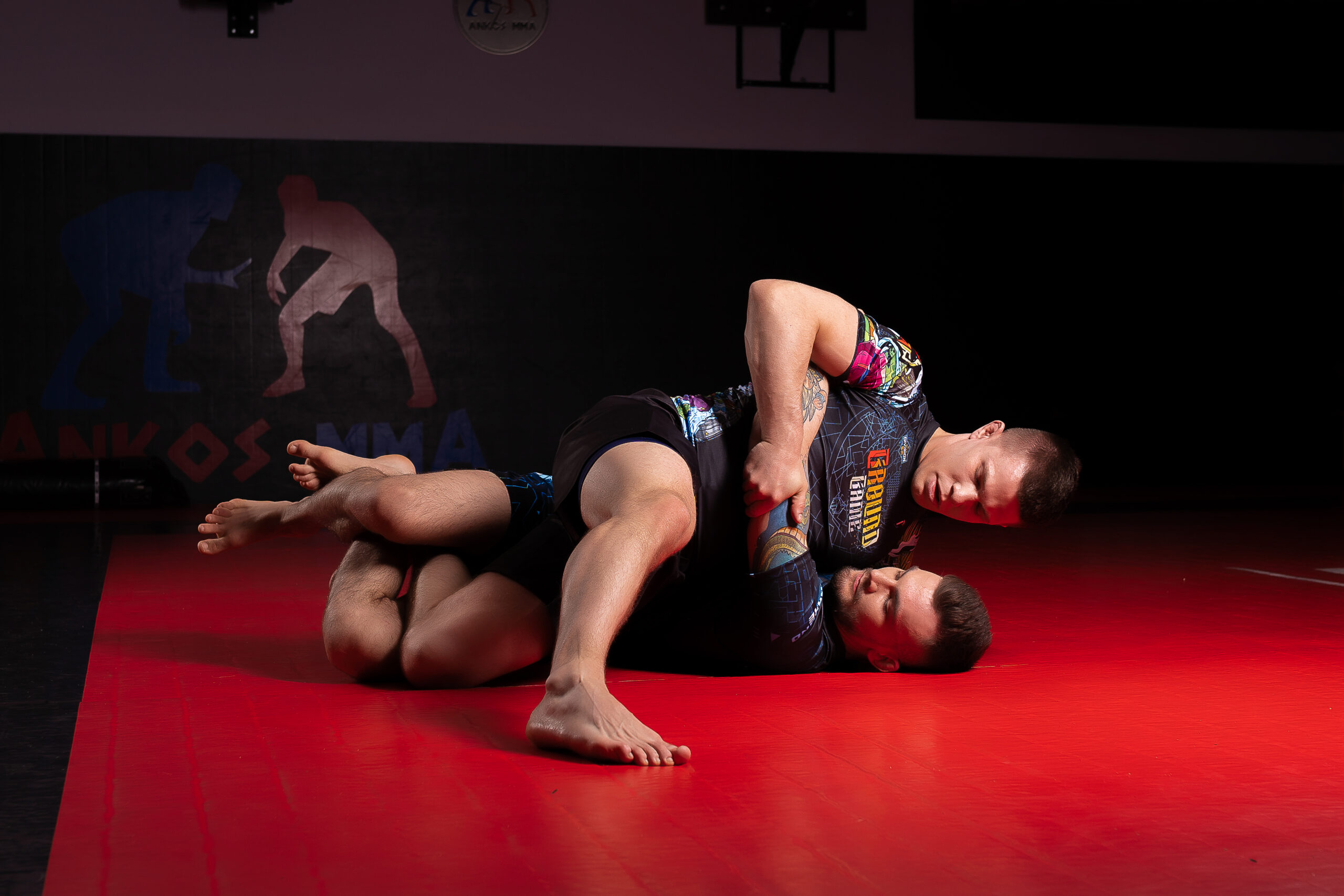
You also get more design variety. The under-$30 tier tends toward solid colors and simple two-tone prints because complex sublimation runs costs up. Under $50 unlocks proper artwork — hand-drawn graphics, multi-panel layouts, sleeve detailing — without crossing into collab territory.
What you do not get yet at $50: signature collabs, ultra-premium fabric blends, or the deeply technical cuts from competition-only brands like Shoyoroll or Origin. Those usually start at $65 and climb fast.
Sub-$50 Picks for 2026
This tier is where the value-to-quality ratio peaks. If you buy carefully here, you can put together a rotation of three shirts for the price of two premium ones, and most rolling partners will not be able to tell the difference.
- Hayabusa Geo Long-Sleeve. $45 to $50 retail. The cleanest mid-range option in 2026 — articulated sleeves, 240 gsm fabric, prints that survive forty washes without fading.
- 93brand Standard Issue. $42. Built specifically for no-gi grappling. Longer torso than most, strong hem grip, panel construction that does not bunch under a brown belt’s pressure.
- Phalanx FU Manchu Series. Floats around $40 to $48. Best fabric weight in the price tier, but the cut runs slim — order up if you sit between a medium and large.
- Manto Defend. $44. Polish brand with a long history in no-gi. Excellent flatlock work and prints that look closer to a $70 shirt than a $44 one.
- Tatami Essential. $35 to $45 depending on print. Reliable rather than exciting. Their sizing chart is accurate — trust it and skip the back-and-forth returns.
Red Flags on Cheap Rashguards
The budget rashguard market still hides a lot of garbage. These are the tells that should send you back to the search results:
- No fabric weight listed anywhere on the product page.
- Stock photos that look identical to four other listings with different brand names — usually means it is the same generic shirt with rebranded tags.
- Reviews that cluster around five stars in the first two weeks, then drop to two stars after three months. That pattern flags a shirt that looks great new but falls apart fast.
- Listings that show models posing rather than rolling, often with sleeves that end above the wrist — a sign the shirt was designed for fitness use and rebranded for grappling.
- Sublimation prints with visible pixel banding or fuzzy edges. That is what cheap printing looks like, and it will get worse with washing.
When to Skip Budget and Pay More
Budget rashguards make sense for almost every recreational grappler. They make less sense if you are competing seriously, training six days a week, or living in a humid climate that demands quick-drying fabric. In those cases, the premium tier earns its price through reliability — a $75 shirt washed daily for a year often outlasts three $25 shirts in the same window.
The other case for paying more is competition. IBJJF and ADCC rules on rashguard fit and color are strict, and budget shirts sometimes fall outside the tolerances on sleeve length or rank-stripe placement. If your only rashguard is a $25 generic, check the rulebook before you sign up for the open.
Making Budget Gear Last
Cheap rashguards die fastest from heat. Skipping the dryer adds months of life to almost any shirt at any price point — hang dry only, ideally inside-out and out of direct sunlight. Wash cold, in mesh laundry bags to keep flatlock seams from snagging on zippers or velcro, and skip fabric softener entirely. Softener coats polyester fibers and ruins moisture wicking.
One detail most grapplers miss: rinsing a sweaty rashguard with cold water before tossing it into a gym bag adds significant life. Bacteria that get to live in trapped sweat for two hours produce the funk that ruins rashguards, and a thirty-second sink rinse breaks that cycle before it starts.
Final Word
Budget rashguards are not a compromise anymore — they are the smart default for most grapplers. Pick one with flatlock seams, a real silicone hem strip, and a published fabric weight, and you will get most of the function of a premium shirt for a third of the cost. Stack two or three from the $25 to $45 range and you will have a no-gi rotation that survives a full year of hard rolling without ever asking you to spend $80 on a single shirt.
Sources
- Sanabul — Essential Rashguard product specifications
- Hayabusa Fightwear — Geo Series product specs
- 93brand — Standard Issue no-gi rashguard line
- Tatami Fightwear — Essential rashguard collection
- IBJJF — Uniform regulations for no-gi competition
Need help ranking on Google? RankOnRepeat manages your entire blog — keyword research, writing, and publishing — so your business shows up when customers search. See how it works →
Browse our top-rated rashguards and no-gi gear at the RashguardGuy shop →
Shop on Amazon
BJJ Rashguards on Amazon →
As an Amazon Associate we earn from qualifying purchases.